
Are Deer Antlers Good for Dogs? Benefits of Antler Chews
Posted by Russell Gibbons on 17th Jun 2026
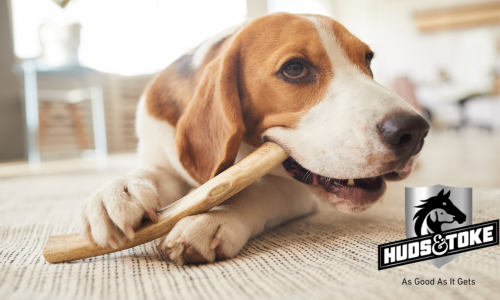
Are deer antlers good for dogs? The short answer
Deer antlers are one of the longest-lasting natural chews you can give a dog. A single antler is odour-free, low in mess, made of a single natural ingredient and can keep a keen chewer busy for weeks. Those are real benefits, and they are why antlers built such a loyal following among dog owners.
There is a genuine trade-off worth understanding before you decide, though. The very hardness that makes an antler last so long is also what worries a lot of vets. Australian and overseas veterinary sources both link antlers, along with other very hard chews, to broken teeth. So the honest answer is that antlers can be a good option for some dogs and a poor choice for others, and how you offer one matters just as much as whether you offer one at all.
This guide walks through what antlers actually are, the benefits owners look for, the risks vets flag, and how to weigh a long-lasting chew safely. If you would rather skip the hardest chews altogether, we have pointed to some gentler long-lasting options further down.
What are deer antlers, and how do they differ from horns?
Deer antlers are bony structures that grow from the frontal area of a deer's skull. They are unique to the deer family (the Cervidae) and are found mainly on males, although some females, such as reindeer, grow them too. Antlers are made of several tissues while they develop, including skin, nerves, blood vessels, cartilage and bone, and that mix is exactly what sets them apart from horns.
The growth cycle is genuinely fascinating. Antlers emerge as small buttons from permanent bumps on the skull called pedicles, then go through a rapid growth phase while covered in a soft, blood-rich tissue called velvet that feeds them oxygen and nutrients. As the breeding season approaches and testosterone rises, the antler calcifies into hardened bone and the velvet is shed. Once mating season ends and testosterone drops, a weak layer forms at the base, the antler drops off, and a fresh one begins to grow.
Antlers versus horns
People often use the words interchangeably, but they are two different things. As the US National Park Service explains (an overseas source, but a clear one on the biology), antlers are made of bone and are shed and regrown every year, while horns are made of keratin, grow continuously throughout an animal's life and are never shed. That is why a deer chew is a piece of bone-like tissue rather than the keratin you would find in a horn.
It is also why antlers are seasonal. Deer shed them at certain times of the year, so naturally shed antlers can only be collected at certain times, which can make supply patchy.
What are deer antlers made of?
Antlers start life as cartilage and gradually mineralise into a dense, bone-like substance. By the time an antler is a finished chew, it is mostly:
- Calcium, the largest mineral component and the same mineral that supports strong bones.
- Phosphorus, the other essential bone mineral, which works alongside calcium.
- Trace minerals, including potassium, magnesium, iron, zinc and sulphur.
- A bone-like core with marrow, which is the part that gives the antler its long-lasting, gnaw-worthy density.
Naturally shed antlers are collected, cleaned and only minimally processed before they are sold as dog chews. Very little is done to them, which is a big part of the appeal for owners who want a simple, single-ingredient product. It is worth keeping the mineral content in perspective, though: a dog works away at an antler slowly over weeks, so it is best thought of as an enrichment chew rather than a meaningful source of daily nutrition.
You will sometimes see antlers sold whole or split lengthways to expose the softer marrow core. A split antler tends to be a little easier going, because the dog can reach the marrow and does not have to work only against the hardest outer bone. Whole antlers last longer but are firmer, which brings us to the part that really decides whether an antler is right for your dog: how hard it is, and what that means for their teeth.
The benefits owners look for in antler chews
Set the safety questions aside for a moment and it is easy to see why antlers earned their fans. Here is what owners tend to value most.
They last a very long time
An antler can take a moderate chewer weeks, sometimes months, to work through. That is extended entertainment and, next to soft treats that vanish in minutes, good value. It also stores well in the cupboard, so you decide when your dog gets it rather than racing a use-by date.
Low odour and low mess
Unlike many natural chews, antlers do not break down into strong smells, and they do not leave a greasy residue on floors, rugs or furniture. That is a real plus for indoor dogs and small homes.
A single natural ingredient
Antlers are just antler, with nothing added. That simplicity suits some dogs that react to the fillers and additives found in more processed treats, though any dog with known food sensitivities should still be introduced to a new chew carefully.
Low in calories and mentally engaging
Because a dog nibbles rather than gulps an antler, very little is actually swallowed, so it adds few calories to the day. And chewing itself is a naturally settling activity. A long-lasting chew can help occupy a bored or restless dog during the stretches they might otherwise spend inventing mischief. Enrichment like this is a genuine benefit, but it is worth pairing with the safety guidance below rather than treating an antler as a set-and-forget option.
The risks: why many vets flag antlers
This is the part that turns antlers from a simple yes into an it-depends, and it is the part worth reading closely.
Broken teeth are the main concern
The trade-off is simple to state. An antler is extremely hard, which is exactly why it lasts, but a dog that bites straight down on it rather than gnawing gently from the side can crack a tooth. Australia's Vet Voice, run by the Australian Veterinary Association, lists deer antlers among the long-lasting chews that vets frequently see causing broken teeth, alongside bones, cow hooves, pig's ears and tough jerky. It notes that broken teeth are painful and can sometimes lead to abscesses, which may require extraction and surgery.
RSPCA Australia makes the same point about very hard chews in its guidance on feeding bones: because of their hard density, chewing on them can result in broken and worn teeth, and sharp fragments can cut the inside of the mouth and throat.
Overseas veterinary sources agree. Cornell University's veterinary college (a US source) states plainly that fractured teeth are commonly caused by chewing very hard objects, and specifically names antlers, hooves and bones as items that may break a tooth. The US veterinary hospital group VCA adds that the teeth most often broken are the canine (fang) teeth and the large upper cheek teeth toward the back of the mouth, and that a fracture which exposes the sensitive pulp inside a tooth can let infection in, usually needing a root canal or extraction to fix.
The classic injury from a chew this hard is a slab fracture, where a slab of enamel shears off the side of one of those big chewing teeth when a dog clamps down on something unyielding. It does not always look dramatic, and a dog will often carry on as if nothing has happened, which is part of why these fractures can go unnoticed until a vet spots one at a check-up. That is exactly why the safe-use habits below are worth taking seriously rather than treating as fine print.
Signs a tooth may already be hurting
Cornell notes that a dog with a painful fractured tooth might react to hot and cold, avoid drinking cool water, refuse hard treats they have to bite, or approach the food bowl and then walk away without eating. If you notice any of these, stop the chew and see your vet.
Choking and blockages
As an antler wears down, it can reach a size a dog could try to swallow whole, which risks choking or an internal blockage. Smaller fragments that break off are often passed without trouble, but larger pieces are the ones to watch, which is why supervision and swapping out a worn antler both matter.
How to offer any long-lasting chew safely
If you do decide an antler suits your dog, a few simple habits go a long way. These apply to any hard, long-lasting chew, not just antlers.
- Size up. Choose a chew too big for your dog to fit to the back of their mouth. Most swallowing and choking trouble starts with a piece that is too small.
- Use the flex test. Vet Voice advises steering clear of treats that are too hard and do not easily bend. A useful rule of thumb is that if you cannot make a dent in it with your thumbnail, or you would not want to be tapped on the knee with it, it is probably hard enough to risk a tooth.
- Supervise every session. Stay nearby so you can step in if your dog starts biting down aggressively rather than gnawing, or if a piece breaks off.
- Swap it out early. Once a chew wears down to a chunk small enough to swallow, take it away.
- Skip it for puppies and fragile teeth. Antlers are not suitable for puppies under 12 months with developing teeth, or for older dogs and any dog with weak, worn or already-damaged teeth.
- Introduce it slowly. Offer a new chew for short sessions at first and watch how your dog goes at it. A gentle nibbler and a determined cruncher are two very different risk levels with the same antler.
- Chew one dog at a time. Dogs that resource-guard or compete over a prized chew are more likely to bite down hard and fast, so give antlers out separately and keep the mood calm.
- Ask your Australian vet. If your dog is a power chewer or has any history of dental problems, check with your vet before offering an antler. RSPCA Australia recommends a general health examination including a dental check at least once a year, and points out that around 80 per cent of dogs show some sign of dental disease by the age of three, so regular brushing and check-ups do far more for your dog's teeth than any single chew.
None of this is meant to scare you off. It is simply that a chew built to last for weeks is, by design, a hard object in your dog's mouth for a long time, so a few sensible habits are what keep the benefits without the vet bill.
Softer, long-lasting chews worth considering
If the tooth-fracture risk gives you pause, you are not stuck. Plenty of natural chews last a satisfying length of time without being as unforgiving as an antler, and they tend to suit a wider range of dogs, including some that antlers rule out.
Kangaroo tails are a popular middle ground. They are meaty and long-lasting, give a dog a proper gnaw, and are more forgiving on teeth than a solid piece of bone-like antler. Our guide on whether kangaroo tails are good for dogs walks through the benefits and how to serve them, and you can see the range in our kangaroo dog treats collection.
Beyond kangaroo, there is a whole spread of Australian-made natural meat dog treats that deliver single-ingredient simplicity with a gentler bite. If you would like to browse everything in one place and compare textures and chew times, our full dog treats and chews range is the easiest starting point, and the Huds and Toke team are always happy to help you match a chew to your dog.
A balanced final word
So, are deer antlers good for dogs? They can be a great long-lasting, low-mess, single-ingredient chew for the right dog, offered the right way. They are also genuinely hard, and both Australian and overseas vets link them to broken teeth, so they are not the best fit for every dog, especially puppies and dogs with fragile teeth. Weigh the benefits against your own dog's chewing style, supervise, size up, and when in doubt, talk to your Australian vet or reach for one of the gentler chews above.
Thank you, as always, for your support. Tag us on socials with the adventures you are having with your pets, because we love seeing those moments when things are As Good As It Gets with you and your dog. All the best from the team at Huds and Toke.
Frequently asked questions
Do vets recommend deer antlers for dogs?
Many vets are cautious about antlers because they are very hard. Australia's Vet Voice, run by the Australian Veterinary Association, lists antlers among the long-lasting chews that commonly cause broken teeth, and overseas sources like Cornell's veterinary college agree. Antlers can suit some dogs when sized correctly and supervised, but if your dog is a power chewer or has any dental issues, check with your Australian vet first.
Are deer antlers safe for puppies?
Deer antlers are not recommended for puppies under 12 months. The hard texture can damage developing teeth. Wait until the adult teeth are fully in and your dog is a confident, supervised chewer before considering an antler, and choose a gentler chew in the meantime.
How long does a deer antler chew last?
A good-quality deer antler typically lasts weeks to months for a moderate chewer. Aggressive chewers can get through them faster. Antlers are among the longest-lasting natural chews available, which is a big part of their appeal, but that same hardness is why supervision matters.
Can dogs swallow pieces of deer antler?
Small fragments occasionally break off and are usually passed safely. Larger pieces can be a choking hazard or cause an internal blockage. Always supervise antler chewing and take the antler away once it wears down small enough to swallow whole.
Are deer antlers different from horns?
Yes, very. Antlers are made of bone and are shed and regrown each year, and they contain marrow. Horns are made of keratin, grow continuously and are never shed. A deer antler chew is therefore a piece of bone-like tissue, not keratin.
What are some gentler long-lasting chews than antlers?
Kangaroo tails are a popular middle ground: meaty, long-lasting and more forgiving on teeth than a solid antler. Other natural meat chews offer similar single-ingredient simplicity with a softer bite. See our kangaroo tails guide and our natural meat dog treats range to compare options.
The Huds and Toke Editorial Team
Sunshine Coast, Australia · Pet treats brand since 2014
Researched and written by the Huds and Toke editorial team, the same people who bake the treats. We are bakers, not veterinarians: safety claims are drawn from the cited authorities, and for anything about your own pet, talk to your vet. Read our Editorial Standards.
Sources
- US National Park Service, Horns vs. Antlers (overseas source): https://www.nps.gov/articles/hornsvantlers.htm
- Wikipedia, Antler (overseas/general reference): https://en.wikipedia.org/wiki/Antler
- Vet Voice, Australian Veterinary Association (Australian source): https://www.vetvoice.com.au/ec/pet-ownership/the-risks-of-long-lasting-chew-treats/
- RSPCA Australia Knowledgebase, Should I feed bones to my dog? (Australian source): https://kb.rspca.org.au/knowledge-base/should-i-feed-bones-to-my-dog/
- Cornell University College of Veterinary Medicine, Riney Canine Health Center (overseas source): https://www.vet.cornell.edu/departments-centers-and-institutes/riney-canine-health-center/canine-health-information/risks-fractured-tooth
- VCA Animal Hospitals, Fractured Teeth in Dogs (overseas source): https://vcahospitals.com/know-your-pet/fractured-teeth-in-dogs
- RSPCA Australia, The importance of dental health (Australian source): https://www.rspca.org.au/latest-news/blog/importance-dental-health/
Huds and Toke: Proudly Australian, Family Owned
Huds and Toke is a family owned Australian premium pet treats company from Queensland's Sunshine Coast. Naturally made here in Australia and loved by pets and their people right across the country.
Learn more on Wikipedia · Our story · Awards and recognition