Is Zeolite Good for Dogs? What It Is and How It Works
Posted by Katrina Thorpe and Russell Gibbons on 17th Jun 2026
Zeolite turns up in a growing number of natural dog treats and supplements, usually under the banner of "detox". So what is it really, what does the science actually support, and is it good for your dog? Here is an honest, plain-English look at what zeolite is, how it works, where the evidence is strong, where it is still emerging, and how we use Australian zeolite in our grain-free treats.
The short answer, in 30 seconds
- Zeolite is a 100% natural volcanic mineral. The type used in treats is clinoptilolite, with a microscopic, cage-like structure.
- It works by ion-exchange in the gut. It is negatively charged, so it attracts and traps positively charged particles, then carries them out of the body. It is not absorbed into the bloodstream.
- The strongest evidence is as a binder. It is well-studied for binding mycotoxins (mould toxins) in animal feed so they are not absorbed. European food-safety regulators have assessed it as safe and effective for that use.
- The "heavy-metal detox" idea is promising but still emerging. Animal studies are encouraging (one lowered intestinal lead by more than 70%), but it is best seen as a wellbeing supplement, not a proven treatment.
- Quality matters. Use food-grade zeolite from a reputable source. We use Australian-mined zeolite in our grain-free range.
- It is a supplement, not a medicine. Your vet is the best guide for your individual dog.
What is zeolite?
Zeolites are a family of naturally occurring minerals that form over thousands of years where volcanic rock and ash react with water. The result is an aluminosilicate with a microscopic, cage-like honeycomb structure. The specific zeolite used in animal nutrition is clinoptilolite, the most studied food-grade form. Zeolites are not a new fad, they have been used in agriculture and animal feed for decades, and Australia holds some of the highest-quality natural deposits in the world. The zeolite we use is mined right here in Australia.
Quick fact: The body does not store zeolite. It is not absorbed into the bloodstream. It passes through the digestive system and is excreted, which is exactly why it is used to help carry unwanted particles out of the body.
How does zeolite actually work?
Clinoptilolite's cage-like structure carries a negative charge and naturally holds harmless particles such as calcium and sodium. As it passes through the digestive tract, it can swap those particles for positively charged ones it meets along the way, a process called ion exchange. Two groups of particles are relevant here: mould toxins (mycotoxins) and certain heavy metals such as lead and cadmium. Once trapped inside the cage, they are carried out of the body and excreted. Because zeolite is not absorbed and works only inside the gut, its action stays in the digestive tract rather than the bloodstream.
What the research actually shows
This is where it helps to be honest, because zeolite is often marketed with more confidence than the evidence supports. Here is the realistic picture.
Binding mould toxins: the strongest evidence
The best-established use of clinoptilolite is as a binder for mycotoxins, the toxins produced by moulds that can contaminate grains and feed. By trapping these toxins in the gut, clinoptilolite reduces how much is absorbed. It is used in animal feed and agriculture here in Australia and around the world for exactly this reason. Overseas, European food-safety regulators (the EFSA) assessed clinoptilolite of sedimentary origin and found it safe for use across animal species, with no toxicity observed at feed doses as high as 10,000 mg/kg. In one field study, feeding clinoptilolite to dairy cattle reduced the level of aflatoxin M1 carried through into their milk. This binder role is widely used and well understood.
Binding heavy metals: promising but still emerging
The same ion-exchange ability lets clinoptilolite bind certain heavy metals. In a published review of in-vivo research, a clinoptilolite sorbent lowered the accumulation of lead in the intestine of lead-exposed mice by more than 70%. Results like that are why "detox" became zeolite's headline. It is genuinely promising, but most of the strong data is from animal studies, and the broader idea of a whole-body heavy-metal "cleanse" is still being researched rather than settled. The fair way to describe it is a supportive wellbeing ingredient, not a proven treatment.
Why food-grade and quality matter
Not all zeolite is equal. Natural deposits vary in their composition, so reputable producers run quality control and elemental testing to make sure the food-grade product is clean and consistent. This is the part to care about as an owner: the benefits and the safety both depend on using a properly sourced, food-grade clinoptilolite rather than an industrial or untested grade. The zeolite in our treats is Australian-mined and food-grade, chosen for that reason.
Is zeolite safe for dogs?
Food-grade clinoptilolite is widely considered safe for dogs and other mammals. Because it is not absorbed and passes straight through, its effects stay inside the gut, which lowers the chance of interactions with other supplements or medicines. Regulators have found no toxicity at high feed doses, and long-term animal studies have reported no substantial changes in everyday trace elements or vitamins. As with any new supplement, the sensible approach is to introduce it gradually and check with your vet first, especially if your dog is on medication or managing a health condition.
A note on supplements
Zeolite is a supplement, not a medicine
Zeolite is a natural mineral supplement, not a treatment for any specific illness. If your dog is unwell or you are managing a health condition, your vet should always be your first call. A treat with zeolite is a nice everyday extra, not a substitute for veterinary care.
Zeolite in Huds and Toke grain-free treats
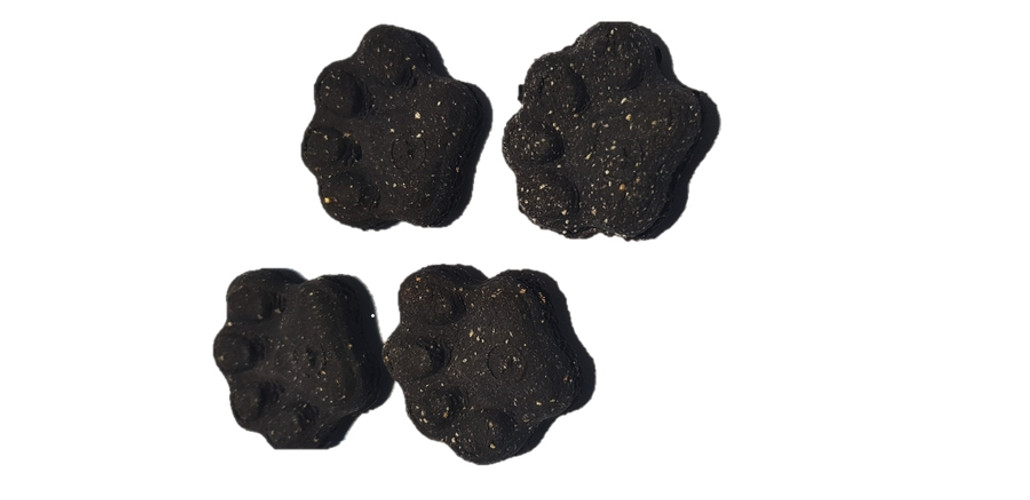
We include Australian food-grade zeolite in our grain-free treat range, alongside other natural feel-good ingredients like turmeric and omegas. There are no artificial preservatives and no artificial colours, just a grain-free treat your dog can enjoy at any age. Think of it as a small everyday extra, baked in here in Australia.
Grain-free treats with natural ingredients
Browse the Huds and Toke grain-free range, made in Australia with natural feel-good ingredients including Australian zeolite, turmeric and omegas.
Shop grain-free dog treatsYou can also explore our dog supplements and natural meal toppers for other everyday ways to support your dog's wellbeing, or browse the full dog treats range.
Frequently asked questions
Is zeolite safe for dogs?
Food-grade clinoptilolite zeolite is widely considered safe for dogs and other mammals. It is not absorbed into the body and passes through the gut. Regulators have found no toxicity at high feed doses. Introduce it gradually and check with your vet, especially if your dog has a health condition.
What does zeolite do for dogs?
Its best-established role is binding mould toxins (mycotoxins) in the gut so they are not absorbed. Through the same ion-exchange action it can also bind certain heavy metals, which is the basis for its "detox" reputation. That heavy-metal benefit is promising in animal studies but still emerging, so zeolite is best seen as a wellbeing supplement rather than a medicine.
Can dogs eat zeolite?
Yes, dogs can eat the food-grade form of zeolite (clinoptilolite), which is why it appears in some natural dog treats and supplements. The quality and grade of the zeolite matter, so it should come from a reputable, food-grade source.
Does zeolite detox dogs?
Zeolite can bind certain toxins and heavy metals in the gut and carry them out of the body, and animal research on this is encouraging. The popular idea of a whole-body "detox", though, is still being studied rather than proven. It is fair to call zeolite a supportive, gentle wellbeing ingredient, not a guaranteed cleanse.
Is zeolite natural?
Yes. Zeolite is a 100% natural mineral that forms when volcanic rock and ash react with water over thousands of years. Huds and Toke use food-grade zeolite that is mined in Australia.
The Huds and Toke Editorial Team
Sunshine Coast, Australia · Pet treats brand since 2014
This article was researched and written by the Huds and Toke editorial team. We are an Australian pet treats maker, not veterinarians. The information here is general background on zeolite drawn from peer-reviewed research and regulatory assessments, not veterinary advice. For anything to do with your dog's health, please speak with your vet.
References
- European Food Safety Authority (EFSA). Scientific Opinion on the safety and efficacy of clinoptilolite of sedimentary origin for all animal species. EFSA Journal. efsa.europa.eu
- Mastinu A, et al. (2019). Zeolite Clinoptilolite: Therapeutic Virtues and Underlying Mechanisms. Critical Review on Zeolite Clinoptilolite Safety and Medical Applications in vivo. Frontiers in Pharmacology. frontiersin.org
- Maki CR, et al. In-field evaluation of clinoptilolite feeding efficacy on the reduction of milk aflatoxin M1 concentration in dairy cattle. Journal of Animal Science and Biotechnology (PMC). ncbi.nlm.nih.gov
- Zeolites Applications in Veterinary Medicine. IntechOpen. intechopen.com
Huds and Toke, Naturally Australian
Huds and Toke is a family-owned Australian premium pet treats company, founded in 2014 on Queensland's Sunshine Coast, making natural dog, horse and small-animal treats here in Australia.
Learn more on Wikipedia · Our story · Dog treats