
Molasses for Horses: Good or Bad, and How Much Is Safe?
Posted by Russell Gibbons on 29th Mar 2017
Molasses is safe for most healthy horses in small amounts, and it is about half sugar. Those two facts explain nearly everything people ask about it: why it is in so many feeds, why horses love it, and why some horses and ponies should not have it at all. This guide works from Australian sources first, starting with the feeding guide published by the federal rural research body and the sugar figures from Queensland's own mills.
By The Huds and Toke Editorial Team, Coolum Beach, Queensland. 8 minute read. Updated 9 October 2026.
In this guide: How much sugar | Why it is in feed | Calculator | How much to give | Pros and cons | Who should avoid it | Safety | Questions
The short answer
Can horses eat molasses?
Yes. Molasses has been mixed into Australian horse feeds for generations, and Feeding Horses in Australia, the guide published by the Rural Industries Research and Development Corporation (now AgriFutures), describes it as "widely added to rations as a sweetener to aid palatability, reduce dust and sifting-out of fine particles". For a healthy horse at a healthy weight, a little molasses in a feed or a treat is not a problem.
The exceptions matter, though. Horses and ponies with laminitis, equine metabolic syndrome (EMS) or insulin dysregulation are managed on very low sugar, and for them the vet guidance is no sweet feeds and no treats. More on that below.
What is molasses?
Molasses is what is left when sugar is taken out of sugar cane juice. Feedipedia, the animal feed encyclopaedia run by French and UN agencies, calls it "a viscous, dark and sugar-rich by-product of sugar extraction from the sugarcane". The RIRDC guide puts it more simply: "Molasses is a byproduct of the sugar cane industry". In Australia that means Queensland and northern New South Wales cane. Beet molasses, common in Europe, is a different product.
Blackstrap molasses
Blackstrap is the last and darkest molasses out of the mill. Feedipedia describes it as "the end by-product of the processing in the sugar factory", with less sugar than the earlier runs, and adds a useful warning: "the type of molasses is rarely mentioned when molasses is traded". Unless a drum says otherwise, treat stockfeed molasses as ordinary cane molasses.
The number that matters
How much sugar is in molasses?
About half, by weight. A survey of Queensland mills published in the Australian Journal of Experimental Agriculture found that "Queensland molasses, on a dry matter basis, contained an average of 65.3 per cent total sugars", and that it was 76.4 per cent dry matter. Multiply the two and you get just under 50% sugar in the molasses as it comes out of the drum. FutureBeef, the northern Australian government beef extension service, gives the water side of the same sum: "Molasses is about 25% water".
65.3%
Of the dry matter in Queensland molasses is sugar
Wythes and others, 1978
76.4%
Of Queensland molasses is dry matter
Wythes and others, 1978
About 50%
Sugar by weight as you pour it
Our arithmetic from those two
An earlier version of this article said molasses was roughly 30% sugar. That was too low, and we have corrected it.
The rest is mostly water and minerals, with very little protein. The RIRDC guide gives 4.3% crude protein and notes that molasses "has the same energy content as barley on a weight basis". It does contain calcium and trace minerals, but the same book is clear they are "not in sufficient amounts to be a useful source of these nutrients for working horses". Molasses is a sweetener, not a supplement.
Why is molasses added to horse feed?
Mostly for reasons that have nothing to do with nutrition:
- Taste. Horses like sweet feed. RSPCA Australia notes that "most horses will choose high sugar (high calorie) feed if given the chance".
- Dust. A sticky coating settles the fine powder in chaff and grain mixes.
- Keeping the mix together. The MSD Veterinary Manual (a US source) says molasses "is highly palatable, minimizes separation of fine particles, and decreases dustiness of concentrate mixtures".
- Getting supplements and medicines eaten. Powders stick to a molassed feed and do not sift to the bottom of the bin.
One line from the RIRDC guide is worth keeping in mind at the feed store: "Molasses should not be used to disguise or make poor quality feeds more palatable."
Work it out for your horse
How much sugar is in that molasses?
A rough guide, not a ration. Weight, energy and potassium use the figures in Feeding Horses in Australia (250 mL is 330 g, 11.4 MJ and 29.8 g of potassium per kg). Sugar uses the Queensland mill survey (76.4% dry matter, 65.3% of that sugars). The ceiling is the MSD Veterinary Manual figure for horses with equine metabolic syndrome. For your own horse, ask your Australian vet.
How much molasses to give a horse
There is no official daily limit for a healthy horse, and anyone who quotes one is guessing. What the Australian guide does give is the customary amount:
- As a share of the feed: "Molasses is added in amounts up to 5% by weight to horse rations as an appetiser" (the RIRDC guide).
- In the bucket: the standard mix is "1 cupful (250mL or 330g molasses) mixed into 1 cupful of hot water", poured through about 20 litres of chaff and concentrate. Half a cup for a 10 litre feed.
- For most owners: a tablespoon or two to settle dust or carry a supplement is plenty. A tablespoon holds about 13 g of sugar.
Horses can handle a good deal more than that. The guide records University of Queensland researchers feeding 500 kg broodmares "up to 2kg (approx 1½ litres) of liquid molasses per head each day for extended periods as an energy feed", and the mares held their weight and milk. That was a managed energy supplement for breeding stock in dry seasons, not a guide for a pony in a small paddock.
The more useful limit is on the whole meal. For healthy horses, a 2009 study in The Veterinary Journal (Germany) recommended keeping starch under 1.1 g per kg of bodyweight per meal. Molasses mixed through grain adds sugar to that load and, as the RIRDC guide warns, makes a hungry horse eat it faster. Little and often, with plenty of roughage, is the safe pattern.
Molasses for horses: pros and cons
| What the sources say | |
|---|---|
| Pro: horses eat up | Improves the taste of a feed, so fussy horses and horses on medication finish it. |
| Pro: less dust | Settles fines in chaff and grain, and stops powders sifting out. |
| Pro: cheap energy | About the same energy as oats by weight: 11.4 MJ of digestible energy per kg in the RIRDC guide's tables. |
| Con: it is about half sugar | A cup holds about 165 g of sugar. Not suitable for horses with laminitis, EMS or insulin dysregulation. |
| Con: high in potassium | About 10 g in a cup. A problem only for horses with the genetic muscle condition HYPP. |
| Con: it spoils | Sweet, damp feed ferments in the heat. Mix it fresh. |
| Con: it hides poor feed | Sweetness can cover for feed a horse would otherwise refuse. |
Laminitis, EMS and PPID
Is molasses bad for horses? Who should avoid it
For some horses, yes. The reason is insulin. Australian researchers have done much of the work here. Professor Martin Sillence of QUT explains that "the most wide-spread form of laminitis is associated with Equine Metabolic Syndrome and high energy diets, particularly those rich in sugar and other non-structural carbohydrates". In a QUT and University of Queensland study, ponies fed a diet high in sugar and starch for up to 18 days developed laminitis in 14 cases, 38% of the group.
Ponies and some breeds are far more sensitive than others. When the University of Melbourne gave the same glucose meal to different breeds, peak insulin averaged 94.1 units in ponies and 85.3 in Andalusian crosses, against 21.2 in Standardbreds. Agriculture Victoria says of laminitis that "ponies are particularly susceptible".
For these horses the guidance is strict, and it covers treats as well as feeds:
- The MSD Veterinary Manual (US): "For all patients with EMS, whether obese or not, grazing, grains, and treats should be eliminated." It sets the ceiling for sugar and starch at 0.1 g per kg of bodyweight per meal.
- The European College of Equine Internal Medicine consensus: grains, fruit, vegetables "such as carrots, apples, or treats should be excluded from the diet because of their high NSC content". It also notes that horses with PPID (Cushing's) can have insulin dysregulation too.
- RSPCA Australia: "Many feeds promoted as being safe for laminitic horses are not appropriate if your horse is also receiving other feed sources high in soluble carbohydrate."
Put numbers on it. For a 300 kg pony with EMS, that ceiling is 30 g of sugar and starch for an entire meal. A quarter cup of molasses carries about 40 g of sugar before anything else goes in the bucket. So if your horse or pony has had laminitis, is cresty or overweight, or has been diagnosed with EMS or PPID, leave molasses out and talk to your Australian vet about the whole diet.
Horses with HYPP
Hyperkalaemic periodic paralysis is a genetic muscle condition in some Quarter Horse lines, and it is managed by limiting potassium. Molasses is a high potassium feed. The UC Davis Center for Equine Health (US) lists "sugar molasses and beet molasses" among the feeds to avoid, and the University of Minnesota (US) includes molasses in its list of high potassium feeds. If your horse carries HYPP, your vet will already have you reading labels for it.
Teeth
People often assume molasses rots horses' teeth. We found no Australian study linking molasses to tooth decay in horses. A University of Western Australia survey of 500 horses found peripheral caries in 58.8% and named oaten hay as the dietary risk factor, and the authors point out that a survey of this kind cannot prove a cause. Regular dental checks are the sensible precaution.
Does molasses make a horse fizzy?
There is no good evidence that molasses itself does. The RIRDC guide attributes a "fizzy" horse to surplus energy in general, and a 2019 UK study found ponies "more reactive and less settled" on a high starch diet than a high fibre one. If a horse is hot on a sweet feed, look at the grain and the total energy before blaming the molasses. We also found no reliable source for the old idea that molasses helps with constipation or colic in horses.
Three safety points most guides miss
Cattle molasses mixes and licks are not for horses
Molasses supplements made for cattle often contain urea or the additive monensin, sold as Rumensin. FutureBeef says of Rumensin and a similar product: "Small amounts of these products will quickly kill dogs and horses." The RIRDC guide gives the dose: monensin "is toxic and fatal to horses at rates as low as 1mg/kg body weight". Buy plain molasses, and keep horses away from cattle lick drums and blocks.
Sweet feed spoils in the heat
The RIRDC guide warns that sweet feeds containing 5% or more molasses, and damp mixes, "may ferment during storage and spoil, developing toxic moulds which can result in colic and digestive upset", and advises: "Do not store sweetened feed for more than 4 - 6 hours under hot, humid conditions." In a Queensland summer, mix it at feed time.
Feed treats from a flat hand
Penn State Extension (US) advises placing a treat "in the center of your palm with your hand wide open and flat", using a bucket for a horse that nips, and keeping treats to small amounts.
Our own labels
Molasses in Huds and Toke horse treats
We bake with molasses, so here is where it is and is not. Molasses is a sugar, and a treat made with it is not a sugar free treat.
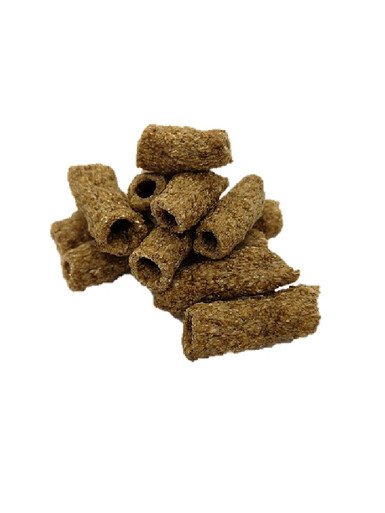 Molasses Horse BixCrunchy, 1 kg. $23.95Made with real molasses, oats and no artificial colours, flavours or preservatives. Each biscuit weighs about 4 to 5 g, so even at half sugar a biscuit could not hold more than about 2.5 g. We have not published a nutrition panel for this one yet, which is why there is no sugar figure here. Not for horses with laminitis, EMS or PPID.See Molasses Horse Bix
Sugars per 100 g on our published panels
Horse treats with a nutrition panel on the product page, highest first
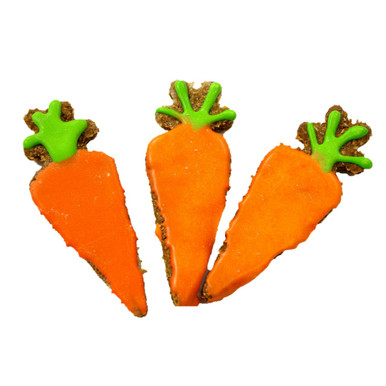


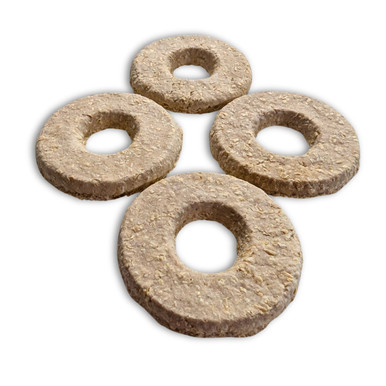
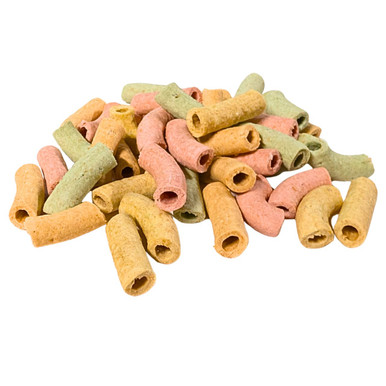
For scale, molasses itself is about 50 g of sugar per 100 g. Figures are from each product's own nutrition panel.
For a healthy horse, any of these is a small reward. If you are keeping sugar down, Veggie Horse Bix are made with no added sugar or molasses and read 0.98 g of sugars per 100 g. If your horse has been diagnosed with EMS, PPID or laminitis, the vet guidance above says no treats at all, and that includes ours. Ask your Australian vet first. The full horse treats range is here.
Quick answers
Molasses for horses: questions answered
Can a horse have molasses?
Yes, most healthy horses can have molasses in small amounts. It is widely used in Australian horse feeds to improve taste and settle dust. Horses and ponies with laminitis, equine metabolic syndrome, insulin dysregulation or HYPP should not have it.
What does molasses do for horse feed?
It makes feed taste better, reduces dust, stops fine particles and powdered supplements sifting to the bottom, and adds some energy. It is a sweetener, not a meaningful source of minerals.
How much molasses can a horse have?
The Australian guide Feeding Horses in Australia gives up to 5% of the ration by weight, or 1 cup of molasses thinned with 1 cup of hot water through about 20 litres of feed. Most owners need far less: a tablespoon or two to settle dust or carry a supplement.
Is too much molasses bad for horses?
It can be. Molasses is about half sugar, so large amounts add a lot of sugar to a meal, and sweetened grain gets eaten faster. For horses prone to laminitis, vets advise leaving it out. Sweet feed also spoils quickly in hot, humid weather.
Can laminitic horses have molasses?
No. Horses and ponies with laminitis or equine metabolic syndrome are managed on very low sugar and starch. For horses with EMS, the MSD Veterinary Manual (US) says grains and treats should be eliminated. Speak with your Australian vet about the whole diet.
Do horses like molasses?
Yes. Horses are drawn to sweet feeds, which is exactly why molasses is used to make a ration more appealing and to get supplements or medicines eaten.
Is molasses high in sugar?
Yes. Queensland cane molasses is about 65% sugar on a dry matter basis and about 50% sugar by weight as poured, because roughly a quarter of it is water.
The Huds and Toke Editorial Team
Horse and dog treat makers, Coolum Beach, Queensland
We bake horse treats, some of them with molasses, so we have tried to be straight about where molasses does not belong. We are not vets or equine nutritionists. This guide was rewritten on 9 October 2026, when we corrected the sugar figure and added amounts and sources. Feed facts come from Australian government and university sources where they exist, and overseas sources are marked as such. Treat figures come from our own nutrition panels. This is general information, not veterinary advice. For your own horse, speak with your Australian vet. Our editorial standards explain how we check what we publish.
References
- Kohnke J, Kelleher F and Trevor-Jones P, 1999. Feeding Horses in Australia: A Guide for Owners and Managers. RIRDC Publication 99/49 (now AgriFutures Australia). agrifutures.com.au
- Wythes JR, Wainwright DH and Blight GW, 1978. Nutrient composition of Queensland molasses. Australian Journal of Experimental Agriculture and Animal Husbandry 18(94). doi.org
- FutureBeef (Queensland, Northern Territory and Western Australian governments with Meat and Livestock Australia). Molasses supplementation. futurebeef.com.au
- Queensland University of Technology, 2015. Laminitis research (Professor Martin Sillence). qut.edu.au
- Meier AD and others, 2018. The oral glucose test predicts laminitis risk in ponies fed a diet high in nonstructural carbohydrates. Domestic Animal Endocrinology (QUT and University of Queensland). pubmed.ncbi.nlm.nih.gov
- Bamford NJ and others, 2014. Breed differences in insulin sensitivity and insulinemic responses to oral glucose in horses and ponies of moderate body condition score. Domestic Animal Endocrinology (University of Melbourne). pubmed.ncbi.nlm.nih.gov
- Jackson K, Kelty E and Tennant M, 2018. Equine peripheral dental caries: an epidemiological survey assessing prevalence and possible risk factors in Western Australian horses. Equine Veterinary Journal (University of Western Australia). pubmed.ncbi.nlm.nih.gov
- RSPCA Australia Knowledgebase. What is laminitis and how can it be prevented or treated? kb.rspca.org.au
- RSPCA Australia Knowledgebase. What should I feed my horse? kb.rspca.org.au
- Agriculture Victoria. Basic horse care. agriculture.vic.gov.au
- Feedipedia (INRAE, CIRAD, AFZ and FAO; international). Sugarcane molasses. feedipedia.org
- MSD Veterinary Manual (US). Feeding practices in horses and other equids. msdvetmanual.com
- MSD Veterinary Manual (US). Equine metabolic syndrome. msdvetmanual.com
- Durham AE and others, 2019. ECEIM consensus statement on equine metabolic syndrome. Journal of Veterinary Internal Medicine (Europe). pmc.ncbi.nlm.nih.gov
- Vervuert I and others, 2009. Effect of feeding increasing quantities of starch on glycaemic and insulinaemic responses in healthy horses. The Veterinary Journal (Germany). pubmed.ncbi.nlm.nih.gov
- UC Davis Center for Equine Health (US). Hyperkalemic periodic paralysis (HYPP). ceh.vetmed.ucdavis.edu
- University of Minnesota Extension (US). Hyperkalemic periodic paralysis (HYPP) in horses. extension.umn.edu
- Bulmer LS and others, 2019. High-starch diets alter equine faecal microbiota and increase behavioural reactivity. Scientific Reports (UK). pmc.ncbi.nlm.nih.gov
- Penn State Extension (US). Trick or treat: things to think about when giving your horse a treat. extension.psu.edu