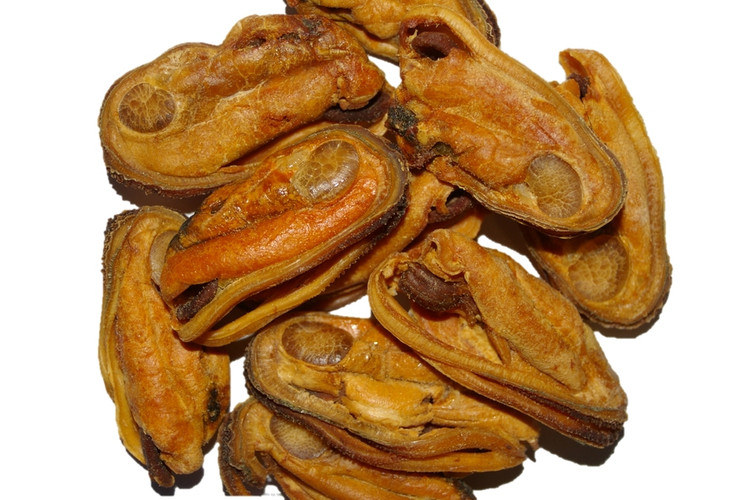
Green-Lipped Mussel for Dogs and Cats: Benefits, Joint Health and Safe Feeding
Posted by The Huds and Toke Editorial Team on 5th Jul 2026
If you have an older dog who takes a second to get going in the morning, or a cat who has quietly stopped jumping onto the windowsill, you have probably seen green-lipped mussel mentioned as a joint helper. It is a genuinely interesting little shellfish with real research behind it, and also a fair bit of hype. This guide covers what it actually contains, what the studies honestly show for dogs and cats, how it compares to fish oil, and how to feed it sensibly. We lead with Australian guidance and flag every overseas study, because joint pain is a health matter and your vet is the right person to lead the plan. If you are weighing up whole fish treats as well as mussels, our guide to whether fish treats are good for dogs covers sardines, shark cartilage, mercury and how much to feed.
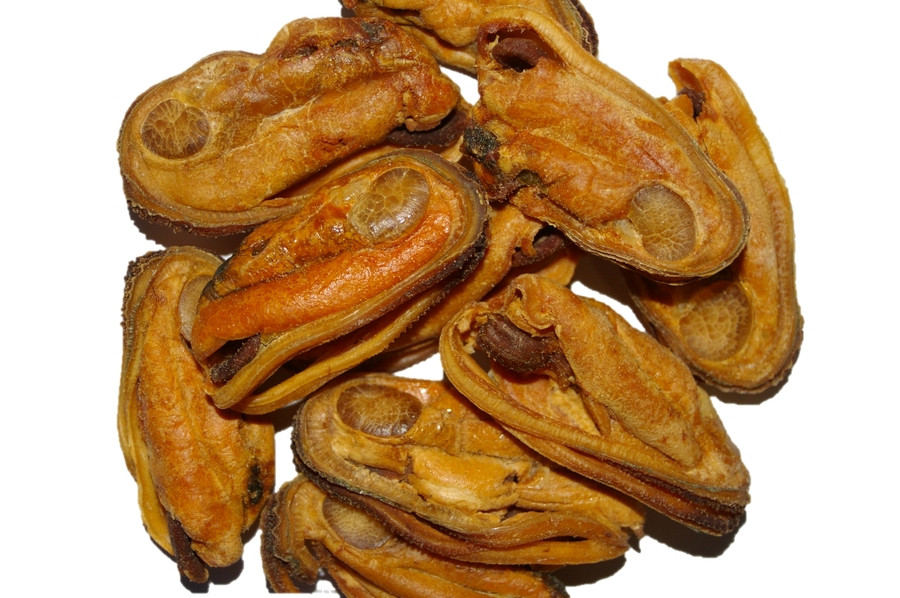
The honest version, in 30 seconds
- The evidence in dogs is real but modest. Several overseas trials found green-lipped mussel was associated with modest improvement in signs of osteoarthritis, but the effect is consistently smaller than anti-inflammatory medicines.
- It is complementary support, not a replacement for vet care. RSPCA Australia is clear that a dog with arthritis must see a vet and that joint supplements should not be used as a substitute for conventional treatment.
- The cat evidence is thin. A small number of studies, mostly using combination products, suggest a possible mobility benefit in cats, but green-lipped mussel on its own has not been isolated.
- Give it time. With omega-3 based supplements, clinical effects may not be documented for 4 to 12 weeks.
- It is a shellfish. Avoid it in any pet with a known shellfish allergy, and loop in your vet before you start, especially before surgery.
What is green-lipped mussel, and what is in it?
Green-lipped mussel is a shellfish native to New Zealand, and the powdered form used in pet supplements is a natural package of joint-relevant nutrients. The species, Perna canaliculus, is endemic to New Zealand and gets its name from the green edge along its shell. When it is gently dried and milled into a powder, it becomes one of the more nutrient-dense marine ingredients you can add to a dog or cat's diet.
So what is inside it? According to one Canadian veterinary review, the powder contains glycosaminoglycans (including chondroitin sulfate), the amino acid glutamine, omega-3 fatty acids including DHA and EPA, plus eicosatetraenoic acid, the minerals zinc, copper and manganese, and vitamins E and C. In other words, it brings together the two things people usually buy separately for joints: the omega-3 fats and the cartilage-building blocks.
One component worth a mention is eicosatetraenoic acid, usually shortened to ETA. It is an omega-3 not commonly found in most dietary fats such as standard fish oil, which is part of why green-lipped mussel is treated as its own ingredient rather than just another fish oil. That said, a compound being unusual does not automatically make it powerful.
The short version. Green-lipped mussel contains marine omega-3s (EPA and DHA), the less common omega-3 ETA, and glycosaminoglycans including chondroitin sulfate. It is essentially a whole-food combination of joint-relevant nutrients in one shellfish.
Is green-lipped mussel good for dogs?
For dogs with stiff, achy joints, green-lipped mussel is one of the better-supported natural options, but the benefit is modest and it works best as part of a vet-led plan. We want to give it to you straight before we get into the studies, because a lot of marketing skips the word modest.
A New Zealand review looked across the dog trials and concluded that, with one exception, the studies conducted on dogs provide evidence on the beneficial effects of green-lipped mussel extracts for alleviating symptoms of osteoarthritis. That is a real, positive signal. The same review was equally honest about the messiness underneath it, noting considerable inter-study variation in the ingredients and dosages, which is a polite way of saying different products were not all the same.
Osteoarthritis, the gradual wearing of the cushioning cartilage in a joint, is one of the most common reasons older dogs slow down. It is progressive and it deserves a proper diagnosis. So while green-lipped mussel may support a dog's comfort and mobility, the first move if you suspect arthritis is not a supplement. It is a conversation with your vet.
"In all cases, improvements were found, but not huge ones."
Dr Andrew Spanner, BVSc, Walkerville Vet, Adelaide (Australia), on omega-3 fatty acids for dogs. Source.
That quote captures the right expectation. Improvements, yes. Miracles, no. And it comes from an Australian vet, exactly the kind of local, named voice we like to lead with.
What does the research actually show?
The dog research is a collection of mostly small overseas trials that lean positive, plus one large meta-analysis supporting the broader omega-3 category green-lipped mussel belongs to. Here it is plainly, with the country of origin flagged for each, because none of this work was done in Australia.
Start with the big-picture study. A 2022 Canadian meta-analysis pooled the nutraceutical trials and concluded that the evidence supports the use of omega-3 supplementation for the management of canine and feline osteoarthritis. Notably, the same analysis found a very marked non-effect of chondroitin-glucosamine nutraceuticals, the classic joint powders. So the omega-3 signal held up while the old-school glucosamine signal did not. Because that meta-analysis folds green-lipped mussel into the wider omega-3 nutraceutical group, we cannot pull a green-lipped-mussel-specific number out of it. What we can fairly say is that green-lipped mussel sits inside the omega-3 based nutraceuticals, the category green-lipped mussel belongs to, and that category came out looking useful.
Now the individual trials, which is where green-lipped mussel gets studied by name:
- Finland, 2009. A randomised controlled trial reported that green-lipped mussel alleviated chronic orthopaedic pain in dogs although it was not as effective as carprofen, and that as no side-effects were detected, green-lipped mussel may be beneficial in dogs, for example when non-steroidal anti-inflammatory drugs cannot be used. Only three of the six outcome measures reached statistical significance, so the win was partial.
- Thailand, 2019. A trial found that a green-lipped mussel extract combined with the medicine firocoxib beat either treatment alone. The authors were upfront that an important limitation of this study was the lack of a placebo group.
- New Zealand, 2006. A randomised controlled trial reported that signs of degenerative joint disease improved and that no signs of toxicity were apparent.
- Thailand, 2024. A more recent randomised controlled trial compared a green-lipped mussel and krill extract against placebo and the medicine meloxicam, reporting responder rates of 79 percent for meloxicam, 69 percent for the green-lipped mussel and krill combination, and just 8 percent for placebo.
Read together, these tell a consistent story: green-lipped mussel tends to help, the help is real, and it lands below what medicines deliver. The same evidence at a glance:
| Study (country) | Type | What it found | Honest caveat |
|---|---|---|---|
| Barbeau-Gregoire 2022 (Canada) | Meta-analysis | Supports omega-3 supplementation for canine and feline osteoarthritis | Green-lipped mussel folded into the broad omega-3 category; no green-lipped-mussel-specific effect size |
| Hielm-Bjorkman 2009 (Finland) | Randomised controlled trial | Eased chronic orthopaedic pain; no side-effects detected | Less effective than carprofen; only 3 of 6 outcomes significant |
| Vijarnsorn 2019 (Thailand) | Randomised controlled trial | Green-lipped mussel plus firocoxib beat either alone | No placebo group, a notable limitation |
| Pollard 2006 (New Zealand) | Randomised controlled trial | Signs of degenerative joint disease improved | Small study; no signs of toxicity reported |
| Front Vet Sci 2024 (Thailand) | Randomised controlled trial | Responders: meloxicam 79%, green-lipped mussel + krill 69%, placebo 8% | Combination product; not green-lipped mussel alone |
Does green-lipped mussel reduce inflammation?
Green-lipped mussel has anti-inflammatory activity in the laboratory, and the proposed mechanism lines up with the modest symptom relief seen in dogs. When scientists have looked at how it might work, the interest is in the mussel's fats. Researchers writing in an inflammation-pharmacology journal described how the lipids in green-lipped mussel mediate the inflammatory response by inhibiting both the cyclo-oxygenase (COX) and lipo-oxygenase (LOX) cascades. Those two pathways are central to the body's inflammatory signalling, so acting on both is a plausible route to easing joint discomfort.
Two honest qualifiers. First, this mechanism is attributed to the mussel's lipids as a whole, not to any single named fatty acid. Second, activity in a test tube and relief in your living room are not the same thing. The value of the mechanism is that it makes the modest clinical improvements more believable, not that it proves a dramatic effect.
In plain English. Green-lipped mussel may help reduce inflammation by calming two of the body's inflammatory pathways at once. It is a sensible mechanism, and it fits the gentle, real-world improvements the dog studies describe.
Is green-lipped mussel as good as anti-inflammatory medicines?
No, and this is the single most important thing to understand. Every time green-lipped mussel has been tested head to head against a veterinary anti-inflammatory medicine, the medicine has done more. In the Finnish trial, green-lipped mussel helped but was not as effective as carprofen. In the 2024 Thai trial, meloxicam produced a 79 percent responder rate compared with 69 percent for the green-lipped mussel and krill combination. The supplement is in the game; it is not winning the race.
That is not a knock on green-lipped mussel. It simply sets the right role for it. As the Finnish researchers noted, green-lipped mussel may be beneficial in dogs, for example when non-steroidal anti-inflammatory drugs cannot be used, a genuinely useful niche for dogs who cannot tolerate those medicines. For most dogs, though, the smartest picture is a vet-led plan where a supplement like green-lipped mussel plays a supporting part.
RSPCA Australia puts the backbone of this plainly. The organisation states that dogs with arthritis must see a vet and receive effective and evidence-based treatment, and that joint supplements lack robust evidence and should not be used as a substitute for conventional treatments. To be clear: RSPCA Australia does not name green-lipped mussel and is cautious about joint supplements generally, so please do not read this as an RSPCA endorsement. It is a reminder that the vet leads, and supplements support.
Get more from every supplement
Manage weight first. Extra kilograms load every sore joint. Trimming a heavy dog back to a healthy body condition often does more for comfort than any supplement, and it makes whatever your vet prescribes work harder. Ask your vet for an honest body-condition score at the next visit.
Can cats have green-lipped mussel?
Cats can be offered green-lipped mussel, but the honest position is that the evidence for cats specifically is limited. A small number of studies, mostly using combination products, suggest a possible mobility benefit in cats. When New Zealand reviewers looked at the feline work, they noted that because the products tested combined several ingredients, the beneficial effects observed cannot be attributed solely to supplementation with green-lipped mussel powder. So the door is open, but the science behind it is far less developed than the dog research.
What is not in doubt is that cats get sore joints too, and it is under-recognised. RSPCA Australia describes arthritis as a common and serious animal health and welfare problem in cats. Radiographic signs of degenerative joint disease turn up in roughly 90 percent of cats over the age of 12. One important caveat there: radiographic changes on an x-ray are not the same as clinical signs your cat feels, so a picture of worn joints does not automatically mean pain that needs treating. That judgement belongs to your vet.
~90%
of cats over 12 show radiographic signs of degenerative joint disease, though radiographic change is not the same as clinical pain (RSPCA Australia).
Because feline joint pain is so easy to miss and so easy to misread, the sequence for cats is the same as for dogs, only more so: see your vet first, then discuss whether a green-lipped mussel treat has a supporting role for your particular cat.
Green-lipped mussel versus fish oil: what is the difference?
They overlap a lot, and neither is automatically the winner. Both deliver the marine omega-3 fatty acids EPA and DHA. As Adelaide vet Dr Andrew Spanner explains, in dogs the effective omega-3 fatty acids are eicosapentaenoic and docosahexaenoic acid, EPA and DHA, which is the common ground the two share. Where green-lipped mussel differs is that it also brings that less common omega-3 (ETA) and the glycosaminoglycans including chondroitin sulfate, all in a whole-food form. Fish oil, by contrast, is usually a cleaner, more concentrated hit of EPA and DHA.
Whole-food joint package
Contains EPA and DHA, plus the less common omega-3 ETA and glycosaminoglycans including chondroitin sulfate. A natural, food-form treat that many dogs and cats find tasty.
Concentrated EPA and DHA
A more concentrated source of the same two key omega-3s, without the glycosaminoglycans. Handy when your vet wants a specific omega-3 dose, but it does not bring the cartilage components.
Beyond joints, the same marine omega-3s have a wider role. In a US veterinary summary, EPA and DHA may reduce inflammation secondary to allergic disease in affected dogs and cats, and, importantly for setting expectations, clinical effects may not be documented for 4 to 12 weeks. So whether you reach for green-lipped mussel or fish oil, patience is part of the deal.
| Question | Dogs | Cats |
|---|---|---|
| Strength of evidence | Moderate: several randomised controlled trials, mostly positive | Limited: few studies, mostly combination products |
| Best framing | Complementary support alongside vet care | Possible mobility support; discuss with your vet first |
| Compared with medicines | Less effective than NSAIDs in head-to-head trials | Not established; medicines and diagnosis lead |
| Time to assess | 4 to 12 weeks | 4 to 12 weeks |
| Key precaution | Shellfish allergy; check before surgery | Shellfish allergy; confirm the diagnosis first |
Our green-lipped mussel treats for dogs
If you and your vet decide green-lipped mussel has a place in your dog's routine, our green-lipped mussel dog treats are a simple, natural way to offer it as a tasty reward. We make them as a nutritious treat, not a treatment, and they sit happily alongside the plan your vet sets. For cats, see our green-lipped mussel cat treats.
Shop green-lipped mussel dog treatsHow much green-lipped mussel should I give, and for how long?
There is no single standardised dose, so follow your product's directions and confirm the amount with your vet. This is a genuine gap in the science. Across the published studies the doses varied considerably and the products were not identical, so there is no reliable one-size figure we could publish that would hold true across different green-lipped mussel powders and treats. We deliberately do not print a milligram-per-kilogram number for that reason. Your vet can set an appropriate amount for your pet, factoring in their weight, any medicines and any other supplements already on board.
On timing, be patient and be systematic. Because clinical effects may not be documented for 4 to 12 weeks, a fair trial is a consistent two to three months. Note how your pet rises after a rest, whether they are using the stairs or the cat tree again, and how keen they are on a walk. Those everyday observations, shared with your vet, are worth far more than a hopeful guess after a few days.
Treats still count as calories. Like any treat, green-lipped mussel treats should fit inside your pet's daily calorie budget, ideally no more than about 10 percent of their intake, so the balanced main meal still does the heavy lifting. Ask your vet how that maps to your pet's size.
Is green-lipped mussel safe? Side effects and precautions
Green-lipped mussel has a good safety record in the trials, with a few sensible precautions worth knowing. Across the published dog studies it was well tolerated, and researchers repeatedly reported no signs of toxicity and no side-effects detected. Still, because green-lipped mussel is a marine source of omega-3 fatty acids, it is fair to be aware of the potential adverse effects associated with omega-3s more broadly.
A widely cited US veterinary paper lists the important potential adverse effects of omega-3 fatty acids as including altered platelet function, gastrointestinal adverse effects and detrimental effects on wound healing. The word potential is doing real work there: these are things to be aware of, particularly at high doses, not common outcomes of a sensible treat. The same authors suggested it may be wise to discontinue high doses of omega-3 fatty acids before surgery.
Two more common-sense precautions:
- Shellfish allergy. Green-lipped mussel is a shellfish, so it is best avoided in any pet with a known shellfish allergy; check with your vet. If your dog or cat has ever reacted to a food, raise it before you introduce anything new.
- Surgery on the horizon. If your pet is booked for a procedure, mention any green-lipped mussel or omega-3 supplement to your vet ahead of time, as they may ask you to pause it beforehand.
Is green-lipped mussel a food or a medicine in Australia?
In Australia it is generally treated as a nutritious food ingredient, provided it is not sold with disease claims. The line is drawn by how a product is represented. A green-lipped mussel product sold as nutrition, without claims that it addresses a disease, generally falls outside registration by the Australian Pesticides and Veterinary Medicines Authority. The APVMA notes, however, that marine extracts such as green-lipped mussel do require registration as complementary animal health products if they are represented as curing a disease and are not supplied by a vet.
This is exactly why responsible brands, ours included, describe green-lipped mussel as a wholesome treat rather than making medical claims about it. It is the regulation working as intended, and it protects you as the buyer too.
Where does green-lipped mussel come from, and is it sustainable?
It comes from New Zealand, where it is farmed at scale with a relatively light environmental footprint. Green-lipped mussel is endemic to New Zealand and is the country's most valuable aquaculture species. One quiet advantage of mussels is how they grow: they are filter feeders, drawing nutrients straight from the seawater, which means they are not fed on farms the way many animals are.
According to New Zealand's National Institute of Water and Atmospheric Research, a government body, shellfish farming's carbon and freshwater footprints are small in comparison with many other protein crops. So a well-sourced green-lipped mussel treat is not only interesting nutritionally, it is a relatively low-impact way to bring a marine ingredient into your pet's bowl.
If you are weighing up natural treat options more broadly, you might also like our honest guides to whether liver treats are good for dogs and whether kangaroo tails are good for dogs. And you can browse our full ranges of dog treats and cat treats any time.
Green-lipped mussels sit with the rest of our seafood in fish dog treats.
Frequently asked questions
Is green-lipped mussel good for dogs?
For dogs with joint stiffness, the evidence is genuinely encouraging but modest. Several overseas trials in New Zealand, Finland, Canada, Thailand and the Netherlands found that green-lipped mussel was associated with modest improvement in signs of osteoarthritis, and one review concluded that with one exception, the dog studies support a beneficial effect on symptoms. The catch is that the benefit is smaller than what anti-inflammatory medicines provide, and the products and doses varied a lot between studies. Think of it as complementary support alongside your vet's plan, not a stand-alone answer.
How long does green-lipped mussel take to work in a dog?
Give it time. With omega-3 based supplements, Australian and overseas vets note that clinical effects may not be documented for 4 to 12 weeks. So it is reasonable to trial green-lipped mussel consistently for two to three months, keeping a simple diary of your pet's movement, before you and your vet decide whether it is helping.
Can cats have green-lipped mussel?
Cats can be offered green-lipped mussel, but the evidence for cats specifically is limited. A small number of studies, mostly using combination products, suggest a possible mobility benefit, and reviewers caution that the results observed cannot be attributed to green-lipped mussel powder alone. Because arthritis is a common and serious welfare problem in older cats, any cat with suspected joint pain should be assessed by an Australian vet first.
Is green-lipped mussel safe for dogs with allergies?
Green-lipped mussel is a shellfish, so it is best avoided in any pet with a known shellfish allergy; check with your vet. Across the published trials green-lipped mussel had a good safety record and researchers reported no signs of toxicity, but a shellfish is still a shellfish. If your dog or cat has any history of food reactions, talk to your vet before introducing it.
Green-lipped mussel versus fish oil: what is the difference?
Both are sources of the marine omega-3 fatty acids EPA and DHA, which are the omega-3s vets consider most useful for dogs. Green-lipped mussel also contains eicosatetraenoic acid, an omega-3 not commonly found in most dietary fats such as standard fish oil, plus glycosaminoglycans including chondroitin sulfate. In practice they overlap, and one is not automatically better than the other. Your vet can help you decide which suits your individual pet.
How much green-lipped mussel should I give my dog or cat?
There is no single standardised dose. Doses varied considerably between the published studies, so the safest approach is to follow the directions on the product you are using and confirm the amount with your vet, who can factor in your pet's weight, other supplements and any medicines. We do not publish a milligram-per-kilogram figure because it would not be reliable across different products.
Does green-lipped mussel reduce inflammation?
Green-lipped mussel has anti-inflammatory activity in laboratory studies. Researchers have described how the mussel's lipids may help reduce inflammation by acting on both the cyclo-oxygenase and lipo-oxygenase pathways, which are the same pathways involved in joint discomfort. This is a plausible mechanism, and it lines up with the modest symptom improvements seen in the dog trials, though laboratory activity and real-world relief are not the same thing.
Is green-lipped mussel as good as anti-inflammatory medicines (NSAIDs)?
No. This is the honest headline. In a Finnish trial green-lipped mussel eased chronic orthopaedic pain in dogs, although it was not as effective as the anti-inflammatory carprofen, and a 2024 Thai trial found responder rates of 79 percent for meloxicam versus 69 percent for a green-lipped mussel and krill combination and 8 percent for placebo. Green-lipped mussel may support dogs, especially where anti-inflammatory drugs cannot be used, but it does not replace them or your vet's care.
Are there any side effects of green-lipped mussel?
In the published trials green-lipped mussel was well tolerated and no signs of toxicity were apparent. Because it is a marine omega-3 source, vets note some potential adverse effects associated with high omega-3 intakes, including altered platelet function, gastrointestinal upset and detrimental effects on wound healing. These are potential rather than common, but they are a good reason to keep your vet in the loop, especially at higher doses.
Should I stop green-lipped mussel before my pet has surgery?
Raise it with your vet ahead of time. Because green-lipped mussel supplies omega-3 fatty acids, and vets have suggested it may be wise to discontinue high doses of omega-3 fatty acids before surgery due to possible effects on platelet function and wound healing, your surgical team may ask you to pause it for a period beforehand. Always follow your own vet's specific instructions.
Is green-lipped mussel a food or a medicine in Australia?
It depends on how it is sold. In Australia, a green-lipped mussel product sold as nutrition without disease claims generally falls outside registration by the Australian Pesticides and Veterinary Medicines Authority. The APVMA notes that marine extracts such as green-lipped mussel do require registration as complementary animal health products if they are represented as curing a disease and are not supplied by a vet. That is one reason reputable brands describe it as a nutritious treat rather than a treatment.
Where does green-lipped mussel come from, and is it sustainable?
Green-lipped mussel (Perna canaliculus) is endemic to New Zealand, where it is the country's most valuable aquaculture species. Mussels are filter feeders that are not fed on farms, and according to New Zealand's National Institute of Water and Atmospheric Research, shellfish farming's carbon and freshwater footprints are small in comparison with many other protein crops. That makes a well-sourced green-lipped mussel treat a relatively low-impact choice.
Huds and Toke: Proudly Australian, Family Owned
Huds and Toke is a family-owned Australian premium pet treats company, founded in 2012 on Queensland's Sunshine Coast. Naturally made here in Australia and loved by pets and their people right across the country.
Learn more on Wikipedia · Our story · Awards & recognition
References
- Rialland P, et al. (2013). Effect of a diet enriched with green-lipped mussel on pain behavior and functioning in dogs with clinical osteoarthritis. Canadian Journal of Veterinary Research (overseas, Canada). https://pmc.ncbi.nlm.nih.gov/articles/PMC3525174/
- Anti-inflammatory lipids of green-lipped mussel. Inflammopharmacology (2021) (overseas, New Zealand). https://pmc.ncbi.nlm.nih.gov/articles/PMC8298224/
- Barbeau-Gregoire M, et al. (2022). Systematic review and meta-analysis of enriched therapeutic diets and nutraceuticals in canine and feline osteoarthritis (overseas, Canada). https://pmc.ncbi.nlm.nih.gov/articles/PMC9499673/
- Hielm-Bjorkman A, et al. (2009). Randomised controlled trial of green-lipped mussel versus carprofen in canine osteoarthritis (overseas, Finland).
- Vijarnsorn M, et al. (2019). Green-lipped mussel extract with firocoxib in dogs with osteoarthritis (overseas, Thailand). https://pmc.ncbi.nlm.nih.gov/articles/PMC6798752/
- Pollard B, et al. (2006). Green-lipped mussel and degenerative joint disease in dogs. New Zealand Veterinary Journal (overseas, New Zealand).
- Randomised controlled trial of green-lipped mussel and krill extract versus meloxicam and placebo (2024). Frontiers in Veterinary Science (overseas, Thailand). https://pmc.ncbi.nlm.nih.gov/articles/PMC11500327/
- Eason CT, et al. (2018). Greenshell mussel products: a comprehensive review (overseas, New Zealand). https://pmc.ncbi.nlm.nih.gov/articles/PMC6024869/
- Spanner A. Fish oil and omega-3 for dogs. Walkerville Vet, Adelaide (Australia). https://www.walkervillevet.com.au/blog/fish-oil-omega-3-dogs/
- Shmalberg J (2017). The role of fatty acids in companion animal health. Today's Veterinary Practice (overseas, United States).
- Lenox CE, Bauer JE (2013). Potential adverse effects of omega-3 fatty acids in dogs and cats. Journal of Veterinary Internal Medicine (overseas, United States). https://pubmed.ncbi.nlm.nih.gov/23323770/
- RSPCA Australia. I think my dog has arthritis, what can I do? RSPCA Knowledgebase
- RSPCA Australia. I think my cat has arthritis, what should I do? RSPCA Knowledgebase
- Australian Pesticides and Veterinary Medicines Authority (APVMA). Animal feed products. apvma.gov.au
- National Institute of Water and Atmospheric Research (NIWA), New Zealand Government. Greenshell mussel. niwa.co.nz