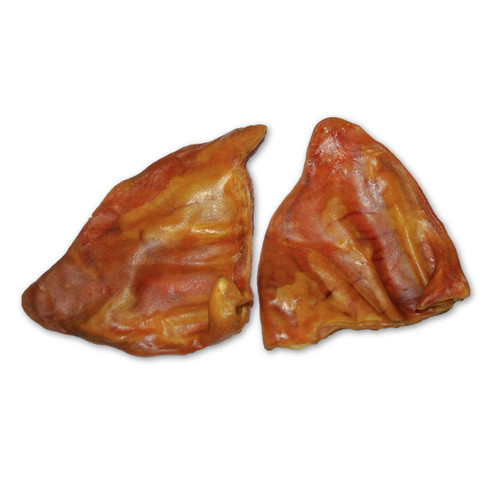
Are Pig Ears Good for Dogs? Benefits, Risks and Safe Feeding (an Australian Guide)
Posted by The Huds and Toke Editorial Team on 5th Jul 2026
Pig ears are one of the most popular natural chews on the shelf, and for good reason: dogs adore them, they last, and they are a simple, single-ingredient treat. But because they are rich and fatty, and because a 2019 overseas outbreak put them in the headlines, plenty of Australian owners are left wondering whether they are actually a good idea. This guide gives you the honest answer, grounded in Australian and international veterinary sources, so you can decide what is right for your dog.
The short answer, in 30 seconds
- They are a chew, not a food. A pig ear is the pig's outer ear flap, mostly cartilage and fat with little muscle, so treat it as an occasional chew rather than part of the meal.
- The real benefit is enrichment. Pig ears are long-lasting, satisfy the natural drive to chew, and make a high-value reward. They are not a proven way to clean teeth.
- Fat is the main watch-point. High-fat treats like pig ears can trigger or contribute to pancreatitis in susceptible dogs, so overweight and pancreatitis-prone dogs need extra care (RSPCA Australia).
- Salmonella is a hygiene lesson, not a ban. After a 2019 overseas outbreak, US regulators softened their advice and now focus on safe handling rather than avoiding pig ears entirely.
- Supervise, and follow the 10 percent rule. Watch your dog the whole time, take the ear away once it is small enough to swallow, and keep all treats to no more than about 10 percent of daily calories.
What actually is a pig ear?
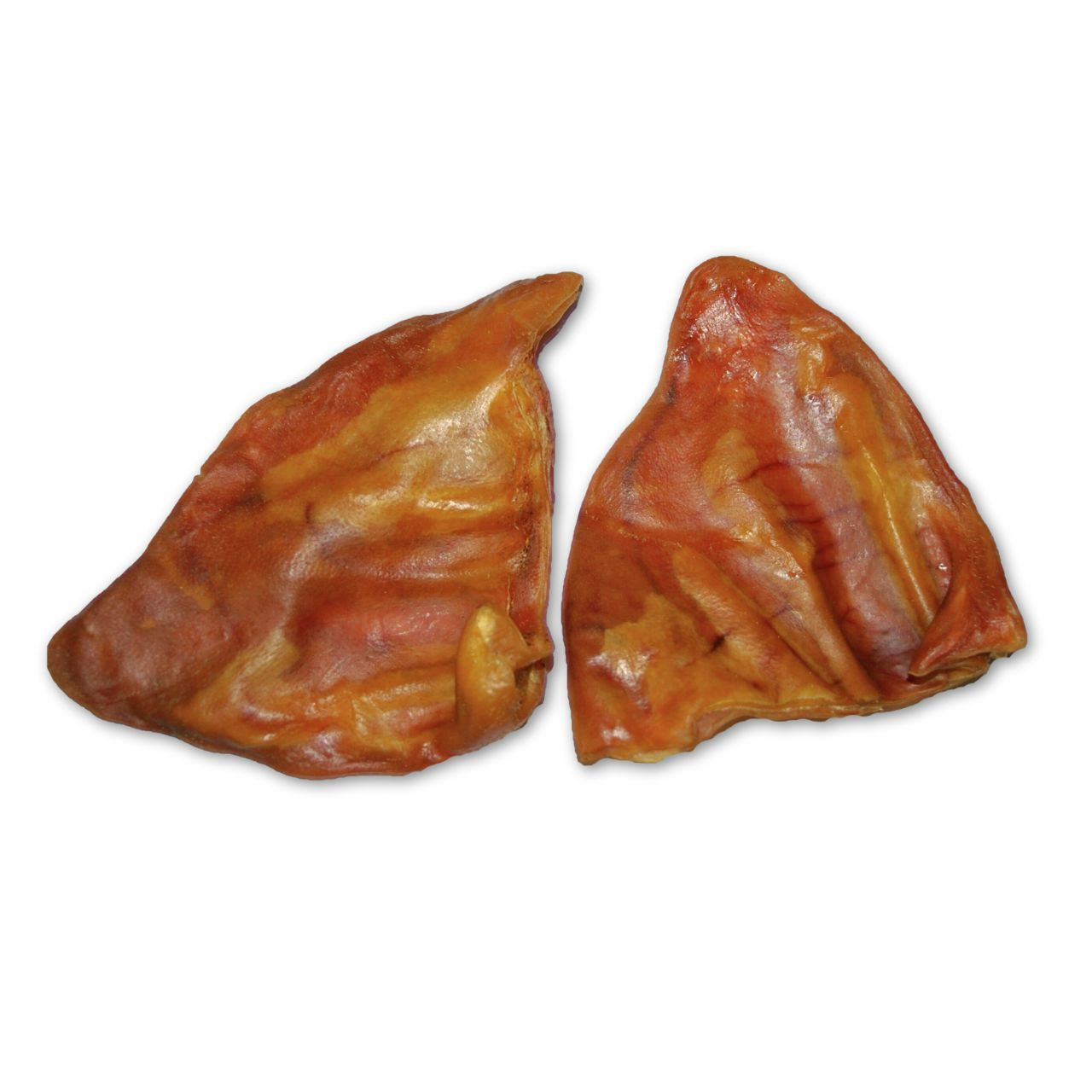
A pig ear is exactly what it sounds like: the pig's outer ear flap, the part known anatomically as the pinna. It is made up mostly of cartilage and fat, with very little muscle meat, which is the single most important thing to understand about it. Because there is almost no muscle, a pig ear is best thought of as a chew rather than a food. It is there to occupy and reward your dog, not to feed them.
As a treat it has a few genuinely appealing qualities. It is a single-ingredient, natural chew, so there is no long list of additives to squint at. It is softer than a bone or an antler, which makes it gentler on teeth than the really hard chews. And it is protein-rich, roughly in the order of 60 to 70 percent protein, though the exact figure depends on the product, so it is best treated as a ballpark rather than a fixed number.
Cartilage naturally contains chondroitin and glucosamine. You will sometimes see this mentioned as a selling point. It is true that cartilage naturally contains these compounds, but that is not the same as a proven joint benefit from eating a pig ear, so we would not buy one for that reason.
What are the benefits of pig ears for dogs?
The honest, defensible benefit of a pig ear is enrichment: it is a long-lasting chew that keeps a dog occupied and mentally stimulated, and it satisfies their natural drive to chew. On top of that, it is a single-ingredient, simple treat and a high-value, very palatable reward, which is why it is so handy for training and settling. Those are real, modest benefits, and they are the reasons most owners reach for pig ears.
Chewing itself is a normal, healthy behaviour for dogs. A chew that lasts gives your dog something constructive to do, which can be especially useful on a rainy day, in the crate, or when you need ten minutes to get something done. That occupation value is where a pig ear genuinely earns its place in the treat jar.
It is just as important to be clear about what a pig ear does not do. It is not a dental product. It is tempting to assume that any chew scrapes teeth clean, but pig ears are not a proven way to clean teeth, and you should not rely on one for dental care. Genuine dental benefit belongs to products that carry recognised veterinary dental accreditation. RSPCA Australia is clear that dental care should be built around proven approaches rather than assumptions, so if clean teeth are your goal, reach for a purpose-made dog dental chew and keep up regular brushing and vet checks. We also would not describe a pig ear as fully digestible, so a pig ear is best understood as enrichment, not nutrition or dental care.
Enrichment, not a health treatment. Pig ears earn their keep by keeping dogs happily busy. That is a lovely thing on its own, and it is where the real value sits.
Are pig ears too fatty for dogs?
Pig ears are relatively high in fat, which is the main reason to feed them in moderation rather than daily. Because the ear flap is mostly cartilage and fat, a pig ear is calorie-dense and richer than a lean training treat. For a healthy adult dog in good body condition, an occasional pig ear is not a drama. For a dog that is carrying extra weight, or one with a history of pancreas trouble, that fat load is exactly the thing to be careful about.
This is not a reason to panic and it is not a reason to feel guilty for buying them. It is simply a reason to be deliberate: to keep pig ears occasional, to factor them into the day's calories, and to be extra cautious with the dogs listed further down this guide. The next two sections explain why the fat matters and how to keep it in check.
Rich by nature. Fat is what makes pig ears so tasty and so satisfying to chew. It is also why they belong in the occasional column, not the everyday one.
Can pig ears cause pancreatitis?
Pig ears do not directly cause pancreatitis, but high-fat treats like pig ears can trigger or contribute to pancreatitis in susceptible dogs. That distinction matters, so it is worth stating plainly: the concern is not that a pig ear is uniquely dangerous, it is that a sudden hit of fat can be one of the triggers in a dog that is already prone.
The Australian and international guidance lines up well here. RSPCA Australia states that "a high fat diet can result in inflammation of the pancreas, which can be very painful and potentially very serious." Vetwest, a Western Australian veterinary group, puts the predisposing factors squarely on the table, noting that "obesity and ingestion of fatty meals are the two main predisposing factors in dogs." From overseas, VCA describes pancreatitis as something that "may be triggered in some cases by a fatty meal," which is the same picture from a different angle.
"A high fat diet can result in inflammation of the pancreas, which can be very painful and potentially very serious."
RSPCA Australia, Knowledge Base. Source.
There is also a breed angle worth handling carefully. Some breeds, Miniature Schnauzers in particular, are often described as prone to pancreatitis, linked to a tendency toward higher triglycerides. That comes from overseas welfare science (UFAW). It is fair to flag it, but it is not undisputed: some sources, including VCA, state there is no clear breed predisposition. So the sensible way to hold both is this: some breeds, Miniature Schnauzers in particular, are described as prone, but it is not a settled fact, and the general advice to be cautious with fatty treats applies to every dog regardless of breed.
Vet-tip
Know your dog's history first. If your dog has ever had pancreatitis, or is significantly overweight, do not introduce a fatty chew like a pig ear without asking your Australian vet. It is a two-minute phone call that can save a very unpleasant week.
How many calories are in a pig ear?
A pig ear is calorie-dense, often in the ballpark of 100 to 150 calories, though it varies a lot by size, so treat that as a rough guide rather than a hard number. A large ear will sit higher, a small trim lower, and different products differ. The point is not the exact figure, it is that a single pig ear is a meaningful chunk of calories for a smaller dog, which is why frequency matters.
The genuinely useful guardrail here is the 10 percent rule: treats should make up no more than 10 percent of your dog's daily calories, with the remaining 90 percent coming from a balanced main diet. This is standard veterinary nutrition guidance echoed by bodies such as WSAVA and AAHA. VCA puts the question directly in its "True or False" series and answers plainly: the statement that pet treats should make up no more than 10 percent of a pet's daily calories is "True."
Daily calorie budget
In plain English: only about a tenth of what your dog eats each day should come from treats. For a small dog, a single calorie-dense pig ear can use up a big slice of that budget in one go, which is why it works better as an occasional chew than a daily habit. Your vet can pin down the right numbers for your dog's size and weight.
Do pig ears carry salmonella?
Pig ears, like other dried animal chews, can carry salmonella, which is exactly why safe handling matters. The reason people ask about this at all traces back to a specific overseas event, and it is worth understanding what actually happened, because the headline and the follow-up tell two rather different stories.
In 2019, the United States saw a salmonella outbreak linked to pig ear treats. According to the US Centers for Disease Control and Prevention archive, "a total of 154 ill people were reported from 34 states," with 35 hospitalised and no deaths. Importantly, the contaminated ears were imported, traced to product from Argentina, Brazil and Colombia. This was an overseas outbreak tied to specific imported product, not a verdict on pig ears everywhere.
Here is the part that often gets lost. The initial advice to avoid all pig ears was issued during the 2019 outbreak, and it was later softened. The current position of the US Food and Drug Administration is that it is "no longer recommending that people avoid purchasing or feeding pig ear pet treats entirely." Instead, regulators shifted to sensible hygiene: supervise your dog, pick up the treat when they are done, keep treats away from small children, clean any surface the treat touched, wash your hands, and do not let your pet lick faces. In other words, the outbreak is best read as a sourcing and hygiene lesson, not a reason to never feed pig ears. That same hygiene list doubles neatly as your everyday safe-handling checklist, which we set out later in this guide.
Are pig ears a choking or blockage risk?
Yes, pig ears can be a choking or blockage risk, particularly for enthusiastic gulpers and small dogs, which is why supervision is non-negotiable. The danger is not the ear sitting on the floor, it is the moment a dog decides to bolt down a large piece rather than chew it properly. That piece can lodge in the throat, or travel down and cause a blockage further along.
The principle is well established for hard chews generally. RSPCA Australia, writing about swallowed hard chews, warns that large swallowed pieces "can get stuck in the dog's gastrointestinal tract" and may require "expensive life-saving surgery." That guidance is given in the context of bones, but the general principle carries straight across to any chew a dog might try to gulp, pig ears included. Dogster likewise stresses supervision and the choking risk with pig ears specifically.
The practical takeaway is simple. Always supervise your dog while they have a pig ear, and take the ear away once it has been chewed down to a size small enough to swallow whole. If your dog is a known gulper, a pig ear may not be the right chew for them at all.
Can pig ears upset a dog's stomach?
Yes, because pig ears are rich and fatty, they can cause vomiting or diarrhoea in some dogs, especially those with sensitive stomachs. A dog that wolfs down a whole ear in one sitting is more likely to have a reaction than one who works away at it slowly, and a dog trying a pig ear for the first time is an unknown quantity until you see how they handle it.
The fix is to introduce pig ears slowly. Start with a small portion rather than a whole ear, offer it when you can keep an eye on your dog, and watch for any loose stools or tummy upset over the next day. If your dog tolerates it well, you have your answer. If they do not, it is a clear sign to stop and, if the upset persists or they seem unwell, to check in with your Australian vet.
Go slow the first time. A small piece, close supervision, and a day of watching the poo tells you everything you need to know about whether pig ears suit your dog.
Are Australian pig ears any different?
Australian-made pig ears from a reputable maker give you traceable local sourcing and processing, which is a real, practical advantage, but Australian does not automatically mean risk-free, and it is only fair to be honest about that. The strongest point in favour of locally made chews is traceability: you can see where the product comes from and how it is handled, and the 2019 outbreak that worried so many owners involved imported product, not Australian-made.
On standards, it pays to be straight with you. Reputable Australian makers produce pet treats under the Australian Standard for the manufacturing and marketing of pet food, currently AS5812 (AS5812-2023), together with PISC 88 hygiene requirements. That is a genuine framework, but the important honesty note is that AS5812 is a voluntary industry standard, not law. Australian pet food is largely self-regulated, a point raised by the pet food industry body PFIAA and by the consumer group CHOICE. So local manufacture under AS5812 is a reassuring signal, not a legal guarantee, and it is one reason to choose a maker you trust.
The cat labelling clue. Imported pig ears are gamma-irradiated at the Australian border for biosecurity, and irradiated product must be labelled "must not be fed to cats." If you ever see that warning on a dog chew, it is a sign the product has been irradiated on import.
None of this is a reason to be unfair to imported chews, plenty of which are perfectly fine. It simply means that with a locally made ear you get local sourcing, local processing and easier traceability, while with any pig ear at all, imported or Australian, the same safe handling and supervision still apply.
Which dogs should be cautious?
Most healthy adult dogs can enjoy an occasional pig ear, but several groups should take extra care, and for all of them the safest first step is to check with your Australian vet. The table below sums up who should think twice and why. If your dog falls into more than one row, that is all the more reason to have the conversation with your vet before offering a pig ear.
| Dog | Why extra caution | Sensible approach |
|---|---|---|
| Overweight or obese dogs | Pig ears are calorie-dense and fatty, and obesity is a leading predisposing factor for pancreatitis. | Usually best avoided or kept very occasional. Ask your vet about leaner reward options. |
| Dogs with a history of, or predisposition to, pancreatitis (including Miniature Schnauzers) | A sudden hit of fat can trigger or contribute to a flare in susceptible dogs. | Do not offer without veterinary advice first. For many of these dogs, pig ears are not worth the risk. |
| Dogs with sensitive stomachs | Rich, fatty chews can bring on vomiting or diarrhoea. | Introduce very slowly with a small portion, or choose a gentler treat. |
| Enthusiastic gulpers | Dogs that swallow rather than chew are at higher risk of choking or a blockage. | Supervise closely and remove early, or avoid pig ears in favour of a chew they cannot bolt. |
| Young puppies | Rich and fatty for a developing tummy, and puppies are more likely to bite off and swallow large pieces. | Generally best left until later. If offering, supervise closely and ask your vet about age and size. |
The no-go rules
Pig ear safety: the non-negotiables
Never leave unsupervised
Stay with your dog for the whole chew. Choking happens in seconds.
Take it away early
Remove the ear once it is small enough to be swallowed whole.
Not for high-risk dogs
Overweight or pancreatitis-prone dogs need a vet's okay first.
Handle hygienically
Wash hands, clean surfaces, keep away from small children.
Not a dental fix
Do not rely on a pig ear to clean teeth. Use a proper dental chew.
Keep to 10 percent
All treats together should stay within a tenth of daily calories.
How do you feed a pig ear safely?
Feeding a pig ear safely comes down to supervision, moderation and simple hygiene, and the good news is that the same handling steps regulators now recommend after the 2019 outbreak double as your everyday routine. Put together, here is the practical checklist.
- Supervise the whole time. Stay with your dog from the first bite to the last, so you can step in the instant they try to gulp a large piece.
- Pick up the treat when they are done, and take the ear away once it is small enough to swallow whole rather than letting them finish it in one gulp.
- Introduce slowly. Start with a small portion, especially the first time or for a sensitive tummy, and watch how your dog responds over the next day.
- Mind the calories. Count the pig ear toward the day's treats and keep all treats to about 10 percent of daily calories.
- Keep it clean. Wash your hands after handling, clean any surface the treat touched, keep treats away from small children, and do not let your pet lick faces.
- Check with your vet before offering pig ears to any overweight, pancreatitis-prone, sensitive or very young dog.
Handled this way, an occasional pig ear is a simple, single-ingredient chew that a lot of dogs genuinely love. If pig ears are not the right fit, there are plenty of other options in our range of natural meat dog treats and pork dog treats, and if you are weighing up other single-ingredient chews you might find our guides to whether liver treats are good for dogs and whether kangaroo tails are good for dogs useful next reads.
Australian-made pig ears, made simple
Our Australian pig ear dog treats are a single-ingredient, natural chew, made here in Australia so you get local sourcing and traceable processing. Prefer a smaller size? Our pig ear trims are a handy option for littler dogs. As with any chew, supervise your dog and keep treats to a sensible share of the day. Browse the full range in our dog treats collection.
Shop Australian pig earsWe also make Australian pig snouts for dogs, another single-ingredient pork chew. As with pig ears, which suits best depends on your dog's size, chewing style and daily fat intake.
Frequently asked questions
Are pig ears safe for dogs?
For most healthy adult dogs, a pig ear is a reasonable occasional chew when it is fed with supervision and in moderation. A pig ear is a chew, not a meal, so the risks are about how you feed it rather than the ear itself: fat content, choking or blockage in gulpers, and hygiene. Dogs that are overweight, prone to pancreatitis, have sensitive stomachs, gulp their chews, or are young puppies should be treated with extra caution. Check with your Australian vet first if any of those apply to your dog.
Are pig ears too fatty?
Pig ears are relatively high in fat because the ear flap is mostly cartilage and fat, so they are calorie-dense and best kept as an occasional treat rather than a daily one. That is not a problem for every dog, but it matters a lot for dogs that are overweight or prone to pancreatitis. A useful rule of thumb is to keep all treats, pig ears included, to no more than about 10 percent of your dog's daily calories.
Can pig ears cause pancreatitis?
Pig ears do not directly cause pancreatitis, but high-fat treats like pig ears can trigger or contribute to pancreatitis in susceptible dogs. According to RSPCA Australia, a high fat diet can result in inflammation of the pancreas, which can be very painful and potentially very serious. Vetwest notes that obesity and ingestion of fatty meals are the two main predisposing factors in dogs. Some breeds, Miniature Schnauzers in particular, are often described as prone, though not every source agrees there is a breed link. If your dog has any history of pancreatitis, talk to your Australian vet before offering a pig ear.
Do pig ears have salmonella?
Pig ears, like other raw or dried animal chews, can carry salmonella, which is why hygiene matters. In 2019 a salmonella outbreak in the United States was linked to imported pig ear treats, with a total of 154 ill people reported from 34 states and 35 hospitalised, and no deaths. The initial US advice to avoid all pig ears was issued during that outbreak and was later softened. The current US Food and Drug Administration position is that it is no longer recommending that people avoid buying or feeding pig ear treats entirely, and instead advises supervising your dog, picking up the treat when they are finished, keeping treats away from small children, cleaning any surface the treat touched, washing your hands, and not letting your pet lick your face. Treat it as a sourcing and hygiene lesson rather than a reason to never feed pig ears.
Are Australian pig ears safer?
Australian-made pig ears from a reputable maker give you traceable local sourcing and processing, which is a genuine advantage, but Australian does not automatically mean risk-free. The 2019 outbreak product was imported. Reputable Australian makers produce chews under the voluntary Australian Standard AS5812 and PISC 88 hygiene requirements, though it is worth being honest that AS5812 is a voluntary industry standard rather than law, and Australian pet food is largely self-regulated. Imported pig ears are gamma-irradiated at the border for biosecurity, and irradiated product must be labelled must not be fed to cats. Whichever you choose, safe handling and supervision still apply.
How often can a dog have a pig ear?
Lead with the 10 percent rule: all treats combined, including pig ears, should make up no more than about 10 percent of your dog's daily calories, with the rest coming from a balanced main diet. Because a pig ear is calorie-dense, often in the ballpark of 100 to 150 calories though it varies a lot by size, that usually means an occasional treat rather than a daily one, especially for smaller dogs. Your vet can help you work out a sensible frequency for your dog's size and weight.
Are pig ears OK for puppies?
Pig ears are generally best left until later for young puppies, because they are rich and fatty and because puppies are more likely to bite off and try to swallow large pieces, which is a choking and blockage risk. If you do want to offer one, do it only with close supervision, take it away once it is small enough to swallow, and check with your Australian vet about the right age and size for your individual puppy.
Can pig ears cause diarrhoea?
Yes, pig ears can cause vomiting or diarrhoea in some dogs because they are rich and fatty, particularly in dogs with sensitive stomachs or if a whole ear is eaten quickly. To reduce the chance of an upset tummy, introduce pig ears slowly, start with a small portion, and watch how your dog responds. If loose stools persist or your dog seems unwell, stop offering them and speak to your Australian vet.
Are pig ears a choking hazard?
Pig ears can be a choking or blockage hazard, especially for enthusiastic gulpers and small dogs that try to swallow a large piece rather than chewing it down. Always supervise your dog with a pig ear and take the ear away once it is small enough to be swallowed whole. RSPCA Australia notes that large swallowed pieces of hard chews can get stuck in the dog's gastrointestinal tract and may need expensive life-saving surgery, so supervision is the single most important safety step.
Do pig ears clean teeth?
No, you should not rely on pig ears to clean your dog's teeth. Pig ears are a chew for enrichment and occupation, not a proven dental product. Genuine dental benefit belongs to products that carry recognised veterinary dental accreditation, so if dental care is your goal, choose a proper dental chew and keep up regular tooth brushing and vet dental checks. Enjoy a pig ear for what it is, a long-lasting, high-value chew, not as a substitute for dental care.
References
- RSPCA Australia. "Should I feed bones to my dog?" RSPCA Knowledge Base. kb.rspca.org.au (Australia).
- Vetwest Animal Hospitals. "Pancreatitis in Dogs." vetwest.com.au (Australia, WA).
- VCA Animal Hospitals. "Pancreatitis in Dogs." vcahospitals.com (overseas, US).
- VCA Animal Hospitals. "True or False: Pet Treats Should Make Up 10 Percent of Your Pet's Daily Calories." vcahospitals.com (overseas, US).
- US Centers for Disease Control and Prevention (archive). "Outbreak of Salmonella Infections Linked to Pig Ear Dog Treats" (2019). archive.cdc.gov (overseas, US).
- US Food and Drug Administration. "Pig Ear Pet Treats: Questions and Answers." fda.gov (overseas, US).
- Dogster. "Are Pig Ears Good for Dogs?" Vet-reviewed by Dr Amanda Charles BVSc MRCVS. dogster.com (overseas, US).
- Pet Food Industry Association of Australia (PFIAA). "Pet Food Standards" (AS5812 voluntary standard; self-regulation). pfiaa.com.au (Australia).
Huds and Toke: Proudly Australian, Family Owned
Huds and Toke is a family-owned Australian premium pet treats company, founded in 2012 on Queensland's Sunshine Coast, with a HACCP-certified kitchen. Naturally made here in Australia and loved by pets and their people right across the country.
Learn more on Wikipedia · Our story · Awards & recognition
Related guide: not sure which chews are kind to your dog's teeth? Read our ranked guide to safe chews for dogs and the thumbnail test.