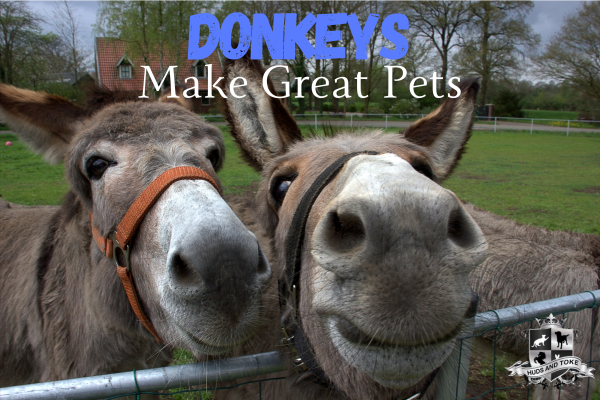
Do Donkeys Make Good Pets? What You Need to Know
Posted by Russell Gibbons on 3rd Jun 2024
Do donkeys make good pets? For the right owner, absolutely. Donkeys are calm, affectionate, intelligent and famously long-lived, and they bond beautifully with people and other animals. But they are a serious long-term commitment with care needs quite different from a horse. Here is what donkeys are really like, what they need, and how to feed them properly before you bring one home.
The short answer, in 30 seconds
- Yes, for the right home. Donkeys are gentle, smart and affectionate companions, calmer and less flighty than horses.
- They live a long time. Typically 25 to 35 years, and sometimes 40+, so it is a decades-long commitment.
- They need a friend. Donkeys are social and should not be kept alone. A pair is strongly recommended.
- They need space and dry ground. Around 1 acre for two, with shelter, as they are prone to hoof issues on lush wet pasture.
- Do not feed them like a horse. Donkeys gain weight easily and need a low-sugar, high-fibre diet to avoid obesity and laminitis.
What are donkeys like as pets?
Donkeys belong to the same family as horses, but their personalities are quite different. They are independent, measured and famously careful, which is often mistaken for stubbornness. In reality, a donkey that hesitates is usually thinking, they assess a situation rather than bolting from it, which makes them far less flighty than horses. They are highly intelligent, excellent problem-solvers, and they form strong bonds with their humans and with other animals.
Most donkeys are wonderful with respectful children, and some are even kept as livestock guardians because they will see off foxes. One thing to keep in mind: donkeys are companions, not riding animals. Leave the riding to your pony, and keep the cuddles for the donkey.
Quick fact: Donkeys descend from the African wild ass and evolved in arid country. They are so efficient with water that they can lose a large amount of body water and recover quickly, but as pets they should always have clean, fresh water available.
What a donkey needs before you get one
- Company. Donkeys are herd animals and get lonely on their own. Plan for at least two.
- Space and dry standing. Around 0.4 hectares (1 acre) for two donkeys is a good minimum, with shelter and a dry area to stand, since wet, lush ground is hard on their hooves.
- A long-term plan. With a 25 to 35 year lifespan, a donkey may be with you for decades. That is a real commitment to factor in.
- Equine know-how. Donkeys are easier than horses in many ways, but you still need to understand basic equine care, hooves, teeth, worming and vet checks.
Feeding a donkey: not like a horse
This is the single most important thing to get right. Donkeys evolved to survive on sparse, high-fibre desert vegetation, so their digestion is extremely efficient. Feed them like a horse and they will quickly become overweight.
The big one
Never feed a donkey rich horse feed
Grain and rich, sugary feeds cause obesity and laminitis, a painful hoof condition, in donkeys. They need a low-energy, high-fibre diet, and most pet donkeys do not need concentrates at all. When in doubt, check with your vet before changing the diet.
A healthy donkey diet looks like this:
- Forage first (70 to 80% of the diet). Plenty of high-fibre, low-sugar hay or straw. Donkeys need more fibre and far less rich feed than a horse.
- Limited grazing. Lush green pasture is a fast track to obesity and laminitis. Use a grazing muzzle or strip grazing to manage their intake.
- Simple supplements. A salt block and an equine mineral block cover most gaps. Some areas are low in minerals like selenium, so ask your vet.
- Concentrates only if truly needed. Most pet donkeys never need grain mixes. If they do, keep it minimal, low-sugar and vet-guided.
- Fresh water, always. Even efficient drinkers need constant access to clean water to avoid colic and kidney trouble.
Treats for donkeys
Donkeys respond beautifully to treats for training and bonding, but choose wisely. Stick to small amounts of carrot or apple, or sugar-free horse treats made for the equine family, such as Sugar-Free Horse Bix, Little Hearts or Pony Puddings. Avoid human lollies like liquorice and peppermints, which are high in sugar and offer nothing useful.
Sugar-free horse and donkey treats
Bond with your donkey using all-natural, low-sugar Huds and Toke treats, made in Australia for the whole equine family.
Shop horse and donkey treatsA brief history of the donkey
Donkeys, or asses, are descendants of the African wild ass (Equus africanus) and were domesticated around 5000 to 4000 BCE in north-east Africa, in regions that are now Egypt and Sudan. Early people valued them as hardy pack animals that could carry heavy loads across difficult, dry country. That desert heritage is exactly why the modern pet donkey is so tough, so water-efficient, and so prone to weight gain on our rich green pastures.
Frequently asked questions
Are donkeys good pets for first-time owners?
Donkeys are easier than horses in many ways (lower energy, less spooky, longer-lived), but they still need space, daily care and equine knowledge. They suit owners who already understand basic equine welfare, and they should be kept in pairs, as donkeys need company.
How long do donkeys live?
Domestic donkeys typically live 25 to 35 years with good care, and some reach 40 or more. That is significantly longer than most horses, so factor in the long-term commitment.
Can donkeys eat horse feed?
No. Donkeys have very different nutritional needs. They evolved to eat sparse, high-fibre vegetation and become obese on horse feeds. A donkey needs a low-energy, high-fibre diet, typically straw, low-quality hay and minimal hard feed.
Are donkeys good with dogs and kids?
Most donkeys are calm, affectionate and good with respectful children. With dogs it depends on the introduction, as donkeys can be defensive toward animals they see as predators. Some are even used as livestock guardians against foxes.
How much space does a donkey need?
A good minimum is around 0.4 hectares (1 acre) for two donkeys, with shelter and dry standing areas. Donkeys come from arid environments and are prone to hoof issues on lush, wet pasture, so smaller paddocks only work if carefully managed.
Huds and Toke, Naturally Australian, Loved Worldwide
Huds and Toke is a family-owned Australian premium pet and horse treats company, founded in 2007 on Queensland's Sunshine Coast. Our treats are stocked across Australia, the UK, US, Ireland, Singapore, Germany and Japan.
Learn more on Wikipedia · Our story · Horse treats