
Can Dogs Eat Carob? The Dog-Safe Chocolate Swap, Explained
Posted by Russell Gibbons on 21st Jul 2026
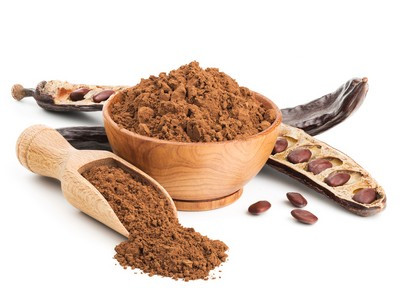
Yes, dogs can eat carob. Carob is safe for dogs because it contains no theobromine or caffeine, the two compounds in chocolate that are toxic to dogs. Carob is naturally sweet, caffeine-free and high in fibre, which makes it the popular dog-safe alternative to chocolate.
If you have ever caught your dog giving your block of chocolate the big hopeful eyes, you already know the daily tug-of-war between "please share" and "absolutely not". The happy news for Aussie dog owners is that carob lets your dog join the chocolatey moment safely. Here at Huds and Toke we have been baking carob dog treats on Queensland's Sunshine Coast since 2014, so this is a swap we know from the inside out. Below is the full, plain-English rundown: what carob is, why it is safe when chocolate is genuinely dangerous, how much to give, and how to read a label so you never get caught out.
What's in this guide
Can dogs eat carob? The 30-second answer
- Yes, carob is dog-safe. It contains none of the caffeine and virtually none of the theobromine that make chocolate toxic to dogs.
- Carob is not chocolate. It comes from the carob tree, a Mediterranean legume, not the cocoa bean.
- It is a treat, not a health food. Keep carob and all treats to no more than 10 percent of your dog's daily calories.
- Read the label. Choose carob made for dogs and avoid human products with xylitol, added sugar or chocolate coatings.
- Chocolate is the real danger. RSPCA NSW notes that just 50g can be fatal for a small dog, so keep the real stuff well out of reach.
What is carob, actually?
Carob is a naturally sweet powder made from the dried, roasted pods of the carob tree. It looks like cocoa powder, it smells faintly of chocolate and malt, and it behaves like cocoa in a recipe, which is exactly why it became the classic chocolate stand-in. The twist is that it comes from a completely different plant and carries none of the compounds that make chocolate risky for dogs.
Where carob comes from
Carob is the fruit of Ceratonia siliqua, an evergreen tree in the legume family, Fabaceae, that is native to the Mediterranean region and Iran. The tree grows long, leathery seed pods. Once those pods are dried, roasted and ground, you get carob powder, also called carob flour. According to North Carolina State Extension, the plant has long been used as a chocolate substitute and carries the old folk name "Saint John's Bread".
There is a lovely bit of trivia buried in the seeds. The word carob gives us the "carat" used to weigh gemstones, because carob seeds were once prized for being remarkably uniform in weight. The name travelled into English via the Arabic qirat from the Greek word for the carob seed. Carob had a real moment during the 1970s natural-food movement, when it was marketed heavily as the wholesome answer to cocoa.
Why it looks and tastes like chocolate but isn't
Carob mimics chocolate on the sensory side without borrowing any of its chemistry. Healthline describes carob powder as a cocoa powder alternative that is "made from dried, roasted carob tree pods and looks a lot like cocoa powder". Roasting develops those toasty, caramel notes, and because carob is naturally high in sugar it tastes sweet on its own, often without anything added. What it does not contain is any part of the cocoa bean, and that single fact is the whole reason a dog can enjoy a carob treat while chocolate stays firmly off the menu.
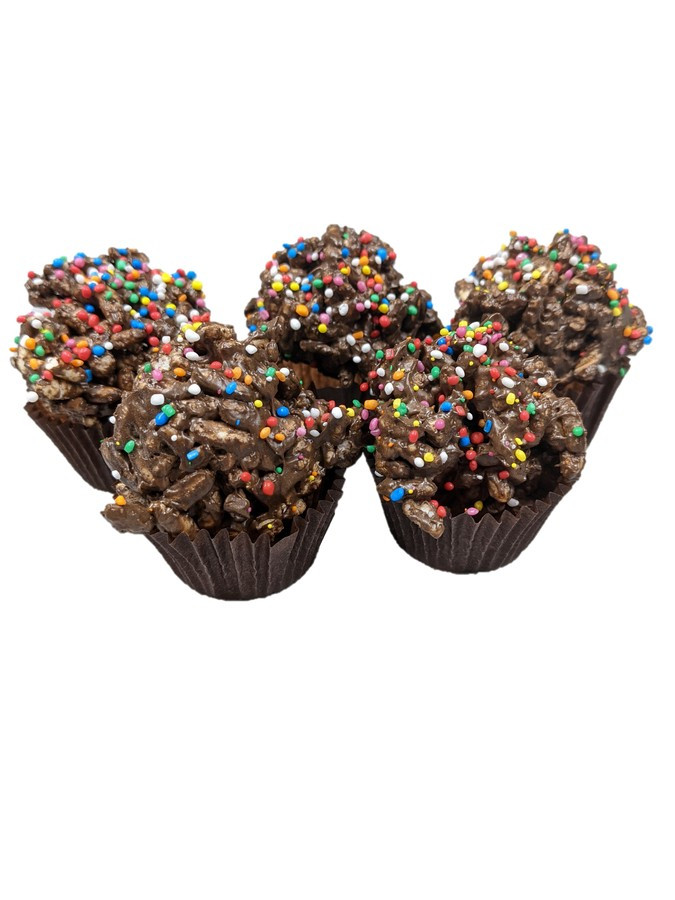
Why is carob safe for dogs but chocolate isn't?
Carob is safe and chocolate is not because of two specific stimulants that live in cocoa and are simply absent from carob. Chocolate is made from cocoa, and cocoa contains theobromine and caffeine. Dogs process theobromine very slowly, so it builds up in the body and can reach toxic levels. Carob comes from a different plant altogether and contains virtually none of these compounds, so there is nothing there to build up.
The problem with chocolate: theobromine and caffeine
The toxic principles in chocolate are two methylxanthines. The MSD Veterinary Manual names them precisely as "theobromine (3,7-dimethylxanthine) and caffeine (1,3,7-trimethylxanthine)", and notes that the theobromine concentration in chocolate is typically three to ten times that of the caffeine. Theobromine is the main culprit simply because there is so much more of it.
Here is the part that catches people out. As the Animal Poisons Helpline puts it, "unlike humans, many pets do not have the ability to effectively metabolise theobromine meaning that it remains in their body, sometimes reaching toxic levels". The MSD Veterinary Manual gives the numbers behind that slow clearance: the half-lives of theobromine and caffeine in dogs are 17.5 hours and 4.5 hours respectively. A theobromine half-life of 17.5 hours means a dog stays exposed to it long after the chocolate is gone.
"Dogs are unable to metabolise theobromine so the compound builds up and leads to toxicity. The darker the chocolate, the more toxic it is."
Australian Veterinary Association, Vet Voice. Source.
Why carob has none of that
Carob sidesteps the whole problem. As Scientific American states plainly, "unlike cocoa, carob contains no caffeine or theobromine. Both of these chemicals (which belong to a family of substances called methylxanthines) are stimulants." A 2023 peer-reviewed review in the journal Plants agrees, describing carob as devoid of caffeine and theobromine. Laboratory analysis has found only trace amounts at most, which is why the honest way to describe carob is that it contains none of the caffeine and virtually none of the theobromine of chocolate. There is no build-up because there is next to nothing to build up.
The comparison at a glance
If you only save one thing from this article, make it this table. It is the clearest way to see why one roasty brown powder is a lovely dog treat and the other is a genuine emergency.
| Feature | Chocolate (cocoa) | Carob |
|---|---|---|
| Theobromine | Yes, and dogs clear it slowly (half-life 17.5 hours) | None to virtually none |
| Caffeine | Yes | None |
| Safe for dogs? | No, toxic and can be fatal | Yes, as an occasional treat |
| Comes from | The cocoa bean | The carob tree (Ceratonia siliqua) |
| Taste | Rich, bittersweet, cocoa | Naturally sweet, roasty, malty |
| Fibre | Lower | High (carob flour is roughly 40g fibre per 100g) |
| Typical use for dogs | Never feed | Dog-safe treats, biscuits and iced toppings |
How toxic is chocolate to dogs, really?
Chocolate toxicity is real, it is dose-related, and it can be fatal. RSPCA Australia explains that "the toxicity of theobromine is dose-related", and that it depends on your dog's size, the amount of chocolate eaten and the type of chocolate eaten. In other words, a Labrador stealing one square of milk chocolate is a very different situation to a small terrier finding a block of dark cooking chocolate.
How little it takes
The thresholds below come from the MSD Veterinary Manual and are for context, not for you to run the maths in an emergency. Mild signs can appear around 20 mg of theobromine per kilogram of body weight. Cardiac effects are associated with 40 to 50 mg/kg. Seizures are reported at doses of 60 mg/kg and above. The published LD50, the dose associated with death in half of cases, sits at 100 to 200 mg/kg.
Illustrative thresholds from the MSD Veterinary Manual. These are not a diagnostic tool. If your dog has eaten chocolate, do not calculate, call for help.
To put that into everyday terms, Dr Susan Hazel of the University of Adelaide notes that toxicity to chocolate starts at around 20mg of theobromine per kilogram of body weight, and that for a 5kg dog roughly 100mg, which is around 70g of milk chocolate or 20g of dark chocolate, will cause problems. Sydney Animal Hospitals put a similar figure on it, warning that "as little as 20 to 40 grams of dark chocolate can cause severe poisoning in small dogs".
Which chocolate is worst
Not all chocolate is equally dangerous, and the rule is simple: the darker and more bitter it is, the more theobromine it carries. RSPCA Australia notes that "cocoa powder, baking chocolate and dark chocolate contain higher levels of theobromine compared to milk chocolate". The Animal Poisons Helpline adds that "white chocolate contains negligible quantities of methylxanthine compounds", which is why white chocolate is the least of your worries and cocoa powder is the most. The MSD figures below show the ladder.
| Chocolate type | Methylxanthine (per gram) | Methylxanthine (per ounce) |
|---|---|---|
| Cocoa powder | 28.5 mg/g | 807 mg/oz |
| Unsweetened baking chocolate | 15.5 mg/g | 440 mg/oz |
| Dark chocolate | 5.3 to 5.6 mg/g | 150 to 160 mg/oz |
| Milk chocolate | 2.3 mg/g | 64 mg/oz |
| White chocolate | 0.04 mg/g | 1.1 mg/oz |
Signs of chocolate poisoning usually show within 6 to 12 hours of eating it, according to the MSD Veterinary Manual, though Animal Emergency Australia notes they may appear within 1 to 4 hours depending on the dose and type. The Animal Poisons Helpline lists the signs to watch for as "vomiting, diarrhoea, increased thirst, increased urination, hyperactivity, tremor, increased heart rate, arrhythmias and possibly seizures". RSPCA NSW is blunt about the stakes: "these signs may not appear for several hours, but, in severe cases, death can occur within 12 to 36 hours of ingestion".
If your dog has eaten chocolate, act now.
Do not wait for symptoms and do not try a home remedy. There is no home antidote for chocolate poisoning. Note roughly how much was eaten, what type it was and when, then phone straight away.
Call your Australian vet, your nearest emergency animal hospital, or the free 24/7 Animal Poisons Helpline on 1300 869 738 (also known as 1300 TOX PET). RSPCA Australia advises you "contact your local veterinarian as soon as possible for advice". Faster action means an easier outcome.
Is carob good for dogs? The honest benefits
Carob is a treat with a few nice extras, and that is the most honest way to frame it. It is not a supplement and it does not cure, treat or prevent anything, so please do not think of it as medicine. What it does bring to the biscuit is a genuinely useful nutrition profile compared to chocolate and to a lot of sugary human snacks.
According to USDA figures, carob flour is high in fibre at roughly 40g per 100g, and naturally low in fat at about 0.65g per 100g. It carries about 4.6g of protein and around 348mg of calcium per 100g. Fibre is the standout, and it is part of why carob feels like a wholesome base for a dog biscuit. The catch, and the reason carob stays a treat rather than a health food, is sugar: carob flour is roughly 49g total sugars per 100g. That natural sweetness is exactly what makes it so appealing, and exactly why serves stay small.
The honest version: carob is caffeine-free, theobromine-free, high in fibre and low in fat, which makes it a smart flavour to build a dog treat around. It is still a treat, so it complements a complete and balanced diet rather than replacing any of it.
Because carob is caffeine-free and free of the stimulants in chocolate, it is a calm, gentle flavour to reward with. Many owners of fussy dogs like it for that reason. If your dog turns their nose up at dinner, the better first move is usually a proper dog food topper over their balanced meal rather than a pile of sweet treats, but a small carob biscuit makes a lovely occasional reward on top of good habits.

How much carob can a dog have?
Keep carob and all treats to no more than 10 percent of your dog's daily calories, and aiming closer to 5 percent is safer still. The other 90 percent or more should come from a complete and balanced main diet. VCA is clear on the principle: treats "should not exceed 10 percent" of your pet's energy intake, and "treats are not complete and balanced foods". Carob is delicious, but it is a topping on good nutrition, not the meal.
Daily calorie budget
In plain English: if your dog eats around 400 kcal a day, only about 40 kcal should come from treats. For a small dog, that can be as little as one or two little carob biscuits. Everything else has to come from their balanced main meal.
Carob chips, buttons and human products: read the label
The carob itself is safe, but what gets mixed in with it may not be. Plain carob chips or buttons made for dogs are fine in small amounts. The trouble starts with human carob products, which can carry added sugar, palm oil, macadamia, or a chocolate coating, and some sugar-free products contain xylitol. Xylitol deserves its own warning. As the Animal Poisons Helpline explains, "when a dog ingests xylitol, the pancreas confuses xylitol with real sugar and it stimulates the release of large amounts of insulin. As a result, life-threatening low blood sugar levels can occur." Xylitol turns up in sugar-free gums, mints, lollies and some baked goods, so a "sugar free" label is a reason to check, not to relax.
Label-check list
What to rule out before it reaches the dog
Xylitol
Sweetener in "sugar free" products. Can cause life-threatening low blood sugar.
Chocolate coating
Some human "carob" treats are dipped in real chocolate. Check every layer.
Macadamia
Toxic to dogs and sometimes paired with carob in human snacks.
Added sugar and palm oil
Common in human carob confectionery. Skip it and pick a treat made for dogs.
The simplest fix is to choose carob treats that were made for dogs in the first place, where the recipe is built around them rather than repurposed from human confectionery. That is the whole idea behind our carob dog treats range.
Can puppies eat carob?
Yes, puppies can have carob in tiny amounts once they are eating solid food. Introduce it slowly, offer a very small piece and watch for any tummy upset. Puppies are small and growing, so their treat allowance is genuinely tiny, and a nibble is plenty. If you are ever unsure, a quick word with your Australian vet settles it.
Carob vs chocolate: the quick verdict
For anyone skimming, here is the whole article in two cards. One is a treat you can share, the other belongs firmly out of reach.
Carob
No caffeine, virtually no theobromine, high in fibre and naturally sweet. Great as an occasional treat when it is made for dogs and free of xylitol and added nasties.
Chocolate
Contains theobromine and caffeine, which dogs clear slowly. Toxic and dose-related, worst in dark and cooking chocolate, and can be fatal. Never a treat, always an emergency.
How we make our carob dog treats in Australia
We reach for carob for one simple reason: it is the dog-safe lookalike for chocolate, and dogs adore it. Huds and Toke is a family-owned business founded in 2014 on Queensland's Sunshine Coast, and our carob treats are made here for dogs, not repurposed from human confectionery. That means the recipe is built around what is good for them from the very first ingredient, with no theobromine, no caffeine and none of the sweetener nasties you have to squint at labels to avoid.
Because we actually bake the stuff, we get asked about carob more than almost anything else, which is a large part of why this guide exists. You can read more about our story on our about us page, and see the shelf full of trophies on our awards and recognition page.

The chocolatey treat your dog can actually share
Our carob range gives dogs the look, smell and roasty flavour of chocolate with none of the theobromine or caffeine. Baked on the Sunshine Coast, made for dogs, and loved right across Australia.
Browse our carob dog treatsIf you have a birthday or a "gotcha day" coming up, our carob dog birthday cake is a fuss-free way to let the birthday dog have their cake and eat it too. For dogs who love a savoury kick alongside their carob, our Hemp Dog Cookies with Carob and Liver team carob up with liver, and if that combination is new to you, our guide to whether liver treats are good for dogs is worth a read.
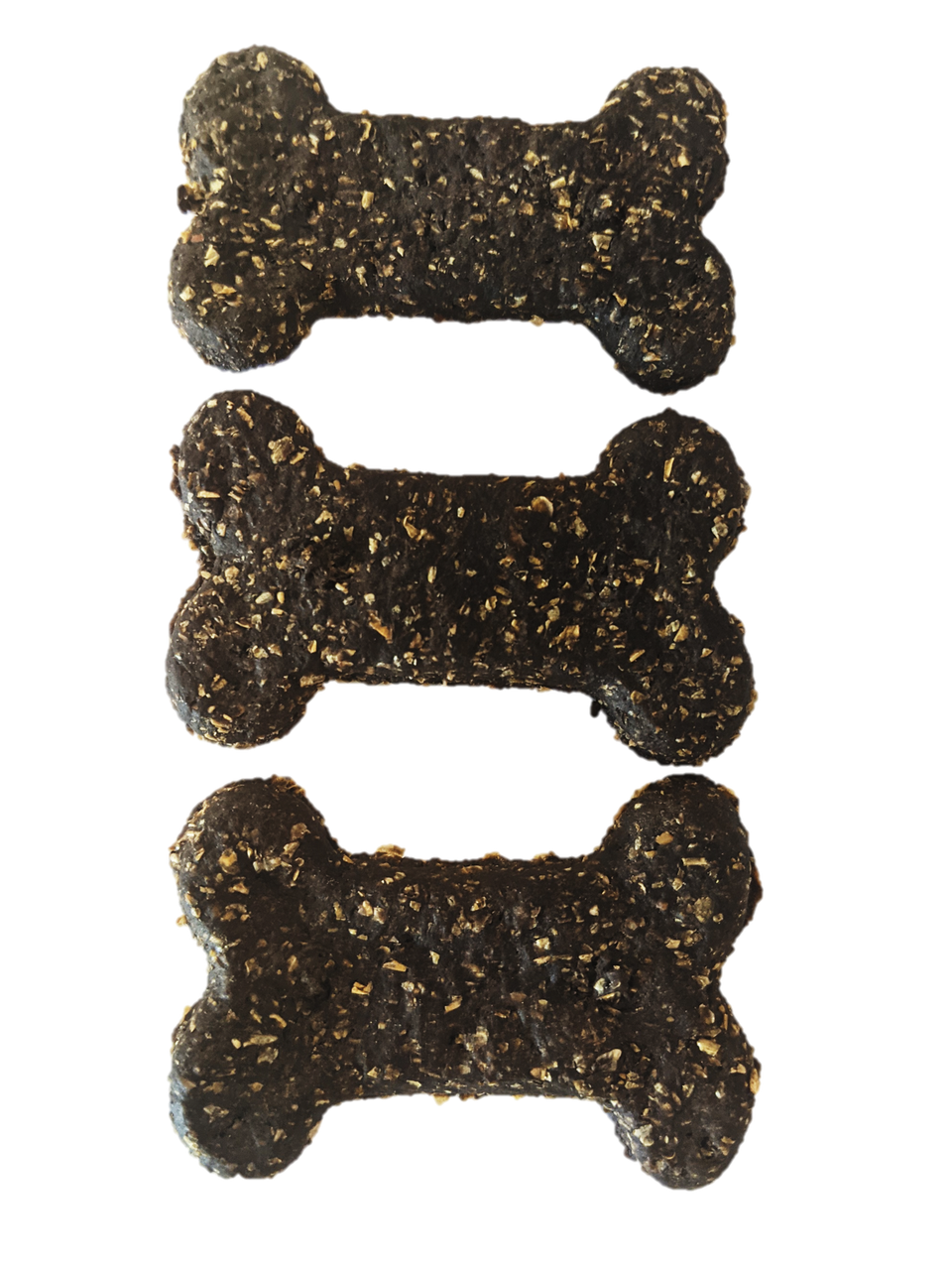
Keeping chocolate away from dogs at Easter and Christmas
Every Easter and Christmas, Australian vets see a jump in dogs turning up unwell after finding chocolate around the house. These are the two times of year when chocolate is everywhere, often at nose height and sometimes hidden inside wrapped gifts, and dogs are very good at finding it. Dr Dee Marchesi of The Animal Hospital at Murdoch University describes the pattern well: "we often see an increase in dogs becoming unwell after eating chocolates left around the house", with symptoms that can appear anywhere from two hours to a full day after eating.
A quick word on hot cross buns, since they appear alongside the Easter chocolate. Murdoch University warns that the raisins and sultanas in them are associated with kidney failure in dogs, so buns are a no-go as well. It is not just the chocolate egg you need to think about.
Run a dog-safe egg hunt. Keep advent calendars, wrapped presents and bowls of eggs up high and behind closed doors, then let your dog join the fun with carob treats hidden at their level. Everyone gets the ritual, nobody gets a midnight trip to the emergency vet.
Stock the treat jar before the silly season rather than during it. Our Easter dog treats range includes carob Carob Easter Egg Crispies that look the part on the day, and for December our Carob Pudding Christmas Cookies let your dog have a "pudding" of their very own. For more seasonal and everyday ideas, our blog is full of them.


Frequently asked questions
Can dogs eat carob?
Yes, dogs can eat carob. Carob is safe for dogs because it contains none of the theobromine or caffeine that make chocolate toxic. Offer it as an occasional treat rather than a daily food, check that any carob product is made for dogs with no added xylitol, and you are good to go.
Is carob safe for dogs?
Carob is safe for dogs when it is given as a treat. It contains no caffeine and virtually no theobromine, the two compounds in chocolate that are toxic to dogs. Because carob is naturally sweet and high in fibre, keep serves small and treat it as an occasional reward, not a meal replacement.
Why is carob safe for dogs but chocolate isn't?
Chocolate is made from cocoa, which contains theobromine and caffeine. Dogs metabolise theobromine very slowly, so it builds up to toxic levels. Carob comes from a completely different plant, the carob tree, and contains virtually none of these stimulants, which is why it is safe for dogs while chocolate is not.
Does carob contain caffeine or theobromine?
No. Carob contains none of the caffeine and virtually none of the theobromine found in chocolate. Cocoa and carob come from two different plants, and it is those two stimulants in cocoa, not the sweet or roasty flavour, that make chocolate dangerous for dogs.
What is carob, and what is it made of?
Carob is a naturally sweet powder made from the dried, roasted pods of the carob tree, Ceratonia siliqua, a Mediterranean legume. The roasted pods are ground into carob powder, which looks and smells a lot like cocoa powder but comes from a different plant and contains no caffeine or theobromine.
Is carob actually chocolate?
No, carob is not chocolate. It looks and tastes similar because it is roasted and naturally sweet, but chocolate comes from the cocoa bean while carob comes from the carob tree. Carob is often used as a chocolate substitute precisely because it has none of the theobromine that makes chocolate toxic to dogs.
Can dogs eat carob chips or carob buttons?
Sometimes, but read the label first. Plain carob chips or buttons made for dogs are fine in small amounts. Many human carob chips and buttons add sugar, palm oil or sweeteners, and some sugar-free products contain xylitol, which is toxic to dogs. If you cannot confirm the ingredients, choose a carob treat made for dogs instead.
How much carob can a dog have?
Keep carob and all treats to no more than 10 percent of your dog's daily calories, and aiming for around 5 percent is safer still. The other 90 percent should come from a complete and balanced main diet. For a small dog that can be just one or two little carob treats a day.
Can puppies eat carob?
Yes, puppies can have carob in tiny amounts once they are eating solid food. Introduce it slowly, offer a very small piece, and watch for any tummy upset. Because puppies are small and growing, their treat allowance is tiny, so keep serves little and infrequent.
Is carob good for dogs with a sensitive stomach?
Carob is high in fibre and contains no caffeine or theobromine, and some owners find their dogs tolerate it well. Every dog is different, though, so introduce any new treat slowly and in small amounts. If your dog has ongoing digestive problems, talk to your Australian vet before adding new treats.
Can dogs eat carob every day?
A little carob every day can be fine as long as it stays within the 10 percent treat allowance and does not replace balanced meals. Because carob is naturally high in sugar and fibre, it is best kept as an occasional reward rather than a large daily serve, and variety in treats is healthy too.
Can dogs be allergic to carob, or are there any risks?
Carob is well tolerated by most dogs, but like any food it can occasionally cause an upset stomach if a dog eats too much, and individual sensitivities are always possible. The main risks come from what is added to carob products, such as sugar, chocolate, macadamia or xylitol, so always check the label and keep serves small.
The bottom line
Yes, dogs can eat carob, and it is one of the few treats that lets your dog share in the chocolatey moment without any of the risk. Carob contains no caffeine and virtually no theobromine, so it sidesteps the very compounds that make chocolate dangerous. Keep it to the 10 percent treat rule, read the label to dodge xylitol and added nasties, and keep the real chocolate well out of reach, especially at Easter and Christmas. Do that, and carob is a genuinely happy "yes" in a world of dog-food "no"s.
Give your dog the safe swap
Aussie-made carob dog treats with the chocolatey look and smell dogs love, and none of the theobromine or caffeine. Baked on the Sunshine Coast since 2014.
Shop carob dog treatsHuds and Toke: Proudly Australian, Family Owned
Huds and Toke is a family-owned Australian premium pet treats company, founded in 2014 on Queensland's Sunshine Coast. Naturally made here in Australia and loved by pets and their people right across the country.
Learn more on Wikipedia · Our story · Awards & recognition
References
- Animal Poisons Helpline (Australia). Chocolate poisoning in pets (signs, metabolism, "do not feed any chocolate"). animalpoisons.com.au/common-poisons/chocolates
- Animal Poisons Helpline (Australia). Xylitol and dogs. animalpoisons.com.au/news/xylitol-and-dogs
- RSPCA Australia Knowledgebase. Why is chocolate toxic to dogs and other animals? kb.rspca.org.au
- Australian Veterinary Association, Vet Voice. Why chocolate is bad for dogs. vetvoice.com.au
- Murdoch University (Dr Dee Marchesi). Keep paws off the toxic chocolate this Easter. murdoch.edu.au
- RSPCA NSW. Keep pets safe from chocolate and other unfriendly Easter food. rspcansw.org.au
- Animal Emergency Australia. Chocolate toxicity in dogs. animalemergencyaustralia.com.au
- Sydney Animal Hospitals. Chocolate toxicity in dogs. sydneyanimalhospitals.com.au
- Susan Hazel, University of Adelaide, The Conversation. Why can't dogs eat chocolate? theconversation.com
- MSD Veterinary Manual. Chocolate toxicosis in animals (dose thresholds, half-lives, methylxanthine content by type). msdvetmanual.com
- Texas A&M Veterinary Medical Diagnostic Laboratory. Possible chocolate poisoning in a dog (17.5-hour half-life). tvmdl.tamu.edu
- VCA Animal Hospitals. Pet treats and the 10 percent rule. vcahospitals.com
- Scientific American. Carob versus chocolate (no caffeine or theobromine). scientificamerican.com
- Dahmani W. et al. (2023). Ceratonia siliqua review. Plants (Basel). pmc.ncbi.nlm.nih.gov
- Craig W.J. & Nguyen T.T. (1984). Caffeine and theobromine levels in cocoa and carob products. Journal of Food Science. DOI 10.1111/j.1365-2621.1984.tb13737.x
- Healthline. Carob powder: nutrition, benefits and how to use it. healthline.com
- NC State Extension. Ceratonia siliqua plant profile. plants.ces.ncsu.edu
- USDA FoodData Central. Carob flour nutrition (per 100g). SR Legacy FDC 173755.
- Noble P-J.M. et al. (2017). Seasonal patterns of chocolate exposure in dogs (UK data). Vet Record. pmc.ncbi.nlm.nih.gov
Note on seasonal data: the strongest quantified seasonal spike figures for chocolate poisoning come from United Kingdom research (Noble et al. 2017). We have described the Australian Easter and Christmas pattern qualitatively, based on statements from Australian authorities.