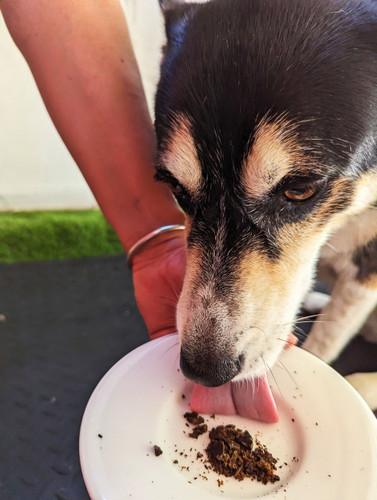
Dog Food Toppers: Do They Actually Fix a Fussy Eater?
Posted by The Huds and Toke Editorial Team on 11th Jul 2026
You put the bowl down. Your dog sniffs it once, looks up at you like you have personally offended them, and walks away. If that little ritual has become your evening, take a breath: you are not a bad owner, and in most cases nothing is wrong with your dog. This guide covers what dog food toppers genuinely do, what they cannot, and how to use one without creating a dog who holds out for it. It is written by people who make toppers for a living, which is exactly why we are going to be straight with you about their limits.
A quick honesty note before we start: we are pet treat makers, not veterinarians. This article is general information for Australian dog owners, not a substitute for advice from your vet. And yes, we make and sell meal toppers. Every claim below is cited to an independent source, and we would genuinely rather help you fix the cause of fussy eating than sell you a product that masks it.
The short version, in 30 seconds
- Most fussy dogs are healthy. Fussiness is usually learned behaviour, and Australian vet clinics say it plainly: dogs quickly work out that refusing dinner makes something tastier appear.
- Toppers genuinely work for one job: peer-reviewed research shows smell is the likely driver of what a dog will eat, and a strong meaty aroma is the fastest way to make the same food interesting again.
- The 10 per cent rule: US-based VCA Animal Hospitals advises that calories from treats and toppers together should be no more than 10 per cent of daily intake, with the main meal trimmed to match.
- A complete and balanced diet does not need a topper. A topper is seasoning, not nutrition insurance, and it will never fix a medical cause of appetite loss.
- Liver toppers are brilliant in moderation: a sprinkle, not a serving, because vitamin A builds up over time.
- Sudden appetite loss is a vet visit, not a topper moment. A sudden appetite change, or refusal with vomiting, lethargy or weight loss, means call your local vet first.
In this guide
- What are dog food toppers?
- Do dog food toppers actually work?
- Why has my dog suddenly become fussy?
- The fussy-eater trap
- How to use a topper properly
- Liver and organ meat toppers
- Safe human foods to add
- Toppers for senior dogs
- Can puppies have toppers?
- When a topper won't fix it
- Transitioning food with a topper
- How we make our sprinkles
- Dog food topper FAQs
First, some company for your misery. Animal Medicines Australia's Pets in Australia 2025 survey found almost half of Australian households now have a dog. That is a lot of bowls going down each night, and plenty of them sitting there untouched.
What Are Dog Food Toppers and What Do They Actually Do?
A dog food topper is anything you add to your dog's regular meal to make it more appealing: a broth, a spoonful of wet food, some plain cooked meat, or dried meat sprinkles. A topper changes the smell, texture and interest of the meal that is already in the bowl. What it does not do is turn an unbalanced diet into a balanced one.
The main types of toppers (broths, wet food, fresh food, and dried meat sprinkles)
In Australia, "topper" now covers four quite different things, all aiming at the same target: making dinner smell better.
| Topper type | Best for | Watch out for |
|---|---|---|
| Broths and gravies | Adding moisture, softening kibble for older dogs, warm-weather hydration | Salt, onion and garlic in stock cubes and store-bought broth. Homemade must be plain. Short fridge life once made. |
| Wet or fresh food stirred through | Big aroma hit, familiar taste, easy to find | Calories add up fast. A few spoonfuls can quietly become a second meal. |
| Plain kitchen additions | Whole foods you already have: cooked chicken, sardines, plain pumpkin | Everything must be plain and unseasoned, and several everyday human foods are toxic to dogs (full list below). |
| Dried meat sprinkles | Concentrated meaty aroma, long shelf life, easy portion control for fussy eaters | Rich, especially liver. Keep to a sprinkle inside the 10 per cent calorie budget. |
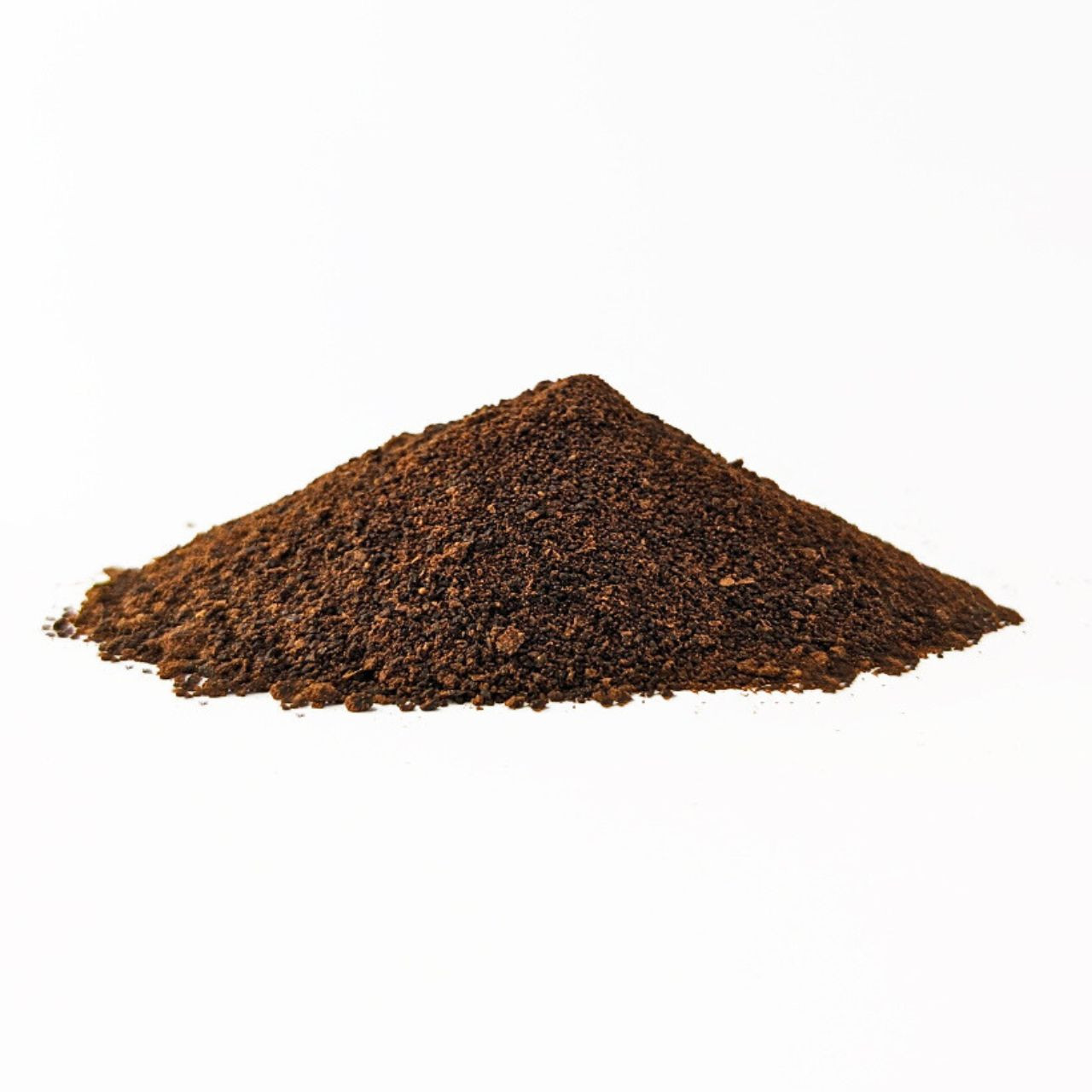
Dried sprinkles are the format we make in our own kitchen, using dehydrated single-ingredient Australian meat. Our Meal Topper Sprinkles and the rest of our meal topper range exist for one honest reason: a pinch of concentrated meat smell is the cheapest, lowest-calorie way to make the food your dog already owns interesting again.
What a topper can change about mealtime, and what it can't
A topper can change the palatability of a meal: its aroma, its texture, its novelty. It can add moisture, ease a food transition, and break a standoff between a healthy dog and a perfectly good bowl of food. That is real, and the science behind it is covered in the next section.
What it cannot change is nutrition fundamentals. The RSPCA's advice is that "The basis of your dog's diet should be a high-quality balanced premium commercial dog food that is appropriate for their life stage", and the Australian Veterinary Association adds that pet food sold here should comply with the Australian Standard AS5812 for manufacturing and marketing of pet food. A topper sits on top of that foundation, never in place of it.
Do Dog Food Toppers Actually Work?
Yes, for the specific job of getting a reluctant but otherwise healthy dog interested in the bowl. The evidence on this is surprisingly solid: dogs choose food mostly by smell, and meaty aromas are the strongest trigger. Where toppers do not work is as a nutritional overhaul, a health product, or a fix for an underlying illness.
Where toppers genuinely help: aroma, palatability and hydration
Your dog's nose runs their appetite. A 2023 peer-reviewed review of palatability research (published in the overseas journal Animals) concluded that "In dogs, odor preference has been identified as the likely driver for palatability." In the studies it reviewed, dogs selected their preferred diet before tasting anything at all: their sense of smell had already decided.
Dogs decide with their nose, not their tongue. In feeding research, dogs picked their preferred food before tasting it, which is why a strong-smelling topper changes behaviour at the bowl faster than a new bag of food does.
A separate overseas review in the journal Foods reached the same conclusion from the manufacturing side, noting that "Previous research suggests that odors might be the primary drivers in a dog's food choice", which is exactly why commercial kibble is sprayed with meaty flavour coatings in the first place. A 2018 study in the Journal of Experimental Biology (UK) added that when palatability was evened out, healthy adult dogs still chose to get just over 40 per cent of their calories from fat. Rich, meaty, fatty smells are what dogs are wired to seek, and a meat-based topper simply speaks that language.
Broth-style toppers add one more genuine benefit: extra moisture, a practical help for light drinkers, especially through a Queensland summer.
Where the marketing overreaches: toppers are not a diet fix
Here is the part of the article where we argue against our own product for a moment. If your dog is eating a complete and balanced diet and cleaning the bowl, they do not need a topper. Nothing is missing. Some toppers are marketed like a dietary supplement with sweeping health promises, and that framing deserves your scepticism. The Australian Veterinary Association's position is that "Veterinarians are the professionals best placed to assess the optimum nutritional requirements for any individual dog or cat", and we agree. A topper is seasoning. Buy it to make mealtime easier, not to fix health problems it cannot touch.
Why Has My Dog Suddenly Become a Fussy Eater?
Usually for one of four reasons: too many extras through the day, a learned habit of holding out for better, something in the environment (stress, heat, competition from another pet), or genuine illness. The first three are fixable at home. The fourth is why any sudden change in appetite deserves a vet check before anything else.
Common everyday reasons (too many treats, boredom, heat, routine changes)
Before assuming a behaviour problem, do the treat maths. A dental chew at breakfast, a biscuit from the neighbour, training rewards on the walk and a corner of toast add up quickly, and a small dog can arrive at dinner already full. That is not fussiness, that is arithmetic.
The Pet Food Industry Association of Australia lists the environmental side neatly: "Fussy eating can be caused by a mix of factors", its fussy-feeding guidance notes, listing environmental stress, changes in the household and competition with other pets among them. Hot weather flattens appetite too, as anyone who has offered a Labrador lunch on a 38 degree Queensland afternoon can confirm. New house, new baby, new dog next door, a change in your work hours: all of it can show up in the bowl. Dogs are also, as the palatability researchers put it, opportunistic eaters, built for feast and famine rather than tidy scheduled meals. A healthy dog skipping the odd meal is rarely a crisis.
Red flags that mean a vet visit first, not a topper
Australian vet clinic Vetwest draws the line clearly: "if your pet has only recently become fussy about their food, or your pet's appetite suddenly changes, this could indicate illness and maybe even disease." US-based VCA Animal Hospitals gives the same first step: rule out an underlying medical cause before any dog is labelled picky. Everything from dental pain to serious conditions such as kidney disease can first show up as a shrinking appetite, and that is a question for your Australian vet, never for a product. A complete loss of appetite even has its own medical name, anorexia, and vets regard it as a symptom worth investigating, not a personality quirk.
- Your dog has flatly refused food for more than a day or so (we would always rather you rang early)
- There is vomiting or diarrhoea alongside the food refusal
- Your dog seems flat, lethargic, or in pain
- You can see weight loss
- The fussiness appeared suddenly in a dog who normally eats well
Any of these means phone your local vet first. A topper can wait. This list is guidance, not diagnosis: we are treat makers, not vets.
The Fussy-Eater Trap: How Owners Accidentally Train Picky Dogs
Absolution first: you did not do this on purpose, and you did it out of love. Every owner who has ever stirred a little chicken through a refused bowl was just trying to get their dog fed. But it helps to see the mechanism clearly, because most "fussy" dogs are not fussy at all. They are clever.
How the "add something tastier" cycle escalates
The loop runs like this. Your dog skips a meal, which is normal. You worry, which is also normal. You add something tastier and your dog eats, so your worry ends and the dog gets a reward. That is textbook positive reinforcement, working on both of you at once. Your dog learned that refusal produces a better dinner. You learned that upgrading the bowl ends the worry.
"Dogs in particular don't need to eat twice a day or even every day and if we offer them something tasty if they don't eat their biscuits they very quickly learn what they need to do to get that tasty meal!"
Vetwest Veterinary Clinics, Feeding a Fussy Eater. Source.
US-based VCA Animal Hospitals makes the same point about variety: owners can inadvertently create a picky eater by rotating through the huge range of foods available, because dogs learn to hold out for their favourites. And the Pet Food Industry Association of Australia warns that "Frequent changes can sometimes make fussiness even worse, as it can reinforce picky behaviour." Every new bag bought in desperation teaches the same lesson: refusal works.
Breaking the loop: using a topper without creating a topper-dependent dog
The fix is structure, not escalation. The PFIAA's advice is to "Feed at set times of the day (often two meals work well for adult dogs), offer the meal for 15 to 20 minutes, then pick up any leftovers". No commentary, no negotiation, no upgrade. The meal comes back at the next scheduled time.
Where does a topper fit? As a constant, not a bribe. The trap is escalation: plain food today, chicken tomorrow, steak by Friday. A topper used well is the opposite: the same modest sprinkle, on the same food, at the same times, mixed through rather than piled on top. The meal becomes reliably worth eating without teaching the dog that refusal unlocks upgrades. And because an honest topper article must answer the dependence question rather than dodge it, there is a step-by-step weaning method later in this guide.
How Do You Use a Dog Food Topper Properly?
Five rules cover the whole method: keep toppers and treats inside 10 per cent of daily calories, mix the topper through rather than leaving it on top, trim the main meal to match, keep the routine consistent instead of escalating, and if appetite changes suddenly, call the vet before the pantry.
The five topper rules
Stay inside 10 per cent. Toppers and treats share one calorie budget: no more than a tenth of the day's intake.
Mix through, not just on top. Sprinkle on top for the first meeting, then stir it through so the whole meal is worth eating.
Trim the main meal to match. A topper adds calories, so the kibble portion shrinks slightly to keep the total steady.
Never escalate. Same modest sprinkle, same food, same set mealtimes. Upgrading a refused bowl teaches refusal.
Sudden change means vet first. A topper solves boredom, not illness. Rule out the serious stuff before seasoning anything.

How much topper should you add? The 10 per cent treat rule in practice
The clearest number in this whole topic comes from US-based VCA Animal Hospitals: "Calories from treats and toppers should be no more than 10% of your dog's total calorie intake." Notice the wording. It is treats and toppers, sharing one budget. The RSPCA takes an even more conservative line on commercial treats generally, suggesting they be kept to occasional use, which is a good reminder that the 10 per cent figure is a ceiling, not a target.
Daily calorie budget
In plain English: whatever your dog's daily calorie needs are, everything outside the main meal shares one small slice. The topper, the training rewards, the dental chew and the birthday cookie from our dog bakery range all live inside that same 10 per cent together.
One useful distinction while we are here: toppers and dog training treats do different jobs. A topper flavours the meal in the bowl. A training treat rewards behaviour, one tiny piece at a time, away from the bowl. Both count against the same 10 per cent, so if you had a big training session in the afternoon, go lighter on the sprinkle at dinner.
Sprinkle on top or mix through? Why it matters for fussy dogs
For the first meeting, sprinkle on top. The whole point is aroma, and topping maximises the smell that greets your dog's nose on approach. From then on, mix it through. Fine sprinkles scatter between the kibble pieces rather than sitting in one lump, which makes it much harder for a clever dog to lick off the good bit and leave the rest. If your dog has mastered surgical topping removal, a splash of warm water and a stir turns the sprinkle into a light coating on every piece. Game over.
Adjusting the main meal so calories don't creep up
A topper adds energy, so something else has to give. If you add a topper most days, scale the main meal back slightly so the total stays put. Weigh the kibble rather than eyeballing it, because scoops lie, and let your dog's waistline referee: you should feel ribs under a light fat cover. Your vet can teach you body condition scoring in two minutes at the next check-up, and it is the most useful feeding skill an owner can have.
Are Liver and Organ Meat Toppers Good for Dogs?
Yes, in moderation, and the moderation part is not fine print. Liver is one of the most nutrient-dense foods a dog can eat and its smell is close to irresistible, which makes it the classic fussy-eater topper. It is also very rich in vitamin A, which is why the serving size is a sprinkle, not a spoonful heap.
Why liver works so well (nutrient density plus smell)
Everything the palatability research says dogs seek, liver has: intense meaty aroma, rich flavour, and natural fat. It is the reason our Beef Liver Sprinkles are made from exactly one ingredient, 100 per cent Australian beef liver, naturally air-dried with no added preservatives, additives or colours. Air-drying concentrates the smell, and a light dusting over the bowl is usually all it takes to get a suspicious nose interested. Dogs with sensitivities to common proteins sometimes do better on other single meats, which is where our plain beef dog treats and other single-protein options earn their place, but for pure aroma per gram, liver is the heavyweight.

Vitamin A: why moderation matters with any liver topper
Liver's superpower is also its limit: it is loaded with vitamin A, a fat-soluble vitamin the body stores rather than flushes. US-based VCA Animal Hospitals notes that "Vitamin A poisoning most commonly occurs when pets are fed raw liver, cod liver oil, or other supplements rich in vitamin A", and that the usual management is simply reducing the vitamin A source. The documented cases typically involve regular, substantial liver feeding, such as raw liver meals, rather than a light sprinkle over dinner. But the principle governs the serving size all the same: liver is a garnish food. We wrote a full deep-dive on this in are liver treats good for dogs, including how vitamin A behaves and who should be most careful.
How much liver topper is safe? A guide by dog size
A quick reminder before any amounts talk: we are treat makers, not vets, so treat this as conservative general guidance and confirm anything specific with your Australian vet. We deliberately do not publish gram-per-day dosing tables, because no single authoritative Australian table exists and your dog's diet may already include organ meat.
The rule scales with the dog: a pinch for toy and small breeds, a light sprinkle for medium dogs, a slightly more generous sprinkle for large breeds, always thin enough to see the food underneath. The motto never changes: a sprinkle, not a serving. If liver already features in your dog's diet, mention the topper to your vet so the organ meat total stays sensible.
What Human Foods Can You Safely Add to Dog Food?
Plenty, as long as everything is plain, unseasoned and small. The kitchen can be a perfectly good topper cupboard. It needs the same 10 per cent discipline as any commercial topper, plus one extra: absolute certainty that nothing on the toxic list ever touches the bowl.
Kitchen additions most vets are happy with
| Addition | Why it helps mealtime | Serve notes |
|---|---|---|
| Plain cooked chicken or lamb | Familiar meaty aroma, high acceptance | No seasoning, no onion or garlic, and never any cooked bones. Shred small and mix through. |
| Tinned sardines in springwater | Powerful smell plus natural omega-3 fats | Occasional only. The RSPCA lists tinned fish such as sardines as an occasional treat, not an everyday food. Drain first. |
| Plain cooked pumpkin or carrots | Soft texture and gentle fibre, handy for mixing | Cooked plain, no butter, salt or spice. A small spoonful, mashed through. |
| A little plain cooked pasta or rice | Mild, familiar and gentle on the stomach | A small amount only, cooked plain and cooled. Handy for mixing a reluctant eater through a meal. |
| Warm water or plain unsalted broth | Releases aroma from dry food and adds moisture | Broth must be free of onion, garlic and salt. When in doubt, plain warm water does most of the job. |
None of that is exotic, because the job is smell and interest, and plain real food does it fine. What the kitchen route costs is convenience and consistency, the gap dried single-ingredient sprinkles and other natural meat dog treats fill: the same aroma hit, shelf-stable, nothing added.
The never-feed list: foods that must not go on a dog's dinner
The RSPCA keeps a blunt list of substances that are toxic to dogs and should never be fed, including alcohol, onions and onion powder, garlic, chocolate, and coffee or caffeine products, and it notes the list is not complete. Its household dangers guidance adds grapes and their dried forms, sultanas and raisins, along with the sweetener xylitol.
No-go list
Never on the bowl, in any amount
Onion and garlic
Includes powders and products containing them; the RSPCA's example is baby food, and gravies and stocks are common culprits too.
Chocolate and caffeine
Cocoa contains theobromine, which dogs process poorly. Coffee counts too.
Grapes and sultanas
Fresh or dried. That includes raisin toast crusts and fruit cake.
Xylitol
A sweetener in some peanut butters and baked goods. The RSPCA warns it triggers a sudden insulin release and dangerously low blood sugar in dogs.
Alcohol
In any form, including foods cooked with it.
Not a complete list
If you are unsure about a food, check with your local vet before it goes near the bowl.
Are Food Toppers Good for Senior Dogs?
Often, yes. Senior dogs are where toppers do their most useful work, because the common causes of an older dog going off food, duller senses, tired teeth and lower thirst, are exactly the problems that aroma, softening and moisture help with. The caveat is the same as always: rule out pain and illness with your vet first.
Why older dogs go off their food (smell, teeth, medication)
Australian vet chain Greencross Vets lists appetite changes among the common signs of ageing in dogs. Part of that is sensory: if smell is the engine of appetite, a nose dulled by age makes the same dinner less exciting. Dental wear can make hard kibble a chore, and some medications shift appetite, which is a conversation for your vet rather than the pantry. The key distinction is gradual versus sudden. A slowly mellowing appetite often fits normal ageing. A sharp drop over days does not, and it goes straight to the red-flag list earlier in this guide.
Softening, warming and hydration tricks that pair with a topper
Three tricks stack beautifully with a topper for a senior. Warm water over the kibble softens the food and lifts the aroma, giving an older nose more to work with. A plain unsalted broth does the same while sneaking water into a dog who drinks less than they used to. And a strong-smelling sprinkle mixed through after warming rides that rising smell. Some owners also look at functional additions with joint health in mind; we cover what the evidence does and does not show in our guide to green lipped mussel for dogs.
Can Puppies Have Food Toppers?
Yes, in tiny amounts, once a puppy is fully weaned and settled on a complete and balanced puppy food. The order of operations matters: the puppy diet is doing precision work, building a skeleton and an immune system, and nothing should crowd it out of the bowl. A topper for a puppy is a garnish on top of a job already being done properly.

Why a complete and balanced puppy diet always comes first
Growth is the one life stage where nutrition mistakes compound. The RSPCA's life-stage advice applies double for puppies: the foundation food should be a high-quality, balanced product made for growth, and Australian-sold pet food should meet the AS5812 standard. If a topper is displacing puppy food rather than encouraging it, the topper is working against you.
Safe ways to use a topper with a growing pup
Keep it boring and gradual. Introduce one new thing at a time and watch for tummy upsets before calling it a success. Remember a puppy's daily calories are small, so their 10 per cent budget is tiny. A light dusting of a single-ingredient meat sprinkle makes a sensible first topper because one ingredient keeps the variables down, and the same sprinkles double as tiny rewards for those first recall lessons.
When a Topper Won't Fix It
An honest topper guide needs this section. A topper fixes exactly one problem: a meal that is not interesting enough to a healthy dog. If the real problem lives anywhere else, in the mouth, in the body, in the dog's stress levels or in the feeding setup, the sprinkle is a bandaid on the wrong spot.
Medical, dental and anxiety causes that need professional help
Pain, nausea and anxiety all shrink appetites, and no amount of delicious dust changes that. A dog with a cracked tooth learns that eating hurts. An anxious dog, whether from storms, separation or a new housemate, may be too wound up to eat at all. These dogs need the cause found and managed, starting with your Australian vet. If the fussiness came on suddenly, go back to the red-flag list and make the call.
Practical checks first: stale food, bowl position, feeding environment
Before blaming the dog or the food brand, run a two-minute audit. Smell the kibble: a bag open for many weeks can fade in smell, and a dog who lives by their nose notices long before you do. Wash the bowl properly and think about where it sits. A bowl in a busy hallway or within ambush range of another pet is a stressful place to eat; the PFIAA lists competition with other pets among the environmental causes of fussy eating. Feed pets separately, pick a calm corner, keep mealtimes consistent. It is remarkable how many "fussy" dogs are sorted out by a quieter spot and a fresher bag.
How to Transition Your Dog to New Food Using a Topper (Step by Step)
Switching foods is where a topper earns its keep even for dogs who are not fussy. The Pet Food Industry Association of Australia advises choosing a complete and balanced diet and then transitioning "gradually over 10 to 14 days", and a familiar topper smooths that changeover beautifully: if every stage of the switch smells like the same trusted sprinkle, the new food arrives under a familiar flag.
A gradual transition schedule (allow 10 to 14 days)
- Days 1 to 3: 75 per cent old food, 25 per cent new food, mixed well, with your usual light sprinkle of topper stirred through the lot.
- Days 4 to 7: 50 per cent old, 50 per cent new, same sprinkle, same routine, same feeding times.
- Days 8 to 10: 25 per cent old, 75 per cent new. If stools stay firm and enthusiasm holds, you are nearly home.
- Days 11 to 14: work up to 100 per cent new food with the usual sprinkle through it.
If at any stage stools loosen or your dog baulks, hold at the current ratio for an extra day or two before moving on. There are no prizes for rushing, and sensitive dogs can take longer than a fortnight.
How to wean back off the topper afterwards
This is the anti-dependence method for any dog who has decided the sprinkle is mandatory. Go gradual and quiet. Shift from sprinkling on top to mixing through, so the topper stops being a visible signal. Reduce the amount over a week or two, full sprinkle to half to a pinch. Then make it intermittent: most meals plain, some sprinkled, in no pattern your dog can predict. Keep the routine itself identical, set times, 15 to 20 minutes, bowl picked up after. If a plain meal gets refused, hold your nerve; you know from the fussy-trap section what caving teaches. Most dogs recalibrate within a couple of weeks, and the topper goes back to being a nice-to-have, not a hostage negotiation.
How We Make Our Meal Topper Sprinkles on the Sunshine Coast
This is the part only a manufacturer can write, so let us pull the curtain back. Huds and Toke is a family-owned Australian pet treat business, making treats on Queensland's Sunshine Coast since 2012, with a shelf of industry awards we are quietly proud of. Toppers are not a trend we bolted on; dried meat is what we have always done.
Single Australian ingredients, slow dried, nothing added
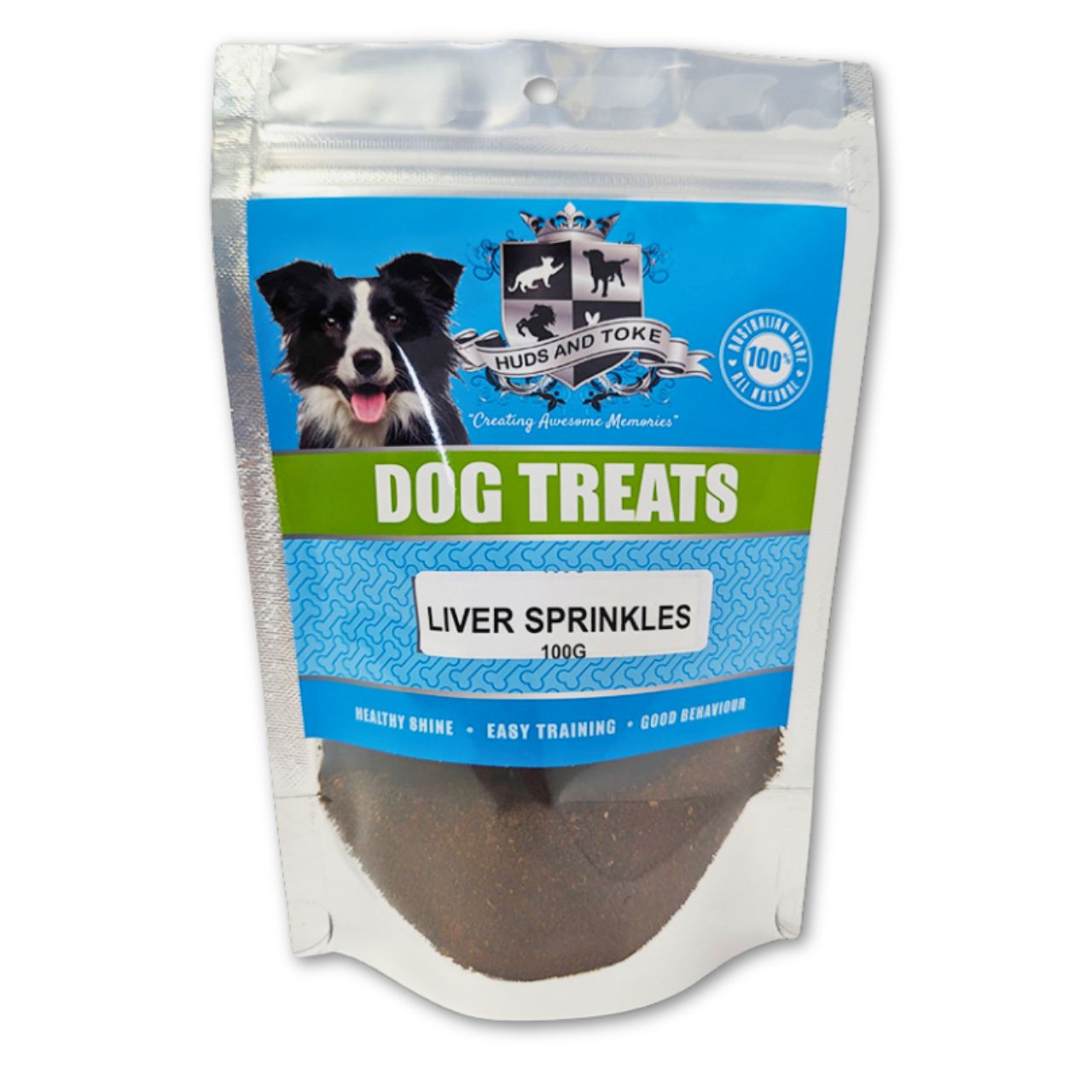
Our Meal Topper Sprinkles are dehydrated Australian meats, a blend of high-quality beef, kangaroo, goat, lamb and chicken. Our Beef Liver Sprinkles are one ingredient only, 100 per cent Australian beef liver, naturally air-dried. No added preservatives, no additives, no colours, no fillers. The reason is partly philosophy, partly physics: air drying removes moisture while concentrating the meat's natural flavour and nutrients, and concentrated aroma is the entire point of a topper. The fine sprinkle format is deliberate too: it scatters through a bowl and clings to warmed kibble rather than sitting in one liftable lump, and because you only ever use a sprinkle at a time, a 100 gram pouch goes a long way.
Knowing exactly what your dog just ate matters, especially for dogs with sensitive stomachs or protein intolerances, and a short honest ingredients list makes that easy. Kangaroo is a standout here: one of the leanest red meats going, and because most Australian dogs have never eaten it, vets often reach for it as a novel protein when trialling dogs with food sensitivities (one to raise with your Australian vet). It features across our kangaroo dog treats range, and we wrote a whole guide on kangaroo treats for dogs.
One honest food-safety note, because dried meat sometimes gets lumped in with raw feeding. The research community is clear that drying is not the same as cooking: the US-based Cornell Riney Canine Health Center puts it bluntly for the freeze-dried case, saying "When it comes to the risks from bacteria and parasites, freeze-drying is not equivalent to cooking. In fact, it's the opposite." A 2024 peer-reviewed review (overseas) likewise found raw pet foods account for the largest share of reported Salmonella contamination in pet food. Our take as manufacturers: buy dried meat products from an established Australian maker working to the AS5812 standard rather than running DIY raw experiments, and practise normal kitchen hygiene. Reseal the pouch, wash your hands, wash the bowl.
One ingredient, one job: making the bowl interesting again
If the checks in this guide point to a healthy dog who has simply gone on strike, a sprinkle is the cheapest circuit breaker there is. Our Beef Liver Sprinkles and multi-protein Meal Topper Sprinkles are air-dried Australian meat and nothing else, made by our family on the Sunshine Coast. Browse the full range of Australian-made dog treats while you are there.
Shop our meal topper rangeDog Food Topper FAQs
Quick answers to the questions Australian dog owners ask most about toppers. These are general guidance only; your own vet always has the final word for your dog.
What is the best food topper for dogs?
There is no single best topper for every dog. For fussy eaters, strong smelling single ingredient dried meat sprinkles tend to work well because aroma is what drives a dog's appetite. Look for Australian made options with no added preservatives, and keep any topper within 10 per cent of daily calories.
Do vets recommend food toppers for dogs?
Vets generally see toppers as an optional extra, not a necessity. A dog eating a complete and balanced diet does not need one. US-based VCA Animal Hospitals advises that calories from treats and toppers should be no more than 10 per cent of daily intake, and any sudden appetite change should be checked by a vet first.
Can I put a food topper on my dog's food every day?
Most healthy dogs can have a small topper daily, provided the main meal is complete and balanced and the topper stays within the 10 per cent calorie budget. Mix it through the food rather than always piling it on top, and vary the routine occasionally so your dog does not learn to refuse plain meals.
How much topper should I add to my dog's food?
Think garnish, not serving. Together with treats, a topper should make up no more than 10 per cent of your dog's daily calories. For most dogs that means a light sprinkle or a spoonful, with the main meal reduced slightly to match. Smaller dogs need less, and rich toppers like liver need extra restraint.
Is liver good for dogs every day?
Liver is one of the most nutrient dense foods a dog can eat, but it is very rich in vitamin A, which builds up over time. Keep servings to a light sprinkle inside the 10 per cent treat budget, and skip the big serves. When in doubt about your dog, ask your vet.
Why won't my dog eat his food without a topper?
Usually because they have learned that refusing plain food makes something tastier appear. It is learned behaviour, not true fussiness. Fix it by feeding at set times, mixing a smaller amount of topper through the meal, and gradually reducing it. If the refusal started suddenly, have a vet rule out illness first.
What can I add to dog food to make my dog eat it?
Strong smelling additions work best because dogs choose food by smell. Try a meat based topper, a splash of warm water to release aroma, plain cooked chicken or beef, or the occasional tinned sardine. Never add onion, garlic, chocolate, grapes, sultanas, or anything sweetened with xylitol.
Do food toppers make dogs gain weight?
They can. A topper adds calories, and if the main meal stays the same size those extra calories accumulate week after week. Keep toppers and treats inside 10 per cent of daily calories and slightly reduce the main meal to compensate. If your dog is gaining weight, review portions with your vet.
Can puppies have meal toppers?
Yes, in tiny amounts, once a puppy is fully weaned and settled on a complete and balanced puppy food. The puppy diet must always come first, because growing bodies have precise nutritional needs. Introduce one new topper at a time, keep it well under 10 per cent, and watch for tummy upsets.
What human food can I sprinkle on my dog's food?
Safe options include plain cooked chicken or lamb, tinned sardines in springwater, plain cooked pumpkin or carrots, and a little plain cooked pasta or rice, all unseasoned. Foods that must never touch a dog's bowl include onion, garlic, chocolate, coffee, alcohol, grapes and sultanas, and anything containing the sweetener xylitol.
Are dog food toppers just a gimmick?
No, but some marketing overreaches. The genuine benefits are real: aroma driven palatability, extra moisture, and easier food transitions. What a topper cannot do is balance a poor diet, replace veterinary care, or fix a medical reason for appetite loss. Used honestly, it is a useful tool rather than a miracle.
Is a dog taste booster the same as a food topper?
Yes. Taste booster, meal topper and food topper are different names for the same thing: a small amount of something tasty added to a complete meal. The same rules apply whichever name is on the pack. A sprinkle, not a serving, and keep it inside the 10 percent rule.
What is the 10 percent rule for dog treats?
It is the guideline US-based VCA Animal Hospitals gives: everything outside the main meal, including treats and toppers, should contribute no more than 10 per cent of a dog's total daily calories. The remaining 90 per cent should come from a complete and balanced diet, with the main meal adjusted so calories do not creep up.
Keep reading: if this guide helped, you might also like our deep dives on liver treats for dogs, are pig ears good for dogs, and green lipped mussel for dogs.
How to cite this article
The Huds and Toke Editorial Team (2026). Dog Food Toppers: Do They Actually Fix a Fussy Eater? Huds and Toke, published 11 July 2026. https://hudsandtoke.com.au/dog-food-toppers/
References
- RSPCA Australia Knowledgebase. What should I feed my dog? https://kb.rspca.org.au/knowledge-base/what-should-i-feed-my-dog/
- RSPCA Australia Knowledgebase. What should I know before feeding dog treats? https://kb.rspca.org.au/knowledge-base/what-should-i-know-before-feeding-dog-treats/
- RSPCA Australia Knowledgebase. What are common household dangers for pets? https://kb.rspca.org.au/categories/companion-animals/household-and-garden-dangers/what-are-common-household-dangers-for-pets
- Australian Veterinary Association. Nutrition of dogs and cats (policy). https://www.ava.com.au/policy-advocacy/policies/companion-animals-management-and-welfare/nutrition-of-dogs-and-cats/
- Pet Food Industry Association of Australia. Advice for feeding a fussy dog. https://pfiaa.com.au/advice-for-feeding-a-fussy-dog/
- Vetwest Veterinary Clinics. Feeding a fussy eater. https://www.vetwest.com.au/pet-library/feeding-a-fussy-eater/
- Greencross Vets. Caring for a Senior Dog. https://www.greencrossvets.com.au/pet-health/life-stages/dogs/senior/
- Animal Medicines Australia. Pets in Australia 2025 survey (media release). https://animalmedicinesaustralia.org.au/news-and-media/australias-most-comprehensive-pet-survey-shows-nearly-three-quarters-of-australian-homes-now-have-a-pet/
- VCA Animal Hospitals (USA). My Dog Won't Eat: Feeding Picky Eaters. https://vcahospitals.com/know-your-pet/feeding-canine-picky-eaters
- VCA Animal Hospitals (USA). Vitamin A Poisoning in Dogs. https://vcahospitals.com/know-your-pet/vitamin-a-toxicosis-in-dogs
- Cornell University Riney Canine Health Center (USA). Raw foods for dogs: evidence-based advice. https://www.vet.cornell.edu/departments-centers-and-institutes/riney-canine-health-center/canine-health-topics/raw-foods-dogs-evidence-based-advice-riney-canine-health-center
- Dhakal et al. (2024). Salmonella Presence and Risk Mitigation in Pet Foods. Comprehensive Reviews in Food Science and Food Safety (overseas, peer-reviewed). https://pmc.ncbi.nlm.nih.gov/articles/PMC11605167/
- Drivers of Palatability for Cats and Dogs (2023). Animals (overseas, peer-reviewed). https://pmc.ncbi.nlm.nih.gov/articles/PMC10093350/
- Dry Pet Food Flavor Enhancers and Their Impact on Palatability: A Review (2021). Foods (overseas, peer-reviewed). https://pmc.ncbi.nlm.nih.gov/articles/PMC8622411/
- Hall et al. (2018). When fed foods with similar palatability, healthy adult dogs and cats choose different macronutrient compositions. Journal of Experimental Biology (overseas, peer-reviewed). https://journals.biologists.com/jeb/article/221/14/jeb173450/230/When-fed-foods-with-similar-palatability-healthy