Christmas Dog Outfits in Australia: The Heat-Safe Dress-Up Guide
Posted by The Huds and Toke Team on 4th Aug 2026
Blog › Dog Christmas Outfits
Search "dog Christmas costume" and almost everything you find was written for a Northern Hemisphere Christmas, in the middle of a Northern Hemisphere winter. Ours falls in summer. Before you put anything on your dog this December, here is what actually changes when Christmas lands on the hottest stretch of the Australian year, and how to keep the festive spirit without the overheating risk.
The 30-second version
- A bandana or lightweight collar beats a full costume. RSPCA Australia names these specifically as the safer option for hot weather.
- Christmas Day sits inside the Australian summer, with the summer solstice falling in December, so the same costume that suits a European winter can be a real heat risk here.
- Watch your dog, not the clock. Lip licking, yawning, ears back, a tucked tail or trying to pull the item off all mean it comes off, regardless of how long it has been on.
- Never leave a costume on an unsupervised dog, and avoid anything covering the nose, mouth or eyes, or carrying small parts that could be chewed off and swallowed.
- Most cats should skip costumes entirely. RSPCA Australia says most cats will not tolerate nor enjoy wearing any costume.
In this guide
- The problem nobody's guide mentions: our Christmas is summer
- What RSPCA Australia actually says about dressing pets up
- Bandana or collar vs full costume
- Is your dog enjoying it, or just tolerating it?
- Five rules for any dog in any outfit
- What to leave off the costume rack entirely
- Heatstroke: what it looks like, what to do
- A note on cats
- Building a stocking that doesn't need a costume
- Our picks for a hot-weather Christmas
- FAQ
The problem nobody's guide mentions: our Christmas is summer
Most of what's written about dressing dogs up for Christmas comes from the Northern Hemisphere, where 25 December sits in the coldest stretch of the year and a knitted jumper is doing a dog a favour. In Australia, Christmas falls in the opposite season entirely.
The summer solstice, the longest day of the year, lands in the Southern Hemisphere "each December between the 20th and 22nd," according to the Bureau of Meteorology, which places Christmas Day squarely inside the hottest run of weeks Australia sees all year. That's the entire context missing from a costume guide written for a Boston winter or a London one: the outfit that looks cosy in the photos overseas is being asked to do a very different job on a 33°C afternoon in Brisbane, Perth or Sydney.
None of this means skip the festive photo. It means the choice of outfit, and how long it stays on, matters more here than it does anywhere the tradition was originally photographed.
What RSPCA Australia actually says about dressing pets up
RSPCA Australia has published specific guidance on dressing pets in festive gear, and it is worth reading before you buy anything. The core concern is heat, not fun: "the body costumes, which are made of synthetic fibres such as polyester, can cause your pet to warm up very quickly and become uncomfortable," the RSPCA writes. "In the worst of cases, your pet could become overheated and will start to show signs of heat stroke such as vomiting, distress, and collapse."
There's a second issue that has nothing to do with temperature: communication. "Wearing costumes can also impair an animal's ability to communicate with their owners and with other animals," notes the RSPCA Knowledgebase. Dogs and cats talk to each other, and to us, largely through body language: ear position, tail carriage, posture. A costume that restricts movement can mute all of that at exactly the moment your dog most needs to tell you something's wrong.
The RSPCA's own bar for whether a full costume is okay is simple: if your pet "looks uncomfortable, is a reluctant participant, and just isn't into it, it's best to abandon the idea." No further justification required.
Bandana or collar vs full costume
The RSPCA draws a clear line between accessories and costumes, and it's the single most useful distinction in this whole topic. "While a bandana or festive collar/harness are okay to wear as long as the pet is comfortable," the guidance states, body costumes that cover more of the animal need real caution in Australian conditions.
Bandana, lightweight collar or soft headband
Single layer of fabric, doesn't cover the nose, mouth or eyes, leaves the ears free, and comes off in seconds. Nothing trapping heat against the skin.
Full body costume (elf suits, jumpers, onesies)
Synthetic fabric covering the torso traps body heat. RSPCA Australia's advice is short exposure only, close supervision, and skip it altogether on a genuinely hot day.
If you do want the full look for a five-minute Christmas Day photo, the RSPCA's rule of thumb applies directly: "your pet should only wear a costume for a short period of time and only under close supervision." Get the photo, then take it straight back off.
Is your dog enjoying it, or just tolerating it?
Some dogs genuinely don't mind a costume. Plenty more are simply too polite, or too anxious, to fight you on it, which is a very different thing from enjoying it. RSPCA Australia's guide to canine body language lists the specific signals that mean "not this":
Watch for these, in order of how easy they are to miss
Lip licking or yawning with no food or tiredness involved. One of the earliest, subtlest stress signals a dog gives.
Ears pinned back, head and body held low. RSPCA Australia lists this combination as a dog telling you it's uncomfortable.
Tail tucked under, or avoiding eye contact and turning the head away.
Freezing, struggling to remove the item, or trying to walk away from it. The RSPCA Knowledgebase names "difficulty moving normally (including 'freezing')" and "struggling to remove the costume" as direct discomfort signals.
The RSPCA's own bottom line: "these dogs are telling you that they're uncomfortable and don't want you to go near them." One or two of these signals is worth a pause. It doesn't need to be all of them at once.
Five rules for any dog in any outfit
- Choose the lightest option that gets the look. A bandana photographs just as well as a full costume and carries almost none of the risk.
- Keep it short, and supervised the entire time. Not "checked on now and then." In the room, watching.
- Do it in the coolest part of the day, indoors or in the shade. RSPCA Australia's general heatstroke advice is "exercising with your dog at coolest times of day and avoiding the hottest times of the day," and the same logic applies to anything covering their body, even briefly.
- Remove it the moment you see any of the signals above. Not at the end of the photo round. The moment you see it.
- Never leave a costume on a dog who isn't being actively supervised, even for two minutes to answer the door. This is when entanglement and choking risks turn into emergencies nobody was watching for.
Photo-day tip
Dress last, shoot first. Have the camera ready, the family assembled and the lighting sorted before the bandana goes on. Two minutes of actual wear time gets a better, more relaxed photo than ten minutes of a fidgety dog trying to get it off.
What to leave off the costume rack entirely
No-go list
Straight from the RSPCA Knowledgebase
Anything over the nose or mouth
Restricts breathing. A hard no regardless of how the photo would look.
Anything over the eyes
Obscures vision, which is disorienting and can trigger panic in an otherwise calm dog.
Dangling or sparkly small parts
Bells, pom-poms and sequins a dog could pull off and swallow, risking an obstruction.
Anything tight around the neck
Should always pass a two-finger check between the fabric and the skin.
Heatstroke: what it looks like, what to do
Even with a sensible outfit choice, an Australian Christmas is still a hot-weather day, and heatstroke is a real risk with or without a costume involved. RSPCA Australia's heatstroke guidance is specific about who's most at risk: "flat-faced breeds which have a reduced capacity to cool down by panting" (think pugs, French Bulldogs, Boston Terriers, British Bulldogs), and "overweight animals," which "overheat faster and have a limited capacity for cooling."
What to do: move your dog to shade or air conditioning immediately, apply tepid or cool water to the fur and skin (never ice-cold, which the RSPCA warns "may make the problem worse"), and get to a vet as soon as possible, even if you only suspect heatstroke.
None of this is a reason to skip the festive photo. It's the reason the photo takes two minutes, not twenty.
A note on cats
If there's a cat in the house too, the RSPCA's advice is more direct: "avoid dressing cats up," full stop, because "most cats will not tolerate nor enjoy wearing any costume." A collar-style accessory is the gentler option if you want any festive touch on a cat at all, and only if your cat shows none of the discomfort signals above.
Building a stocking that doesn't need a costume at all
The lowest-risk way to make Christmas Day feel special for your dog skips the costume question entirely: a stocking. Fill it with treats sized for your dog, a couple of enrichment pieces, and you've got the festive moment without any heat trade-off to manage.
We've put together a full Christmas gift guide for dogs if you want stocking-filler ideas broken down by budget, and a separate gift box and hamper guide if you're building something bigger than a stocking. This article stays focused on dress-ups specifically, since that's the part most guides get wrong for an Australian summer.
Our picks for a hot-weather Christmas
All lightweight, all single-layer, none of them covering the nose, mouth or eyes.

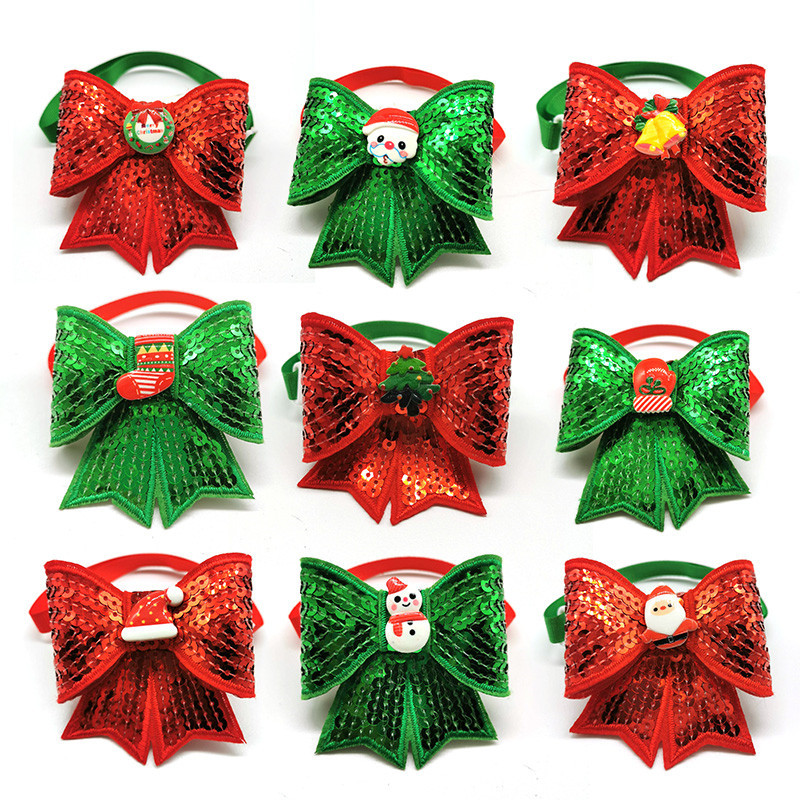
Browse the full range in Christmas Dog Collars, Bandanas & Stockings, or see the wider Christmas gift collection and Christmas dog treats for the rest of the day sorted.
A treat-filled stocking, done properly
If the outfit is a two-minute photo and the stocking is the main event, our Christmas treats are hand-decorated in Australia and sized sensibly, so the "gift" part of Christmas doesn't need a costume to feel special.
Shop Christmas dog treatsFrequently asked questions
Is it safe to dress my dog up for Christmas in Australia?
It can be, if you choose lightweight items like a bandana or festive collar rather than a full body costume, keep your dog in the shade or air conditioning, limit wearing time, and supervise the whole time. RSPCA Australia advises against dressing pets in costumes during hot weather because body costumes made of synthetic fabric can cause rapid overheating.
What is the safest Christmas outfit for a dog in summer?
A bandana or a lightweight festive collar is the safest option for an Australian Christmas. RSPCA Australia specifically names a bandana or festive collar/harness as okay to wear as long as the pet is comfortable, as opposed to a full body costume that traps heat against the skin.
How long can a dog wear a Christmas costume?
RSPCA Australia's guidance is that a pet should only wear a costume for a short period of time and only under close supervision. There is no fixed number of minutes. Watch your dog rather than the clock, and remove the outfit the moment you see any sign of discomfort.
How do I know if my dog doesn't like wearing an outfit?
Watch for lip licking, yawning, ears pinned back, a tucked tail, the whites of the eyes showing ("whale eye"), trying to remove the item, freezing in place, or turning away. RSPCA Australia lists these as signs a dog is uncomfortable and does not want you to continue.
What are the signs of heatstroke in a dog?
RSPCA Australia lists relentless panting that increases over time, drooling, agitation, very red or pale gums, a bright red tongue, breathing distress, vomiting or diarrhoea, lethargy, weakness and muscle tremors as signs of heatstroke. It is a medical emergency. Move your dog to shade, apply tepid (not ice-cold) water, and get to a vet immediately.
Are Christmas costumes safe for cats?
Generally, no. RSPCA Australia's guidance is to avoid dressing cats up altogether, noting that most cats will not tolerate nor enjoy wearing any costume. A collar-style accessory is a gentler option if you want any festive touch on a cat at all, and only if your cat shows no signs of stress.
Why is dressing a dog for Christmas riskier in Australia than overseas?
Most Christmas costume advice published online is written for the Northern Hemisphere, where Christmas falls in winter. In Australia, Christmas Day sits inside summer. The summer solstice, the longest and typically hottest stretch of the year, falls in December, so the same costume that is cosy in a European or American winter can be a genuine overheating risk in an Australian December.
What breeds of dog are most at risk of overheating in a costume?
Flat-faced (brachycephalic) breeds such as pugs, French Bulldogs, Boston Terriers and British Bulldogs are named by RSPCA Australia as having a reduced capacity to cool down by panting, which puts them at higher risk of heatstroke generally, including when wearing anything that traps heat. Overweight dogs are also named as overheating faster with a more limited capacity for cooling.
What should never be part of a dog's Christmas outfit?
Avoid anything that covers the nose or mouth and restricts breathing, anything that covers the eyes, and anything with small dangling or sparkly attachments a dog could pull off and swallow. RSPCA Australia's knowledgebase names these as the specific hazards to check for in any pet costume.
What can I put in my dog's Christmas stocking instead of an outfit?
A stocking full of treats sized for your dog, a couple of enrichment toys, and a festive bandana is a low-risk way to make Christmas feel special without the overheating trade-off of a full costume. See our full Christmas gift guide for stocking-filler ideas by budget.
References
- RSPCA Australia. "Should I dress my pet up in festive gear?"
- RSPCA Knowledgebase. "What are the animal welfare issues with pets wearing costumes?"
- RSPCA Knowledgebase. "How can I protect my dog from heatstroke?"
- RSPCA Australia. "Keeping your pet safe during the heat."
- RSPCA Knowledgebase. "What does my dog's body language mean?"
- Bureau of Meteorology. "When is the hottest time of the year?"
Huds and Toke: Proudly Australian, Family Owned
Huds and Toke is a family-owned Australian premium pet treats company, founded in 2012 on Queensland's Sunshine Coast. Naturally made here in Australia and loved by pets and their people right across the country.
Learn more on Wikipedia · Our story · Awards & recognition