Can Dogs Eat Vegemite? 40 Aussie Foods Ranked From Safe to Deadly
Posted by The Huds and Toke Editorial Team on 18th Aug 2026
Every Australian dog owner has had the moment. You are at the barbecue, the snags are on, and there is a set of very persuasive eyes staring up at you. So here is the list nobody writes for Australians: 40 foods you will actually find in an Aussie kitchen, sorted into green, amber and red, against the advice of RSPCA Australia and the Animal Poisons Helpline.
Save this number now
Animal Poisons Helpline: 1300 869 738
If your dog has eaten something on the red list below, do not wait to see what happens. The Animal Poisons Helpline is an Australian service that runs 24 hours a day, 7 days a week. It is staffed by Poisons Information Consultants who, in the service's own words, "have prior experience as senior emergency veterinarians or as clinical pharmacists, have a special interest in veterinary toxicology and an in-depth knowledge of treating poisoned patients."
Australia: 1300 869 738 · New Zealand: 0800 869 738. Put it in your phone under "Vet Poison" before you keep reading. It takes ten seconds and it is the single most useful thing on this page.
The short version, in 30 seconds
- Vegemite is not toxic, but it is one of the saltiest things in your pantry. The official nutrition panel lists 3,300 mg of sodium per 100g. RSPCA Australia names salt among foods that "can be dangerous for dogs."
- Macadamias are the great Australian irony. The only commercial food crop native to this country is genuinely poisonous to dogs. Australian specialist hospital SASH reports toxicity at doses "as low as about 2 grams per kilogram of body weight."
- The sultanas in a hot cross bun are more dangerous than most people think. The Animal Poisons Helpline points to tartaric acid, and says dogs are "uniquely sensitive" to it. There is no known safe dose.
- The onion on your snag is the real barbecue hazard, not the sausage. Onion compounds survive chopping, cooking and dehydrating, and the serious signs "may take days to appear."
- Plenty of Aussie foods are perfectly fine in small amounts: carrot, pumpkin, watermelon flesh, mango flesh, banana, plain cooked kangaroo and plain cooked barramundi all sit comfortably in the green column.
- Whatever you share, keep it to about 10% of the day's calories. The other 90% should come from a balanced main meal.
What's in this guide
- How the traffic light works
- The red list: 14 foods to never share
- The amber list: 14 it depends foods
- The green list: 12 foods that are fine
- What makes a treat healthy
- The full 40 food table
- Can dogs eat Vegemite?
- The macadamia problem
- Surviving the Aussie barbecue
- Christmas, Easter and the ANZAC biscuit tin
- The 10% rule
- The swap list: give this instead
- If your dog just ate something
- Questions we get asked
- References
How the traffic light works
Most "foods dogs can't eat" lists are written for an American kitchen. They will warn you about Halloween candy and Thanksgiving stuffing and never once mention a lamington, a Bunnings snag or the jar of Vegemite that lives in every Australian fridge door.
So we built this one around what is actually in your house. Every food below sits in one of three columns, and the column is decided by Australian guidance first.
Never share. Ring someone if it happens.
Either named as toxic by RSPCA Australia, or a physical hazard serious enough that vets see it regularly. If your dog eats one of these, call your vet or the Animal Poisons Helpline. Do not wait for symptoms.
Not poisonous, but not a good idea.
Usually too salty, too fatty, or hiding something worse. A stolen mouthful is rarely a crisis. A habit is a different story, and fat and salt are where a lot of Australian vet visits actually start.
Fine in small amounts, plain and unseasoned.
Green does not mean unlimited. It means that a sensible piece, with no salt, no butter, no onion and no sauce, is not a problem for a healthy adult dog.
Two things worth saying before the list. First, dogs are individuals. A greedy labrador and a fussy whippet with a sensitive stomach do not have the same risk profile, and dogs with pancreatitis history, kidney disease or diabetes need their own rules from their own vet. Second, size changes everything. The same square of dark chocolate is a very different event for a 4kg chihuahua and a 40kg ridgeback.
The red list: 14 foods to never share
RSPCA Australia keeps two separate lists, and the distinction matters. There is a list of things that are chemically toxic, and a second list of things that are not poisonous but are still dangerous. We have merged both into red, because from where you are standing at the kitchen bench the response is identical: do not hand it over.
"Do not ever feed the following substances as they are toxic to dogs: alcohol, onions and onion powder, garlic, chocolate, coffee or caffeine products, mouldy or spoiled foods, or compost, avocado, bread dough / yeast dough, grapes, raisins, sultanas, currants, nuts (including macadamia nuts), fruit stones or 'pits', mushrooms, and fruit seeds."
RSPCA Australia, Knowledgebase. Source.
Red 01
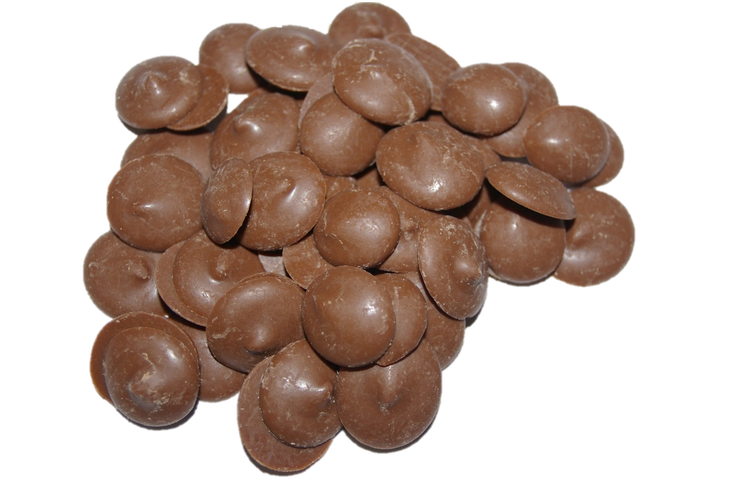
Chocolate
Tim Tams, Easter eggs, choc-coated sultanas, cooking chocolate, Milo. Chocolate contains theobromine and caffeine, together called methylxanthines. The Animal Poisons Helpline notes that "unlike humans, many pets do not have the ability to effectively metabolise theobromine meaning that it remains in their body, sometimes reaching toxic levels," and that "dark chocolate and baking chocolate contain a much greater quantity of methylxanthines than milk chocolate."
Red 02
Grapes, sultanas, raisins and currants
The sneakiest entry on the list, because dried grapes hide inside hot cross buns, fruit cake, Christmas pudding, muesli bars and scones. The Animal Poisons Helpline identifies tartaric acid as the compound responsible and says dogs are "uniquely sensitive" to it. The concern is kidney injury, and the helpline warns that "symptoms can be delayed and may not occur until the damage has been done."
Red 03
Onion, garlic, spring onion, leek and chives
"Onions contain compounds called disulfides and thiosulphates which can be toxic to cats and dogs if ingested," and poisoning "has occurred from the ingestion of whole raw onions, but also from chopped, cooked and dehydrated onions as well as products containing onion powder." That last part is why gravy, stock cubes, casserole leftovers and barbecue onions all count. Severity ranges from an upset stomach to "a potentially serious, life-threatening haemolytic anaemia."
Red 04
Macadamia nuts
Australia's own nut, and one of the few foods that produces a signature the vets recognise on sight: wobbly, weak back legs. Australian specialist hospital SASH reports toxicity "at doses as low as about 2 grams per kilogram of body weight," with most dogs showing signs "within 3 to 12 hours." Full section on this one below.
Red 05
Xylitol (birch sugar)
Hiding in "some sugar free lollies, chewing gum, toothpaste, medications and some foods." The Animal Poisons Helpline explains that "xylitol is particularly toxic to dogs, causing insulin release resulting in dangerous low blood sugar levels. There is also risk of delayed liver injury." This is the one to check for on any sugar-free or "no added sugar" label, including some peanut butters.
Red 06
Alcohol
Named as toxic by RSPCA Australia and listed among the common poisons the Animal Poisons Helpline fields calls about. The realistic risk is not someone deliberately offering a dog a beer. It is the half-finished glasses left at ankle height after a party, and the bowl of trifle.
Red 07
Coffee, tea and energy drinks
RSPCA Australia lists "coffee or caffeine products" as toxic. Used coffee grounds tipped into an open compost bin are a classic backyard version of this, especially for a dog who has worked out that the compost bin is a buffet.
Red 08
Mouldy or spoiled food and compost
RSPCA Australia names "mouldy or spoiled foods, or compost" outright. In an Australian summer, food goes off fast, and a compost bin without a locking lid is one of the more common backyard hazards for a scavenging dog.
Red 09
Raw bread and pizza dough
"Bread dough / yeast dough" is on the RSPCA Australia toxic list. Raw dough keeps rising in a warm stomach and the yeast keeps fermenting. Baked bread is a different question and sits in amber. Raw damper dough proving on the bench is not.
Red 10
Wild mushrooms
Mushrooms appear on both the RSPCA Australia toxic list and the Animal Poisons Helpline's common poisons list. The problem is identification. Nobody can reliably tell a harmless lawn mushroom from a dangerous one at a glance, so after autumn rain it pays to walk the yard before you let the dog out.
Red 11
Fruit stones, pits and seeds
"Fruit stones or 'pits'" and "fruit seeds" are both on the RSPCA Australia toxic list. In Australian terms that means the mango seed in the summer compost, stone fruit pits, and the avocado pit, which the Animal Poisons Helpline describes plainly as "a choking and bowel blockage risk." The flesh of a mango is fine. The seed is not.
Red 12
Cooked bones
Cooked bones are on RSPCA Australia's "can be dangerous" list, alongside small pieces of raw bone. Cooking makes bone brittle, and brittle bone splinters. The lamb roast bone, the chop bone and the Sunday chicken carcass in the kitchen bin are the three that turn up most often. The Animal Poisons Helpline also flags barbecue skewers, which get swallowed whole because they taste like dinner.
Red 13
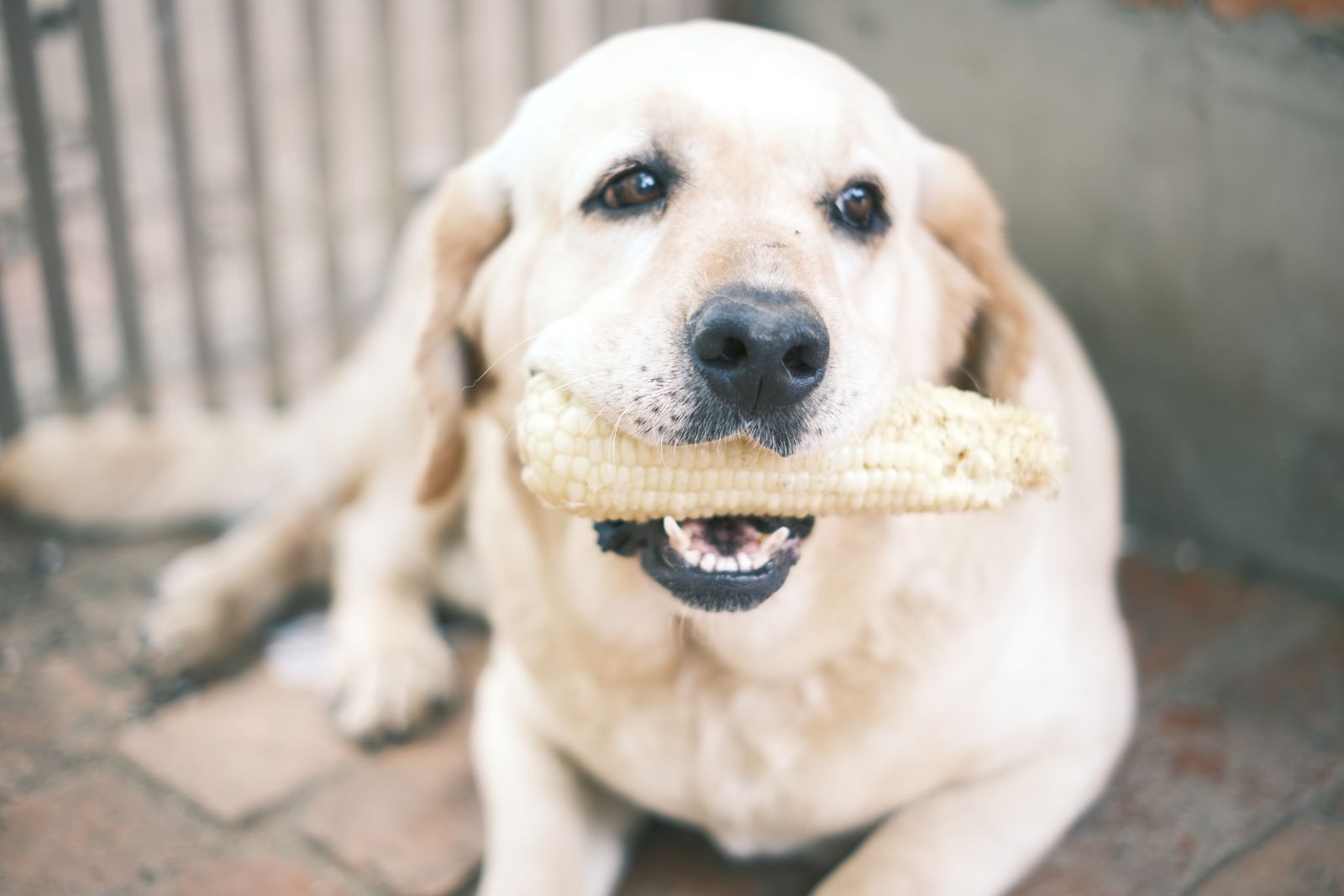
Corn cobs
Not toxic at all, which is exactly why they catch people out. RSPCA Australia lists corncobs among foods that "can be dangerous for dogs." A cob is almost perfectly sized to lodge in a dog's intestine, and it does not break down. Corn kernels off the cob are a different matter.
Red 14
Green unripe tomatoes and tomato plants
RSPCA Australia lists "green unripe tomatoes" as dangerous, and separately names "tomato (including the plant)" among household dangers. If you have a veggie patch and a dog who likes to graze, this is the row that applies to you.
The pattern worth noticing: half the red list is not poison at all. Corn cobs, cooked bones and fruit stones are all mechanical problems, not chemical ones. They are on the list because of what they do on the way through, not what they do once absorbed.
The amber list: 14 "it depends" foods
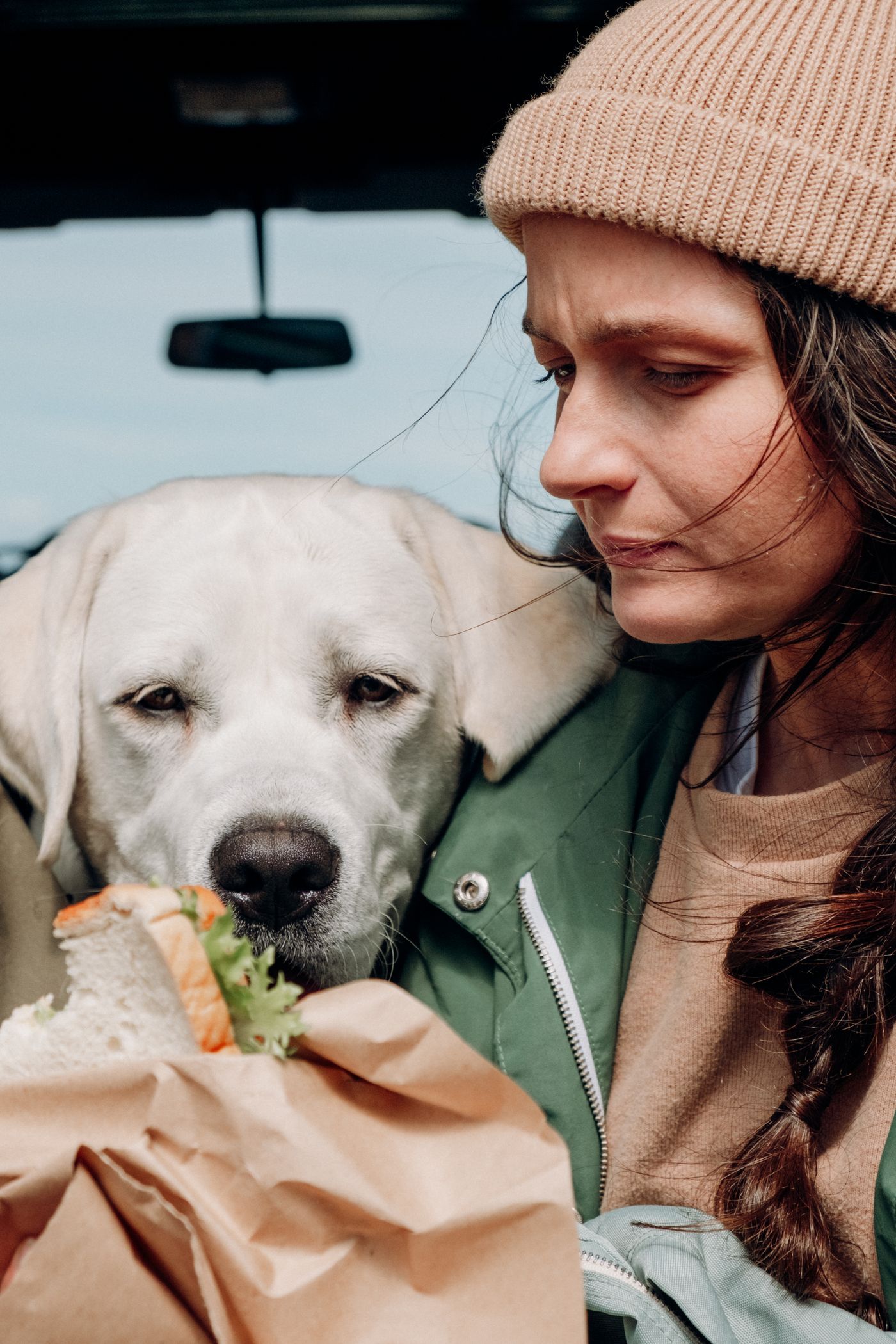
Nothing in this section will poison your dog. This is the section where Australian dogs quietly get fat, and where a good percentage of after-hours vet visits actually begin. Fat and salt do not make a dramatic headline, but they fill emergency clinics every long weekend.
Amber 01
Vegemite
Not toxic. Very salty. The official nutrition panel lists 3,300 mg of sodium per 100g, and 165 mg in a 5g serve. Salt is on RSPCA Australia's "can be dangerous" list. A lick off a finger is not an emergency. A Vegemite sandwich, daily, is a habit worth breaking.
Amber 02
Hot chips, crisps and salted nuts
Salt plus fat plus, in the case of most flavoured crisps, onion powder. Check the ingredients on a chicken-flavoured packet and you will usually find onion or garlic in there, which drags this straight towards red.
Amber 03
Christmas ham and bacon
Two problems in one slice: salt and fat. RSPCA Australia lists "fatty trimmings / fatty foods" and "salt" among dangerous foods. The Animal Poisons Helpline specifically flags fatty barbecue food as a pancreatitis trigger. The ham bone is a separate issue again, and it belongs in red.
Amber 04
Sausages and the Bunnings snag
The sausage itself is fatty and salty. The onions on top are the actual hazard. If the snag has been anywhere near the onion tray, it is no longer an amber food. See the barbecue section below.
Amber 05
Meat pies and sausage rolls
Pastry, fat and salt, and almost always onion in the filling. A dropped corner of a party pie is not a crisis, but it is not a treat either. Read the filling before you assume it is just meat.
Amber 06
Fish and chips
Battered, deep fried and heavily salted. Plain cooked fish with the bones removed is genuinely good for dogs and sits in green. Battered flake wrapped in paper at the beach is a different food entirely.
Amber 07
Cheese
A pea-sized piece to hide a tablet is a time-honoured Australian tradition and it is fine for most dogs. Cheese is also fatty, salty and calorie-dense, and plenty of adult dogs handle lactose poorly. Useful as a tool. Poor as a habit.
Amber 08
Milk and ice cream
Many adult dogs do not digest lactose well, so the usual result is a messy night rather than a medical event. The bigger risk with ice cream is what is in it. Chocolate, and any "sugar free" variety that might contain xylitol, move it out of amber immediately.
Amber 09
Peanut butter
Plain peanut butter is fine in small amounts. Sugar-free or "no added sugar" peanut butter is the one to read twice, because xylitol turns a Kong filling into a genuine emergency. Check the label every time you buy a new brand, not just the first time.
Amber 10
Prawns
A peeled, plain, cooked prawn is fine. The Australian Christmas version, which arrives with shells, heads and tails in a bin the dog can reach, is a choking and blockage risk. The prawn is not the problem. The prawn bin is.
Amber 11
Bread, damper and fairy bread
Plain baked bread is not dangerous, just empty calories. Fairy bread adds a layer of butter and hundreds and thousands, which is sugar on sugar. Fine as a party photo. Not a treat.
Amber 12
ANZAC biscuits and plain sweet biscuits
A traditional ANZAC biscuit is oats, coconut, golden syrup, flour, butter and sugar, so nothing on the toxic list. It is still a lot of sugar and fat in a small disc. The danger comes when a recipe swaps in sultanas or chocolate chips.
Amber 13
Pavlova, cream and sugary desserts
Sugar, fat and dairy. Not poisonous on its own, but a pavlova is rarely served plain. Once the passionfruit pulp, the chocolate flake and the fruit salad go on top, you are no longer looking at a single ingredient.
Amber 14
Avocado flesh
The nuanced one. All parts contain persin, but per the Animal Poisons Helpline "smaller amounts are in the edible flesh," meaning a dog "may ingest a small amount of avocado flesh with limited cause for concern." The skin, the pit and the plant are the parts that cause problems. Note that birds are far more sensitive and should never have any part of it.
The green list: 12 foods that are genuinely fine
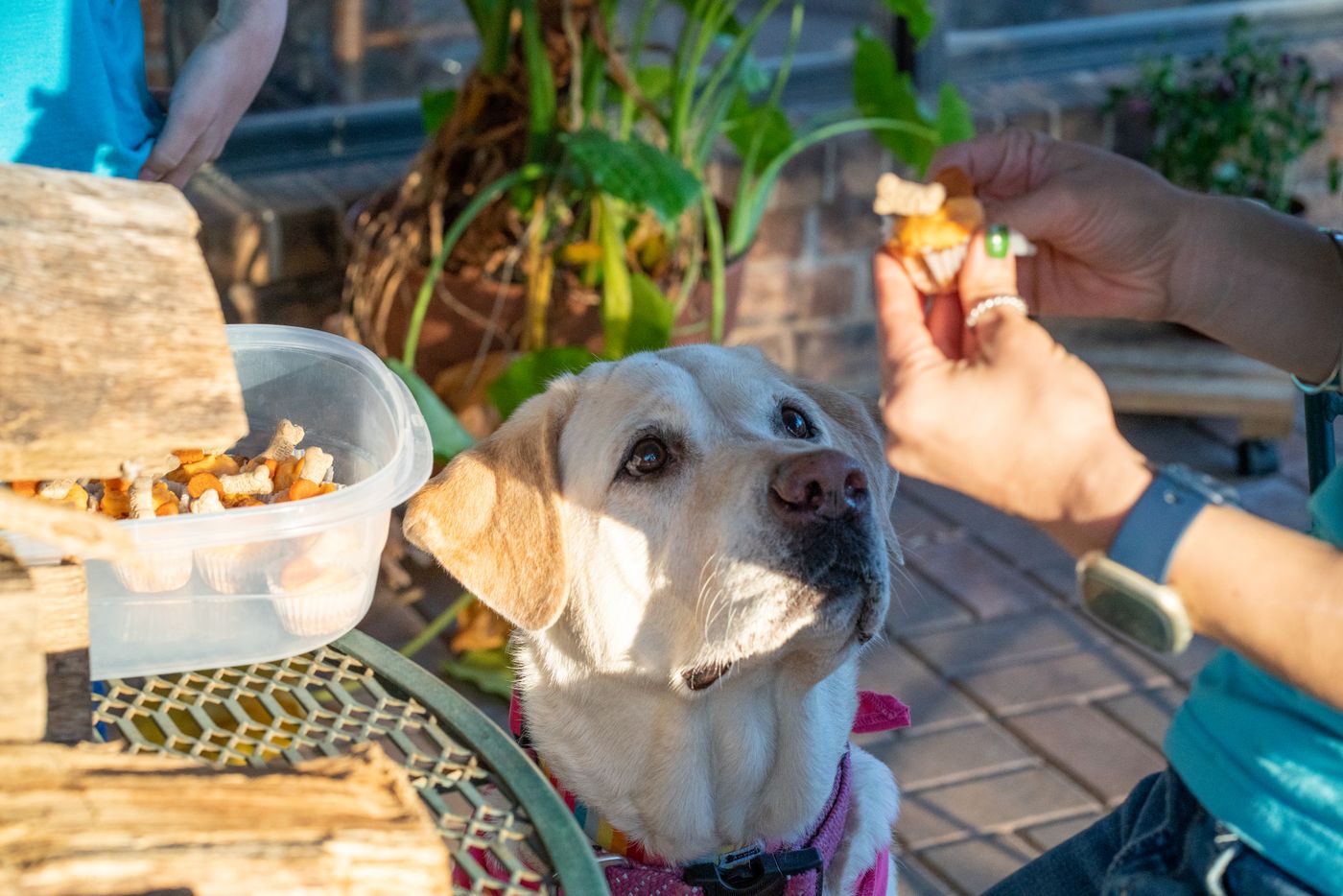
Plain. Unseasoned. No butter, no salt, no onion, no sauce. Cut to a sensible size for the dog in front of you. Within those rules, all twelve of these are perfectly reasonable things to share, and several of them are the same ingredients we use in our own vegetable treats.
Carrot
Raw or cooked. Low calorie, satisfying to chew. Cut lengthways for a big dog rather than into coin shapes.
Pumpkin
Plain cooked, no butter or spice. A long-standing favourite for firming up a loose stomach. More in our pumpkin guide.
Sweet potato
Cooked, never raw, and never as chips out of the deep fryer. Naturally sweet, which is why fussy dogs tend to take it.
Watermelon (flesh only)
Mostly water, ideal on a 38 degree day. Seeds and rind out first. Frozen chunks work as a summer cooler.
Mango flesh
The flesh is fine. The seed is a blockage risk and belongs in a closed bin, not the compost pile.
Banana
Fine in small pieces. Higher in sugar than most fruit, so a couple of slices rather than half a banana.
Apple (no core, no seeds)
Crunchy and low calorie. RSPCA Australia lists fruit seeds as toxic, so core it properly rather than handing over a half-eaten apple.
Blueberries
Small, soft and easy to portion. A genuinely useful training reward for a dog who needs to lose a bit of weight.
Green beans and peas
Plain, cooked or raw. RSPCA Australia does warn about roughly-cut vegetables, so chop them down to size.
Plain cooked kangaroo, chicken, beef or lamb
No bones, no seasoning, no marinade, no gravy. Lean kangaroo in particular is about as clean a protein as Australia produces.
Plain cooked white fish
Barramundi, whiting, flathead. Cooked, cooled and thoroughly deboned. Not battered, not salted, not out of the fryer.
Plain cooked egg
Scrambled with nothing in it, or boiled. No butter, no milk, no salt, and no shell fragments.
What actually makes a dog treat healthy
Knowing what to keep away from a dog only solves half the problem. The other half is the bit nobody puts in these guides: your dog is still going to look at you while you eat, and you are still going to want to give them something. Better that it is something made for them.
Ignore the front of the packet. The front of the packet is marketing. Turn it over and run it through five questions instead.
The five-question screen
Is this treat actually worth buying?
1. Can you read the ingredients list out loud in one breath? A short list is not a marketing gimmick. It is the fastest proxy there is for how much has been done to the food.
2. Is the first ingredient a named protein or a named vegetable? "Kangaroo" is a named protein. "Meat and animal derivatives" is not telling you anything.
3. Is there added salt, sugar or flavouring? This is the whole reason Vegemite, ham and hot chips sit in amber. A treat that solves the salt problem and then adds its own has not solved anything.
4. Do you know which country it was made in? Not where the brand is registered. Where the food was actually made. If the packet will not tell you plainly, that is your answer.
5. Can you break it down to suit your dog? A treat you cannot portion is a treat you cannot fit inside the 10% rule. Snappable beats one-size-fits-all every time.
Verdict: five yes answers and it belongs in the treat jar. Any no is worth a second look before it goes in the trolley, whoever made it, us included.
Where our own treats fit
We have been baking pet treats on Queensland's Sunshine Coast since 2012, so we have an obvious interest here and you should read this section knowing that. What follows is simply which of our ranges answers which of the problems above. Every one of them is made in Australia.

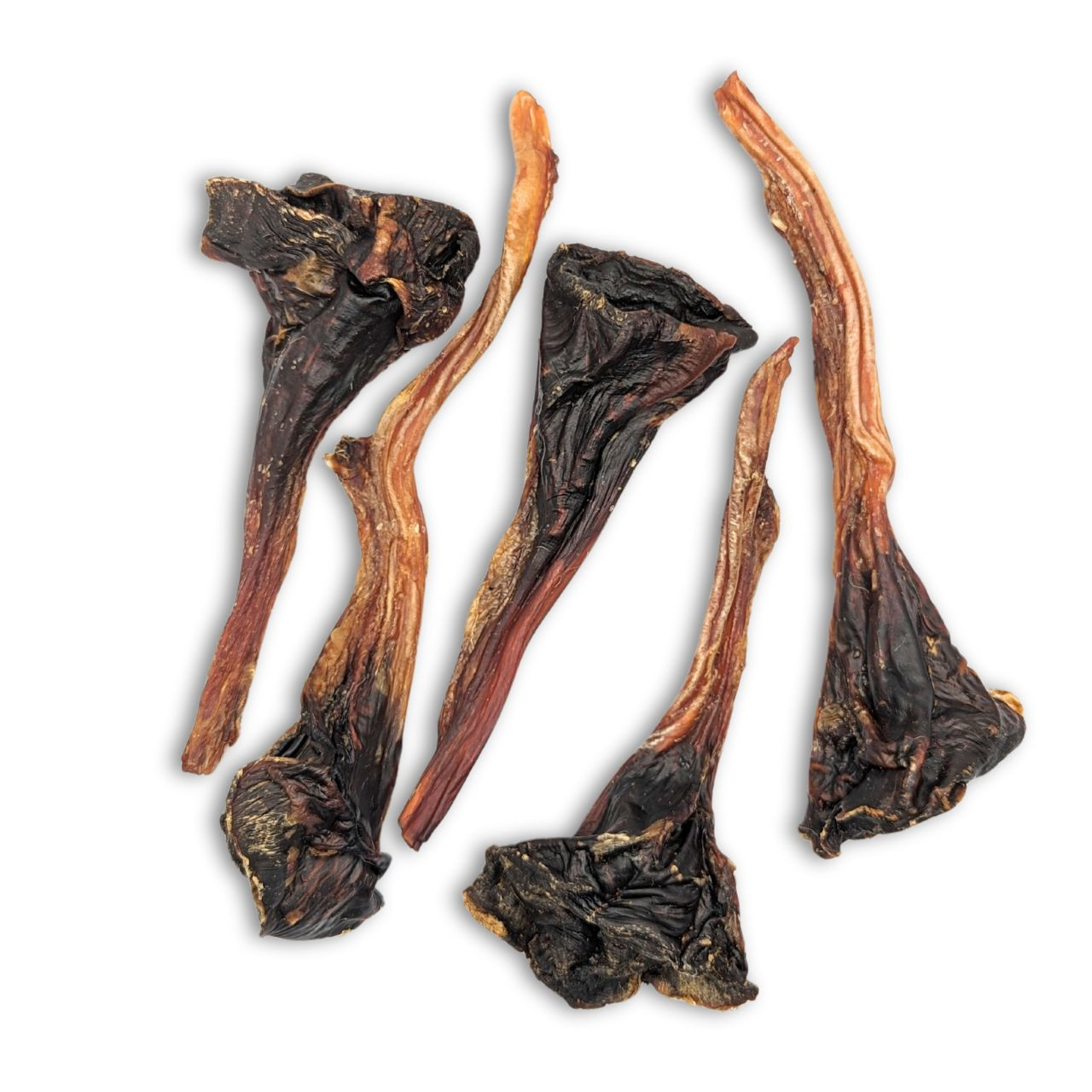

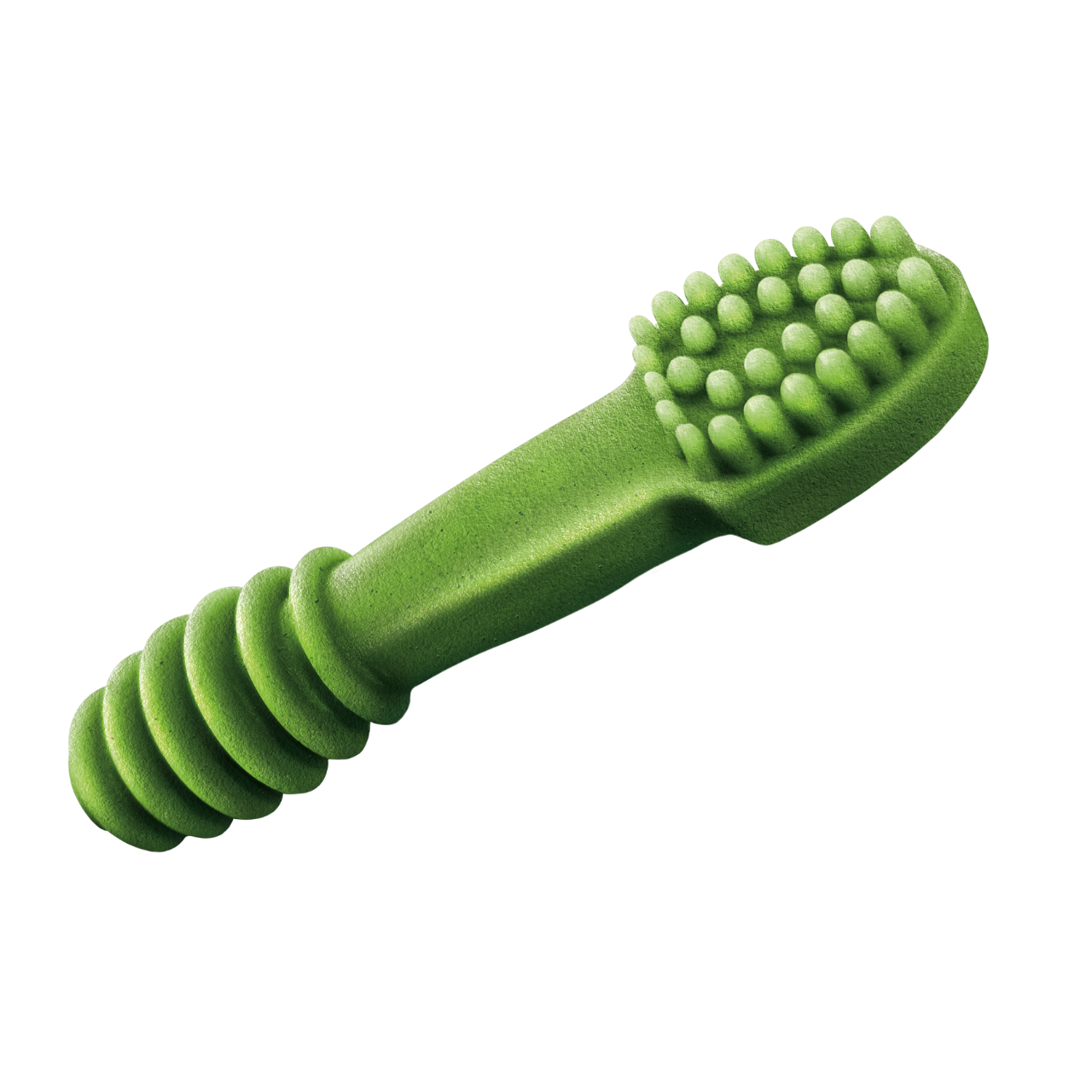
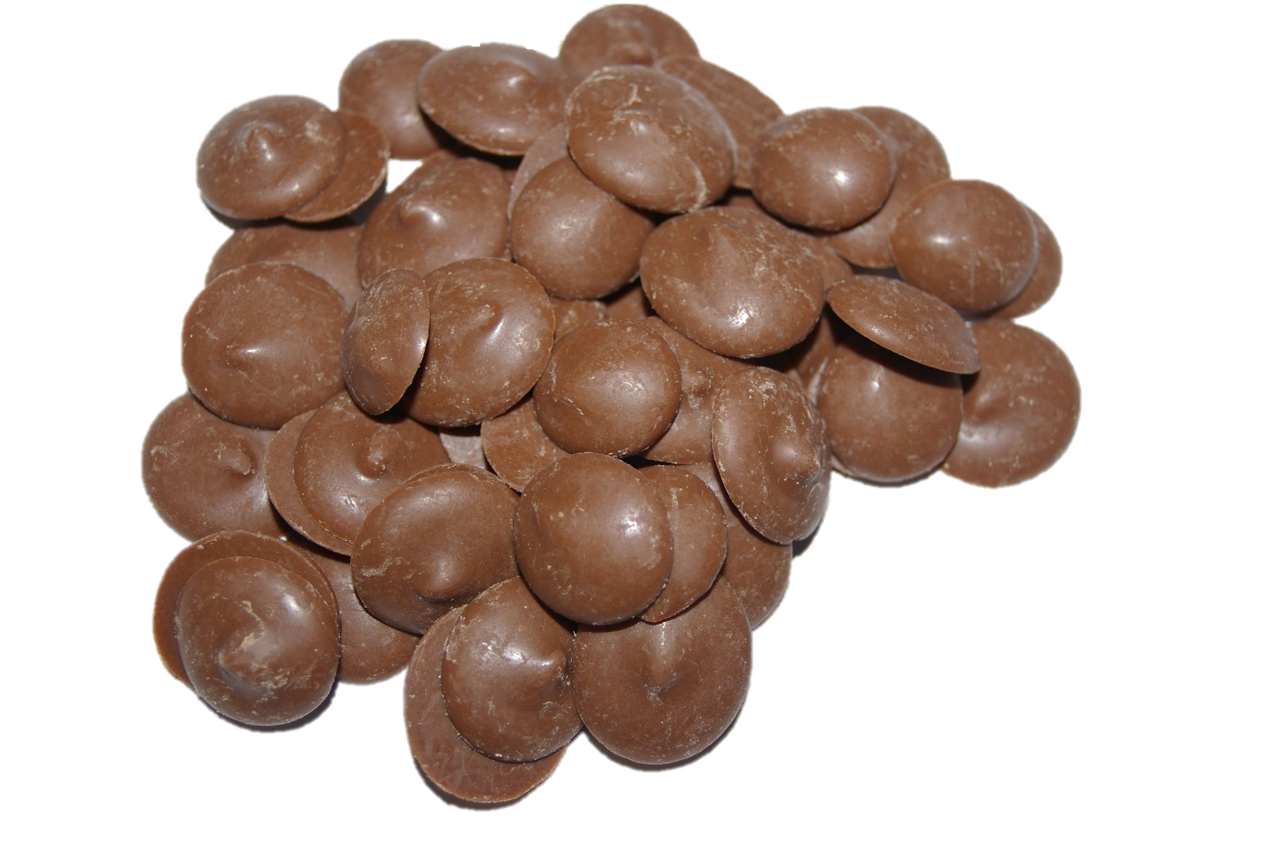

Not sure where to start? The whole range lives in dog treats, and if you are shopping for a puppy, a senior or a dog on a diet, the puppy, soft and low fat ranges are the ones to look at first.
The full 40 food table
Screenshot this one and stick it on the fridge. It is the whole guide in a single scroll.
| Food | Verdict | Why |
|---|---|---|
| Chocolate (Tim Tams, Easter eggs, Milo) | RED | Theobromine and caffeine. Dark and baking chocolate are far worse than milk. |
| Grapes, sultanas, raisins, currants | RED | Tartaric acid. Kidney injury risk. No known safe dose. |
| Onion, garlic, spring onion, leek, chives | RED | Disulfides and thiosulphates. Raw, cooked, dried and powdered all count. |
| Macadamia nuts | RED | Signs reported from about 2 g/kg. Classic sign is hind limb weakness. |
| Xylitol / birch sugar | RED | Insulin release and dangerous low blood sugar, plus delayed liver injury risk. |
| Alcohol | RED | Named toxic by RSPCA Australia. Watch abandoned glasses at ankle height. |
| Coffee, tea, energy drinks | RED | Caffeine. Used coffee grounds in the compost count too. |
| Mouldy food and compost | RED | Explicitly named by RSPCA Australia. Lock the compost bin. |
| Raw bread and pizza dough | RED | Keeps rising and fermenting in a warm stomach. |
| Wild mushrooms | RED | Impossible to identify safely at a glance. Check the lawn after rain. |
| Fruit stones, pits and seeds | RED | Mango seeds, stone fruit pits, avocado pits, apple cores. Blockage and toxicity. |
| Cooked bones and skewers | RED | Cooking makes bone brittle. Splinters, punctures, blockages. |
| Corn cobs | RED | Not toxic. Almost perfectly sized to block an intestine. |
| Green unripe tomatoes and tomato plants | RED | Named by RSPCA Australia. Relevant if you have a veggie patch. |
| Vegemite | AMBER | 3,300 mg sodium per 100g. Not toxic, just very salty. |
| Hot chips, crisps, salted nuts | AMBER | Salt and fat. Flavoured crisps often contain onion powder. |
| Christmas ham and bacon | AMBER | Salt and fat. Pancreatitis risk. The bone is red, not amber. |
| Sausages and the Bunnings snag | AMBER | Fatty and salty. Red the moment onions are involved. |
| Meat pies and sausage rolls | AMBER | Pastry, fat, salt, and usually onion in the filling. |
| Fish and chips | AMBER | Battered and salted. Plain cooked fish is green. |
| Cheese | AMBER | Fine for hiding a tablet. Fatty and salty as a habit. |
| Milk and ice cream | AMBER | Lactose. Check for chocolate and xylitol in the flavour. |
| Peanut butter | AMBER | Fine plain. Read the label on any sugar-free version for xylitol. |
| Prawns | AMBER | Peeled and plain is fine. Shells, heads and tails are the risk. |
| Bread, damper, fairy bread | AMBER | Baked bread is empty calories, not a danger. Raw dough is red. |
| ANZAC and plain sweet biscuits | AMBER | Sugar and fat. Red if the recipe includes sultanas or choc chips. |
| Pavlova, cream, sugary desserts | AMBER | Sugar, fat, dairy. Check every topping before you assume. |
| Avocado flesh | AMBER | Small amounts of flesh are low concern. Skin, pit and plant are not. |
| Carrot | GREEN | Raw or cooked. Low calorie and good to chew. |
| Pumpkin | GREEN | Plain cooked, no butter or spice. |
| Sweet potato | GREEN | Cooked only. Not as deep-fried chips. |
| Watermelon flesh | GREEN | Seeds and rind removed. Excellent frozen in summer. |
| Mango flesh | GREEN | Flesh only. The seed is a blockage risk. |
| Banana | GREEN | Small slices. Higher in sugar than most fruit. |
| Apple (cored) | GREEN | Core and seeds out. Crunchy and low calorie. |
| Blueberries | GREEN | Easy to portion. Good for a dog watching their weight. |
| Green beans and peas | GREEN | Plain. Chop rather than serving roughly cut. |
| Plain cooked kangaroo, chicken, beef, lamb | GREEN | No bones, no seasoning, no marinade, no gravy. |
| Plain cooked white fish | GREEN | Barramundi, whiting, flathead. Thoroughly deboned. |
| Plain cooked egg | GREEN | Nothing added. No butter, milk, salt or shell. |
Can dogs eat Vegemite?
Short answer: it will not poison them, and it is still not a good idea.
Vegemite is a yeast extract spread. There is nothing on the RSPCA Australia toxic list in it. No chocolate, no onion, no xylitol, no grapes. If your dog licks the knife, nothing bad is going to happen.
The issue is sodium. The official Vegemite nutrition information panel lists 3,300 mg of sodium per 100g, with 165 mg in a standard 5g serve. That makes it one of the saltiest things most Australians keep in the house. And salt appears by name on RSPCA Australia's list of foods that "can be dangerous for dogs," sitting alongside fatty trimmings and cooked bones.
The practical rule
A lick is fine. A sandwich is not. Treat Vegemite the way you would treat soy sauce or stock powder. It is a seasoning, and seasoning is not something dogs need. If your dog has heart or kidney problems, skip it entirely and ask your Australian vet what their sodium ceiling should be.
The same logic covers most of the salty Australian pantry: chicken salt, stock cubes, gravy powder, soy sauce, olives and anything from the deli counter. None of these are poisons. All of them are ways to hand a small animal a very large amount of salt without meaning to.
The macadamia problem
Here is the fact that stops people at a barbecue.
2 g/kg
Macadamia toxicity in dogs has been reported at doses "as low as about 2 grams per kilogram of body weight," according to Australian specialist veterinary hospital network SASH. For a 10kg dog, that is roughly a small handful.
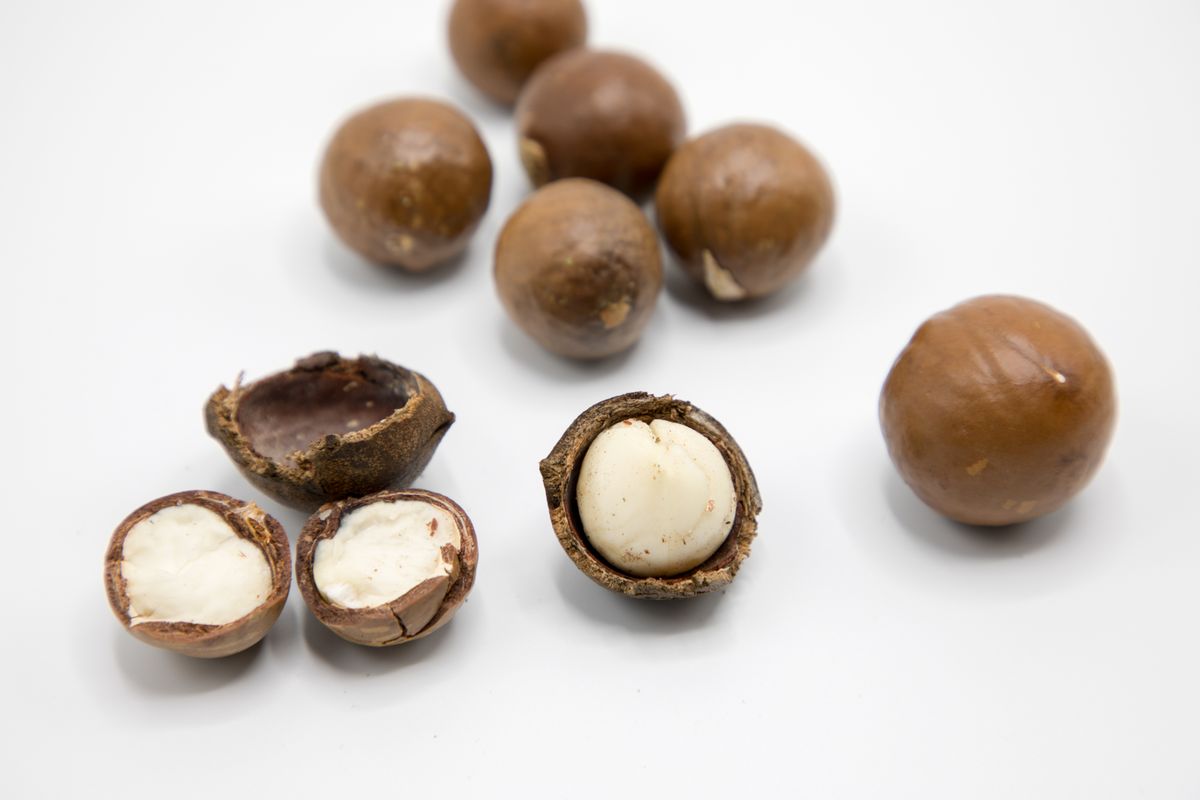
The macadamia is, as the Australian Macadamia Society puts it, "the only Australian native food crop that has ever been developed and traded internationally as a commercial food product." It grew wild on the rainforest fringes of south-east Queensland and north-east New South Wales long before anyone farmed it. It is the closest thing this country has to a native nut of its own, and it grows in backyards from Lismore to the Sunshine Coast.
It is also, for reasons science has not fully pinned down, genuinely poisonous to dogs. RSPCA Australia lists "nuts (including macadamia nuts)" among substances that should never be fed.
What macadamia poisoning actually looks like
This is one of the few toxicities with a signature clear enough that experienced owners spot it before the vet does. According to SASH, dogs may show:
- Vomiting or diarrhoea
- Hind limb weakness or reluctance to walk, the classic sign
- Tremors or shaking
- Fever, meaning a raised body temperature
- Unsteady movement and lethargy
SASH notes that "most dogs show signs within 3 to 12 hours of eating macadamias," and that symptoms can appear later than that. A dog whose back legs go wobbly a few hours after a party is a dog worth ringing someone about.
The combination to really watch
Chocolate-coated macadamias. A Christmas favourite in half the houses in this country, and it stacks two red-list items into one bite-sized package. The same goes for macadamia and white chocolate biscuits, and any nut assortment left out in a bowl at chest height for a tall dog.
Surviving the Aussie barbecue
The Animal Poisons Helpline puts it bluntly: "When there is a major sporting event or public holiday, the Animal Poisons Helpline phones can ring off the hook." The hazards it names for those days read like a description of an Australian backyard: fatty barbecue food, macadamia nuts, alcohol, and cooked bones and skewers.
So here is the barbecue, ranked by what will actually hurt your dog.
Backyard risk order
1. The onions. Not the sausage. The tray of fried onions is the single most toxic thing on most Australian barbecues, and the serious signs of Allium poisoning "may take days to appear."
2. The skewers and chop bones. Swallowed whole because they smell like the best thing that ever happened. Cooked bone splinters, and a bamboo skewer does not bend.
3. The fat. Trimmed fat, dripping-soaked bread, a plate scraped straight into the dog bowl. This is the pancreatitis route, and it is the reason emergency clinics dread long weekends.
4. The drinks at ankle height. Half-finished beers on the deck are exactly at dog nose level, and alcohol is on the toxic list.
5. The snag itself. Genuinely the least of your problems, as long as it has not touched the onions. Still fatty and salty, so a small piece rather than a whole one.
The fix that actually works: take the dog's own treats outside with you. Guests will feed your dog. That is simply what happens. Put a container of dog treats on the table and let people use those instead, and the problem solves itself.
Something for them to have while you eat
We have been baking pet treats on Queensland's Sunshine Coast since 2012, in small batches, with ingredients you can pronounce. Our natural dehydrated meat treats are single-protein and made for exactly this moment: something to hand over at a barbecue that is not a sausage. For the smaller, faster rewards, the training treat range is easier to portion.
Browse our dog treatsChristmas, Easter and the ANZAC biscuit tin
Australia's three big food occasions each carry their own specific hazard, and none of them is the one people expect.
Christmas: the pudding, not the ham
Everyone worries about the ham, and the ham is only amber. The genuine red-list item on an Australian Christmas table is the pudding, because a traditional one is built almost entirely out of sultanas, raisins and currants. Mince pies and fruit cake are the same problem in a smaller package. Add the prawn shells in the bin, the ham bone, and the bowl of chocolate-coated macadamias on the sideboard, and you have most of this article on one table.
If you want the dog included in the day properly, that is what a Christmas treat is for. We have written a full Australian Christmas gift guide for dogs if you are planning ahead, and a heat-safe dress-up guide for anyone whose dog is getting a costume in a 35 degree December.
Easter: the hot cross bun is the sleeper
Chocolate eggs get all the attention, and rightly so. But the hot cross bun is the one people hand over without thinking, and a traditional bun is full of sultanas. Given there is no established safe dose for dried grapes, a bun is not a snack to share.
The good news is that the chocolate craving has a genuine substitute. Carob looks like chocolate, smells like chocolate to a dog, and contains no theobromine at all, which is why it is the base of our carob and yoghurt range and why we wrote a whole piece on why carob works as the dog-safe chocolate swap. Around Easter, carob Easter treats let the dog join in without anyone having to say no.
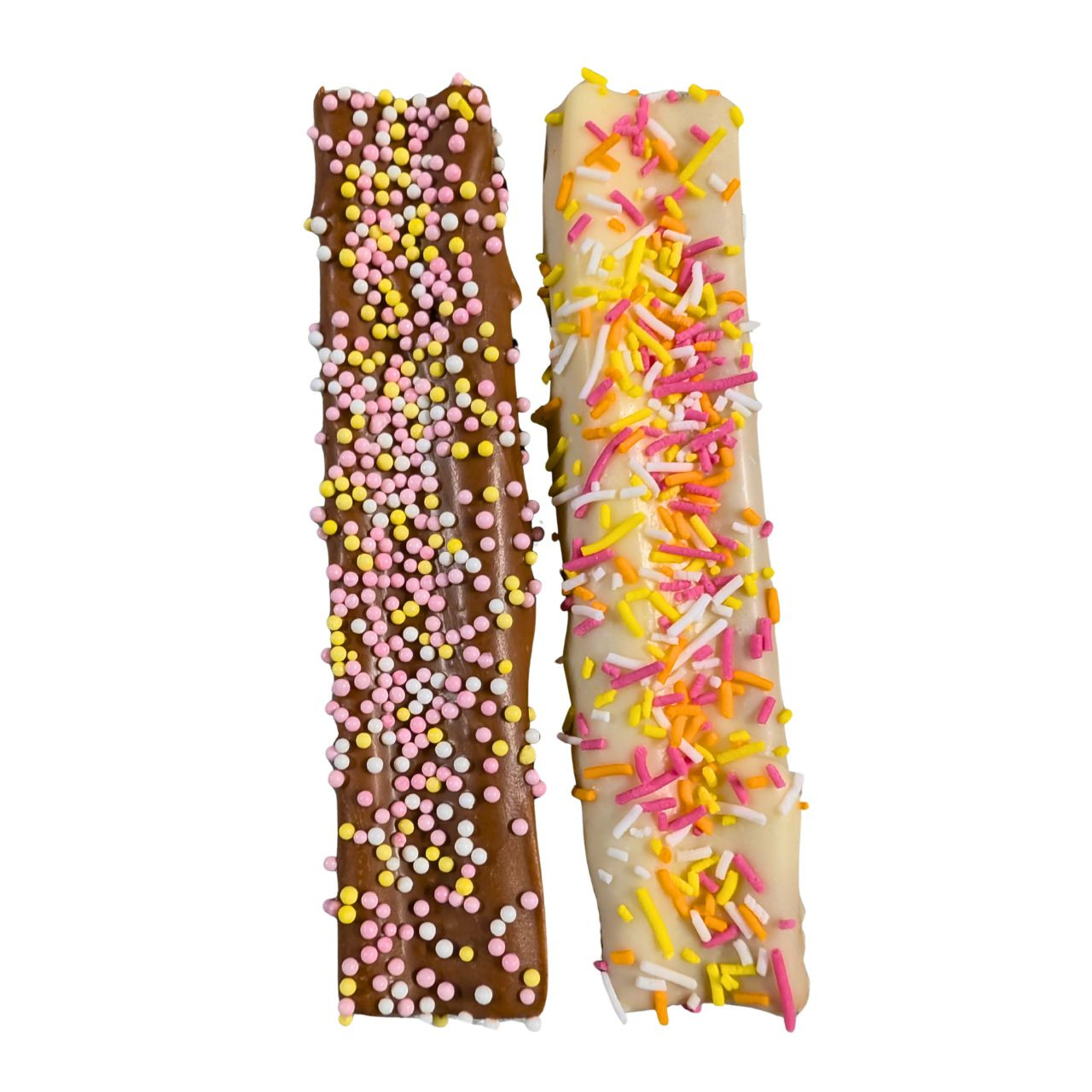
ANZAC Day: actually one of the safer ones
A traditional ANZAC biscuit contains oats, coconut, golden syrup, flour, butter and sugar. Nothing on the toxic list. It is sugary and fatty and not a treat we would recommend, but a crumb dropped on the floor is not a reason to panic. Just check the recipe, because modern versions sometimes add sultanas or chocolate chips, and that changes the answer completely.
The one-sentence version of this whole section: in Australian kitchens, dried fruit is more dangerous than most people think, and chocolate is exactly as dangerous as everybody already knows.
The 10% rule
Everything above is about what is safe. This part is about how much, and it is the bit that quietly matters more, because obesity does more damage to more Australian dogs than any single item on the red list.
The working guideline used widely in veterinary practice is that treats and extras should make up no more than about 10% of a dog's daily calories. The other 90% comes from a complete, balanced main meal, which is what keeps the vitamins and minerals in proportion.
Daily calorie budget
In plain English: a 10kg kelpie eating around 500 kcal a day has roughly 50 kcal to spend on everything else. That is a couple of small biscuits, or a handful of carrot sticks, or one slice of ham. Not all three. The barbecue day where four different guests each give "just a little bit" is how a dog quietly eats a second dinner.
Two practical habits make this easy. First, break treats in half. Dogs measure enthusiasm, not grams, and a half-sized reward lands exactly the same. Second, if the dog is getting extras, take a little out of the dinner bowl to match. We go deeper into portioning in our guides to using treats in training and what puppies can have at every age.
The swap list: give this instead
Saying no to a dog is hard, and it is much easier when you have something to say yes to instead. This is the whole article compressed into a shopping habit: the eight things Australian dogs beg for most, and what to hand over in their place.
| They are begging for | Give this instead | Why it works |
|---|---|---|
| The snag off the barbecue | A single-protein meat treat See our natural meat treats | Same meaty payoff, none of the fat, salt or onion contamination. |
| A Tim Tam or a lamington | Carob buttons See our carob and yoghurt | Looks and smells like chocolate to a dog. No theobromine in it at all. |
| Cheese to hide the tablet | A soft treat you can mould See our soft treats | Does the same job without the fat and salt becoming a daily habit. |
| Hot chips at the beach | A veggie chew See our vegetable treats | The crunch is the point. The salt and the deep fryer were never the point. |
| Ice cream on a hot day | Frozen watermelon, seeds and rind out See our our treat range | Straight off the green list, costs nothing, and works better in a Queensland summer. |
| Ham off the Christmas plate | A Christmas dog treat See our Christmas dog treats | Lets them join in on the day without the salt, the fat or the bone. |
| A bone from the roast | A dental chew See our dental chews | If the appeal was the chewing, this delivers it without brittle cooked bone. |
| Scraping the dinner plate | A meal topper See our meal toppers | Solves the actual problem, which is usually that they find their own bowl boring. |
Made in Australia, in small batches, since 2012
We are a family business on Queensland's Sunshine Coast and we bake every one of these ourselves. If this guide has convinced you to stop sharing the snag, the dog treat range is where to find the thing you hand over instead. There is a cat range too, and if you are buying for somebody else, the gift boxes save you assembling one yourself.
Shop Australian made dog treatsIf your dog just ate something
If you have arrived at this page mid-emergency, this is the section you need.
Do this now
Four steps, in order
- Take it away and keep the packet. The label tells the vet the ingredients, the percentage of cocoa, whether there is xylitol, and how much was in there to begin with.
- Work out roughly how much and how long ago. Weight of your dog, amount eaten, time since. Those three numbers are the first thing you will be asked.
- Ring the Animal Poisons Helpline on 1300 869 738, or your own vet. The service runs 24 hours a day and is staffed by consultants with senior emergency veterinary or clinical pharmacy backgrounds. Ring even if your dog looks completely fine.
- Do not make your dog vomit unless you are told to. For some substances that makes things worse, and it is a decision for the person on the other end of the phone, not for the internet.
The reason to ring before symptoms appear is that for several of the red-list items, waiting is exactly the wrong move. On grapes and dried grapes, the Animal Poisons Helpline is explicit: "Never wait for symptoms to develop before seeking help," because "symptoms can be delayed and may not occur until the damage has been done." On onion, "more concerning signs may take days to appear." On chocolate, the helpline recommends calling "immediately for an assessment even if your pet looks well."
Questions we get asked
Can dogs eat Vegemite?
Not toxic, but very high in salt. The official nutrition panel lists 3,300 mg of sodium per 100g. A lick off a finger is harmless for a healthy dog. A Vegemite sandwich as a regular thing is not a good idea, and dogs with heart or kidney conditions should skip it entirely.
Is one sultana enough to hurt a dog?
There is no established safe dose for grapes or dried grapes, and the Animal Poisons Helpline advises against waiting for symptoms. If your dog eats sultanas, raisins, currants or grapes in any quantity, ring the helpline or your vet and let them assess it against your dog's weight.
What if my dog ate one macadamia?
Ring for advice. SASH reports signs at doses as low as about 2 grams per kilogram of body weight, which means a single large nut matters far more to a 4kg dog than to a 40kg one. Watch particularly for weakness in the back legs, and remember signs usually appear within 3 to 12 hours.
My dog ate a bit of sausage at the barbecue. Should I panic?
Almost certainly not, as long as it had no onion on it. A plain piece of sausage is fatty and salty rather than toxic. Keep an eye out over the following day or two for repeated vomiting, diarrhoea, a hunched posture or a lost appetite, which are the signs that would send you to a vet.
Can dogs eat lamingtons or Tim Tams?
No. Both are chocolate-coated, and chocolate is on the toxic list. Carob is the swap that works, because it looks and smells like chocolate to a dog without containing any theobromine.
Are cooked bones ever okay?
No. RSPCA Australia lists cooked bones among foods that can be dangerous, because cooking makes bone brittle and prone to splintering. RSPCA Australia's guidance on raw bones is that if you do choose to offer bones, "they should always be raw and introduced gradually," and it notes that bones carry their own risks including broken teeth and internal blockages. Talk to your Australian vet about what is appropriate for your dog before starting.
What about cats?
Most of the red list applies to cats too, and cats are actually more susceptible to onion and garlic than dogs are. Cats are also far fussier, which is the only reason they end up on the phone to the poisons helpline less often. Our cat treats guide covers the feline side properly.
What can I give instead?
Anything from the green list, in sensible amounts, or a treat that was made to be a treat. Vegetables are the cheapest option going and most dogs love a carrot. If you would rather something purpose-made, that is what we bake: vegetable treats, single-protein meat treats, dental chews and soft treats for older dogs.
The last word
You do not need to memorise 40 foods. Three rules cover almost everything on this page.
- If it is chocolate, dried fruit, onion or a nut, it is a no. That single sentence covers the majority of Australian food poisonings in dogs.
- If it is plain, unseasoned and cut to size, it is probably fine. Plain meat, plain fish, plain vegetables, plain fruit without seeds or stones.
- If it is salty or fatty, it is a sometimes food, not a treat. The ham, the snag, the chips and the cheese all live here.
And if the worst happens, the number is 1300 869 738, it answers at three in the morning, and nobody on the other end will think you are overreacting.
References
- RSPCA Australia Knowledgebase. What should I feed my dog? kb.rspca.org.au
- RSPCA Australia Knowledgebase. What are common household dangers for pets? kb.rspca.org.au
- Animal Poisons Helpline. Common Poisons for Dogs and Cats. animalpoisons.com.au
- Animal Poisons Helpline. Grapes, Sultanas, Currants and Raisins. animalpoisons.com.au
- Animal Poisons Helpline. Onions. animalpoisons.com.au
- Animal Poisons Helpline. Chocolate Poisoning in Dogs. animalpoisons.com.au
- Animal Poisons Helpline. Xylitol. animalpoisons.com.au
- Animal Poisons Helpline. Avocado. animalpoisons.com.au
- Animal Poisons Helpline. About Us. animalpoisons.com.au
- Animal Poisons Helpline. Avoid a Race to the Vet: Essential Tips for Pet Safety. animalpoisons.com.au
- SASH (Small Animal Specialist Hospital). Macadamia Nut Toxicity in Dogs. sashvets.com
- Australian Macadamia Society. About the macadamia industry. australianmacadamias.org
- Australian Native Plants Society (Australia). Macadamia integrifolia. anpsa.org.au
- VEGEMITE. Official product page and nutrition information panel. vegemite.com.au
Huds and Toke: Proudly Australian, Family Owned
Huds and Toke is a family-owned Australian premium pet treats company, founded in 2012 on Queensland's Sunshine Coast. Naturally made here in Australia and loved by pets and their people right across the country.
Learn more on Wikipedia · Our story · Awards & recognition