Puppy Treats: What Puppies Can Have at Every Age (Australian Guide)
Posted by The Huds and Toke Team on 23rd Jul 2026

The short answer
- Treats can start early, in tiny amounts. Once a puppy is eating solid food properly, small soft treats can be introduced carefully.
- Size and texture matter more than flavour. Pea sized and soft enough to swallow quickly is the rule while the adult teeth are still coming through.
- Ten per cent, and count it. Treats are food. At puppy portions the maths adds up fast, so adjust meals accordingly.
- Use treats to buy good experiences. The socialisation window is short, and food is how you pay for calm, positive first impressions.
- Some foods are never safe. Chocolate, grapes, sultanas, onion, garlic, xylitol and cooked bones stay well out of reach at every age.
The short answer
Most healthy puppies can have their first proper treat from around eight weeks of age, once they are fully weaned and eating solid food. The rules are simple. Keep the pieces tiny, keep the ingredients single and recognisable, introduce one new thing at a time, and keep all treats to no more than about ten percent of what your puppy eats in a day.
Everything else is detail, but the detail matters, because a puppy's gut, teeth and confidence all change enormously between eight weeks and twelve months. A treat that is perfect for a fourteen week old kelpie is the wrong shape entirely for a nine week old cavoodle, and a chew that suits a teething five month old can be too hard for the same dog three weeks earlier.
This guide walks through it stage by stage. We have been making treats in our HACCP certified kitchen on the Sunshine Coast since 2012, and the questions we get from new puppy owners are remarkably consistent. How small is small enough? How many is too many? What do I do when the poo goes soft? When can I stop worrying?
We will answer all of that. Where something is genuinely medical, we will say so and send you to your Australian vet, because a blog post cannot examine your dog.
What this guide covers
- When the first treat is safe and what it should be
- Stage by stage guidance from eight weeks to twelve months
- The ten percent rule, explained with real numbers you can copy
- Daily treat allowances worked out by puppy weight
- Size, shape and texture rules, including through teething
- Foods that are never safe, and why
- Using treats for toilet training, crate training, socialisation, travel and vet visits
- What to do when a new treat causes loose stools
- When and how to move to adult treats
- The mistakes we see most often, and how to avoid them
When can puppies have their first treat?
Puppies are usually fully weaned somewhere around six to eight weeks, and in Australia most breeders and rescues will not send a puppy home before eight weeks. By the time your puppy arrives, their digestive system is already handling solid food, which means a small, simple treat is generally fine.
The bigger question is not whether the puppy can have a treat. It is whether this particular week is the right week. A puppy who came home yesterday, left their litter, travelled in a car for the first time and is now sleeping in a strange laundry has a lot going on. Their gut is under stress even if nothing is wrong. Adding three new treat varieties on day one is how you end up cleaning the floor at two in the morning.
Wait for the settle
Our general advice is to give your puppy two or three days on nothing but the food the breeder or rescue was feeding. Let the toilet habits settle, let the puppy sleep, let the household calm down. Then introduce one treat.
The exception is training. If your puppy needs to learn their name, learn to come when called, and learn that the back door means toilet time, you need something to pay them with. In those first few days you can absolutely use their own kibble or their own food, measured out of the daily ration, as training currency. That costs you nothing in terms of digestive risk because it is food they are already eating.
What the first real treat should look like
The first treat you buy should tick four boxes.
- Single protein. One meat, clearly named. Chicken, or kangaroo, or lamb, or fish. Not a blend. If your puppy reacts, you want to know exactly what they reacted to.
- Small enough to swallow safely. Roughly the size of your smallest fingernail for a small breed puppy, no bigger than a pea for a toy breed.
- Dry and low fat. Rich, fatty treats are the most common cause of a new puppy's upset tummy.
- Australian made, with a short ingredient list. If you cannot pronounce it or picture it, you do not need it in an eight week old.
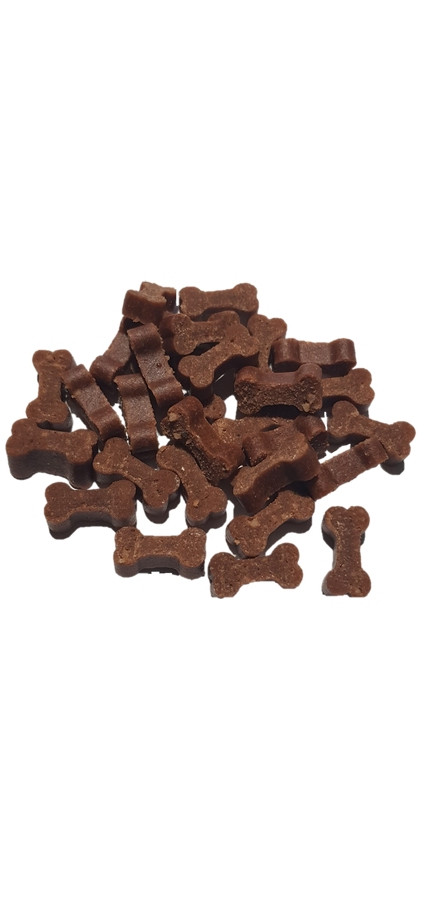
Our Chicken Micro Bones - Dog Training Treats were designed for exactly this job. They are tiny, they are dry, and chicken is one of the most commonly tolerated first proteins in Australian puppies. If your puppy has a known chicken sensitivity, or the breeder has flagged one, Kangaroo Micro Bones - Dog Training Treats are a good novel protein alternative.
One thing to check first
Ask the breeder or rescue what the puppy has already eaten. Some breeders start treat training early and your puppy may already be familiar with a particular protein. That is useful information, because a protein the puppy already tolerates is the safest place to start.
The ten percent rule explained, with worked examples
You will hear the ten percent rule everywhere, and it is a good rule, but almost nobody explains how to actually apply it. Here is the plain version.
Treats should make up no more than about ten percent of your puppy's total daily food intake. The other ninety percent should be complete, balanced puppy food.
The reason is not weight gain, at least not primarily. It is nutrition. Puppy food is formulated to deliver the calcium, phosphorus, protein and energy a growing dog needs, in the right ratios. Treats, however good, are not complete diets. If treats start displacing a meaningful share of the balanced food, you are diluting the formulation exactly when the puppy is building bone.
This matters most in large and giant breeds, where the calcium to phosphorus balance during growth is genuinely important. If you have a large breed puppy, be stricter with the ten percent rule than you would with a small breed, and talk to your Australian vet about growth diets.
Working it out in grams, not calories
Calorie counting is a pain and most treat packets do not make it easy. Grams are simpler and close enough for a pet owner.
Take the daily food amount from the feeding guide on your puppy food packet, for your puppy's current weight. Divide by ten. That number, in grams, is roughly your daily treat budget.
Worked example one: a small breed puppy
Ruby is a twelve week old cavoodle weighing 3 kg. Her food packet says 120 g of puppy kibble per day, split across three meals.
- Ten percent of 120 g is 12 g of treats per day.
- Twelve grams sounds like nothing, and it nearly is. Weigh 12 g of small training treats on your kitchen scales once, and look at the pile. That is your visual reference forever.
- Ruby's owner then removes about 12 g of kibble from her daily meals to keep the total energy the same.
Worked example two: a medium breed puppy in heavy training
Banjo is a sixteen week old kelpie weighing 9 kg. His food packet says 260 g per day.
- Ten percent of 260 g is 26 g of treats per day.
- Banjo is doing three short training sessions a day plus recall practice in the yard, so 26 g goes quickly. His owner splits it deliberately: 8 g for morning training, 8 g for the afternoon session, 6 g for recall, 4 g held back for vet or grooming moments.
- On big training days, his owner takes the shortfall out of dinner rather than going over budget.
Worked example three: a large breed puppy
Nala is a five month old labrador weighing 18 kg. Her food packet says 400 g per day.
- Ten percent of 400 g is 40 g of treats per day.
- Forty grams feels generous, but labradors are famously food motivated and famously prone to carrying extra weight. Nala's owner treats 40 g as a ceiling, not a target, and typically uses 25 g to 30 g.
- Because she is a large breed, her owner is careful that treats never replace more than a small slice of the balanced growth food.
The part everyone forgets
The ten percent budget includes everything. Training treats, the biscuit from the neighbour, the crust of toast, the bit of chicken that fell off the bench, the chew given at the vet, the training treats your partner used while you were at work. Households routinely double a puppy's treat intake without anyone realising, because three people are each giving "just a few".
The fix is embarrassingly simple. Measure the day's treat allowance into one container in the morning. When the container is empty, treats are done. Everyone in the house takes from the same container.
How many treats per day by puppy weight
The table below turns the ten percent rule into a starting point you can use today. These are general guides for healthy puppies on a standard complete puppy food. Your packet's feeding guide always wins, and your Australian vet's advice always wins over that.
| Puppy weight now | Typical daily food (guide only) | Daily treat budget (about 10%) | Roughly how that looks | Notes |
|---|---|---|---|---|
| 1 kg to 2 kg | 50 g to 90 g | 5 g to 9 g | A very small pinch of pea sized pieces | Toy breeds. Break every treat down further. Watch for low blood sugar and feed frequently. |
| 2 kg to 4 kg | 90 g to 150 g | 9 g to 15 g | A small teaspoon worth of tiny pieces | Most small breed puppies at eight to fourteen weeks. |
| 4 kg to 8 kg | 150 g to 240 g | 15 g to 24 g | A heaped teaspoon to a small tablespoon | Enough for two or three short training sessions. |
| 8 kg to 15 kg | 240 g to 350 g | 24 g to 35 g | About a tablespoon and a half of small pieces | Medium breeds mid growth. Split across the day rather than one session. |
| 15 kg to 25 kg | 350 g to 480 g | 35 g to 48 g | Around two tablespoons | Large breed adolescents. Treat as a ceiling, not a target. |
| 25 kg and over | 480 g and up | 48 g and up | Two to three tablespoons | Giant breeds. Be conservative and prioritise the balanced growth diet. |
Two practical notes on this table. First, weigh your puppy often, because a growing dog's numbers move weekly. Most Australian vet clinics are happy for you to pop in and use the scales in reception, and it doubles as a free confidence building visit. Second, if you are using treats heavily for training in a given week, reduce meals slightly rather than adding treats on top.
8 to 12 weeks: tiny tastes and gentle introductions
This is the settling in phase. Your puppy's job right now is to learn that the world is safe, that you are the source of good things, and that going to the toilet outside is worth doing. Your job is to keep their gut boring and their experiences positive.
What their body is doing
At eight weeks a puppy has a full set of deciduous teeth, often called milk teeth or needle teeth. They are sharp but they are not strong, and the jaw muscles behind them are undeveloped. The digestive system is functional but still adjusting to a life without milk. Sleep requirements are enormous, often eighteen hours a day or more.
This combination means: soft or crumbly textures, tiny pieces, and very few new things at once.
Treat rules for this stage
- Size. Pea sized or smaller. If it needs two chews, it is too big.
- Texture. Dry and light, or soft enough to squash between your finger and thumb. Nothing hard, nothing that requires a proper bite.
- Variety. One protein for the first fortnight. Add a second only when the first is clearly fine.
- Frequency. Little and often is better than one big handful. Small stomachs do better with spread out intake.
- No chews yet. Long lasting chews, hard bones and dense sticks are not for this age. Their teeth are not built for it.
What to actually use
Training treats are the whole toolkit at this age. Our Chicken Micro Bones - Dog Training Treats and Kangaroo Micro Bones - Dog Training Treats are the two we point new owners to most often, because they are small enough to use straight from the packet and dry enough not to make a mess in your pocket.
If your puppy is very small, a toy breed or a tiny cross, break each micro bone in half again. A puppy does not care about the size of the reward nearly as much as we assume. They care about the timing and your tone of voice. Ten tiny pieces beat one big piece every single time.
Australian Fish Nibble - Dog Treats are also worth knowing about at this age. Fish is a useful protein for puppies who seem sensitive to poultry, and the aroma tends to grab the attention of puppies who are otherwise a bit distracted.
The single most useful thing you can do this fortnight
Hand feed some of your puppy's daily food. Not all of it, just a portion. Sit on the floor, let the puppy come to you, and feed pieces one at a time while saying their name. You are building three things at once: the association between you and good outcomes, a soft mouth, and a name response. It costs you nothing from the treat budget because it is food they were getting anyway.
3 to 6 months: the teething window
Somewhere around twelve to sixteen weeks the milk teeth start to fall out and adult teeth begin pushing through. This process continues for months and for many dogs is not fully finished until around six or seven months of age. You may find tiny teeth on the carpet. More often you will find nothing at all, because puppies swallow them, which is normal and harmless.
Teething changes everything about your puppy's relationship with chewing. Gums are sore. The urge to chew is not naughtiness, it is a genuine physical drive. If you do not provide an outlet, your skirting boards become the outlet.
What teething puppies actually need
They need something to work on that gives a bit, rather than something that resists. A texture that yields under pressure massages sore gums. A texture that does not yield can hurt, and in the worst case can damage a tooth that is already loose or a new adult tooth that is not fully seated.
This is why we are cautious about very hard chews during this window. A rock hard item and a mouth full of shifting teeth is a poor combination.
Managing the chaos
- Rotate. Have three or four acceptable chew options and swap them daily so none becomes boring.
- Chill it. A damp, cold item feels good on sore gums. A clean, wet flannel wrung out and frozen for twenty minutes is a free option that most puppies love.
- Supervise. Any chew, any age, always supervised. Take it away when it gets small enough to swallow whole.
- Redirect, do not scold. When they chew the wrong thing, swap for the right thing and praise. Punishing a physical drive teaches nothing.
- Expect a fussy patch. Some puppies eat less for a few days when teeth are moving. If your puppy stops eating altogether, is drooling heavily, or is pawing at their face, that is a call to your Australian vet, not something to wait out.
Treats that suit this stage
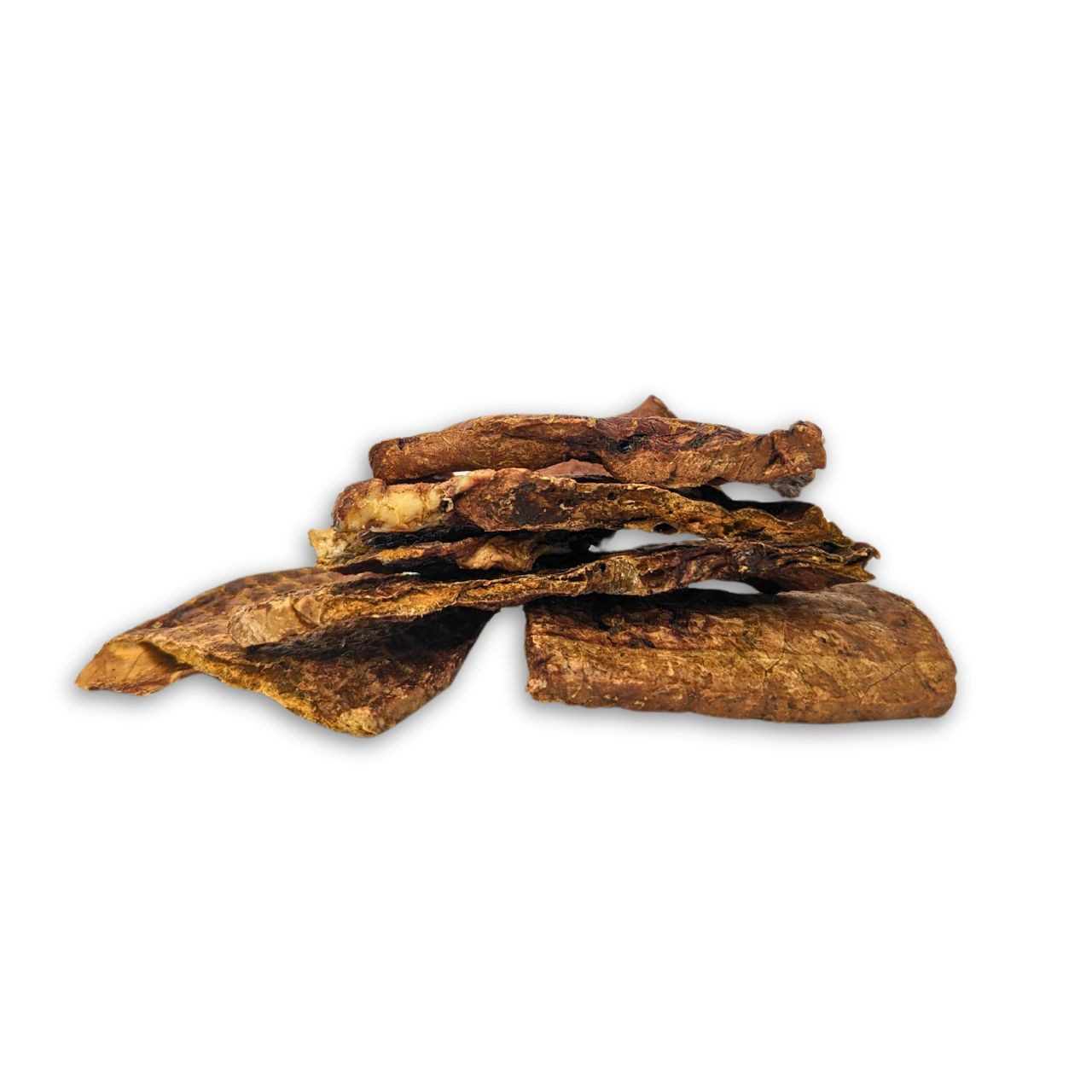
Lamb Puff - Lamb Lung - Dog Treats come into their own here. Lamb lung has an airy, light texture that breaks down easily rather than resisting the tooth, so a teething puppy can work on it without a hard impact. It is also a single protein, which keeps things simple.
Veggie Tubes - Vegetarian - Dog Treats are handy for puppies who are already getting plenty of meat protein through training, or for households wanting a lighter option to bulk out an enrichment toy.
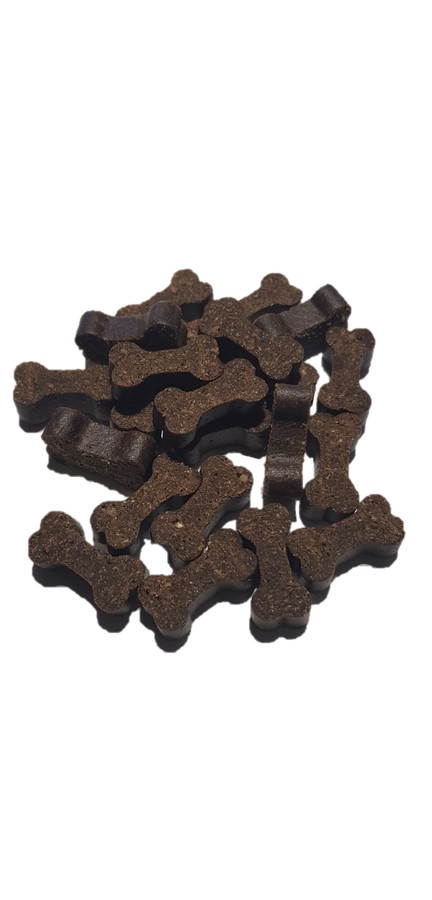
Training treats remain the daily workhorse. This is the age where Beef Micro Bones - Dog Training Treats become useful as a higher value option, because by three months you will want a hierarchy of rewards (more on that below).
Puppy dental development and safe chew textures
Understanding what is happening in the mouth makes texture choices obvious rather than guesswork. Here is the rough timeline and what it means for what goes in.
| Age | What is happening in the mouth | Safe textures | Avoid | Chew session length |
|---|---|---|---|---|
| 8 to 12 weeks | Full set of milk teeth, sharp but weak. Jaw strength minimal. | Soft, crumbly, light and airy. Anything that squashes between finger and thumb. | Hard chews, dense sticks, anything requiring a real bite. | A few minutes only, fully supervised. |
| 12 to 16 weeks | Incisors start to loosen and drop. Gums tender. Chew drive rising sharply. | Airy and yielding textures. Chilled damp items. Light dried treats. | Hard chews. Anything that could knock a loose tooth. | Five to ten minutes, supervised. |
| 4 to 6 months | Premolars and canines being replaced. Peak chewing, peak destruction. | Moderately firm but still breakable. Stuffable toys. Airy dried treats. | Very hard items. Anything you could not dent with a thumbnail. | Ten to fifteen minutes, supervised. |
| 6 to 9 months | Adult teeth mostly through but roots still settling. Molars finishing. | Firmer chews can be introduced gradually. Watch the individual dog. | Sudden jumps to the hardest options available. | Fifteen to twenty minutes, supervised. |
| 9 to 12 months | Adult dentition essentially complete in most breeds. | Adult appropriate chews, matched to body size and chew style. | Anything sized to be swallowed whole. | Normal adult sessions, still supervised. |
A useful home test for hardness: press your thumbnail into the chew. If you can leave a mark, it will generally give under a puppy's tooth. If it feels like pressing on a stone, it is too hard for a mouth that is still changing. This is a rule of thumb, not a guarantee, and any concern about a chipped or damaged tooth is a same week appointment with your Australian vet.
Signs a chew is not working out
- Blood on the chew (a little from a shedding milk tooth is common, more than a little is not)
- Your puppy putting the chew down and pawing at their mouth
- Chewing on one side only
- Reluctance to eat their normal food after a chew session
Any of those means stop, remove the chew, and if it repeats, book a check.

6 to 12 months: the adolescent
Congratulations, your sweet compliant puppy has been replaced. The adolescent phase is where recall falls apart, where the world becomes more interesting than you are, and where many Australian families quietly give up on training right at the moment it matters most.
Treats are your leverage here, and they need to be used more cleverly than they were at twelve weeks.
What changes
Physically, adult teeth are in or nearly in, so chew options widen. Growth is slowing in small breeds and still going in large ones. Energy is high. Appetite can swing.
Behaviourally, your dog is testing boundaries and their world has expanded. A treat that worked in the kitchen at four months does nothing at the beach at nine months, because the environment is now competing for attention.
Build a reward hierarchy
This is the single most useful concept for adolescent training. Not all treats are equal in your dog's mind, and you should deliberately sort them into tiers.
- Everyday tier. Kibble or a low excitement treat. Used at home, low distraction, easy behaviours.
- Good tier. Your standard training treat. Used in the yard, on the footpath, in familiar places.
- Jackpot tier. The one your dog would sell you out for. Reserved for recall in an open park, for passing another dog calmly, for the vet table.
The mistake is using the jackpot tier for sit in the kitchen. Save it. A dog who gets the best thing for the hardest job learns that hard jobs are worth doing.
For most dogs the jackpot tier is a strong smelling protein. Australian Fish Nibble - Dog Treats and Kangaroo Micro Bones - Dog Training Treats both punch above their weight here. Test it yourself: offer two treats in closed fists and see which one your dog works harder for.
Recall specifically
Adolescent recall failure is the number one reason dogs stop being let off lead, and it is largely preventable. Pay recall generously and pay it every single time, well into adulthood. Use a long line in open areas so you never call a cue you cannot enforce. Never call your dog to end the fun, or the cue starts to predict something bad.
Keep a dedicated recall pouch that only comes out for recall, filled with the jackpot tier. Your dog will learn the sound of that pouch faster than they learn their own name.
Watch the waistline
Adolescence is where puppy fat quietly becomes adult fat, particularly in desexed dogs, whose energy requirements often drop after surgery. Run your hands along your dog's ribs weekly. You should feel them easily under a thin layer, without pressing hard. Look down from above and you should see a waist behind the ribs. If either of those disappears, cut the treat budget before you cut anything else, and mention it at the next vet visit.
Size and texture rules for puppies
Here is the practical sizing guide we give out most often. Match the row to your puppy's expected adult size, not their current size, for chew selection, and to their current size for training treat sizing.
| Expected adult size | Training treat piece size | Chew guidance (once teething allows) | Common mistakes |
|---|---|---|---|
| Toy (under 5 kg): chihuahua, toy poodle, mini dachshund | Smaller than a pea. Break micro treats in half. | Small, light, airy chews only. Remove when it can be swallowed whole. | Giving whole treats sized for a labrador. Overfeeding because the pieces look small to us. |
| Small (5 kg to 10 kg): cavoodle, mini schnauzer, jack russell | Pea sized. | Light chews, supervised, ended before the piece gets small. | Assuming a confident chewer can handle adult sized items. |
| Medium (10 kg to 25 kg): kelpie, border collie, staffy, cocker | Pea to small fingernail sized. | Moderate chews from around six months, matched to chew style. | Underestimating how fast a determined chewer gets through things. |
| Large (25 kg to 40 kg): labrador, golden, german shepherd | Small fingernail sized. Still smaller than you think. | Larger chews so they cannot be swallowed. Firm but not rock hard until adult teeth settle. | Big dog, big treat thinking. It wrecks the treat budget and slows training. |
| Giant (over 40 kg): great dane, mastiff, wolfhound | Small fingernail sized, used frequently. | Large items only. Be strict about growth diet and calcium balance. | Overfeeding treats during a long, slow growth period. |
The three texture questions
Before giving any new treat or chew, ask yourself three things.
- Can it be swallowed whole? If yes, and it is not tiny and soft, it is a choking risk. Either size up or hold it.
- Can I dent it with a thumbnail? If no, it is too hard for a puppy under about six months.
- Does it break into sharp shards? If yes, it is not a puppy item.
Those three questions will filter out most of what goes wrong.
A note on gulpers
Some puppies barely chew. They inhale. Labradors are famous for it but any breed can do it. If you have a gulper, size up, hold the chew yourself so they have to work at it rather than swallow it, and consider using a snuffle mat or slow feeder to make eating take longer. Never let a gulper have a chew unsupervised.

Training with treats versus free feeding
There is a real difference between food given for nothing and food given for something, and it is worth understanding because it shapes your dog's behaviour for years.
Free feeding: what it costs you
Free feeding means leaving a bowl of food down all day for the puppy to graze from. It is convenient. It also throws away most of your training leverage, makes toilet training harder to predict, and hides the early warning sign of illness (a dog who is off their food).
We would gently suggest not doing it with a puppy. Meal feeding at set times gives you a predictable toilet schedule, an appetite to train with, and an obvious signal when something is wrong.
Using meals as training currency
Here is the approach that works best for most Australian families with a busy schedule.
- Measure the full daily food allowance into a container each morning.
- Feed roughly two thirds as normal meals.
- Keep the remaining third aside as training currency, used throughout the day.
- Use actual treats on top of that, within the ten percent budget, for the harder jobs.
This way your puppy earns a meaningful portion of their food, which builds engagement, without pushing you over the ten percent line, because the kibble portion is part of the balanced diet rather than an addition to it.
When to fade the treats
People worry about creating a dog who only works for food. The fix is not to stop using food. The fix is to change the schedule once the behaviour is reliable.
- Learning phase. Reward every single correct repetition. Every time, no exceptions.
- Fluency phase. Once the dog is right roughly nine times out of ten, start rewarding unpredictably. Sometimes one treat, sometimes three, sometimes just praise.
- Maintenance phase. Occasional, unpredictable rewards. This is actually stronger than constant rewards, because unpredictability keeps the behaviour lively.
Two behaviours we would never fully fade: recall and anything involving handling or the vet. Keep paying those generously for life. The cost of a treat is nothing compared to the cost of a dog who will not come back.
Marker words
Pick a word, "yes" works fine, and say it at the exact moment your puppy does the right thing, then deliver the treat. The word bridges the gap between the behaviour and the food, which lets you be precise even when you cannot get the treat there instantly. Clickers do the same job. Consistency matters more than which one you choose.
How to introduce a new protein
New proteins are where most treat related tummy upsets come from, and they are almost entirely avoidable with a bit of patience.
The three day method
- Day one. Give one or two small pieces only. Nothing else new that day. Watch the next twenty four hours.
- Day two. If stools are normal, give a few more pieces spread across the day.
- Day three. If still normal, use the treat as you normally would.
- Wait a week before introducing the next new protein.
It feels slow. It is slow. It is also the difference between knowing your dog's tolerances by six months and spending the next three years guessing.
Keep a simple record
A note in your phone is enough. Date, protein, and how the stools looked for the two days after. When your vet eventually asks whether your dog has had a reaction to anything, you will have an actual answer instead of a shrug.
Why variety is still worth it
Once your puppy has a couple of tolerated proteins, gradually widening the range has real benefits. It gives you options if one protein later causes trouble, it gives you a hierarchy of reward values for training, and it means a supply issue with one product does not derail your routine.
A sensible progression for many Australian puppies looks like chicken first, then lamb or fish, then beef, then kangaroo, with a vegetarian option such as Veggie Tubes - Vegetarian - Dog Treats available as a lighter filler. That is a rough order, not a rule. If your puppy has already had something, start there.
Signs of a genuine food reaction
Loose stools are common and usually just a rich food or a fast change. Signs that suggest something more, and warrant a vet conversation, include persistent itchy skin, recurring ear infections, chronically soft stools that never firm up, vomiting, or swelling around the face. Food allergy diagnosis is a proper veterinary process involving elimination diets, and it is not something to attempt from a blog. Talk to your Australian vet.
What to do if a puppy gets loose stools from a new treat
It happens to nearly everyone at some point. Here is a calm, staged response.
Step one: stop the variable
Remove the new treat immediately. Do not swap it for a different new treat, because then you have two unknowns. Go back to nothing but the food your puppy was on before.
Step two: watch, do not starve
Old advice was to fast a dog for twenty four hours. That advice has largely moved on, and it is genuinely risky in young puppies, who can drop their blood sugar quickly. Toy breeds especially should not be fasted. Keep feeding, keep water available, and keep an eye on things. If you want to adjust the diet while things settle, ring your vet clinic and ask, most Australian clinics will happily give phone guidance.
Step three: know what is normal and what is not
A single soft stool in an otherwise bright, playful, eating, drinking puppy is usually nothing. The picture changes if you see any of the following.
- Blood in the stool, or black, tarry stools
- Vomiting alongside the diarrhoea
- Lethargy, or a puppy who will not get up and play
- Refusing food or water
- Signs of dehydration such as tacky gums or skin that is slow to spring back
- Diarrhoea lasting more than about a day in a young puppy
- Any suspicion they have swallowed something they should not have
Any of those is a call to your Australian vet, today. Puppies dehydrate far faster than adult dogs, and a small puppy with ongoing diarrhoea is genuinely time sensitive. Do not wait it out overnight. If it is after hours, ring the emergency clinic and describe what you are seeing, and let them decide whether you need to come in.
Step four: reintroduce properly
Once things are normal for a few days, you can decide whether to try the treat again. If you do, go back to a single small piece and watch. Sometimes the culprit was the quantity rather than the ingredient. A puppy given fifteen new treats in one training session will react in a way the same puppy given two would not.
If the same treat causes the same reaction twice, put it aside and move on. There are plenty of other options and no single treat is worth the hassle.
Preventing it in the first place
- One new thing at a time
- Start with two or three pieces, not a handful
- Avoid introducing new treats on the same day as a food change, a vaccination, or a big outing
- Keep treats sealed and dry, especially in Queensland humidity
- Watch what the rest of the household is handing out
Treats and toilet training
Toilet training is the fastest, most concrete win you can get with treats, and most people accidentally sabotage it in the same three ways.
The method that works
- Go out with them. Every time. Do not send the puppy out the back door alone and assume it happened.
- Wait quietly. Do not play, do not chat, do not distract. Be boring until the job is done.
- Mark and pay instantly. The moment they finish, say your marker word and give the treat. Within two seconds. Not when you get back inside.
- Then play. A minute of fun after toileting teaches the puppy that going outside does not mean the fun ends.
The three sabotages
- Treating inside instead of outside. The puppy learns that coming back in is the rewarded behaviour, so they hold on outside and rush back to the door.
- Treating too late. Dogs connect rewards to whatever happened in the previous couple of seconds. Ten seconds later, you are rewarding walking towards you.
- Punishing accidents. Scolding a puppy for weeing indoors teaches them that toileting near you is dangerous, so they start hiding it behind the couch. Clean it up with an enzymatic cleaner and say nothing.
A realistic schedule
Take a young puppy out after waking, after eating, after play, and roughly every hour in between while awake. That is a lot of trips and a lot of treats, which is exactly why toilet training rewards should be tiny. Use the smallest pieces you have. Chicken Micro Bones - Dog Training Treats broken in half will get you through a heavy toilet training week without wrecking the budget, and you can offset by reducing meal portions slightly.
Overnight, expect a young puppy to need a toilet break. A rough guide many Australian trainers use is that a puppy can hold on for about as many hours as they are months old, plus one, though every dog differs and none of them read the guide.
Treats for crate training and alone time
Teaching a puppy to be comfortable alone is one of the kindest things you can do for them, and it is much harder to teach later than it is now. Treats are central to it.
Making the crate a good place
- Feed meals in the crate with the door open, so the crate predicts food.
- Scatter a few treats inside during the day, at random, so checking the crate sometimes pays off.
- Never use the crate as punishment. Ever. It only takes a few bad associations to undo weeks of work.
- Build duration slowly. Seconds, then a minute, then five, with you in the room before you leave it.
The stuffed toy routine
A hollow rubber toy packed with something the puppy has to work at is the backbone of alone time training. Pack it, freeze it in summer so it lasts longer, and give it only when the puppy is settling alone. That way the toy is genuinely special and predicts alone time rather than being a random freebie.
Crumbled Lamb Puff - Lamb Lung - Dog Treats or pieces of Veggie Tubes - Vegetarian - Dog Treats work well mixed through a stuffing, because they hold their shape and give the puppy something to hunt for. Count whatever goes in the toy against the daily treat budget.
What alone time training actually looks like
- Puppy is tired and has toileted. This is not a job for a wired puppy.
- Give the stuffed toy in the crate or pen. Stay in the room, reading, ignoring them.
- Once they are engaged, step out of the room briefly. Come back before they notice.
- Build up gradually across days and weeks, not hours.
- Always return while they are still calm, never in response to barking, or you teach barking.
If your puppy panics when left, screams, drools, or is destructive at the exit point, that is worth taking seriously rather than pushing through. Separation related distress responds well to early, structured help. Speak to your Australian vet or a qualified behaviour trainer.
Treats for socialisation: banking good experiences
The socialisation window in puppies is short and it does not reopen. Roughly speaking, the period up to around sixteen weeks is when a puppy most readily accepts new things as normal. What they meet and enjoy in that window shapes the adult dog you get.
Treats are the tool that turns exposure into a positive association. Exposure alone is not socialisation. A puppy dragged into a busy market and overwhelmed has been exposed, and has learned that markets are frightening.
The formula
New thing appears, treat appears. New thing goes away, treats stop.
That is it. The puppy learns that the arrival of the strange thing predicts good stuff. Skateboard rolls past, treat. Man in a hi vis vest walks by, treat. Bin lorry rumbles past the end of the street, treat.
Crucially, you feed regardless of what the puppy does. You are not rewarding a behaviour here, you are building an emotional association. Even if the puppy is a bit uncertain, feed. You cannot reinforce fear with food.
Distance is the dial
If your puppy will not take a treat, they are too close to the thing, or the thing is too intense. A puppy who refuses food that they would normally take is telling you they are over their limit. Move further away and try again. Distance is the volume knob for every scary thing in the world.
A socialisation checklist worth working through
- Surfaces: grass, sand, concrete, timber decking, metal grates, wet tiles, vet clinic lino
- Sounds: vacuum, blender, lawnmower, whipper snipper, thunder, fireworks recordings played low, traffic
- People: children, teenagers, older people, people in hats, hi vis, sunglasses, hoods, people with walking frames
- Objects: prams, bikes, skateboards, umbrellas, wheelie bins, garden hoses
- Handling: paws, ears, mouth, tail, collar grabs, being lifted, being held still
- Places: the car, the vet car park, outside a cafe, the back of a ute, a lift, the beach
Before full vaccination, do this safely. Carry your puppy, or use a mat in a low traffic area, and check with your vet about what is appropriate in your area. Sitting on a park bench with a puppy on your lap watching the world go by is proper socialisation and carries very little risk.
Puppy preschool
Most Australian vet clinics run puppy preschool and it is generally worth doing, both for the puppy and for you. Bring your own treats. Bring small, dry ones that will not fall apart in a bum bag, and bring more than you think you need. A class environment is high distraction, so this is a job for your jackpot tier.

Treats for travelling and vet visits
Two situations that produce lifelong problems if handled badly, and lifelong ease if handled well.
The car
Car sickness and car anxiety are common in puppies and often reinforce each other. A puppy who feels sick in the car learns to dread the car, which makes them more stressed, which makes them feel sicker.
- Start with the car stationary and the engine off. Feed treats in the car, then get out. Do that a few times.
- Progress to engine on, treats, engine off, out.
- Then a very short drive, to the end of the street and back, with a treat and a game at the other end.
- Make sure some drives end somewhere fun, not only at the vet.
- Avoid feeding a full meal right before travel if your puppy is prone to sickness.
- Secure your puppy properly with a crate or a harness restraint. Loose dogs in cars are dangerous for everyone.
If car sickness persists past the early months, mention it to your Australian vet. There are options, and it is not something your dog has to just live with.
The vet clinic
The best thing you can do is make most visits mean nothing. Ring your clinic and ask whether you can pop in for a weigh and a treat with no appointment. Most Australian clinics are delighted to help, because it makes their job easier later.
- Feed in the car park. Feed in the waiting room. Feed on the scales.
- Practise handling at home so the exam is familiar: touch paws, look in ears, lift the lip.
- Bring high value treats to the appointment and hand them over freely, including during the examination if the vet is happy for you to.
- Ask the vet nurse to feed your puppy. A dog who thinks the clinic staff are treat dispensers is a dog who gets better care for life.
Travelling further afield
For road trips, pack more than you need and store treats in a sealed container out of the sun. Australian car interiors get brutally hot and heat degrades treats fast. Never leave a puppy in a parked car, not for a minute, not with the windows cracked. That is not a treat issue, it is a life and death issue, and it kills dogs in this country every summer.
For holiday accommodation, bring familiar treats rather than buying something new on the road. A strange bed, a strange house and a strange treat is asking for an upset tummy in a place you do not know the local vet.
Thinking about fruit for your puppy? Our guide to whether dogs can eat apples covers puppies, seeds and how much is enough.
Treats and foods puppies must never have
Some foods are dangerous for dogs at any age, and puppies are more vulnerable because a small body means a smaller dose does more harm. Keep this list somewhere the whole household can see it, particularly if you have children or visiting relatives who like to share.
| Food or item | Why it is a problem | What to do |
|---|---|---|
| Chocolate | Contains theobromine, which dogs process very slowly. Dark and cooking chocolate are the worst. | Ring your vet immediately with the type and amount eaten and your puppy's weight. |
| Grapes, sultanas, raisins, currants | Linked to kidney failure in dogs. The mechanism is not fully understood and there is no known safe amount. | Treat any amount as an emergency. Ring your vet straight away. Watch fruit cake and muesli bars. |
| Onion, garlic, leek, chives, shallots | Damage red blood cells. Cooked, raw and powdered forms all count, including in gravies and stocks. | Avoid entirely. Be careful with table scraps and leftovers. |
| Xylitol (also labelled birch sugar) | Causes a rapid, dangerous drop in blood sugar. Found in sugar free gum, lollies, some peanut butters and some baked goods. | Emergency. Ring your vet immediately. Always check peanut butter labels before stuffing a toy. |
| Macadamias | Cause weakness, tremors and vomiting in dogs. Very common in Australian backyards and gardens. | Avoid, and pick up fallen nuts if you have a tree. |
| Cooked bones of any kind | Splinter into sharp fragments that can pierce or block the gut. | Never give cooked bones. Secure the bin. If eaten, ring your vet. |
| Alcohol | Toxic to dogs in small amounts, and puppies are tiny. | Keep glasses out of reach at parties. Ring your vet if any is consumed. |
| Caffeine (coffee, tea, energy drinks, coffee grounds) | Stimulant toxicity. Coffee grounds in the compost are a common source. | Keep well away, including used grounds and tea bags. |
| Fatty offcuts, sausages, bacon, rich leftovers | Can trigger pancreatitis, which is painful and sometimes serious. | Avoid. This is the most common Christmas and barbecue mistake in Australia. |
| Corn cobs, stone fruit pits, avocado stones | Classic causes of intestinal obstruction. Do not break down in the gut. | Bin securely. Any suspicion of ingestion means a vet call. |
| Raw bread dough | Expands in the stomach and produces alcohol as it ferments. | Keep proving dough well out of reach. Ring your vet if eaten. |
| Cane toads (not a food, but relevant) | Highly toxic to dogs who mouth them. A real risk in Queensland and northern New South Wales. | Wipe the gums forwards with a damp cloth and get to a vet urgently. Do not hose water into the mouth. |
Foods that are not toxic but are still a poor idea for puppies
- Cow's milk. Many dogs are poorly equipped to digest lactose after weaning. It is a common cause of loose stools.
- Highly salted human snacks. Chips, crackers, processed meats. Not worth the sodium in a small body.
- Anything heavily seasoned. Seasonings frequently contain onion or garlic powder without saying so prominently.
- Very rich raw fat trimmings. Even for owners who feed raw, fat trimmings are a pancreatitis risk.
- Large hard bones and antlers in a teething mouth. Covered above, but worth repeating.
Keep this handy
Put your regular vet's number and your nearest after hours emergency clinic's number on the fridge now, before you need them. When something goes in a puppy's mouth at nine on a Sunday night, you do not want to be searching for a phone number.
When to transition to adult treats
There is no single birthday where a puppy becomes a dog. It depends on size, and the difference is substantial.
| Adult size | Roughly when growth finishes | When to start widening treat and chew options | What to watch |
|---|---|---|---|
| Toy and small | Around 9 to 12 months | From about 8 months, gradually | Weight creep. Small dogs need very little food and it is easy to overdo treats. |
| Medium | Around 12 months | From about 9 months | Adolescent energy. Keep training rewards flowing well past the first birthday. |
| Large | Around 15 to 18 months | From about 12 months | Joints and growth. Stay on growth appropriate food until your vet says otherwise. |
| Giant | Up to 24 months | From about 15 to 18 months | Long slow growth. Be patient and conservative. Ask your vet before changing diets. |
How to make the change
Change one thing at a time, as always. If you are moving to a firmer chew, introduce it supervised, for a short session, and inspect your dog's teeth and gums afterwards. If you are moving to adult food, transition over about a week by mixing increasing proportions of the new food into the old.
Your training treats do not need to change at all. The training treats that worked at four months work just as well at four years. What changes is the chew end of the range, where an adult mouth can handle more.
Do not drop the treat budget rules
The ten percent guideline applies to adult dogs too, and adult dogs are typically less active than adolescents while still being just as keen. Desexed adults in particular often need less food than owners expect. Keep checking ribs and waist, and adjust.
Common mistakes owners make
These are the ones we hear about most, at markets, on the phone and in emails. None of them make you a bad owner. All of them are fixable.
1. Treats that are far too big
The most common of all. A treat sized for chewing is a training disaster, because the puppy spends thirty seconds eating and loses the thread of the lesson. Break everything down. Your puppy is not counting grams, they are counting events.
2. Introducing five new things in the first week
New home, new food, new treats, new chews, new everything. When the tummy goes off, you have no idea which variable caused it. Boring is your friend in week one.
3. Not counting what everyone else gives
Four adults each giving "just a couple" adds up to a substantially overfed dog. One container, one budget, everyone takes from the same place.
4. Using the best treat for the easiest job
If your puppy gets the jackpot treat for sitting in the lounge room, you have nothing left when a dog appears across the park. Build the hierarchy and protect the top tier.
5. Rewarding too late
The reward must arrive within a couple of seconds of the behaviour, or you are rewarding something else. Use a marker word to buy yourself time.
6. Giving hard chews during teething
Covered above, but it is worth saying again. A mouth full of loose and erupting teeth is not the moment for the hardest thing in the cupboard.
7. Leaving a puppy alone with a chew
Every chew, every dog, every time: supervised. And take it off them when the piece gets small enough to swallow whole. Trade it for a treat rather than snatching it, so you do not accidentally teach resource guarding.
8. Accidentally rewarding the wrong thing
A puppy jumps up, you push them down and say "no" while making eye contact and touching them. From the puppy's point of view, jumping up produced attention. Reward the four paws on the floor instead, and ignore the jump.
9. Feeding treats when the puppy has already checked out
Training a tired, overstimulated or overheated puppy does not work. Five minutes of focused work beats twenty minutes of a puppy who has stopped learning. In Australian summer heat, train early morning or evening and keep sessions short.
10. Giving up on treats too early
Around six to nine months, plenty of owners decide their dog "should know it by now" and stop paying. That is exactly when adolescent dogs need the most reinforcement. Keep paying for the hard behaviours well into adulthood.
11. Storing treats badly
Australian humidity, particularly up here in Queensland, is unkind to dried treats. Reseal packets properly or decant into an airtight container, keep them out of direct sun, and do not leave a bag in the car. If a treat smells off or looks different from usual, bin it.
12. Treating instead of feeding
A puppy who fills up on treats and then turns their nose up at their balanced meal is being short changed nutritionally. If your puppy is going off their food, look at the treat volume before you look at the food.
Our puppy range at a glance, mapped by stage
We do not make a separate "puppy formula" treat, because we do not think puppies need one. What they need is small pieces, single proteins and appropriate textures, which our existing range already covers. Here is how we would map it.
| Product | Best from | Main use | Why it suits that stage |
|---|---|---|---|
| Chicken Micro Bones - Dog Training Treats | 8 weeks | Everyday training, toilet training, name recognition | Tiny, dry and simple. Chicken is a widely tolerated first protein. Break in half for toy breeds. |
| Kangaroo Micro Bones - Dog Training Treats | 8 weeks | Training, and a novel protein option | Useful when a puppy seems sensitive to common proteins, and a good high value option for many dogs. |
| Beef Micro Bones - Dog Training Treats | 10 to 12 weeks | Training, building a reward hierarchy | A different protein to rotate in once the first one is established, so you have variety and tiers. |
| Australian Fish Nibble - Dog Treats | 10 to 12 weeks | High value training, distraction work, recall | Strong aroma cuts through a distracting environment. A useful alternative for poultry sensitive puppies. |
| Veggie Tubes - Vegetarian - Dog Treats | 12 weeks | Enrichment stuffing, lighter everyday rewards | A vegetarian option to balance a meat heavy training week, and handy for packing into toys. |
| Lamb Puff - Lamb Lung - Dog Treats | 12 to 16 weeks | Teething comfort, enrichment, reward variety | Airy lamb lung texture yields under sore gums instead of resisting. Breaks down easily. Single protein. |
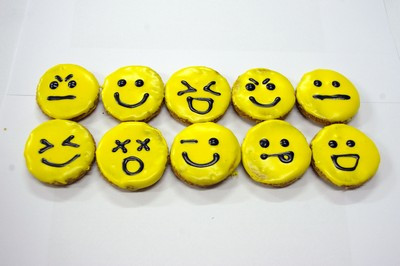
| Puppy Emoji Cookies - Dog Treats | 4 months | Occasional treat, gotcha day, celebrations | A baked cookie for the moments that deserve one. Break into pieces and count against the daily budget. |
| Doggie Cookie Mix - 4pce - Dog Treats | 4 months | Variety pack, gifts, occasional treats | A mixed selection for households who want options. Introduce one at a time, as always. |
You can browse the full puppy training treats range, the wider dog training treats selection, or everything we make in dog treats.
Being honest about limits
Two things we will not pretend. First, no treat is a substitute for a complete, balanced puppy food, and no treat brand should tell you otherwise. Second, every puppy is an individual. Our guidance is general, it is based on years of making treats and talking to owners, and it is not veterinary advice. If your puppy has a health condition, a known sensitivity, or you are simply not sure, ask your Australian vet before you change anything.
Putting it all together: a simple plan
If you want one page to work from, here it is.
Week one
- Same food the breeder was using. No changes.
- Training currency comes from the daily food ration.
- Toilet training starts immediately, rewarded outside, within two seconds.
- Handle the puppy gently every day: paws, ears, mouth.
Weeks two to four
- Introduce one training treat, three day method.
- Measure the day's treat allowance into one container each morning.
- Start crate and alone time work with a stuffed toy.
- Begin socialisation safely, following your vet's advice on where you can go.
Months two to four
- Add a second and third protein, one week apart.
- Introduce teething appropriate textures as the teeth start moving.
- Puppy preschool, with plenty of high value treats.
- Build a reward hierarchy and protect the top tier.
Months four to twelve
- Recall becomes the priority. Pay it generously, every time, forever.
- Widen chew options gradually as adult teeth settle.
- Check ribs and waist weekly. Adjust the treat budget before anything else.
- Keep vet visits positive with treats in the car park and on the scales.
Get those right and the rest tends to look after itself. A puppy who has been paid fairly, fed sensibly and shown that new things predict good things generally turns into a dog who is easy to live with. That is the whole point of the treat jar.
Our micro bones are bite sized, soft and made from single Australian proteins, which is exactly what a puppy needs.
Shop puppy training treatsFirst Christmas with a puppy? The Christmas gifts for dogs guide covers what to put in a dog's stocking and the festive foods to keep out of reach, and our Christmas dog treats are all in one place.
For baby teeth, softer is easier. Our soft dog treats are the gentle place to start.
Puppy Treat FAQs
Quick answers to the questions Australian puppy owners ask most. This is general guidance only, and your own vet always has the final word for your puppy.
When can puppies have their first treat?
From about 8 weeks of age, once they are fully weaned onto solid food. The RSPCA notes that puppies naturally wean at around 8 to 12 weeks and begin eating on their own from about 7 to 8 weeks, so a pup arriving home at 8 weeks is generally ready for tiny, soft treats. Start with crumb sized pieces, one new thing at a time, and keep balanced puppy food as the bulk of the diet.
Can puppies have carob?
Yes. Carob is the dog safe alternative to chocolate. Chocolate is dangerous because it contains theobromine and caffeine, compounds dogs are far more sensitive to than people, as US based VCA Animal Hospitals explains. Carob looks similar but is naturally free of those compounds, which is why dog bakeries use it. Our Nutty Carob Paws cookies ($8.95) are baked with carob; for a puppy, break a cookie into small pieces rather than giving it whole.
How many treats can a puppy have each day?
The widely used rule of thumb from US based VCA Animal Hospitals is that treats should make up no more than 10 percent of daily calorie intake, with the rest from a complete and balanced food. For a small puppy that is a genuinely tiny amount, which is why crumb sized training treats are so useful. On heavy training days, cut meal portions back slightly, and ask your Australian vet to check your pup's growth if unsure.
Can puppies have adult dog treats?
Often, yes. Training treats do not need to change with age: the ones that work at four months work just as well at four years. What changes is the chew end of the range. Hold off on firmer adult chews until your puppy is close to finished growing, from about 8 months for small dogs to 15 to 18 months for giant breeds, then introduce them one at a time, supervised.
Do treats help with teething?
They can. The RSPCA notes that permanent teeth come through between four and six months, and that puppy specific chew toys and healthy chewable treats can alleviate teething issues. The key is texture: light, crisp or gently chewy treats that break down easily, such as dried lamb puff, and nothing very hard, since the RSPCA warns that hard bones can break teeth.
What treats should puppies never have?
Never feed anything on the RSPCA's toxic foods list: alcohol, onions, garlic, chocolate, caffeine, mouldy or spoiled food, avocado, bread or yeast dough, grapes, raisins, sultanas, currants, nuts including macadamias, fruit stones, mushrooms or fruit seeds. Cooked bones are also out because they splinter, along with small pieces of raw bone, fatty trimmings, corncobs and salty foods. If your puppy eats any of these, call your Australian vet immediately.
Can I use my puppy's normal food as training treats?
Absolutely. Portion out part of the daily ration of puppy food and hand feed it as rewards, then save higher value bakery treats for harder moments like recall, vet visits and new experiences. This keeps total intake steady, which matters because the RSPCA cautions against overfeeding growing puppies.
Huds and Toke: Proudly Australian, Family Owned
We have been baking and drying pet treats in our own HACCP-certified kitchen on Queensland's Sunshine Coast since 2012. Everything is made here, using Australian ingredients, with no added sugar and no artificial colours or preservatives.
Cite this article: The Huds and Toke Editorial Team (2026). Puppy Treats: What Puppies Can Have at Every Age (Australian Guide) Huds and Toke, published 22 July 2026. https://hudsandtoke.com.au/puppy-treats-guide-australia/
References
- RSPCA Australia Knowledgebase. What should I feed my puppy? https://kb.rspca.org.au/knowledge-base/what-should-i-feed-my-puppy/
- Greencross Vets. Puppy pet library. https://www.greencrossvets.com.au/pet-library/puppy/
- RSPCA Australia Knowledgebase. What should I know before feeding dog treats? https://kb.rspca.org.au/knowledge-base/what-should-i-know-before-feeding-dog-treats/
- RSPCA Australia Knowledgebase. What are common household dangers for pets? https://kb.rspca.org.au/categories/companion-animals/household-and-garden-dangers/what-are-common-household-dangers-for-pets
- Animal Medicines Australia. Pets in Australia survey (media release). https://animalmedicinesaustralia.org.au/news-and-media/australias-most-comprehensive-pet-survey-shows-nearly-three-quarters-of-australian-homes-now-have-a-pet/