How to Use Treats in Dog Training: A Practical Guide for Puppies and Adult Dogs
Posted by The Huds and Toke Team on 22nd Jul 2026

The short version, in 30 seconds
- Small and fast beats big and chewy. A training treat should be swallowed in a second so you can keep the session moving.
- Timing decides what gets learned. The reward has to land within a second or two of the behaviour, or you are rewarding something else.
- Build a value ladder. Everyday treats for the kitchen, your best treat for the dog park. Match the reward to the distraction.
- Ten per cent rule still applies. Training treats are food. Count them and take the difference out of dinner.
- Bribing is not rewarding. If the food comes out before the behaviour, you are teaching your dog to work only when they can see it.
What makes a good dog training treat?
Ask ten dog owners what a training treat is and you will get ten different answers. Some picture a biscuit. Some picture whatever was left over from dinner. Some picture a handful of kibble scooped from the bag on the way out the door.
In practice, a good training treat is a very specific tool, and most of the things sitting in the treat cupboard are not it. A training treat has a job to do, and that job is narrow: it has to arrive fast, disappear fast, and leave your dog wanting the next one.
Here is what that looks like in the real world.
It is small
Small is the single most important quality. A training session might involve thirty to sixty repetitions. If each reward is the size of a fifty cent piece, you have just fed your dog a meal and a half by the time you finish teaching a sit stay.
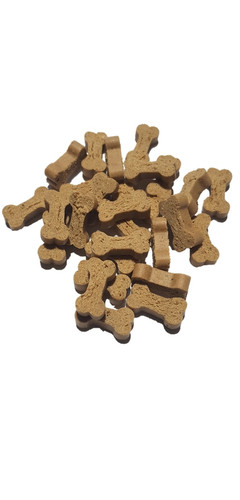
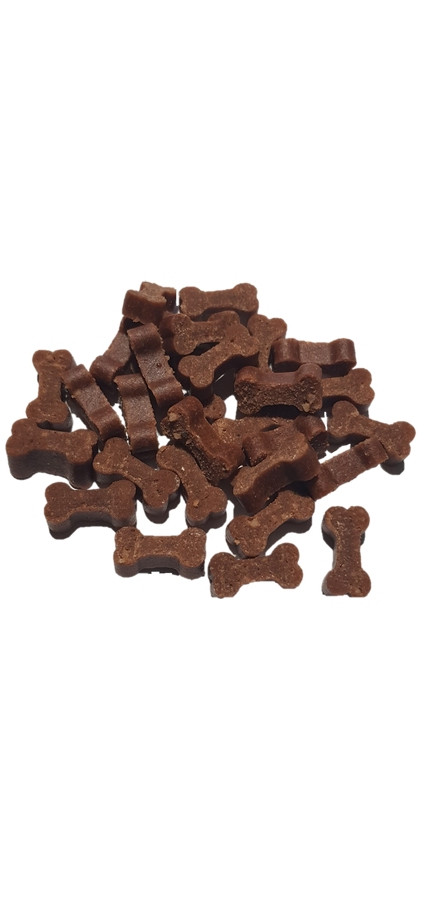
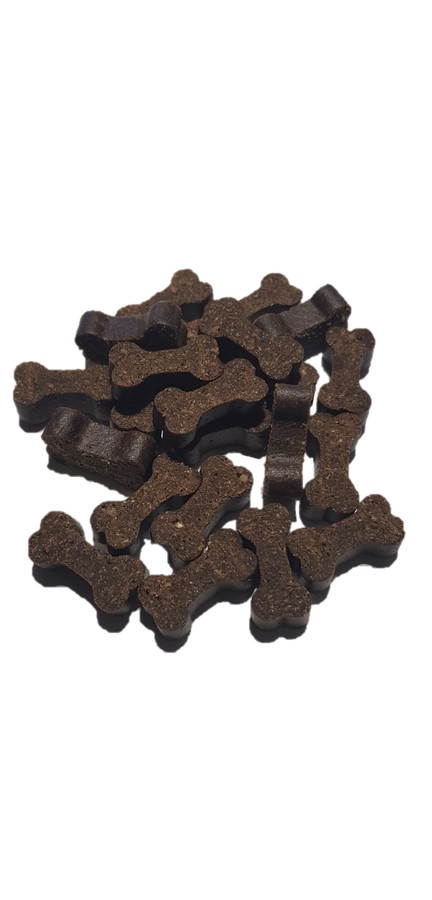
The reward needs to be roughly pea sized for a medium dog, and smaller again for a toy breed. This is why our Chicken Micro Bones - Dog Training Treats, Kangaroo Micro Bones - Dog Training Treats and Beef Micro Bones - Dog Training Treats are made at the size they are. They were not designed to be a snack. They were designed to be a currency.
It is eaten in about a second
Chewing kills momentum. If your dog needs eight seconds to work through a reward, the thread between behaviour and consequence stretches and thins, and you lose the rhythm of the session. Worse, your dog stops watching you and starts watching the ground for crumbs.
A treat that is swallowed almost immediately keeps the loop tight. Ask, mark, reward, reset, ask again. That rhythm is where learning actually happens.
It smells like something
Dogs live in a world of scent. A treat that has no aroma has almost no pulling power, particularly outdoors where the wind is carrying a hundred more interesting smells past your dog's nose. Meat based treats with an honest smell to them tend to hold attention in a way that bland biscuits simply cannot.
It does not fall apart in your pocket
Anything wet, oily or crumbly becomes a problem within about ten minutes. It coats your hands, it marks your clothes, and it turns your treat pouch into something you would rather not touch. Dried and baked treats hold their shape, stay dry to handle and survive being carried around all week.
It is made from ingredients you can name
You are going to feed a lot of these. Over a fortnight of solid training, the total volume adds up. That makes ingredient quality a genuine welfare question rather than a marketing one.
Every treat we make comes out of our own HACCP certified kitchen on the Sunshine Coast, and we have been doing it since 2012. We are a family owned Australian manufacturer, which means we know what goes into each batch because we put it there. When a treat is single ingredient, like our Lamb Liver - Dog Treats or Kangaroo Liver - Dog Treats, what you see on the label is genuinely what is in the pack.
It suits your individual dog
The last quality is the one most guides skip. A treat that works brilliantly for one dog can leave another completely cold. Some dogs will sell their soul for liver. Others find it too rich and turn their heads away. Some dogs go quiet and thoughtful over fish. Some prefer something plant based.
You will not know until you test, and testing properly is a section of its own further down.
Why treats work: the case for reward-based training
Reward based training is not soft. It is not permissive, and it is not about spoiling a dog. It is simply the approach that best matches how animals actually learn.
Behaviour that produces something good tends to happen again. Behaviour that produces nothing tends to fade. That is the whole engine. Everything else is detail about how you apply it.
Food is the most practical reward available to most owners for three reasons.
- It is fast. You can deliver forty rewards in five minutes. You cannot deliver forty games of tug in five minutes.
- It is consistent. A treat is the same every time. Your enthusiasm, your voice and your patience all fluctuate across a day. Food does not.
- It is universal. Almost every dog eats. Not every dog fetches, tugs or enjoys being patted while working.
There is a second, less obvious benefit. Training with food changes your dog's emotional state, not just their behaviour. A dog who is being fed while learning is a dog who feels good about learning. That matters enormously when you get to nervous dogs, reactive dogs and anything involving the vet clinic or the nail clippers.
Australian vets and qualified force free trainers generally recommend reward based methods as the first approach for pet dogs, and for good reason. Methods that rely on fear or discomfort can suppress a behaviour without teaching an alternative, and they carry real risk of damaging the relationship you are trying to build. We only ever recommend reward based, force free training. If a technique relies on frightening or hurting your dog, it is not something we will put our name to.
What treats are actually paying for
A useful reframe: you are not bribing your dog to obey. You are paying wages for work. The work is difficult, especially early on. Your dog is being asked to ignore instinct, ignore distraction and produce a specific behaviour on a specific word in a language that is not theirs.
Nobody works for free indefinitely. Once the behaviour is genuinely learned the pay rate can drop, and we will cover exactly how to do that later in this guide. But during the learning phase, generous, well timed payment is what builds a reliable behaviour.
Timing is everything: reward within the moment
If there is one skill that separates training that works from training that frustrates everybody, it is timing.
Your dog is not connecting the treat to the general concept of good behaviour. They are connecting it to whatever they were doing in the fraction of a second before the reward arrived. Get that window right and progress is quick. Get it wrong and you will accidentally teach something you never intended.
The one second rule
Aim to mark the behaviour within about one second. Not the treat in the mouth within one second, which is often physically impossible, but the marker (more on that shortly) within one second.
Classic timing errors look like this.
- You ask for a sit. The dog sits. You fumble in the pouch. By the time the treat arrives the dog has stood up. You have just rewarded standing.
- You call your dog. They come. You reach for their collar first, then treat. You have paired recall with being grabbed.
- Your dog lies down beautifully, then barks once with impatience as you deliver. You have rewarded the bark.
None of these are disasters on their own. Dogs are forgiving and one mistimed reward will not undo a week of good work. But repeated a hundred times, mistimed rewards create the exact problems people write in to ask us about.
Practise your hands, not just your dog
Before you start a session, do thirty seconds of hand practice with no dog involved. Open the pouch, take one treat, close the pouch. Again. Again. If you can do this without looking, your timing improves immediately because you are not spending a second and a half hunting.
Uniform, dry, similarly sized treats make this dramatically easier. This is one of the quiet advantages of a consistent training treat: you can grab one without needing to check what you grabbed.
Marker words and clicker basics
A marker is a sound that means "that exact thing, and payment is coming". It buys you time. Instead of needing the food in your dog's mouth within a second, you only need the sound within a second, and the food can follow at a human pace.
This is the single biggest upgrade most owners can make to their training, and it costs nothing.
Choosing your marker
You have two practical options.
A marker word. Pick something short and distinct. "Yes" is the most common. "Good" is a poor choice because most people already say it constantly in general conversation, which waters it down. Say it in a consistent tone, brief and clean, not drawn out.
A clicker. A small mechanical device that makes a sharp, identical sound every time. The advantage is precision and consistency. The disadvantage is that it is another object to hold alongside the lead, the treats and possibly a poo bag. Many owners start with a clicker for shaping new behaviours and use a word for everyday work.
Either works. What matters is consistency, not the choice itself.
Charging the marker
Before a marker means anything, you have to teach it. This takes about two minutes.
- Sit somewhere quiet with your dog and a handful of small treats.
- Say "yes" (or click), then immediately deliver one treat. Your dog does not have to do anything.
- Wait a few seconds. Repeat.
- Do this fifteen to twenty times, then stop.
Do a second session the next day. You will know it has landed when you say "yes" and your dog's head snaps around expectantly. At that point the sound itself has become meaningful, and you can start using it to mark real behaviour.
Marker rules that keep it working
- One marker, one treat. Do not mark and then decide not to pay. The marker is a promise.
- Mark once. Not "yes yes yes". One clean marker.
- Mark the moment, not the aftermath. Mark as the bottom touches the ground, not once the dog has settled.
- The marker ends the behaviour. If you mark during a stay, your dog is allowed to get up. If you want the stay to continue, feed without marking and keep going.
A release word is not a marker
Worth separating early. A release word ("break", "free", "off you go") tells your dog the exercise is finished. A marker tells your dog they earned something. Keep them as different words or you will end up with a dog who breaks a stay every time they hear payment coming.
High-value versus everyday treats, and when to use each
Not all rewards need to be spectacular. In fact, if everything is spectacular, nothing is, and you have nothing left in reserve for the hard moments.
Think about it as a pay structure rather than a treat cupboard.
Everyday treats
These carry the bulk of your training volume. They are used for behaviours your dog already knows reasonably well, in environments that are not particularly challenging. Kitchen sits, indoor recalls, settle on the mat, polite waiting at the door.
Our micro bone range sits squarely here for most dogs. So do our Veggie Tubes - Vegetarian - Dog Treats, which suit households wanting a plant based option in the rotation.
High value treats
These come out when the job is genuinely hard. Recall away from another dog. First time in a new park. Holding a stay while somebody knocks at the door. Anything involving fear, tension or high arousal.
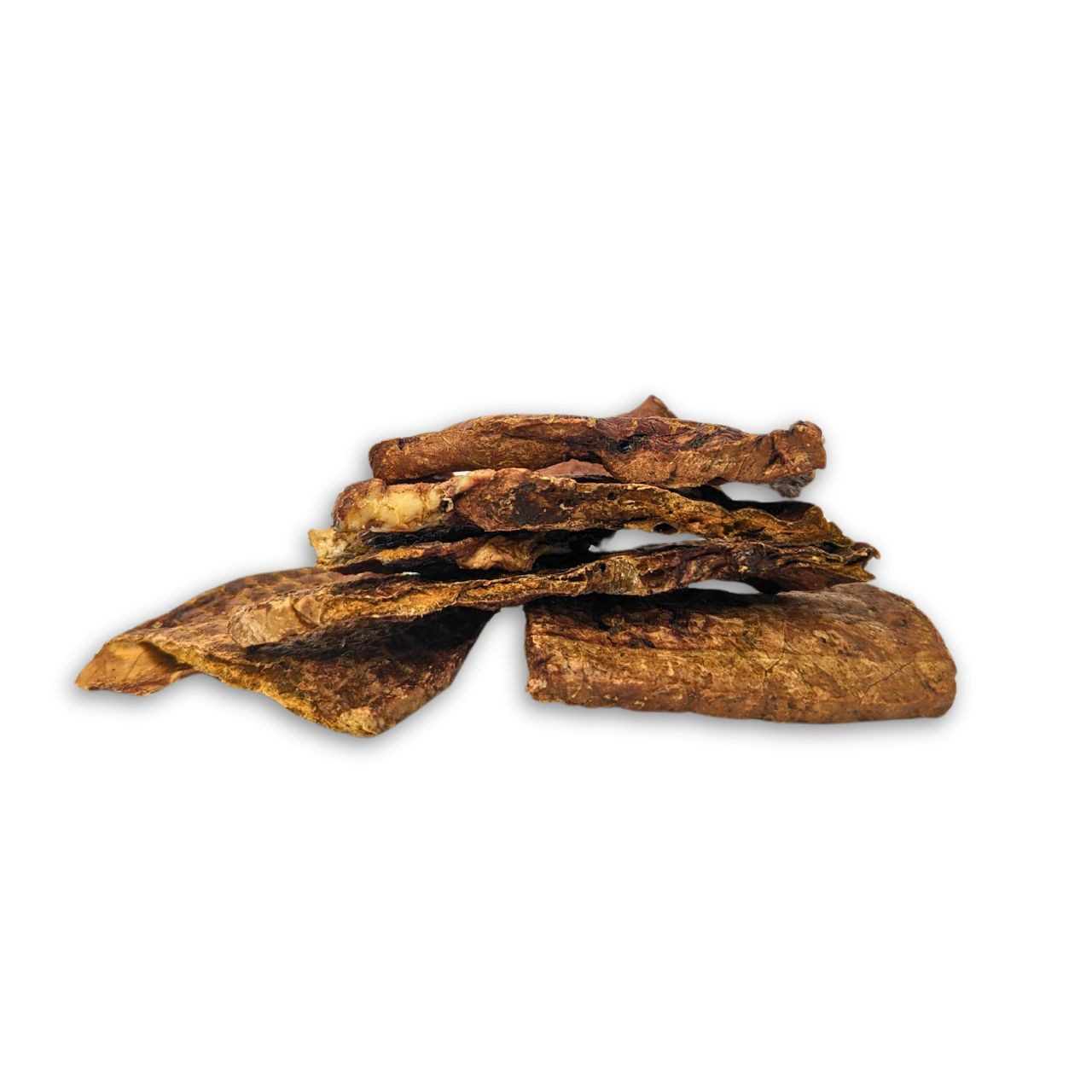
For most dogs the higher value end means stronger smelling, meatier, richer options. Lamb Liver - Dog Treats, Kangaroo Liver - Dog Treats, Lamb Lung Cubes - Dog Treats and Kangaroo Jerky Cubes - Dog Treats tend to land in this bracket. Australian Fish Nibble - Dog Treats is a strong performer for dogs who go slightly flat on red meat.
Jackpot rewards
Rare, and used deliberately. A jackpot is several treats in a row, delivered with real enthusiasm, for a genuine breakthrough. The first time your dog recalls off a kangaroo sighting. The first time they walk past the neighbour's fence without reacting.
Jackpots are memorable precisely because they are uncommon. Use them once or twice a fortnight, not every session.
The mistake most people make
Using the best treat you own for the easiest behaviour you train. If your dog is getting liver for a lounge room sit, you have nothing left to offer when a kelpie comes charging across the oval. Save your top tier. Spend your everyday tier freely.
Building a value ladder for your own dog
Every dog ranks treats differently, and the ranking is personal. The only reliable way to find out is to test, and the test is simple.
The two treat test
- Take two different treats, one in each closed hand.
- Open both hands at the same time, at the same distance, at the same height.
- Note which one your dog goes to first.
- Repeat three or four times, swapping which hand holds which, because plenty of dogs simply favour a side.
- The consistent winner ranks higher.
Run this as a small tournament across five or six treat types and you will have a genuine ranking within about fifteen minutes. Write it down and stick it inside the cupboard door.
Re-test seasonally
Rankings shift. Dogs get bored of a treat that has been in heavy rotation, and a treat they ignored six months ago can suddenly become gold. Re-run the test every few months, and always re-run it if training has gone flat.
The ladder in practice
Once you know your dog's ranking, match the rung to the difficulty of the moment. The table below shows how that works in practice. Adjust the examples to your own dog's results.
| Distraction level | Typical situation | Reward value needed | Examples from our range | Reward frequency |
|---|---|---|---|---|
| Level 1: none | Lounge room, hallway, nothing happening | Everyday | Chicken Micro Bones, Veggie Tubes | Every correct repetition while learning |
| Level 2: mild | Backyard, quiet street, family moving about | Everyday to mid | Beef Micro Bones, Kangaroo Micro Bones | Most repetitions, start varying |
| Level 3: moderate | Footpath walk, distant dogs, cars passing | Mid | Australian Fish Nibble, Beef Lung Cubes | Variable, roughly every second or third |
| Level 4: high | Busy park, dogs at ten to twenty metres, off lead area fence line | High | Kangaroo Jerky Cubes, Lamb Liver | Generously, most repetitions |
| Level 5: extreme | Recall off another dog, wildlife, beach, first visit anywhere new | Highest you own | Kangaroo Liver, jackpot handfuls | Every single time, no exceptions |
One rule sits above all of this. The environment sets the price, not your budget. If your dog will not take a treat at all, the environment has beaten your reward, and the answer is to move further away from whatever is causing it rather than to keep asking.
Treat size and daily moderation: small treats, honest maths
This is the part of treat training that gets glossed over, and it is the part that quietly causes problems.
Australian vets generally advise that treats make up no more than around ten percent of a dog's daily food intake, with the remainder coming from a complete and balanced diet. That guidance is easy to nod along to and surprisingly easy to blow past.
Run the numbers on a real session
A focused training session might be five minutes long. In five minutes an organised owner can comfortably deliver forty rewards. Two sessions a day is eighty. Add casual rewards through the day, the treat for coming inside, the one for waiting at the gate, the one because they were cute, and you can easily be at a hundred and twenty pieces.
If each piece is small and dry, that is manageable. If each piece is the size of a chocolate biscuit, you have doubled your dog's daily intake without noticing.
Practical ways to keep it honest
- Break treats down. Most treats can be halved or quartered. A treat does not need to be big to be valuable. Dogs respond to taste and smell far more than to volume.
- Subtract from meals. On heavy training days, reduce dinner. This is the simplest fix and the one most people skip.
- Use part of the daily food ration as training currency. For dogs on dry food, a portion of the day's kibble can carry the easy indoor repetitions, saving the real treats for hard work.
- Measure the day's treats out in the morning. Put the allowance in a container. When it is empty, training uses praise, play and life rewards instead. This single habit prevents most overfeeding.
- Read the pack. Feeding guidance differs between products and between dogs. Check what is on the packaging and check with your vet if your dog is overweight, on a restricted diet or managing a health condition.
Weight matters more than most owners think
Carrying extra weight affects joints, mobility, heat tolerance (which matters a great deal in an Australian summer) and general quality of life. A treat training programme should never come at the cost of your dog's condition. If your dog is gaining, the answer is not to stop training. It is to shrink the treats and shrink the meals.

Managing daily calories across training sessions
Once you accept that training food is food, planning becomes straightforward. Here is a workable structure for a normal week.
Plan the week, not the session
Decide in advance which days involve heavy training. A day with puppy class, a park trip and a vet visit is a big day. A rainy Tuesday at home is not. Adjust meals accordingly rather than trying to balance every session in isolation.
Use a tiered budget
| Session type | Typical length | Food source | Meal adjustment |
|---|---|---|---|
| Indoor practice of known behaviours | 3 to 5 minutes | Portion of daily kibble or lowest tier treat | None needed if taken from the ration |
| New behaviour, indoors | 5 minutes | Micro bone sized training treats | Small reduction at the next meal |
| Outdoor practice, moderate distraction | 10 to 15 minutes | Mid tier treats, broken small | Noticeable reduction at the next meal |
| Recall or reactivity work, high distraction | 10 to 20 minutes | Highest tier treats | Reduce one full meal, or split dinner smaller |
| Big day (class plus outing plus vet) | Across the day | Mixed tiers | Plan the day's meals down before you start |
Rewards that cost nothing
Food is not your only currency, and leaning on the others keeps the calorie budget sane.
- Permission to sniff an interesting patch of grass
- Release to go and greet a friendly, known dog
- The door opening so the walk continues
- A short game of tug or chase
- Genuine, warm praise and a scratch in the right spot
These are called life rewards, and they are powerful precisely because your dog wanted them anyway. A dog who learns that sitting politely makes the front door open has learned something durable, and it did not cost a single treat.
Puppy training treats: starting right
Puppies are learning constantly whether you are teaching or not. The first few months set patterns that last, which makes early treat use worth thinking about carefully.
Go smaller than you think
A puppy's stomach is tiny. Treats for puppies should be genuinely small, dry and easy to swallow. Our micro bone range and a small selection from puppy training treats are sized for exactly this. If in doubt, break the treat in half again.
Keep sessions very short
A young puppy has a working attention span measured in a couple of minutes. Two or three sessions of ninety seconds will teach more than one session of ten minutes, which mostly teaches a puppy that training gets boring.
Stop while your puppy still wants more. This is the hardest advice to follow and the most valuable.
Introduce new proteins one at a time
Puppy digestion is sensitive. Add one new treat type, give it a few days, and watch for any change in stools or appetite before adding another. If something does not agree with your puppy, this approach tells you what it was.
Single ingredient treats are useful here for exactly this reason. If a puppy reacts to a treat with one ingredient, you know precisely what to avoid.
What to actually teach first
Before sit and drop, teach these.
- Their name. Say it, and when the head turns, mark and pay. That is the whole exercise. Do it fifty times over a week and you have a puppy who orients to you.
- Hand feeding. Taking food gently from a hand without snapping. If teeth touch skin, the hand closes and the treat disappears for a moment.
- Settling. Reward calm. Puppies get rewarded constantly for being busy and rarely for being quiet. Drop a treat between their paws when they lie down on their own.
- Recall as a game. Never a command yet, just a party. Two people, opposite ends of a hallway, calling in turn, paying every time.
- Handling. Touch a paw, mark, pay. Touch an ear, mark, pay. This makes vet visits and nail trims immeasurably easier later.
Socialisation and food together
The early socialisation window is short and important. Pairing new experiences with good food helps a puppy form positive associations rather than fearful ones. New surface underfoot, treat. Umbrella opening at a distance, treat. Skateboard rolling past on the other side of the road, treat.
Keep everything at a distance where the puppy is curious rather than worried. If they will not take food, you are too close. Move back. Your vet can advise on what is appropriate before the vaccination course is complete.

From lure to cue: how the treat leaves your hand
This is where a great many owners get stuck, and the sticking point is almost always the same: the treat stays in the hand too long.
The three stages
Stage one: the lure. The treat is in your hand, your dog follows it, and the movement produces the position you want. Hold a treat at your dog's nose and lift it slowly back over their head, and most dogs sit. This is fine, and it is a fast way to get a behaviour happening.
Stage two: the empty hand. After roughly five successful repetitions, do the identical hand movement with nothing in your hand. Your dog does the behaviour, you mark, and the treat comes from the pouch or your other hand. The movement is now a hand signal rather than a lure.
Stage three: the cue. Say the word first, pause for a beat, then give the hand signal if needed. Over repetitions the word starts predicting the signal, and your dog begins responding to the word alone. Fade the hand signal gradually to something small, or keep it as a deliberate second cue if you like having both.
Five repetitions, then move on
The number is not sacred but the principle is. If you lure more than about five to ten times, the food in your hand becomes part of the picture your dog is learning. Then you have a dog who sits when there is food in your hand and stares blankly when there is not.
People describe this as a dog who "only does it for treats". Almost always, it is a dog who was lured for a hundred repetitions and never taken to stage two.
Where the reward comes from matters
Deliver the reward in the position you want the behaviour to happen. If you want a close heel, feed at your leg seam. If you want a settled down stay, deliver between the front paws so your dog stays low. If you want a fast, close recall, feed right at your knees rather than at arm's length.
Dogs return to where the food appears. Use that.
Variable reward schedules and why random beats predictable
While a behaviour is new, reward every single correct repetition. This builds the behaviour quickly and clearly.
Once it is reliable in a quiet environment, switch to rewarding some repetitions and not others, unpredictably. This is called a variable schedule, and it produces stronger, more persistent behaviour than rewarding every time.
Why unpredictability works
If a reward comes every time, the absence of a reward is immediately informative, and behaviour drops off quickly the moment payment stops. If rewards come unpredictably, your dog cannot tell whether this repetition is the paying one, so they keep offering the behaviour with enthusiasm.
Every gambler understands this without needing it explained.
How to actually run it
- Continuous. Every correct repetition, until the behaviour is solid in a quiet room.
- Mostly. Roughly four out of five. Vary which one you skip.
- Half. Roughly every second repetition, but genuinely randomly, not alternating.
- Occasional. Roughly one in four or five, with the odd surprise jackpot.
Do not become mechanical about it. If you reward every third repetition exactly, your dog will work out the pattern faster than you expect and start coasting on the two in between.
Two things to keep constant
Always mark and always praise, even when no food follows. The marker keeps its meaning because it is still followed by something good, even if that something is a warm "good dog" and a scratch.
Reset to continuous whenever the context changes. New location, new distraction, new person handling the dog, back to paying every time until it is solid again. Then thin out.
Fading treats without losing the behaviour
The goal is not a dog who works forever for food. It is a dog who responds because the behaviour is genuinely learned, with food used as maintenance rather than as the engine.
Getting there requires patience, and the most common failure is going too fast.
Fade in this order
- Fade the lure first. Food out of the hand, into the pouch. This happens early, within the first handful of repetitions.
- Fade the visible pouch. Treats in a pocket, in a container on the shelf, in the kitchen. Your dog should not be able to see the food source before performing.
- Fade the frequency. Move through the variable schedule described above.
- Fade toward life rewards. Replace many food rewards with things your dog already wants. The lead goes on. The ball is thrown. The door opens.
- Maintain, do not abandon. Keep occasional, unpredictable food rewards in the mix forever. A behaviour that is never paid will eventually erode.
Signs you have faded too fast
- Slower responses than last week
- Your dog checking your hands or pouch before responding
- Responding indoors but not outdoors
- Needing to repeat the cue two or three times
If you see these, go back one step for a week. This is not failure. Behaviour is not linear, and rebuilding is quick when the foundation is there.
The behaviours you should never fully fade
Some things are too important to let erode. Recall is the obvious one. Keep paying recall, well, for the life of your dog. The cost of a few treats is nothing against the value of a dog who turns and comes back when a car is coming.
Training in high-distraction environments
Every owner has had this moment. Your dog performs beautifully in the kitchen, then appears to forget everything the second you reach the park.
Your dog has not forgotten. Dogs do not generalise the way people assume. A sit in the lounge room and a sit at the dog park are, to your dog, close to two separate exercises until you teach them otherwise.
The three variables
Trainers often talk about distance, duration and distraction. The rule that saves most sessions is simple: only increase one at a time.
If you are adding distraction, shorten the duration and reduce the distance. Ask for a two second stay at two metres in a busy park, not the thirty second stay at ten metres that works at home.
Build a distraction ladder
- Empty room at home
- Home with the family moving around
- Backyard
- Front yard or driveway
- Quiet street, early morning
- Normal street during the day
- Edge of a park with dogs a long way off
- Park at a moderate distance from activity
- Close to the action
Move up a rung only when your dog is succeeding roughly four times out of five. If they fail twice in a row, drop back a rung immediately. Repeated failure teaches your dog that your cues are unreliable predictors of anything.
Distance is the dial that always works
When things go wrong outdoors, the fix is almost never more insistence. It is more distance. Move away from whatever is winning, get your dog back into a state where they can eat and think, and work there.
A dog who suddenly will not take a treat outdoors is telling you something specific. Either the reward is too low value for the environment, or they are over threshold and no longer able to eat. Both are solved by backing off.
Arrive prepared
- Bring better treats than you think you need
- Bring more than you think you need
- Do two minutes of easy, known behaviours on arrival before asking for anything hard
- Finish while it is still going well, not after it falls apart
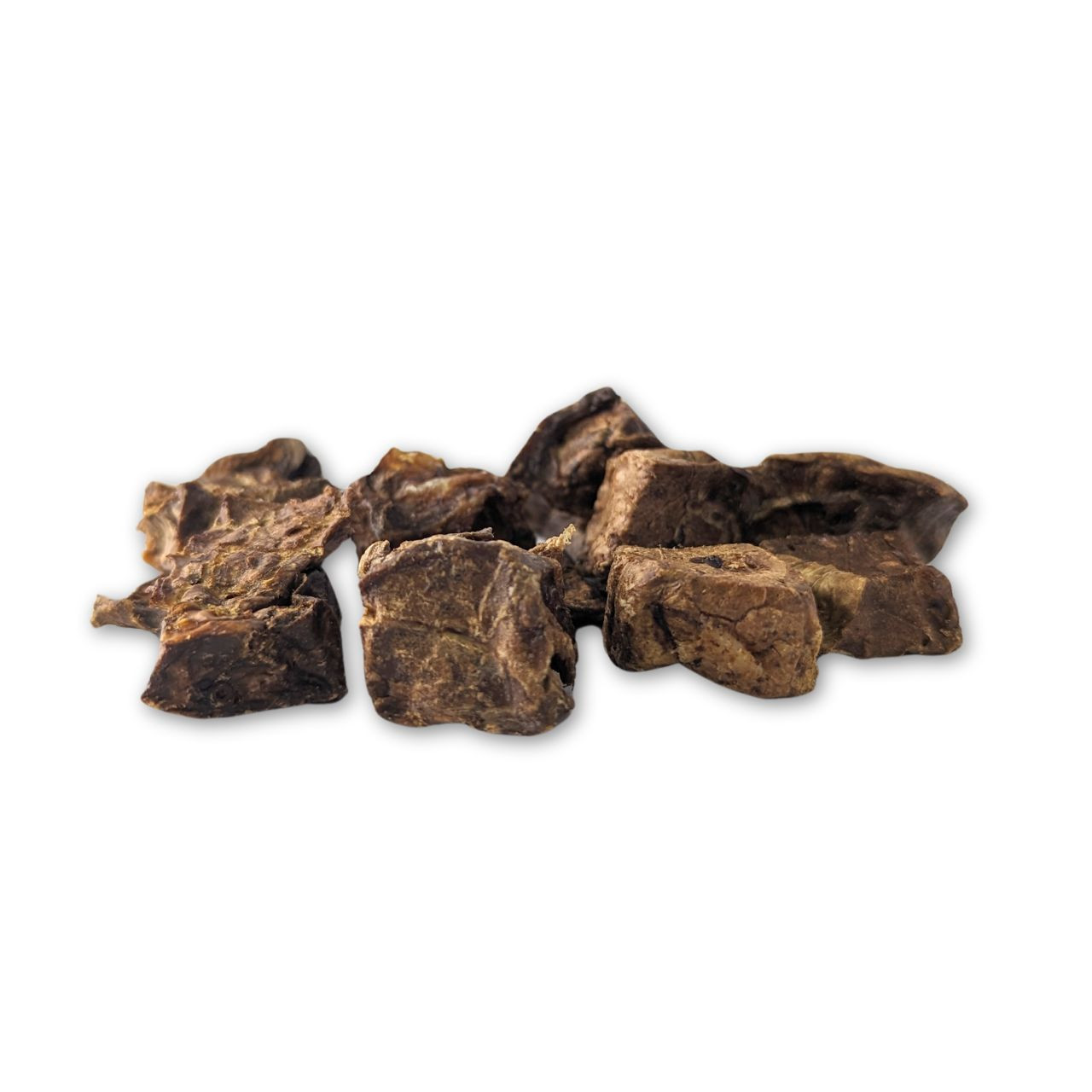
A durable treat matters more outdoors than anywhere else. Wind, sand, heat and long grass are unforgiving. Firm, dry treats like Kangaroo Jerky Cubes - Dog Treats and Lamb Lung Cubes - Dog Treats hold together in a pouch through a full session at the beach.
Recall training and why it needs the best treat you own
Recall is the most important behaviour you will ever teach, and it is the one most commonly undermined by owners without realising.
Your recall cue is competing with everything your dog finds interesting in the world. Kangaroos. Other dogs. A dead thing in the grass. Whatever wonderful smell is coming off the fence line. To win that competition, your recall has to pay better than the alternative, every single time, for the life of your dog.
Rules that protect a recall
- Always pay. Never thin recall out to nothing. This is the one behaviour to keep on a generous schedule permanently.
- Never call your dog for something they dislike. Not for a bath, not for nail clipping, not to end the fun at the park. Go and get them for those things.
- Never call twice. If they do not come, go closer, make it easier, and make sure the next repetition succeeds. Repeating the cue teaches your dog that the first call is optional.
- Never call when you are not confident they will come. Every failed recall weakens the cue. Use a long line while you build reliability.
- Never sound cross. Even if you are. Especially if you are. A dog who returns to an annoyed owner learns that returning is a bad idea.
Build it in stages
- Charge the word. Say your recall cue, then feed. Ten repetitions with the dog standing right next to you. The word starts meaning "excellent things happen".
- Short distance, no distraction. Hallway or lounge room. Pay every time, generously.
- Add distance. Across the yard. Two people calling in turn works well.
- Add mild distraction. A toy on the ground. A family member nearby.
- Add a long line. Five to ten metres of line in a park lets you practise safely with real distractions. The line is not for reeling your dog in. It is a safety net so a failure cannot become a bolt.
- Off lead in safe, legal areas only. And only once the long line work is genuinely reliable.
The recall jackpot
Recall is where jackpots earn their keep. When your dog turns away from something genuinely difficult and comes back to you, that deserves several pieces of your very best treat, delivered one at a time with real delight, over five or six seconds. Feed at your knees so your dog comes right in rather than stopping short.
This is the moment to use whatever sits at the very top of your dog's ladder. For many dogs that is Kangaroo Liver - Dog Treats or Lamb Liver - Dog Treats. Keep a small dedicated bag that only ever comes out for recall, so the treat itself carries meaning.
Release them again
One underused trick. Call your dog, pay well, then release them straight back to what they were doing. Recall then stops predicting the end of fun, and starts predicting a treat plus permission to carry on. That single change fixes a surprising number of ignored recalls.
What to do when your dog stops responding to a treat
It happens to everyone. The treat that worked last month is now met with a shrug. Here is how to work through it methodically rather than assuming your dog has become stubborn.
| What you are seeing | Likely cause | What to try |
|---|---|---|
| Takes the treat but responses have slowed | Treat has gone stale through overuse, or reward rate faded too fast | Rotate to a different protein. Go back to a richer reward schedule for a week. |
| Ignores treats entirely outdoors but eats them at home | Value too low for the environment, or over threshold | Move further from the distraction. Bring a higher tier treat. |
| Works well early in the session then fades | Full, tired, or sessions running too long | Shorten sessions. Train before meals, not after. |
| Not interested in food at all, anywhere, unusual for them | Possible health issue | Stop training and speak to your vet. Appetite change is worth checking. |
| Takes food, then spits it out | Stress, or genuine dislike of that treat | Reduce pressure and distance. Test a different flavour with the two treat test. |
| Snatches hard, seems frantic, cannot focus | Over aroused rather than under motivated | Lower the value slightly, slow your delivery, add calm settling work. |
| Responds at home, blank at class | Behaviour never generalised | Rebuild from an easy rung in a new location rather than assuming the behaviour is known. |
Rotation prevents most of this
The simplest preventive measure is variety. Keep three or four different treats in rotation and change which one is in the pouch. Novelty itself has value, and a treat your dog has not seen for a fortnight is worth more than the same one every day for six months.
This is a good reason to keep a small range across our dog training treats rather than committing to a single bag.

What to do if your dog is not food motivated
Occasionally we hear from owners whose dog genuinely does not seem to care about food. Before accepting that conclusion, work through this list, because in most cases the dog is food motivated and something else is in the way.
Check the obvious causes first
- Are they full? A dog who has just eaten a full meal has no reason to work for food. Train before meals.
- Is food freely available? Dogs with a bowl down all day have little reason to value a treat. Moving to set meal times often transforms motivation.
- Is the treat actually appealing? Run the two treat test properly across several options. Many owners have only ever tried one or two things.
- Is the environment too much? Refusing food outdoors while eating happily at home is a stress signal, not a motivation problem.
- Is something hurting? Dental pain, gut upset and general illness all suppress appetite. Any sudden or unexplained change in food interest is a conversation with your vet, not a training problem.
Ways to raise food value safely
- Train immediately before a meal rather than after
- Feed a portion of the daily ration by hand during training rather than in the bowl
- Warm a treat slightly in your hand to bring out the smell
- Break treats smaller so the same amount goes further and each one feels earned
- Try a different protein entirely. Dogs flat on chicken and beef will sometimes light up for Australian Fish Nibble - Dog Treats or kangaroo
Never withhold meals to force motivation. That is not a technique we would ever recommend, and it is not necessary. Timing meals sensibly is enough.
Non-food rewards for dogs who prefer them
Some dogs, particularly working breeds, value movement above food. That is a resource, not a problem.
- Toys and tug. A short, intense game as the reward for a recall can outperform any treat for the right dog.
- Chase and release. Permission to run after a thrown ball, delivered the instant the behaviour happens.
- Sniffing. For many dogs, thirty seconds of free sniffing is worth more than liver.
- Access. Getting to go through the gate, into the car, up onto the couch if that is allowed in your home.
Even for these dogs, keep food in the toolkit. There are situations, vet handling and quiet counter-conditioning among them, where a game is impractical and food is exactly right.
Treats for reactive or nervous dogs
This section comes with a clear boundary. If your dog is showing aggression, if anyone has been bitten, if you are frightened of your dog's behaviour, or if anxiety is severe, please work with a qualified force free trainer or a veterinary behaviourist. Some behaviour has a medical component, and some of it needs hands on professional assessment. Nothing written on a website can replace that.
What we can offer is how food is used within that broader picture, because it is used constantly, and using it well makes a real difference.
Food as a thermometer
The most useful thing about food with a worried dog is that it tells you where they are emotionally. A dog who is comfortable can eat. A dog who is over threshold usually cannot, or takes food roughly and without interest.
So the treat becomes a live readout. If your dog stops taking food as another dog comes into view, you are too close. Increase distance until they can eat again. That distance is your working distance for today.
Practical guidelines
- Distance first, always. No amount of good treats fixes being too close.
- Feed generously and continuously while the trigger is visible, then stop when it disappears. The contrast is what teaches.
- Do not ask for obedience in these moments. Your dog does not need to sit. They need to feel safe and to associate the trigger with something good.
- Scatter feeding helps. Tossing a few treats on the ground encourages sniffing, and sniffing lowers arousal for many dogs.
- Keep sessions very short. Two or three minutes of good work beats twenty minutes of gradually escalating stress.
- Do not force approaches. A nervous dog should never be lured closer to something they are afraid of with food. That teaches them not to trust the food.
Choosing treats for this work
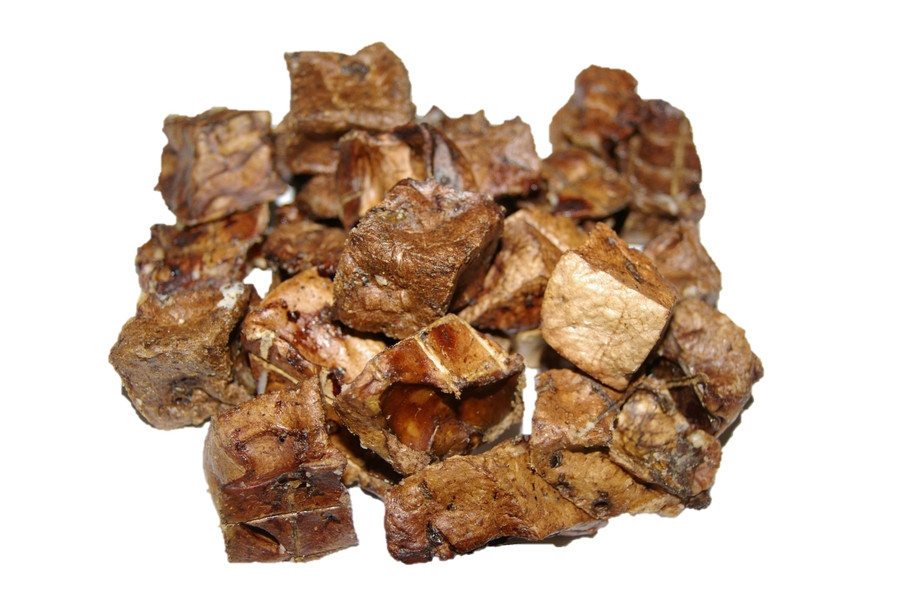
Use the very top of your ladder, and use plenty of it. Small pieces so you can deliver many in a row. Strong smelling so they cut through a distracted, worried state. Easy to swallow so your dog is not left chewing while the trigger moves.
Counter-conditioning basics
Counter-conditioning is the process of changing how your dog feels about something, rather than just what they do about it. It is the backbone of most work with fear, and it runs almost entirely on food.
The core pattern
The order matters enormously.
- The trigger appears at a distance where your dog notices it but is not distressed.
- Then the food starts.
- The trigger goes away.
- Then the food stops.
Trigger predicts food. Food never predicts trigger. If you get the order backwards, and start feeding before the trigger appears, you can accidentally teach your dog that treats mean something scary is coming.
Working under threshold
Under threshold means your dog can notice the trigger and still eat, still respond to you, still move normally. Everything useful happens under threshold. Nothing useful happens above it.
Signs you have gone over: refusing food, fixed staring, stiff body, barking or lunging, an inability to look away. If you see these, you have gone too far, and the session should end with a calm walk away rather than another attempt.
Everyday counter-conditioning
You do not need a formal setup. Small opportunities appear constantly.
- Nail clippers. Clippers appear, treat. Clippers disappear, treat stops. Repeat for days before you ever cut a nail.
- Vet clinic. Park outside, feed a few treats in the car park, drive home. Repeat until the car park is boring.
- Doorbell. Have someone ring it while you feed. Then stop feeding once the sound has finished.
- Storms. Feed at the first distant rumble, well before real distress starts. Storm phobia can be serious, and severe cases need veterinary input.
- Grooming. Brush stroke, treat. One stroke at a time, building up slowly.
Progress here is measured in weeks, not sessions. It is slow, unglamorous work, and it is some of the most valuable training you will ever do.
Common mistakes and how to fix them
Most training problems come from a small handful of habits. Here are the ones we see most often.
Bribing instead of rewarding
A bribe appears before the behaviour. A reward appears after it. The difference sounds small and is enormous.
If your dog only sits when they can see food in your hand, you have a bribe based system. The fix is to move the food out of sight, ask for the behaviour, and pay from a pouch or pocket afterwards. Expect it to feel worse for a few days before it feels better.
Showing the treat too early
Related, and just as common. Reaching for the pouch as you give the cue means your dog is responding to your hand, not your word. Give the cue with still hands. Reach only after the behaviour has happened and you have marked it.
Rewarding the wrong moment
The dog jumps, you push them down, then they sit and you treat. You have rewarded a chain that includes jumping. Watch for what happened in the last second, not what you intended to reward.
Repeating the cue
"Sit. Sit. Siiiit. SIT." Now the cue is four sits and an exasperated tone. Say it once. If nothing happens, make the situation easier and set up a repetition your dog can win.
Training when you are frustrated
Dogs read tension in the body and voice with great accuracy. A session run while you are irritated teaches your dog that training feels bad. Stop, do something easy, end it, come back tomorrow.
Sessions that are too long
Five focused minutes beats twenty scattered ones. Two or three short sessions a day is the sweet spot for most dogs.
Ending on a failure
People often keep going until it goes wrong, then stop. That means every session ends on your dog's worst repetition. Finish on something easy that your dog nails, then stop.
Only training in one room
A behaviour learned in the kitchen exists in the kitchen. Practise everywhere, deliberately.
Being inconsistent between people
If one person allows the dog on the couch and another does not, the dog is not confused about the rules, they are learning that rules depend on who is watching. Agree the cues, the marker word and the household rules with everyone in the home.
Forgetting to reward good behaviour that happens on its own
The single most underused opportunity in dog training. Your dog lies down quietly while you cook. Nobody says a word. Your dog barks at the window and everybody reacts.
Keep a small container of treats in the main living area and pay calm behaviour when it happens by itself. This is free training and it works.
Treat pouch practicalities
A good pouch is not an accessory. It changes your timing, and timing changes everything.
What to look for
- A wide opening that stays open. Hinged or stiffened openings let you get in one handed without looking.
- A way to close it fully. For the drive home, and for keeping a determined nose out.
- A belt clip that actually holds. A pouch that slides around your waist while you walk is a constant small annoyance.
- Washable. It will need it.
- A second compartment. Ideal for keeping your high value treats separate from the everyday ones, so you can reach for the right tier without rummaging.
Pouch habits worth building
- Wear it on the side you want your dog on. If you want a left side heel, wear the pouch on the left.
- Load it before you leave. Not at the front door with an excited dog spinning at your feet.
- Empty it every evening. Old treats in a warm pouch is not a good combination, particularly in a Queensland summer.
- Do not let the pouch become the cue. If your dog only responds when the pouch is on, start doing short sessions with treats in a pocket, on a shelf, or in a container across the room.
Storage between sessions
Dried treats keep best sealed, cool and out of direct sun. Reseal the bag or decant into an airtight container. If a treat has picked up moisture or smells different from usual, throw it out. Australian humidity is unkind to anything left open on a bench.
Matching our treats to the training job
Here is the practical summary. These are suggestions based on what tends to work for most dogs, not rules. Your own dog's ladder, worked out with the two treat test, should always take priority over any table.
| Training job | What the reward needs to do | Suggested treat | Why |
|---|---|---|---|
| High repetition indoor work (sit, drop, stand, name) | Tiny, fast, endlessly repeatable | Chicken Micro Bones - Dog Training Treats | Sized for volume without overfeeding |
| Puppy foundation work | Very small, gentle, easy to swallow | Chicken Micro Bones or Veggie Tubes - Vegetarian - Dog Treats | Small format suits a small stomach and short sessions |
| Lead walking and loose lead work | Quick, one handed, no crumbling | Kangaroo Micro Bones or Beef Micro Bones | Dry and firm, easy to deliver while managing a lead |
| Dogs who go flat on red meat | A different flavour profile with real aroma | Australian Fish Nibble - Dog Treats | Often reignites interest when other proteins stall |
| Vegetarian households or rotation variety | A plant based option that still holds interest | Veggie Tubes - Vegetarian | Adds variety without adding another meat protein |
| Park work with real distractions | Strong smell, high value, survives a pouch | Lamb Lung Cubes or Kangaroo Jerky Cubes | Light, firm and aromatic enough to compete outdoors |
| Recall and emergency recall | The very best thing your dog knows | Kangaroo Liver or Lamb Liver | Top of the ladder for most dogs, ideal for jackpots |
| Counter-conditioning and nervous dog work | High value, small, many in a row | Lamb Liver broken small | Lets you feed continuously while a trigger is visible |
| Crate settling, mat work and quiet time | Something longer lasting that occupies the dog | Kangaroo Sticks - 20cm - Dog Treats | Chewing itself is calming, useful for building a positive crate association |
| Vet visits and handling practice | High value, quick, easy to feed one handed | Kangaroo Jerky Cubes | Firm and clean to handle in a clinic setting |
A note on chews within training
Longer chews such as Kangaroo Sticks - 20cm are not training treats in the repetition sense. They serve a different purpose. They are useful for teaching a dog that the crate, the mat or the car is a good place to be, because chewing occupies the dog and helps them settle. Always supervise chewing, and match the chew to your dog's size and chewing style.
Putting it together: a simple weekly approach
You do not need an hour a day. You need consistency and short sessions.
A workable structure
- Morning, three minutes. Before breakfast. Known behaviours, easy environment, part of the daily food ration as currency.
- Midday, one minute. Opportunistic. Reward calm settling, a polite door wait, a name response.
- On the walk, five minutes total. Broken into short bursts. Loose lead, check ins, a few recalls on a long line.
- Evening, five minutes. One new thing you are actively teaching. Finish on a win.
That is under fifteen minutes a day, and it is more than enough to produce a well mannered dog over a few months.
Keep a rough record
A note on your phone is plenty. Which behaviour, which environment, roughly how many out of ten succeeded. Two weeks of notes will show you patterns you would otherwise miss, particularly which environments are still too hard.
Be honest about limits
Treat training is a tool, not a cure. It builds behaviour, it changes emotional associations, and it makes daily life with a dog far easier. It does not resolve serious aggression, severe separation distress or significant anxiety on its own. Those need a qualified force free trainer or a veterinary behaviourist, and often a combination of both working with your vet.
It also cannot compensate for unmet needs. A dog who is not getting enough physical exercise, mental work, sleep and social contact will struggle to learn no matter how good the treats are. Sort the foundations first and training becomes far easier.
What we would leave you with
Keep the treats small. Keep the sessions short. Mark the moment, pay quickly, and stop while your dog still wants more. Save your best treat for the hardest moment. Keep paying your recall for as long as your dog lives.
Every treat we make comes out of our family kitchen on the Sunshine Coast, made to the same HACCP standard we have held since 2012, because we feed these to our own dogs too. Have a look through our dog training treats, our puppy training treats or the wider dog treats range, pick two or three, and let your dog tell you which one sits at the top of their ladder.
Our micro bones are made for exactly this job. Australian meat, bite sized, and nothing artificial added.
Shop dog training treatsWork it out for your dog
Dog treat allowance calculator
How much is ten per cent for your dog? Set the weight, then type in the calories per 100 g printed on any treat pack.
About 1.6 suits most desexed adult pets. Your Australian vet may set it lower for a dog that gains weight easily, and higher for a dog doing real work.
A starting point for a healthy adult dog, not a diet. Resting energy is 70 times bodyweight in kilograms to the power of 0.75, the formula used by the Ohio State University Veterinary Medical Center (a US vet school, which notes individual needs can vary by as much as 50%). The ten per cent treat limit is from the WSAVA Global Nutrition Committee. Puppies, pregnant dogs and dogs with a health condition need their own plan from your Australian vet.
Dog Training Treat FAQs
Quick answers to the questions Australian dog owners ask most about training with food. This is general guidance only, and a qualified force-free trainer or your vet can advise on your individual dog.
How many training treats can I give my dog a day?
The common veterinary guideline, from overseas veterinary group VCA Animal Hospitals, is that about 90 per cent of daily calories should come from complete and balanced food, leaving up to 10 per cent for treats. Keep training treats tiny, count big sessions against dinner, and ask your Australian vet what suits your dog.
What are the best treats for puppy training?
Small, soft or quickly eaten treats with simple ingredients, sized for a puppy mouth. Our Chicken Micro Bones and Milk Crunchies with Chicken are baked exactly for this job. Introduce one new treat at a time, keep sessions short, and take plenty of high-value treats to puppy school, which RSPCA Australia highly recommends for socialisation.
Should I give a treat every single time my dog obeys?
While your dog is still learning a behaviour, yes. RSPCA Australia notes that behaviour rewarded consistently gets offered more often. Once it is reliable, mix food with praise and play and save treats for the best efforts.
Will my dog only listen when I am holding treats?
Only if the treat is always visible before the behaviour. Fade the food lure early, reward from a pouch or pocket after the behaviour is finished, and your dog learns that obeying produces rewards, not that seeing food does. The lure to cue steps in this guide walk you through it.
Are liver treats good for dog training?
Liver is the classic high-value training treat: strong smelling, meaty and exciting to most dogs, which makes it ideal for recall and distracting environments. Because it is rich, keep pieces small and save it for the hard jobs. We cover the detail in our full guide to whether liver treats are good for dogs.
Can I use treats to train an adult or older dog?
Absolutely. Reward-based training is recommended for dogs of all ages, not just puppies, and in our experience adult dogs often focus better than young pups. Start with high-value treats to build enthusiasm, keep sessions short, and choose softer treats if your older dog's teeth are not what they were.
Huds and Toke: Proudly Australian, Family Owned
We have been baking and drying pet treats in our own HACCP-certified kitchen on Queensland's Sunshine Coast since 2012. Everything is made here, using Australian ingredients, with no added sugar and no artificial colours or preservatives.
Cite this article: The Huds and Toke Editorial Team (2026). How to Use Treats in Dog Training: A Practical Guide for Puppies and Adult Dogs Huds and Toke, published 21 July 2026. https://hudsandtoke.com.au/dog-training-treats-guide/
References
- RSPCA Australia Knowledgebase. What should I know before feeding dog treats? https://kb.rspca.org.au/knowledge-base/what-should-i-know-before-feeding-dog-treats/
- RSPCA Australia Knowledgebase. What should I feed my dog? https://kb.rspca.org.au/knowledge-base/what-should-i-feed-my-dog/
- Pet Food Industry Association of Australia. Advice for feeding a fussy dog. https://pfiaa.com.au/advice-for-feeding-a-fussy-dog/
- Animal Medicines Australia. Pets in Australia survey (media release). https://animalmedicinesaustralia.org.au/news-and-media/australias-most-comprehensive-pet-survey-shows-nearly-three-quarters-of-australian-homes-now-have-a-pet/
- VCA Animal Hospitals (United States). Feeding Canine Picky Eaters. https://vcahospitals.com/know-your-pet/feeding-canine-picky-eaters