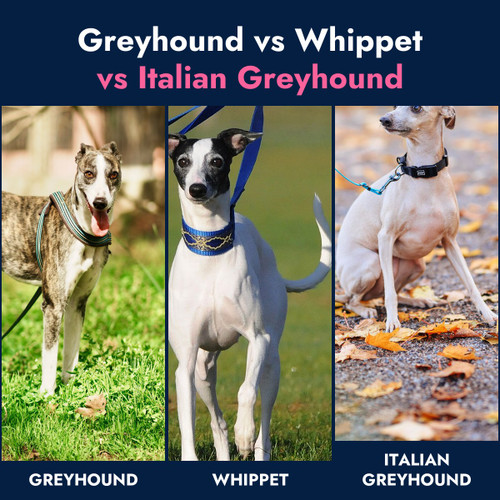
Greyhound vs Whippet vs Italian Greyhound: Differences and Feeding
Posted by The Huds and Toke Editorial Team on 24th Oct 2026
Greyhound vs Whippet vs Italian Greyhound is, first, a question of size: Dogs Australia's breed standards put a Greyhound at 69 to 76 cm at the shoulder, a Whippet at 44 to 51 cm and an Italian Greyhound at 32 to 38 cm. Only the Italian Greyhound's standard gives a weight, 3.6 to 4.5 kg, and it is a Toy breed; the other two are Hounds. Lifespan runs the other way. In a UK study of 584,734 dogs, the median was 11.5 years for Greyhounds, 13.4 for Whippets and 14.0 for Italian Greyhounds. Feeding all three well comes down to two things: portions that differ enormously, and teeth.
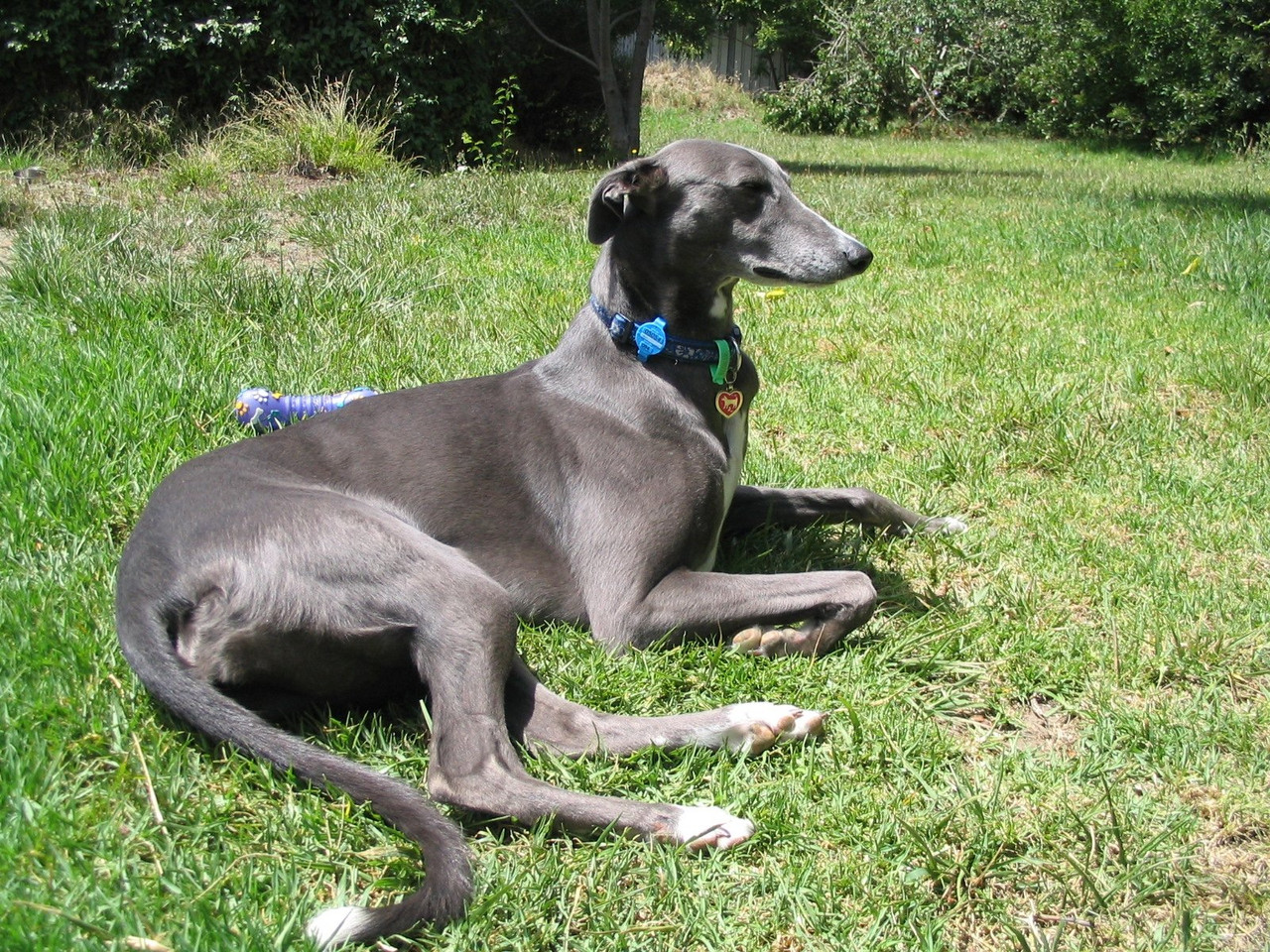
By The Huds and Toke Editorial Team, Coolum Beach, Queensland. 17 minute read. Published 24 October 2026.
Below: the three side by side, then each pairing people actually search for, how long each lives, how fast they run, what the law in your state says about walking a retired greyhound, and what to feed. The calculator turns it into grams for your dog. Australian sources come first; overseas ones are marked.
In this guide: At a glance | Whippet vs Italian Greyhound | Greyhound vs Whippet | Lifespan | Temperament | Speed | Adopting | Muzzle rules | Feeding | Calculator | Treats | Questions
The 20 second version
Greyhound vs Whippet vs Italian Greyhound at a glance
| Greyhound | Whippet | Italian Greyhound | |
|---|---|---|---|
| Group, Dogs Australia | Hound | Hound | Toy |
| Height at the shoulder | Dogs 71 to 76 cm, bitches 69 to 71 cm | Dogs 47 to 51 cm, bitches 44 to 47 cm | 32 to 38 cm |
| Weight | Males 30 to 35 kg, females 25 to 28 kg (GAP NSW) | About 13 kg (Britannica, overseas) | 3.6 to 4.5 kg (breed standard) |
| Coat, in the standard | Fine and close | Fine, short, close in texture | Short, fine and glossy |
| Median lifespan, UK | 11.5 years | 13.4 years | 14.0 years |
| Top speed | 67 km/h (GRV) | 56 km/h (Britannica, overseas) | No reliable figure |
| Exercise | Two 20 minute walks a day (GAP NSW) | No Australian guidance found | No Australian guidance found |
| Gum disease, UK vet records | 2.6 times the odds of a crossbred | 1.7 times the odds of a crossbred | Reported as common, no figure |
| Treat allowance, desexed adult | 142 kcal a day at 29.7 kg | 77 kcal a day at 13 kg | 32 kcal a day at 4 kg |
| Muzzle and lead laws | Set by each state, see below | Ordinary dog rules | Ordinary dog rules |
Heights and groups are from the Dogs Australia standards; neither the Greyhound nor the Whippet standard gives a weight. Lifespans are medians from McMillan and colleagues, 2024 (UK, overseas). Gum disease odds are from UK primary-care vet records (overseas); the Italian Greyhound was not in that study. Treat allowances are our arithmetic, explained in the calculator.
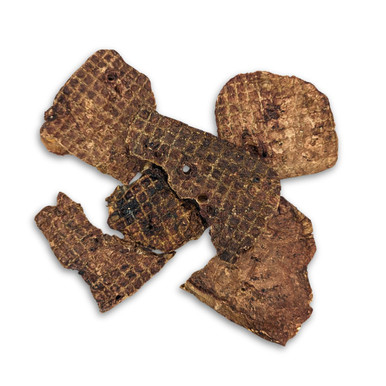
The three treats our greyhound customers name in their reviews


The most searched pairing
Whippet vs Italian Greyhound: what is the difference?
The Italian Greyhound standard calls it "A greyhound in miniature, more slender in all proportions." Stand one next to a Whippet and the miniature part is obvious. On Britannica's figure of about 13 kg (overseas), a typical Whippet weighs around three times as much as an Italian Greyhound at the top of its standard. The American Kennel Club's ranges are wider: 11.3 to 18.1 kg for a Whippet and 3.2 to 6.4 kg for an Italian Greyhound, converted from its pounds.
Australia does not even show them in the same ring: Dogs Australia puts the Whippet in Group 4, the Hounds, and the Italian Greyhound in Group 1, the Toys. That one line explains most of what follows. A Whippet is a small running hound. An Italian Greyhound is a toy dog built like one.
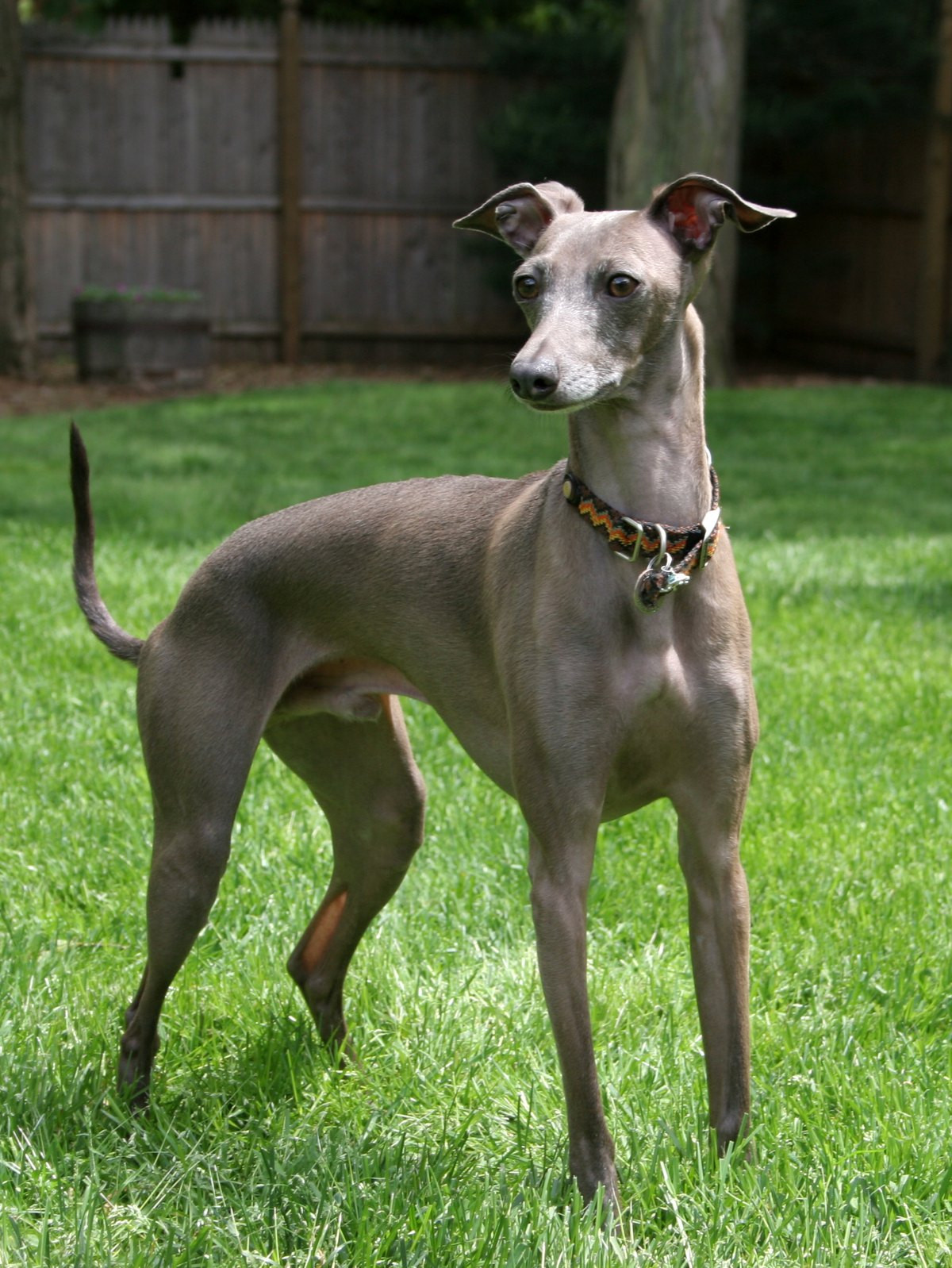
Italian Greyhound size
The standard asks for 32 to 38 cm at the withers and an ideal weight of 3.6 to 4.5 kg, and adds: "Overall type and elegance essential." Under 5 kg of dog on long fine legs is the whole story of the breed, good and bad.
Italian Greyhound temperament, and the Whippet's
Dogs Australia describes the Italian Greyhound as "Intelligent, affectionate and vivacious, may appear aloof." The Whippet standard reads "Gentle, affectionate, even disposition" and calls the breed "An ideal companion. Highly adaptable in domestic and sporting surroundings." We found no Australian vet or adoption source that goes beyond the breed standards on temperament for either breed, so we will not either.
The Italian Greyhound's weak spot: its front legs
An Adelaide vet, Andrew Spanner of Walkerville Vet, writes that leg fractures in Italian Greyhounds are common, the classic break being in the lower foreleg just above the wrist, mostly in puppies and young adults. Going through his clinic's files he counted 7 fractures in around 30 Italian Greyhounds and, with what he calls a rough and ready adjustment, put the rate at between 25 and 45% of the breed. That is one clinic's files, not a survey.
A German study (overseas) found the forearm bone of toy breeds less dense, with thinner internal struts, which the authors say could contribute to the higher risk of these fractures in toy breeds. Dr Spanner's advice is to avoid running play and jumping from furniture, though he notes most dogs seem to break a leg just running in the house like any other dog. Repair usually needs a plate or external fixator fitted by a specialist surgeon, which he puts at around $4000 in Australia. We found no source that links these fractures to food or treats. It is in this article because it is a real practical difference between the two breeds.
Greyhound vs Whippet: size and build
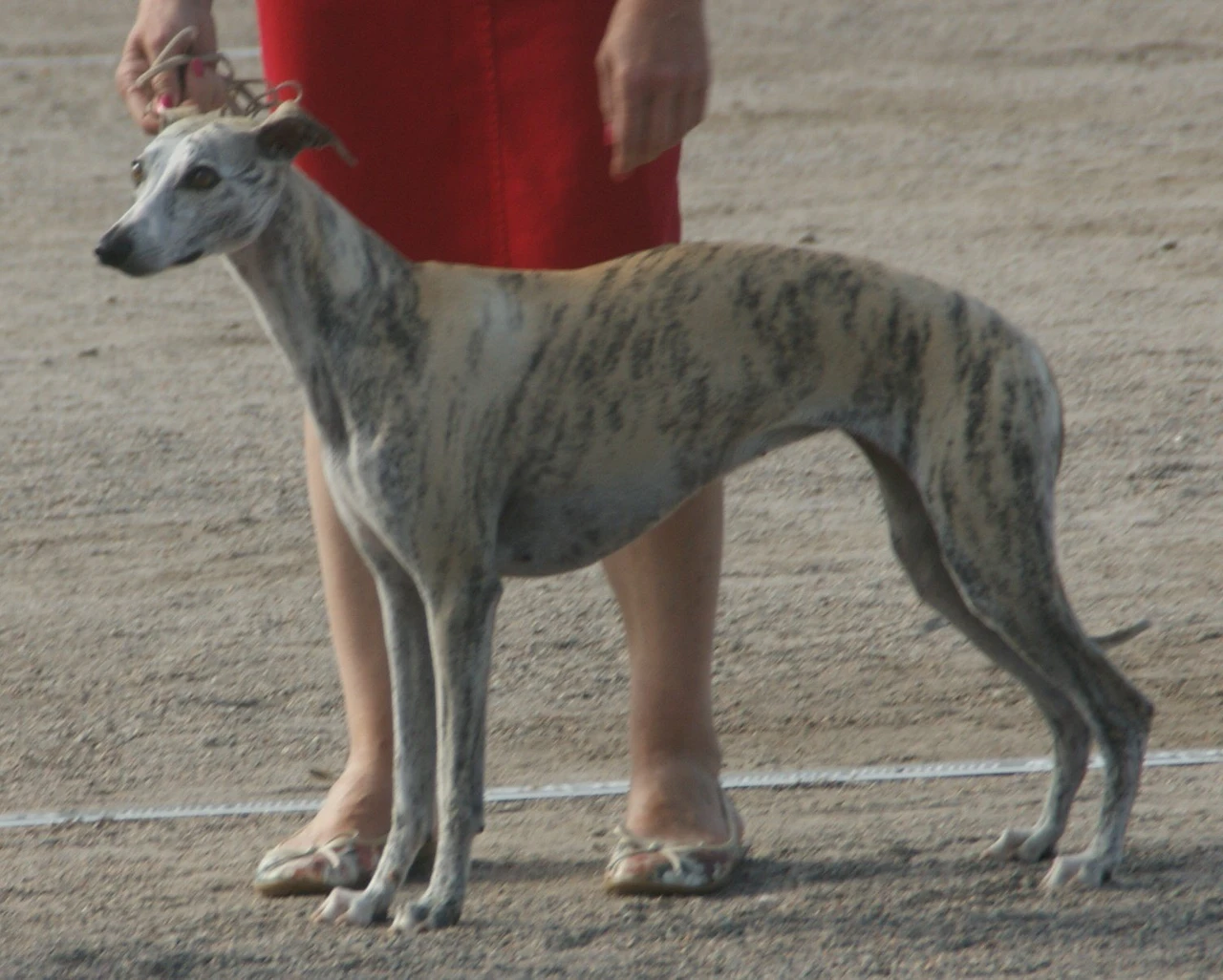
Under Dogs Australia's standards a Greyhound stands 69 to 76 cm and a Whippet 44 to 51 cm, measured at the shoulder. Greyhounds As Pets NSW gives typical adult greyhound weights of about 25 to 28 kg for females and 30 to 35 kg for males. UK pet greyhounds under vet care averaged 29.7 kg, males 32.3 kg and females 27.2 kg (overseas). Two Whippets and change, in other words.
The two standards draw the same shape. The Greyhound's chest is "deep and capacious, providing adequate heart room"; the Whippet's is "very deep with plenty of heart room", with a "definite tuck up" behind it. The Whippet standard sums up the brief: "Built for speed and work. All forms of exaggeration should be avoided."
Whippet size and weight
Dogs Australia's Whippet standard asks for 47 to 51 cm in dogs and 44 to 47 cm in bitches and gives no weight. If you are reading American pages, the American Kennel Club allows a Whippet up to 22 inches, about 56 cm, which is taller than the Australian standard. An Australian Whippet at the top of its standard is still a long way short of the smallest Greyhound bitch.
Is a Whippet or Greyhound better?
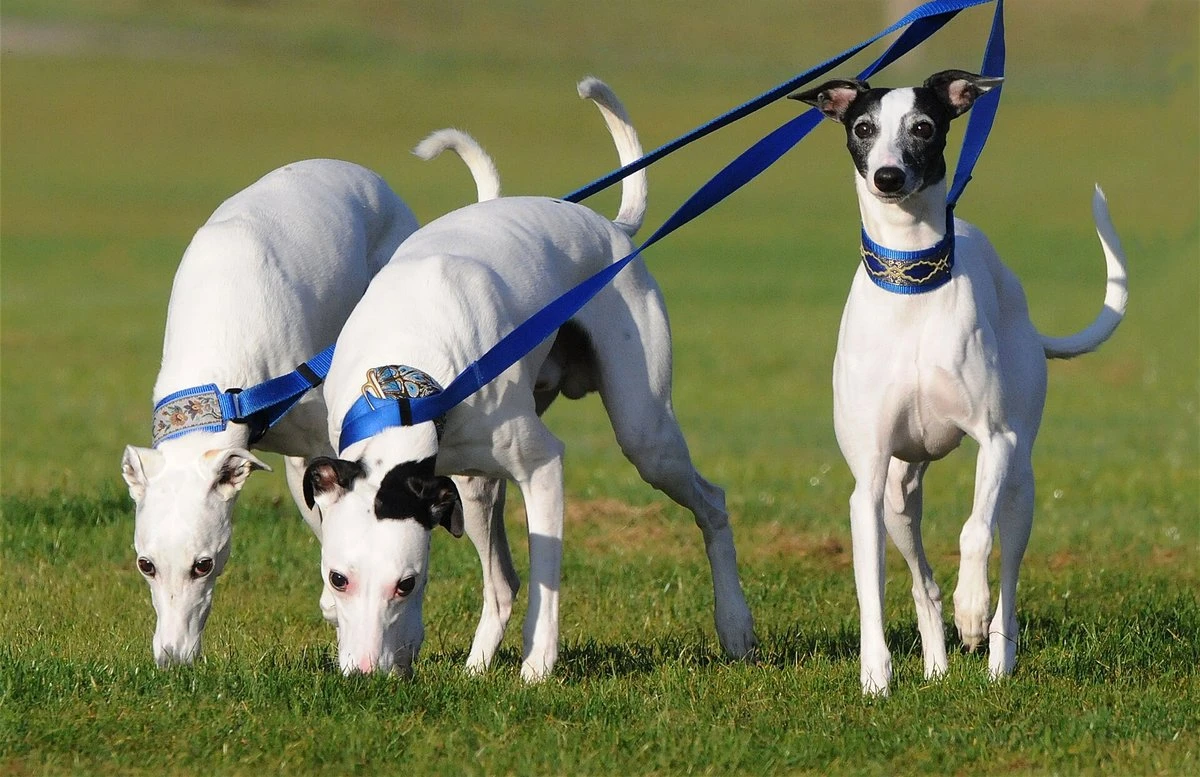
Better is your call. These are the differences the sources actually support:
- Lifespan: a median 13.4 years for Whippets against 11.5 for Greyhounds in the UK study.
- Rules: Australian lead and muzzle laws written for greyhounds apply to Greyhounds; we found none that single out Whippets.
- Getting one: state adoption programs rehome retired racing Greyhounds, from $100 in Queensland and Victoria.
- Treats: by our sums a 29.7 kg Greyhound's daily treat allowance is nearly twice a 13 kg Whippet's.
- Teeth: both carry raised odds of gum disease in UK vet records, the Greyhound more so.
Greyhound lifespan, and how long Whippets and Italian Greyhounds live
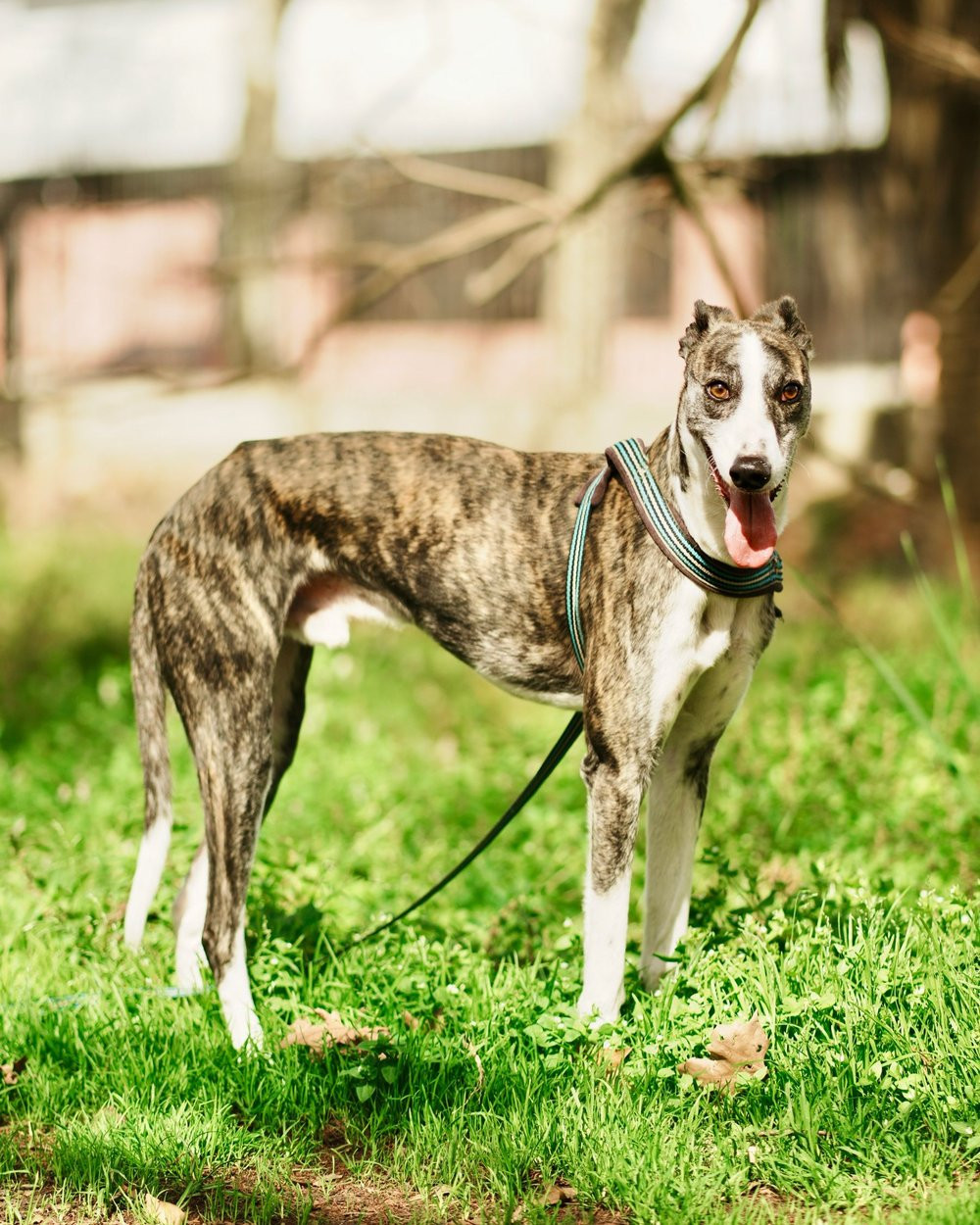
Greyhound Racing Victoria's adoption program puts the average greyhound lifespan at between 10 and 14 years. The biggest study is from the UK (overseas): across 584,734 dogs, McMillan and colleagues found a median lifespan of 11.5 years for Greyhounds, shorter than crossbreeds at 12.0, against 13.4 for Whippets and 14.0 for Italian Greyhounds. The Italian Greyhound figure rests on only 70 deaths, so its range is wide, 13.2 to 15.1 years. Even so, the study lists the Italian Greyhound among the breeds least at risk of early death.
A separate UK study of pet greyhounds under vet care found a median of 11.4 years, with females outliving males, 11.8 years to 11.2. Its most common causes of death were cancers (21.5%), collapse (14.3%) and musculoskeletal disorders (7.8%). The authors note their cancer figure is well below a US online survey of retired racing greyhounds, in which owners gave cancer as the cause in 58% of deaths and bone cancer in 25%. None of these sources links bone cancer to food or treats. It is a conversation for your Australian vet, not your pantry.
Temperament and exercise
Are Whippets as lazy as Greyhounds?
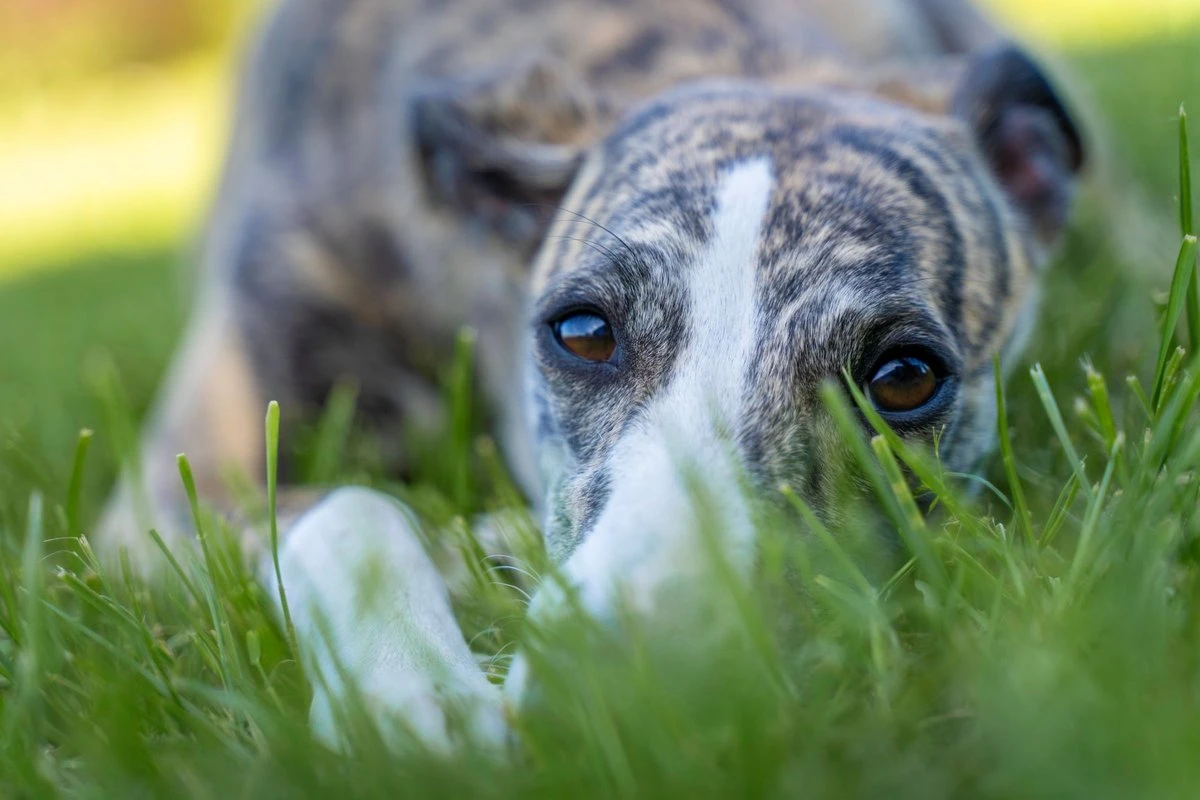
The Greyhound's couch reputation comes straight from the people who rehome them. Greyhound Racing Victoria says greyhounds are sprinters, tire very quickly, and that in most homes a short brisk walk once a day is enough. Greyhounds As Pets NSW calls their energy "Boom and Bust" and suggests two 20 minute walks a day. GAP Queensland says a walk twice a day and a free play is generally sufficient.
We found no source that compares a Whippet's need for exercise with a Greyhound's, and nothing Australian on Whippet or Italian Greyhound exercise. The Whippet standard's "Built for speed and work" is the closest thing to a hint. So the honest answer is that nobody has measured it.
Greyhounds with children, cats and strangers
The Greyhound standard reads: "Intelligent, gentle, affectionate and even tempered." GRV says retired racers are very tolerant with children and will usually walk away from an overbearing child rather than snap or growl, but that small children should never be left unsupervised with one. Asked about cats and rabbits, its answer is "It depends on the dog": some greyhounds are not suitable for homes with small animals, and a lot are. GAP Queensland is blunt about guarding: "Do not expect a greyhound to be a good watchdog." RSPCA Australia says greyhounds generally have friendly and gentle dispositions.
How fast can a greyhound run?
Greyhound Racing Victoria puts greyhounds among the fastest land mammals, at up to 67 km/h, against about 70 km/h for a horse and 44 km/h for a sprinting man. In a small US study of seven racing greyhounds (overseas), the dogs averaged 15.13 to 15.25 metres a second over 500 m races, depending on their diet, about 54 to 55 km/h by our conversion. Top speed and race average are different numbers, which is why both get quoted.
Can a Whippet beat a Greyhound?
Not on the published figures. Britannica (overseas) gives the Whippet up to 56 km/h and says it is known in England as the "poor man's racehorse." We found no source that races the two against each other, and no reliable top speed for the Italian Greyhound.
That turn of speed is why GAP Queensland strongly recommends never letting a greyhound off-leash, dog parks and beaches included. GRV calls letting a greyhound run off lead in public places both illegal and extremely dangerous.
Adopting a retired greyhound in Australia
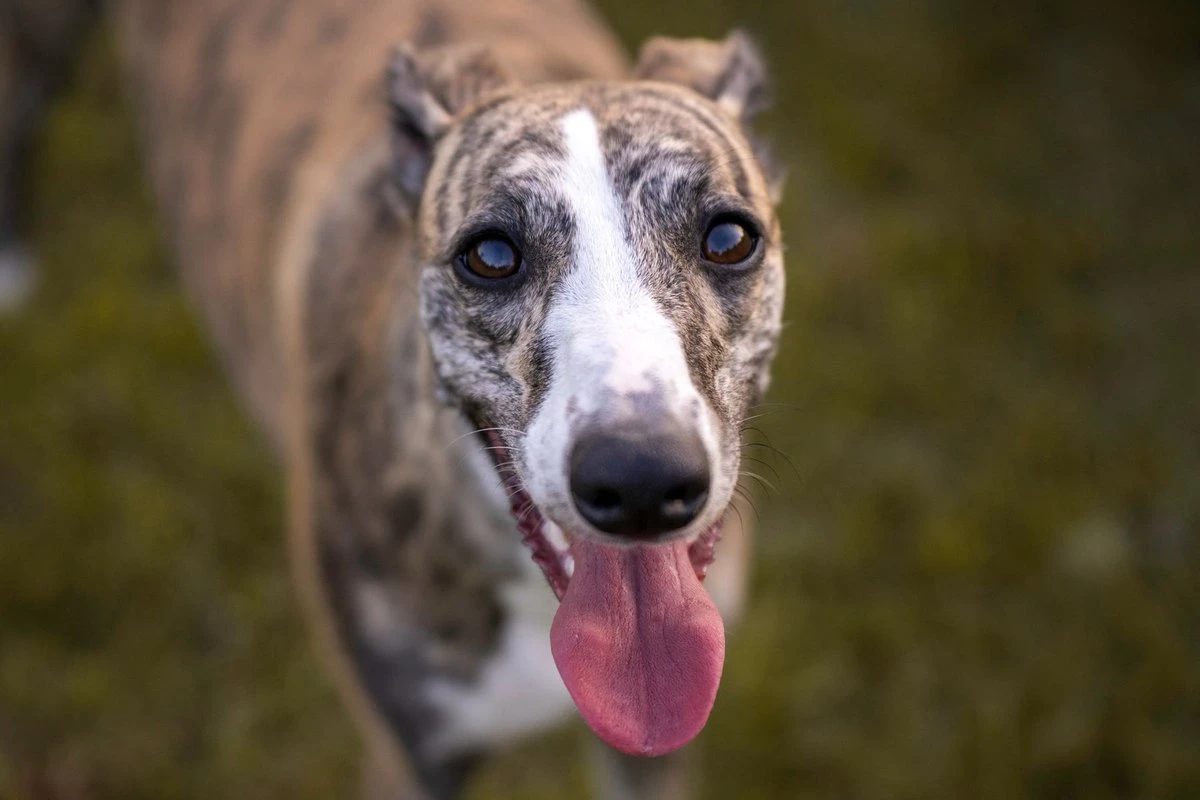
Greyhound Racing NSW says 1,634 greyhounds went into homes through its Greyhounds As Pets programs in the 2024 to 2025 financial year, overseas placements included, up 11.76% on the year before. These are dogs bred for the racing industry, which shapes the feeding advice further down.
Adoption costs little. Through GAP Queensland it is $100, and each dog comes desexed, heartworm tested, vaccinated, microchipped and with a full dental assessment including a scale and polish. Greyhound Racing Victoria's program also lists a $100 adoption fee. In NSW the usual fee is $250, or $150 for greyhounds aged seven and over, with lower prices at some adoption days.
In the ACT, the Territory's 2017 amendment bills set greyhound racing and trialling to cease from 30 April 2018. In Tasmania, the state government says it remains committed to phasing out greyhound racing by 30 June 2029.
Greyhound muzzle rules by state
RSPCA Australia says there is no evidence that greyhounds as a breed pose any greater risk to the public than other dogs, and noted in 2022 that mandatory muzzling of pet greyhounds happened only in Australia and Northern Ireland. Most states have now dropped the muzzle for pets, South Australia the latest in November 2025. The lead is another matter.
Muzzles and leads, state by state
From each state's own government or racing body, checked 24 October 2026.
| State | Muzzle in public for a pet greyhound? | Lead in public? |
|---|---|---|
| NSW | No, since 1 July 2019. A muzzle is still needed in off-leash areas unless the dog has passed an approved retraining program. | Yes, in public |
| Victoria | No, since 1 January 2019 | At all times in public, council off-leash areas included |
| Queensland | Not under the state Act. A council by-law may require one; GAP accredited greyhounds are exempt. | GAP strongly advises never off-leash |
| South Australia | No, since 17 November 2025 | Lead no longer than 2 m; off-leash areas do not apply |
| Western Australia | No, since 23 December 2021 | Yes, in public |
| Tasmania | No, if accredited by an approved program (GAP, Dogs Home of Tasmania, RSPCA) and wearing its numbered collar, since 20 December 2017 | Yes, in public |
| ACT and NT | We found no official page. Check with your territory government. |
Pet (retired or non-racing) greyhounds only. Rules change: check the linked government page before you rely on this.
For a newly adopted greyhound, NSW's Office of Local Government advises keeping the muzzle on in public for at least eight weeks while you settle the dog and watch how it behaves. Whippets and Italian Greyhounds follow the ordinary dog rules: we found no Australian law that singles them out.
Feeding a sighthound
Greyhound food, Whippet food and Italian Greyhound food: what they share
Three very different bowls, and two things to watch: a mouth that needs looking after, and, in the Greyhound at least, very little body fat.
Teeth come first
The NSW greyhound regulator, the Greyhound Welfare and Integrity Commission, tells owners and trainers that greyhounds are vulnerable to dental disease, which can be painful and costly to treat, and that raw, meaty bones or chews belong in the diet. Its guide is written for the racing industry, and its code of practice requires bones or chew toys unless a vet directs otherwise. WSAVA (overseas) warns that bones, raw as well as cooked, can be very dangerous if dogs chew or swallow them, so ask your Australian vet before you add any.
UK vet records (overseas) show why. In a single year, 39% of pet greyhounds were diagnosed with periodontal disease, by far the most common problem in the study. The researchers note the dogs were fairly old, 7.6 years on average, which may push that figure up, and that rehomed racers may have had limited dental care during their racing careers.
Across the UK's general dog population, about one dog in eight had periodontal disease in a year; Greyhounds had about 2.6 times the odds of a crossbred and Whippets about 1.7 times, in a second study. The other breeds near the top of that list were all small dogs. The Greyhound was the exception.
For the Italian Greyhound we found no figure, only a US genetics paper that describes periodontal disease as prevalent in the breed. The same paper found an inherited enamel defect in 14% of the Italian Greyhounds studied, and no link between that defect and gum disease.
GAP Queensland gives every greyhound a full dental assessment with a scale and polish before adoption. Keep that clean start going. A chew is part of the routine; your Australian vet looking in the mouth is the rest of it.
Chews and treats from our range for a Greyhound or Whippet


Very little body fat, thin skin
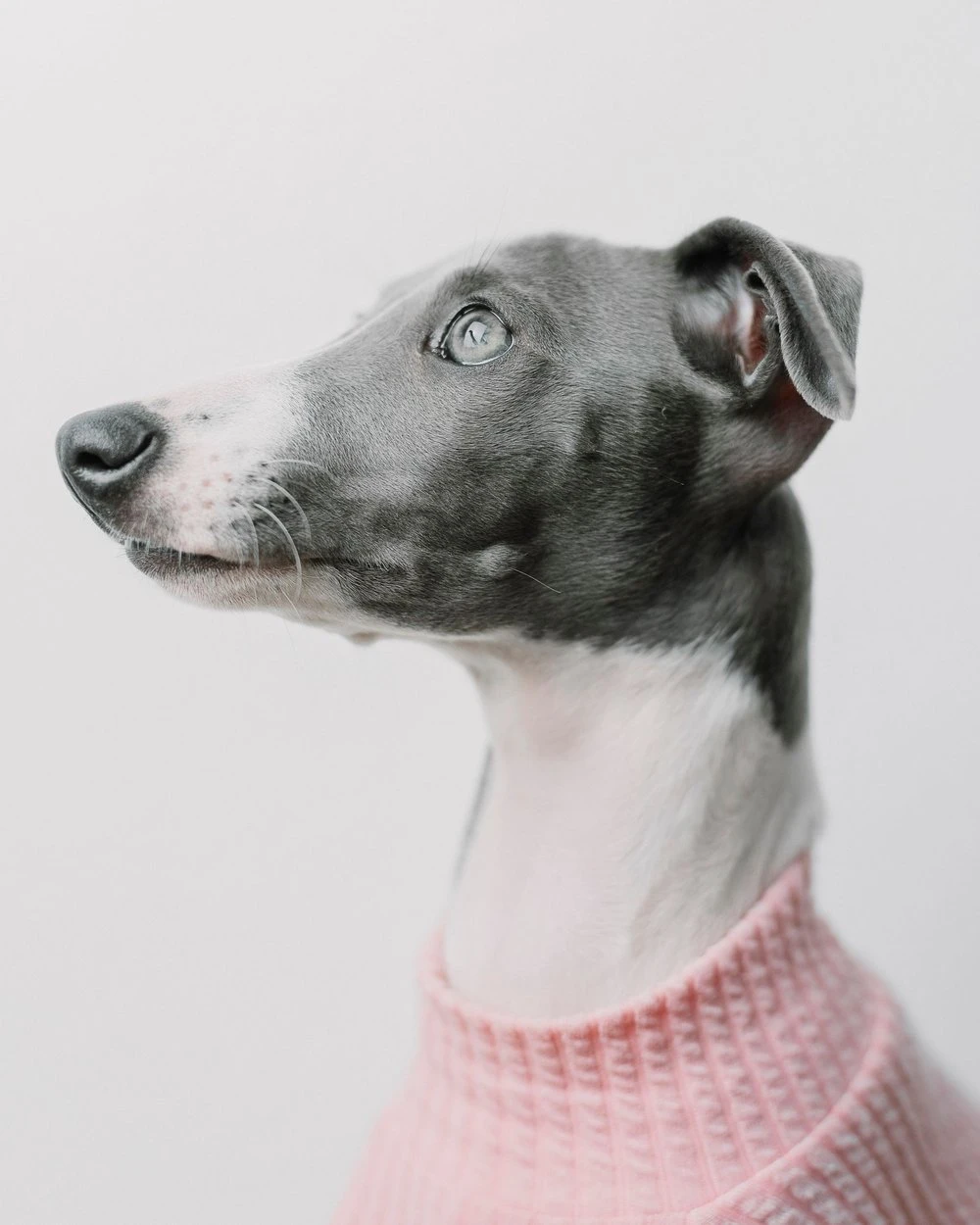
Greyhound Racing Victoria says greyhounds have relatively thin skin and very little body fat, which helps them cool down after a run but makes them susceptible to cold weather. The NSW regulator's guide adds that extra fat in the diet is necessary in cold weather. We found no vet or adoption source on the cold for Whippets or Italian Greyhounds; the Italian Greyhound standard says only that the skin is fine and supple.
Feeding a retired racer
GRV advises feeding twice a day in roughly equal amounts, morning and evening, and says a new greyhound may still be in racing condition and need to gain some weight. Its target is a dog whose ribs you can feel but not see. The NSW regulator's body condition chart allows a little more at ideal, where the last few ribs may be visible, and notes that racing greyhounds usually sit between thin and ideal.
GRV suggests a main food with around 26% protein and at least 15% fat, with meat as the first ingredient. GAP Queensland says greyhounds eat as much as an average large breed dog and thrive on a high fat, high protein diet. GAP NSW says most adoptees arrive at a healthy weight, have a fast metabolism and are quite manageable to keep at an optimal weight, and suggests a vet check if a greyhound will not finish its bowl.
A small US study of seven racing greyhounds (overseas) found their energy needs only slightly higher than those of moderately active dogs. A retired greyhound on a couch is not a racing greyhound, so the calculator below uses ordinary pet figures. GRV is firm on bones: never feed cooked ones, which can splinter.
Bloat and meal times
GRV warns that bloat (gastric dilation and volvulus) can kill within a few hours if untreated, and that if you suspect it you must get your greyhound to a vet straight away, day or night. Its advice: two smaller meals rather than one big one, no exercise for at least an hour before and after eating, water always available so the dog does not gulp, and a slow-feeder bowl for a fast eater. Greyhounds As Pets SA says no walks for 30 minutes either side of a meal, so the programs differ on timing.
They differ on bowls too. GAP SA recommends a raised bowl, 20 to 30 cm off the ground. A large US study of bloat risk (overseas), in eleven other large and giant breeds, linked raised bowls with more bloat, not less. Greyhounds were not in it. Ask your Australian vet which suits your dog.
Tell your vet it is a greyhound
Greyhounds' blood results read differently from most dogs'. A US review (overseas) lists higher red cell mass and creatinine and lower platelet counts and T4 among the differences, and puts the higher creatinine down to their large muscle mass. Worth knowing before a routine blood test sends you home worried.
Grams, not guesses
Sighthound treat calculator
Pick a breed, put in your dog's weight, and pick a treat. The calculator gives the day's treat allowance in calories and in grams of that treat, then shows the same treat for the other two breeds so you can see how far apart they really are.
Work it out for your dog
Sighthound treat calculator
- Greyhound at 29.7 kg: 142 kcal, or 37 g
- Italian Greyhound at 4 kg: 32 kcal, or 8.3 g
Daily calories use the MSD Veterinary Manual's resting energy formula (70 x body weight in kg to the power 0.75) and its multipliers for healthy adult dogs (overseas). MSD says any dog may need as much as 30% more or less than the sum gives, so treat it as a starting point. The allowance is 10% of that daily figure, the ceiling WSAVA (overseas) sets for all treats together. The breed menu fills in 29.7 kg for a Greyhound (the measured average of UK pet greyhounds), 13 kg for a Whippet (Britannica) and 4 kg for an Italian Greyhound (inside the Dogs Australia standard). Type your own dog's weight over it. Treat energy is from our own labels. For your own dog, ask your Australian vet.
What each breed burns, and its treat allowance
Our arithmetic from MSD's formula and WSAVA's 10% rule. A starting point, not a prescription.
| Dog | Resting energy | Daily, desexed | 10% for treats | WSAVA ceiling |
|---|---|---|---|---|
| Italian Greyhound, 4 kg | 198 kcal | 317 kcal | 32 kcal | 24 kcal |
| Whippet, 13 kg | 479 kcal | 767 kcal | 77 kcal | 57 kcal |
| Greyhound, female, 27.2 kg | 834 kcal | 1,334 kcal | 133 kcal | 100 kcal |
| Greyhound, average, 29.7 kg | 891 kcal | 1,425 kcal | 142 kcal | 107 kcal |
| Greyhound, male, 32.3 kg | 948 kcal | 1,517 kcal | 152 kcal | 114 kcal |
The weights are 4 kg (inside the Dogs Australia standard), about 13 kg for a Whippet (Britannica, overseas) and the measured averages of UK pet greyhounds: 27.2 kg for females, 32.3 kg for males and 29.7 kg overall. WSAVA's own table, read between its rows, sits at about 1.2 times resting energy, a quieter dog than MSD's desexed adult, so it gives the lower figure.
By our sums, a 29.7 kg Greyhound weighs about 7.4 times as much as a 4 kg Italian Greyhound but gets only about 4.5 times the treat calories, because energy needs rise more slowly than bodyweight. In practice the trap runs the other way. A handful sized for a Greyhound is most of an Italian Greyhound's day.
Weigh these ones out
From our shelf
Treats for a Greyhound, a Whippet and an Italian Greyhound
We make the treats below, so read this as a maker describing its own range. Every figure comes from our own nutrition panels, and every product named was in stock on 24 October 2026.
Nine of our treats, by fat
From our own nutrition panels. Lowest fat first.
| Treat | Fat | Protein | Energy per 100 g |
|---|---|---|---|
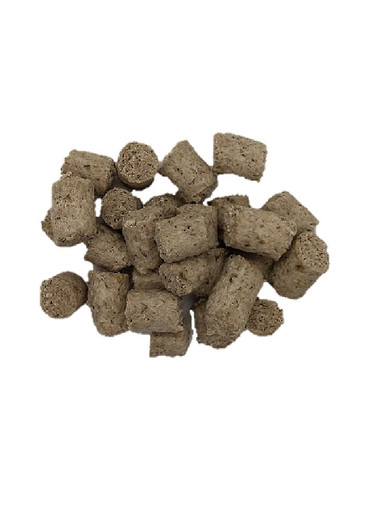
| Veggie Tubes | 3.34% | 9.14% | 320 kcal |
| Little Fish Bites | 3.7% | 10.7% | 336 kcal |
| Kangaroo Tendons | 4.2% | 77.7% | 315 kcal |
| Kangaroo Micro Bones | 6% | 28% | 309 kcal |
| Little Doggy Donuts | 10% | 12% | 359 kcal |
| Lamb Puff | 14.6% | 75.3% | 382 kcal |
| Chicken Breast Chews | 16.3% | 74.1% | 392 kcal |
| Goat Lung Puff | 19.3% | 63.6% | 442 kcal |
| Goat Heart | 22.7% | 62.8% | 473 kcal |
Fat runs from 3.34% in Veggie Tubes to 22.7% in Goat Heart, nearly seven times as much. Energy varies far less, from 309 to 473 kcal per 100 g, so for portion size the breed matters much more than the treat.
The whole day's treats, in grams
If one treat made up the entire 10% allowance of a desexed adult. Lowest energy first.
| Treat | Italian Greyhound, 4 kg | Whippet, 13 kg | Greyhound, 29.7 kg |
|---|---|---|---|
| Kangaroo Micro Bones | 10 g | 25 g | 46 g |
| Kangaroo Tendons | 10 g | 24 g | 45 g |
| Veggie Tubes | 9.9 g | 24 g | 45 g |
| Little Fish Bites | 9.4 g | 23 g | 42 g |
| Little Doggy Donuts | 8.8 g | 21 g | 40 g |
| Lamb Puff | 8.3 g | 20 g | 37 g |
| Chicken Breast Chews | 8.1 g | 20 g | 36 g |
| Goat Lung Puff | 7.2 g | 17 g | 32 g |
| Goat Heart | 6.7 g | 16 g | 30 g |
For a Greyhound
For a lean ex-racer that your vet would like to see carry a bit more, the richer meats earn their place. Goat Heart is 22.7% fat and 473 kcal per 100 g, the most energy in this list, in pieces of about 6 cm. Goat Lung Puff is 19.3% fat. Lamb Puff, made from lamb lung, is 14.6% fat. The rest of the range is in goat dog treats and lamb dog treats.
Once your greyhound has filled out, swap to the lean one. Kangaroo Tendons are 4.2% fat, the leanest meat treat in this list, and about 10 to 25 cm long. That length is why we list them under Greyhound and Whippet and not Italian Greyhound. Our other long chews are in the chews range. We make no claim that any chew cleans teeth: no source we trust says a particular chew does.
“Lamb lungs are our favorite go to treat for our pet greyhound.”
“My greyhound loves the goat hearts which is why we got the 1kg bag after trialling 100g. He also likes the goat lung slices, but his fave is the chicken breast strips.”
For a Whippet
A 13 kg desexed Whippet's whole treat allowance is about 77 kcal, or 16 to 25 g depending on the treat in our table. That is a middle-sized dog's ration. Chicken Breast Chews are 16.3% fat and about 5 mm thick. Kangaroo Tendons work as the weekly chew. For a Whippet carrying a little too much, start with our low fat dog treats.
For an Italian Greyhound
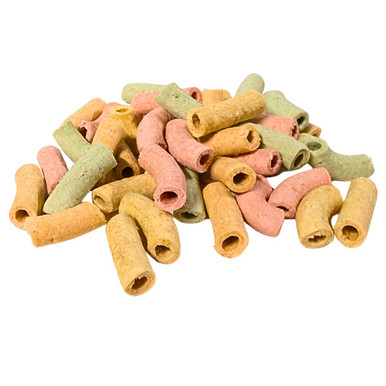
A 4 kg Italian Greyhound's whole day of treats is about 32 kcal, which is 10 g of Kangaroo Micro Bones. That calls for small pieces and a light hand. Kangaroo Micro Bones are 6% fat and 309 kcal per 100 g. Little Fish Bites are about 1 cm by 1 cm and 3.7% fat. Veggie Tubes, about 2 cm by 4 cm and 3.34% fat, break in half for a toy-sized mouth. More small ones are in our dog training treats.



“My son's Italian Greyhounds love these treats.”
Our everyday Little Doggy Donuts are 10% fat and 359 kcal per 100 g. A birthday treat, in other words, and the day's allowance still applies.
What does not suit, and who it suits instead
- Goat Heart for an Italian Greyhound. At 473 kcal per 100 g, 6.7 g is a 4 kg dog's entire day. It suits a Greyhound that needs to put weight back on.
- Kangaroo Tendons for an Italian Greyhound. A chew 10 to 25 cm long, for a dog whose whole day is about 10 g of it. They suit a Greyhound or a Whippet.
- Goat Lung Puff, Lamb Puff and Goat Heart for a Greyhound or Whippet that is already carrying extra. At 14.6 to 22.7% fat they are among the richest in the list, with Chicken Breast Chews at 16.3%. They suit the lean ex-racer.
- Veggie Tubes and Little Fish Bites for a thin ex-racer gaining weight. They are our lowest fat treats here, at 3.34% and 3.7%, and grain-based: whole flour, oats and rice lead both ingredient lists. They suit a Whippet or an Italian Greyhound watching its waist, and training.
- Kangaroo Micro Bones, if you want meat and nothing else. The label lists kangaroo with rice flour, potato and tapioca starch, glycerol, sugar and salt, among other ingredients. The air-dried single meats (Goat Heart, Lamb Puff, Kangaroo Tendons) are 100% Australian meat. Micro Bones suit training any of the three.
- Little Doggy Donuts as an everyday treat for any of the three. They suit a birthday.
Single-meat labels: Goat Heart, Lamb Puff and Kangaroo Tendons each read "100% Australian" goat, lamb or kangaroo, naturally air dried. Little Fish Bites' list starts "Whole Flour, Whole Oats, Whole Rice"; Veggie Tubes' starts "Whole Flour, Oats, Rice".
For more breed-by-breed feeding, see our guides to treats for Kelpies, Cattle Dogs and Border Collies and Labradors, Goldens and Beagles.
Quick answers
Greyhound, Whippet and Italian Greyhound: common questions
Is a Whippet or Greyhound better?
Neither, on the evidence; they suit different homes. A Whippet weighs about 13 kg and lived a median 13.4 years in UK data, against 11.5 years for a Greyhound of 25 to 35 kg. Greyhounds come with state lead and muzzle rules, and cheap adoption through the state programs.
Are Whippets as lazy as Greyhounds?
No study compares them. Australian adoption programs say greyhounds are sprinters that tire quickly and are content with a short walk or two a day; the Whippet standard calls the breed built for speed and work, and highly adaptable.
What are the cons of a Whippet?
The one our sources put a number on is teeth: in UK vet records, Whippets had about 1.7 times the odds of periodontal disease of a crossbred dog.
Can a Whippet beat a Greyhound?
Not on published top speeds: up to 67 km/h for a Greyhound, according to Greyhound Racing Victoria, against up to 56 km/h for a Whippet, according to Britannica (overseas).
What's the difference between Whippet and Italian Greyhound?
Size and group. A Whippet stands 44 to 51 cm and is a Hound; an Italian Greyhound stands 32 to 38 cm, weighs 3.6 to 4.5 kg and is a Toy. The Italian Greyhound lives a little longer in UK data, 14.0 years against 13.4, and is prone to front leg fractures.
How much do Italian Greyhounds cost?
We found no price from Dogs Australia, a breed club or RSPCA Australia, and we do not quote breeder listings. A retired racing Greyhound costs $100 to adopt through the Queensland and Victorian programs.
How long do greyhounds live?
Greyhound Racing Victoria says 10 to 14 years. UK studies put the median at 11.4 to 11.5 years.
Do greyhounds have to wear a muzzle in Australia?
Not as pets in NSW (except in off-leash areas, unless retrained), Victoria, South Australia or Western Australia, or in Tasmania with an approved program's numbered collar. Queensland's Act does not require one, but check your council. Leads are still required in NSW, Victoria, South Australia, Western Australia and Tasmania.
The Huds and Toke Editorial Team
Dog and horse treat makers, Coolum Beach, Queensland. Published 24 October 2026.
We make and sell the treats named in this article. We are not vets. Breed, health and legal facts come from Australian sources first and from overseas sources where marked; the calorie and gram figures are our own arithmetic from the published formulas, and we show the working. Product figures are from our own nutrition panels, and the reviews are from verified buyers on our site. This article is general information and is not a substitute for advice from your Australian vet.
References
- Dogs Australia. Greyhound breed standard. Last updated 2 March 2010. dogsaustralia.org.au
- Dogs Australia. Whippet breed standard. Last updated 1 December 2018. dogsaustralia.org.au
- Dogs Australia. Italian Greyhound breed standard. Last updated 23 January 2015. dogsaustralia.org.au
- Greyhounds As Pets NSW. Keeping Greyhounds at a Healthy Weight. 15 February 2022. gapnsw.com.au
- Greyhounds As Pets NSW. Adoption Day, Muswellbrook (event page with fees). gapnsw.com.au
- Greyhound Racing Victoria, Greyhound Adoption Program. Greyhound Adoption Application (FAQ). gap.grv.org.au
- Greyhound Racing Victoria, Greyhound Adoption Program. Feeding Your Greyhound. gap.grv.org.au
- Greyhound Racing Victoria, Greyhound Adoption Program. Home page. gap.grv.org.au
- Greyhound Welfare and Integrity Commission (NSW Government). Greyhound nutrition and diet, Industry Practice Guide 1.0. gwic.nsw.gov.au
- Greyhound Adoption Program Queensland. Frequently asked questions. Updated 15 December 2025. gapqld.com.au
- Greyhounds As Pets SA. Greyhound Feeding Guide and Nutrition Advice. gapsa.org.au
- Walkerville Vet, Adelaide. Broken Legs In Italian Greyhounds (blog post, updated 28 November 2020). walkervillevet.com.au
- RSPCA Australia Knowledgebase. Should pet greyhounds have to wear muzzles? Updated 29 April 2022. kb.rspca.org.au
- NSW Office of Local Government. Removal of the muzzling requirement for pet greyhounds: FAQs. innerwest.nsw.gov.au
- Agriculture Victoria. Removal of muzzling requirements for pet greyhounds. agriculture.vic.gov.au
- Dog and Cat Management Board, South Australia. Greyhounds. dogandcatboard.com.au
- WA Department of Local Government, Sport and Cultural Industries. Greyhounds. dlgsc.wa.gov.au
- Tasracing. Greyhound Un-muzzling Information. tasracing.com.au
- Greyhound Racing NSW. Annual report reveals successes across the industry. 20 November 2025. grnsw.com.au
- ACT Legislative Assembly. Racing (Greyhounds) Amendment Bill 2017, Explanatory Statement. legislation.act.gov.au
- Premier of Tasmania. Work progresses on greyhound voluntary exit scheme. 1 August 2026. premier.tas.gov.au
- Overseas (global body): World Small Animal Veterinary Association. Feeding treats to your dog, version 2. wsava.org
- Overseas: MSD Veterinary Manual. Nutritional Requirements of Small Animals. msdvetmanual.com
- Overseas (UK): O'Neill DG, Rooney NJ, Brock C, Church DB, Brodbelt DC, Pegram C. Greyhounds under general veterinary care in the UK during 2016: demography and common disorders. Canine Genetics and Epidemiology 2019;6:4. pmc.ncbi.nlm.nih.gov
- Overseas (UK): McMillan KM, Bielby J, Williams CL, et al. Longevity of companion dog breeds: those at risk from early death. Scientific Reports 2024;14:531. nature.com
- Overseas (UK): O'Neill DG, Mitchell CE, Humphrey J, Church DB, Brodbelt DC, Pegram C. Epidemiology of periodontal disease in dogs in the UK primary-care veterinary setting. Journal of Small Animal Practice 2021;62(12):1051-1061. pmc.ncbi.nlm.nih.gov
- Overseas (USA): Gandolfi B, Liu H, Griffioen L, Pedersen NC. Simple recessive mutation in ENAM is associated with amelogenesis imperfecta in Italian Greyhounds. Animal Genetics 2013;44(5):569-78. Read as the PubMed abstract. pubmed.ncbi.nlm.nih.gov
- Overseas (Germany): Planner F, Feichtner F, Meyer-Lindenberg A. Comparative microcomputed tomographic structural analysis of the trabecular and cortical bone architecture of radius and ulna in toy dog breeds. Research in Veterinary Science 2021;136:324-335. Read as the PubMed abstract. pubmed.ncbi.nlm.nih.gov
- Overseas (USA): Lord LK, et al. Results of a web-based health survey of retired racing Greyhounds. Journal of Veterinary Internal Medicine 2007;21(6):1243-50. Read as the PubMed abstract. pubmed.ncbi.nlm.nih.gov
- Overseas (USA): Zaldivar-Lopez S, Marin LM, Iazbik MC, Westendorf-Stingle N, Hensley S, Couto CG. Clinical pathology of Greyhounds and other sighthounds. Veterinary Clinical Pathology 2011;40(4):414-425. pmc.ncbi.nlm.nih.gov
- Overseas (USA): Glickman LT, et al. Non-dietary risk factors for gastric dilatation-volvulus in large and giant breed dogs. Journal of the American Veterinary Medical Association 2000;217(10):1492-9. Read as the PubMed abstract. pubmed.ncbi.nlm.nih.gov
- Overseas (USA): Hill RC, Bloomberg MS, Legrand-Defretin V, et al. Maintenance energy requirements and the effect of diet on performance of racing Greyhounds. American Journal of Veterinary Research 2000;61(12):1566-73. Read as the PubMed abstract. pubmed.ncbi.nlm.nih.gov
- Overseas (USA): American Kennel Club. Whippet. akc.org
- Overseas (USA): American Kennel Club. Italian Greyhound. akc.org
- Overseas: Britannica. Whippet. britannica.com