
Can Dogs Eat Mango? Seeds, Skin, Dried Mango and How Much Is Safe
Posted by The Huds and Toke Editorial Team on 21st Nov 2026
Can dogs eat mango? Yes, a little ripe mango flesh is fine for most dogs, but never the seed and best not the skin. RSPCA Australia names mango seeds on its list of things that are toxic to dogs. Keep mango, with every other treat, under 10% of the day's calories, the rule from the World Small Animal Veterinary Association (overseas). For a 10 kg dog that whole allowance is less than half a mango.
By The Huds and Toke Editorial Team, Coolum Beach, Queensland. 16 minute read. Published 21 November 2026.
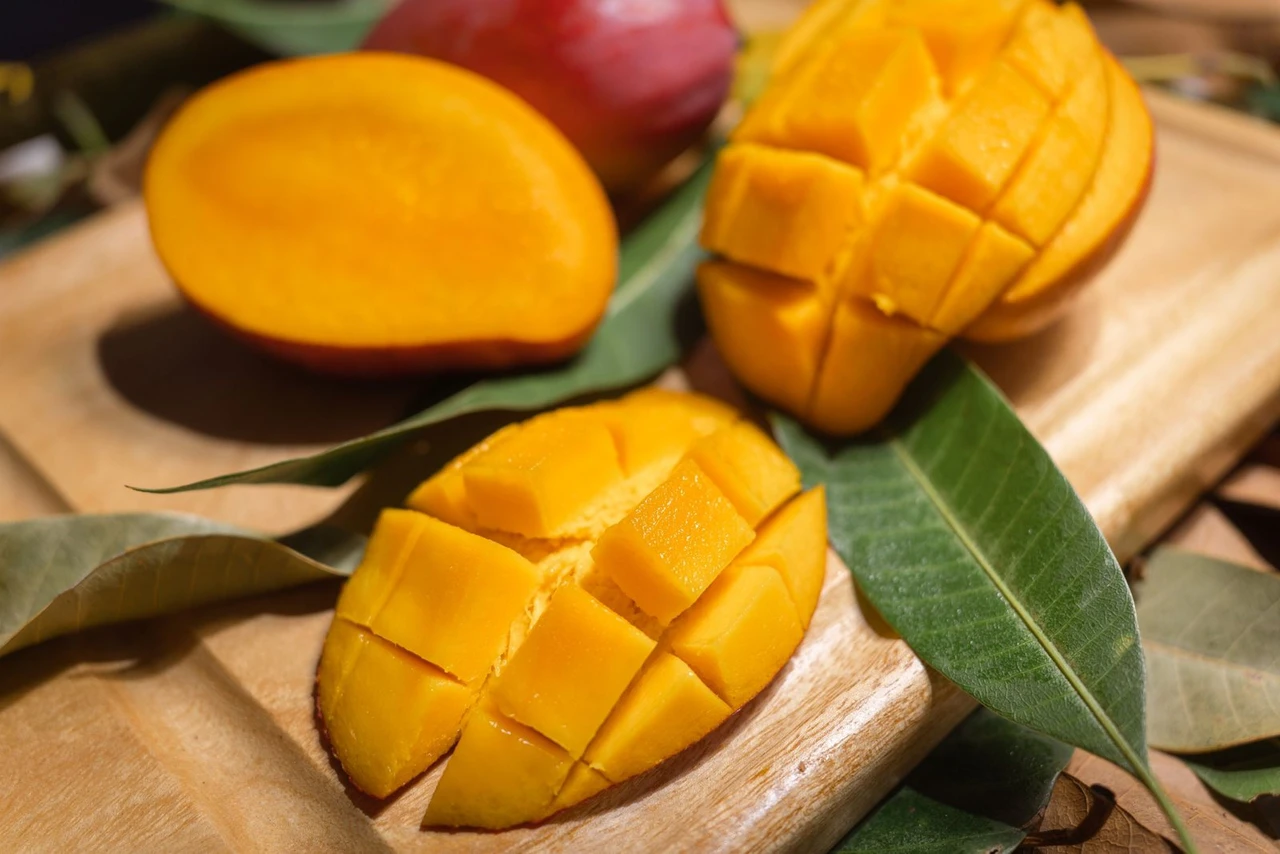
Mango season is here, and on the Sunshine Coast that means mangoes on the kitchen bench and, for plenty of us, under a backyard tree. Below: what the sources say about the flesh, the seed and the skin, what to do if your dog swallows a seed, how much mango suits your dog's size (with a calculator), dried and frozen mango, cats, horses, and the varieties in season. Australian sources come first and overseas ones are marked.
In this guide: Short answer | Good for dogs? | Seeds | Swallowed a seed | Skin | How much | Calculator | Dried and frozen | Other fruits | Cats | Horses | Mango worms | Season | How to serve | Questions
The short answer
Can dogs eat mango?
Yes, in small amounts. The American Kennel Club (overseas) says mango is safe for dogs as long as it is properly prepared and given in moderation, with the skin and pit removed and the fruit cut into small pieces to stop choking. In Australia, RSPCA Australia does not list mango flesh among foods that are toxic to dogs, but it names mango seeds, by name, in its list of fruit stones and pits that are. The WSAVA list of toxic foods (overseas) does not include mango either.
Mango, part by part
| Part | What the sources say | What to do |
|---|---|---|
| Ripe flesh | Not on RSPCA Australia's or WSAVA's lists of foods toxic to dogs | Small peeled pieces, as a treat |
| Seed (stone) | RSPCA Australia lists mango seeds as toxic; a vet case series found seeds blocking dogs' intestines | Never. Bin it |
| Skin | AKC (overseas): dogs can technically eat it but it is hard to digest | Peel it off |
| Dried mango | Sweetened dried mango has about six times the energy of fresh, gram for gram | A sliver at most |
| Frozen mango | Same figures as fresh in the Australian food data | Fine, in the same small amounts |
| Ice cream and sorbet | Some desserts, ice creams included, can contain xylitol, which can be deadly to dogs | Check the label |
RSPCA Australia is also clear that fruit is an extra: the basis of a dog's diet should be a high-quality, balanced commercial dog food that suits its life stage and health. Mango is a treat, and a sugary one, so the amount matters more than the fruit.
Is mango good for dogs?
We found no veterinary authority that says mango does a dog's health any good, so we will not claim it. What we can tell you is what is in it, from Food Standards Australia New Zealand's food composition data.
53.5 kcal
Energy in 100 g of peeled raw mango (224 kJ)
FSANZ, our conversion
12.1 g
Total sugars in 100 g, most of it sucrose
FSANZ
84.5 g
Water in 100 g
FSANZ
The same 100 g has no fat, 0.4 g of protein and 1.3 g of fibre. Of the 12.1 g of sugars, 8.4 g is sucrose, about two thirds. It carries 700 micrograms of beta-carotene and 25 mg of vitamin C, and its vitamin A activity comes entirely from carotenoids, with no preformed vitamin A. The AKC (overseas) lists vitamins as a reason to share it, but that is about what the fruit contains, not a proven benefit to dogs.
So the honest summary: mango is mostly water and sugar, with no fat, which makes it a light treat in small amounts and a sugary one in big ones. If your dog has a medical condition, a food sensitivity or is on a vet-prescribed diet, WSAVA (overseas) says ordinary treats may not be appropriate and to ask your vet team first.
Mango for dogs that are diabetic or carrying weight
Cornell University's Riney Canine Health Center (overseas) warns that treats with a lot of carbohydrate affect blood sugar and could throw off insulin regulation in diabetic dogs, and says to discuss treat choices with your vet. No vet source we read deals with mango and diabetic dogs specifically. Because mango is mostly sugar, a diabetic dog's treats are a question for your Australian vet. For dogs that put on weight easily, the MSD Veterinary Manual (overseas) gives a lower daily energy multiplier, 1.4 times resting energy, which the calculator below includes.
The part that matters
Can dogs eat mango seeds?
No. RSPCA Australia lists "fruit stones or 'pits' (e.g. mango seeds, apricot stones, avocado stones)" among the things never to feed dogs because they are toxic, and lists fruit seeds as well. Its puppy and cat pages repeat the same line.
With mango, the danger that is best documented is not poison. It is size. The Queensland Poisons Information Centre describes the flattened seed as 4 to 7 cm long, 3 to 4 cm wide and 1 cm thick. That is a slippery, fibrous lump a dog can swallow whole, and the AKC (overseas) says mango pits can be a serious choking hazard and can get stuck in a dog's digestive tract.
A published vet case series from Cairo University (overseas, Egypt) describes three adult dogs with acute small intestinal obstruction caused by swallowed mango seeds. They came in after a day of colicky belly pain, sudden vomiting, no appetite, no droppings and lethargy. The vets could not break the mass up by squeezing it, so all three needed surgery to cut the seeds out of the intestine; all three recovered and went home three days later. The author's conclusion: a fresh mango seed can lodge and cause a possibly fatal intestinal obstruction in dogs, and the problem can be avoided by putting fallen and rotting mangoes and seeds in a rubbish bin instead of leaving them out in the open.
Australian vets see this kind of thing too: Sydney Animal Hospitals lists large seeds, like peach pits, among the foreign bodies it commonly sees. The AKC (overseas) notes dogs can swallow mango, avocado or peach pits whole and cause blockages. Even a small-seeded variety such as Calypso, which the Australian Mango Industry Association describes as having a small seed, still has a whole seed.

Is there cyanide in a mango seed?
Some articles say so. Researchers who study mango seed kernels as animal feed do list cyanogenic glucosides among the kernel's anti-nutritional factors, alongside tannins, phytate and others, and say tannins are the main problem for feed value. The MSD Veterinary Manual (overseas) says plant seeds and leaves generally have more cyanide-forming potential than the fleshy part of fruit. But we found no source showing a dog poisoned with cyanide by a mango seed, and the figures for mango kernels are thin, so we will not put a number on it. Treat the seed as a blockage risk first, which is what the vet cases show.
My dog ate a mango seed. What now?
Call your Australian vet straight away, even if your dog seems fine. Tell them roughly when it happened, the size of the seed and the size of your dog. Do not wait to see if it passes. Cornell's Riney Canine Health Center (overseas) lists the common signs of a gut obstruction as vomiting, loss of appetite, belly pain, diarrhoea, dehydration and lethargy. It says most gut foreign body obstructions need surgery, and if the object does not pass, surgery will be required. In the Egyptian cases, the dogs were seen after a one-day history of signs and recovered after surgery; the author says early detection and treatment matters.
After hours, the Animal Poisons Helpline runs 24/7 for Australian pet owners on 1300 869 738, with consultations from $79. Its consultants have worked as senior emergency vets or clinical pharmacists. A swallowed seed is a blockage question as much as a poisons one, so your local vet or emergency vet comes first; the helpline can help you judge how urgent it is.
Can dogs eat mango skin?
The AKC (overseas) says dogs can technically eat mango skin, but it is difficult to digest, so it is best removed first. The Queensland Poisons Information Centre's advice for people is the same: the fruit is edible but the skin should be removed first.
Mango belongs to the Anacardiaceae family, the same plant family as cashews and poison ivy. In people, contact with the sap, bark or fruit can cause dermatitis, and peeling and eating the fruit can affect the hands and the skin around the mouth, according to the Queensland Poisons Information Centre. A US case report (overseas) explains that the urushiol-like allergens sit mainly in the peel and are negligible in the flesh.
We found no source saying mango skin harms dogs in the same way, so we are not claiming it does. The reasons to peel for a dog are simpler: the skin is tough to digest and it adds nothing. If mango sap brings you out in a rash, wear gloves or let someone else do the peeling.
How much mango can a dog eat?
WSAVA (overseas) says treats should always make up less than 10% of a dog's daily calories, and the AKC (overseas) gives mango the same 10% ceiling. That 10% is for every treat in the day, chews and training treats included, so mango has to share it. The AKC also warns that too much of any fruit or vegetable can cause bellyaches and diarrhoea.
Here is the figure worth knowing: the Australian Mango Industry Association says half a mango holds 230 kJ, which is about 55 kcal, already more than WSAVA's whole daily treat ceiling of 47 kcal for a 10 kg dog. Mango is not dangerous in small amounts, but a cheek is a big serve for a small dog.
If the whole treat allowance were mango
Grams a day, peeled, seed out.
| Dog's weight | WSAVA treat ceiling | As fresh mango | As sweetened dried mango |
|---|---|---|---|
| 2 kg | 14 kcal | 26 g | 4 g |
| 4 kg | 24 kcal | 45 g | 8 g |
| 6 kg | 32 kcal | 60 g | 10 g |
| 8 kg | 40 kcal | 75 g | 13 g |
| 10 kg | 47 kcal | 88 g | 15 g |
| 15 kg | 64 kcal | 120 g | 20 g |
| 20 kg | 79 kcal | 148 g | 25 g |
| 25 kg | 94 kcal | 176 g | 29 g |
| 30 kg | 108 kcal | 202 g | 34 g |
| 35 kg | 121 kcal | 226 g | 38 g |
| 40 kg | 134 kcal | 250 g | 42 g |
| 45 kg | 146 kcal | 273 g | 46 g |
The ceiling is WSAVA's table for an average healthy adult dog in ideal body condition (overseas), and it covers all treats, not mango alone. By our arithmetic the table works out at about 1.2 times resting energy, a fairly quiet adult, which is why the calculator can give a higher figure for a desexed adult.
Work it out for your dog
How much mango can my dog have?
Daily calories use the MSD Veterinary Manual's resting energy formula (70 x body weight in kg to the power 0.75) and its multipliers for each life stage (overseas). MSD says any dog may need as much as 30% more or less than the sum gives, so treat it as a starting point. The 10% ceiling is WSAVA's (overseas) and covers every treat in the day, ours included. Fresh and frozen mango figures are from Food Standards Australia New Zealand's food composition data, converted from kJ at 4.184 kJ per kcal; the dried figure is the USDA's for sweetened dried mango (overseas), because the Australian data has no dried mango. The half mango comparison uses the Australian Mango Industry Association's figure of 230 kJ in half a mango; we found no standard weight for a cheek or a cube, so the tool does not count them. Veggie Tubes are 320 kcal per 100 g on our label. Weigh the mango after peeling. For your own dog, ask your Australian vet.
Can puppies eat mango?
Puppies can have a little ripe, peeled flesh like adult dogs, but RSPCA Australia's puppy page lists mango seeds among the fruit stones that are toxic, and fruit seeds as well. Keep seeds well out of a puppy's reach. The MSD Veterinary Manual (overseas) puts puppies under four months at three times resting energy and older puppies at twice, both in the calculator. PDSA, the UK vet charity (overseas), says a food a pet is not used to can cause diarrhoea unless it is introduced slowly, so start with a piece or two. Our puppy treats guide covers sizes and amounts for young dogs.
Dried, frozen and other kinds of mango
Can dogs eat dried mango?
The Australian food composition data has no dried mango, so the best figure we have is the USDA's (overseas) for sweetened dried mango: 319 kcal and 66.27 g of sugars per 100 g. Gram for gram, that is about six times the energy and five and a half times the sugar of fresh mango. Just 10 g of sweetened dried mango is about 32 kcal, roughly two thirds of a 10 kg dog's whole daily treat ceiling.
That figure is for sweetened dried mango; an unsweetened pack has no added sugar, so check its own label. Dried fruit is also one of the foods that commonly contain sulphite preservatives, says Food Standards Australia New Zealand; on a label they show as a preservative with a code from 220 to 228. We found no vet source on sulphites and dogs either way, so the sugar is the reason to keep dried mango to a sliver. Dried mango is also tough and sticky, so cut it small.
Can dogs eat frozen mango?
Frozen peeled mango is effectively the same food as fresh in the FSANZ data: 231 kJ and 12.4 g of sugars per 100 g, against 224 kJ and 12.1 g. Small frozen cubes are an easy summer treat; give them in the same amounts as fresh. For more hot-weather ideas, see our guide to no-melt dog treats.
Canned mango and mango juice
Canned mango pulp is a little higher in sugar than fresh, 13.6 g per 100 g with more sucrose. A commercial orange and mango juice has 7.7 g of sugars and only 0.2 g of fibre per 100 g. Water is the drink; juice is sugar without the fibre.
Mango sorbet, ice cream and yoghurt
The thing to check here is the sweetener. The Animal Poisons Helpline says xylitol is a common sugar substitute that can be deadly to dogs, and lists desserts, including ice creams, among the places it turns up. It says symptoms may not show for 12 hours or more, and a large dose can lead to liver failure over the following 12 to 24 hours. We found no Australian mango sorbet or ice cream named as containing xylitol, but read the label of anything sugar-free.
Some dogs also get an upset tummy from dairy: ASPCA (overseas) explains that pets do not have much lactase, the enzyme that breaks down lactose in milk. A lick of plain yoghurt with a cube of fresh mango is a different thing from a bowl of sweetened mango ice cream; keep the portion to what the calculator gives.
Can dogs eat green mango?
Not every green mango is unripe: the Queensland Poisons Information Centre describes mango skins as yellow, orange, green or red. We found no vet source on unripe mango and dogs. Ripe flesh is softer and easier to cut small, so wait until it gives a little when pressed, and the seed and skin rules are the same.
Which fruits can dogs eat, and which are toxic?
Grapes are the fruit to worry about most. The Animal Poisons Helpline says dogs are uniquely sensitive to grapes, raisins and sultanas, which can cause kidney injury that may be life-threatening. It says early signs include vomiting, loss of appetite, diarrhoea and lethargy. RSPCA Australia's list names them in Christmas cakes too, so watch the leftovers this time of year.
Fruit and dogs at a glance
| Fruit | What the sources say | For dogs |
|---|---|---|
| Grapes, raisins, sultanas, currants | Toxic to dogs (RSPCA Australia, WSAVA); can cause kidney injury (Animal Poisons Helpline) | Never |
| Avocado | On RSPCA Australia's toxic list for dogs, stone included | Never |
| Fruit stones and seeds | Mango seeds, apricot stones, avocado stones and fruit seeds are on RSPCA Australia's toxic list | Never |
| Green, unripe tomatoes | RSPCA Australia lists them as dangerous for dogs | Never |
| Mouldy or rotten fruit, compost | On RSPCA Australia's toxic list | Pick up windfalls |
| Citrus | ASPCA (overseas): stems, leaves, peels, fruit and seeds can irritate if eaten in significant amounts | Keep it small, or skip it |
| Mango, apple, papaya flesh | Not on RSPCA Australia's or WSAVA's toxic lists | Small pieces, seed and core out |
Macadamias are nuts, not fruit, but they are on the same lists: the ASPCA (overseas) says they can cause weakness, wobbliness, vomiting, tremors and overheating in dogs.
Papaya, or pawpaw, is another tropical fruit Australians ask about; its flesh is not on the toxic lists, but RSPCA Australia's "fruit seeds" line covers its seeds, and we found no vet source on papaya for dogs. In the FSANZ data, peeled raw pawpaw has 167 kJ and 8.4 g of sugars per 100 g, yellow papaya 126 kJ and 6.4 g, and red papaya 225 kJ and 11.8 g. Apples follow the same rules as mango; our apples guide covers seeds and cores, and our Aussie foods ranked guide goes through the rest of the pantry.
Can cats eat mango?
RSPCA Australia's cat page lists fruit stones, mango seeds by name, and fruit seeds among the things that can harm cats. Cats are obligate carnivores: they rely on nutrients found only in animal products, says Cornell's Feline Health Center (overseas). VCA (overseas) adds that cats cannot turn beta-carotene into vitamin A the way some other animals do. Since all of mango's vitamin A activity comes from carotenoids, it does nothing for a cat's vitamin A.
A lick of ripe flesh is unlikely to matter, but there is no reason to offer it. Our cat treats guide covers what does suit cats.
For the horse owners
Can horses eat mango?
Mango has not been reported to be toxic to horses, wrote Anthony Knight, a large animal vet at Colorado State University (overseas), in a reader answer for TheHorse.com. The problem is the seed: its thick, fibrous covering could lodge in a horse's throat or gullet, and his advice was that it is not a good idea to let horses eat mangoes because of the choking risk. Choke is an emergency: the MSD Veterinary Manual (overseas) says the classic sign is food coming back out through the nostrils, and food and water should be taken away while you wait for the vet. Auburn University's vet school (overseas) also names treats such as carrots and apples among common causes, so cut any treat small.
Fallen mangoes in a paddock are their own problem. In a small study from Brazil (overseas), four of five Arabian horses with free access to ripe fallen mangoes had erosions and ulcers in part of the stomach 15 to 30 days into the season. Their blood glucose rose above 200 mg/dL between 30 and 180 minutes after eating 5.37 kg of mango, and they recovered on their own about 15 days after the season ended, back on hay and pasture.
For horses with equine metabolic syndrome, the ECEIM consensus (overseas) says fruit and treats should be cut out because of their sugar and starch content, and the MSD Veterinary Manual (overseas) says grazing, grains and treats should be eliminated for all horses with EMS. RSPCA Australia says most horses will choose high sugar feed if given the chance, and that fat ponies are the most prone to laminitis. Our position is that horses with EMS, PPID or laminitis get no treats at all, ours included. No source gives a safe amount of mango for a horse, so we will not suggest one. If you have mango trees in a paddock, fence them off or pick up the fruit. More in our guides to what horses can eat and treats for laminitic horses, or see our horse treats.
Nothing to do with the fruit
What are mango worms in dogs?
"Mango worms" are the larvae of the African tumbu fly, Cordylobia anthropophaga, which the MSD Veterinary Manual (overseas) also lists as the mango fly. The larvae burrow into skin and cause boil-like swellings in people and animals in Africa, particularly south of the Sahara. Female flies lay 100 to 500 eggs, usually in dry, shady, sandy soil contaminated with urine or droppings. MSD says rats and dogs are the usual hosts.
Nothing in that account links the larvae to eating mangoes, so feeding your dog mango does not give it mango worms. In Australia, the Medical Journal of Australia has reported that exotic skin-burrowing flies of this kind arrive each year in the skin of overseas travellers, and named the tumbu fly among them. We found no report of a tumbu fly case in an Australian dog. If you see a lump on your dog's skin with a small hole in it, show your Australian vet.
Mango season in Australia, and why it matters for dogs
About 95% of Australia's mangoes come from the Northern Territory and Queensland, says the Australian Mango Industry Association. The harvest starts in the Northern Territory in July and August, Western Australia in September and October and Queensland in October and November, and runs until March or April. Business Queensland puts the state's crop at about 22,000 tonnes a year, mostly from Mareeba and Dimbulah, then Bowen and the Burdekin, then central and south Queensland. In Queensland the harvest starts in the north in late October and ends in the south in early April.
The mangoes you will find this summer
| Variety | Share of the crop | In shops |
|---|---|---|
| Kensington Pride | 40% | September to February |
| Calypso | 21% | September to March |
| R2E2 | 18% | October to February |
| Honey Gold | 11% | November to March |
| Keitt | 3% | January to March |
Shares are the industry body's five-year average; months are from its 2025 retail guide.
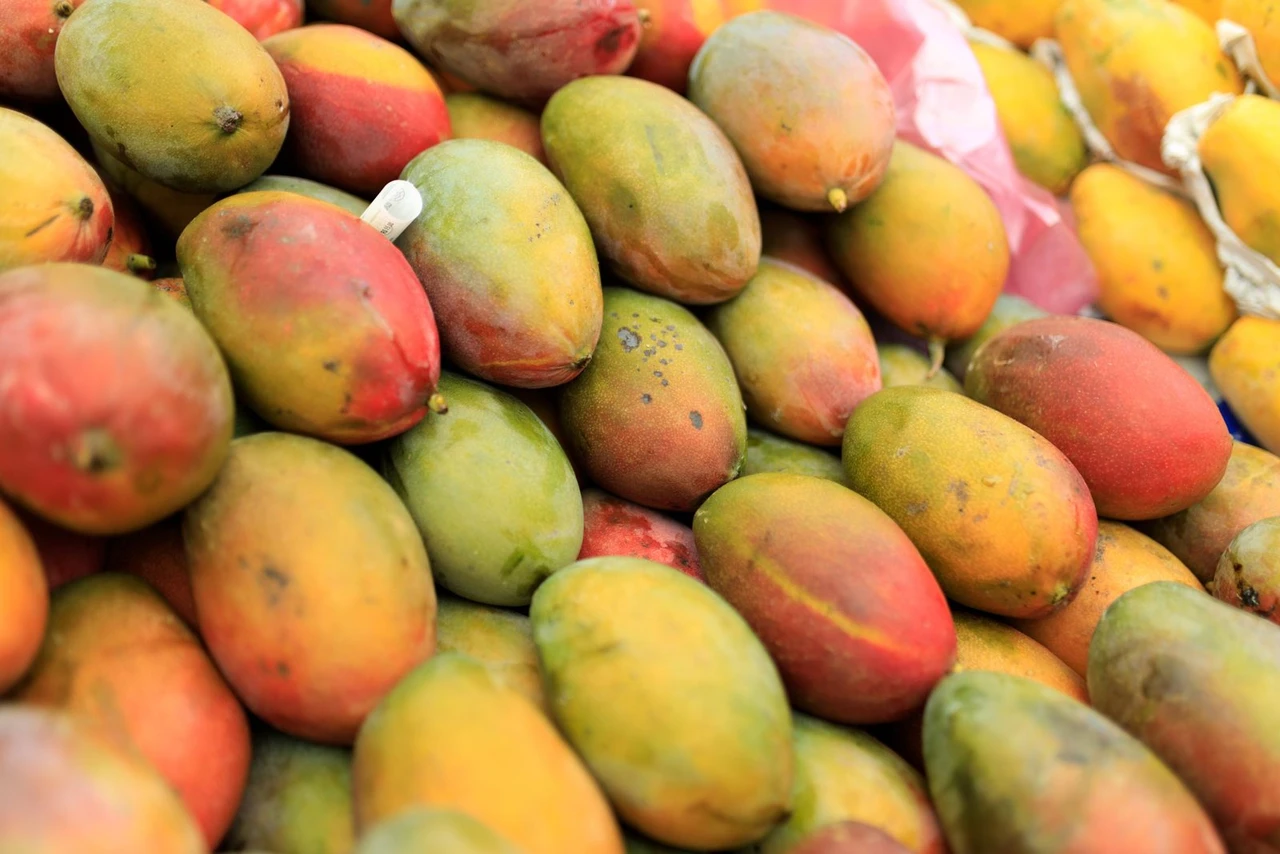
Kensington Pride is still the single most dominant variety, the industry body says. For dog owners the season matters for one reason: from October to April there are more seeds in kitchen bins, on benches and under backyard trees. The Cairo vets' advice fits any Queensland backyard: put fallen and rotting mangoes and the seeds in the bin, not out in the open.
The safe way to serve mango to a dog
- Pick a ripe one. Soft flesh is easier to cut small than firm flesh.
- Peel it. The AKC (overseas) says always remove the skin and pit.
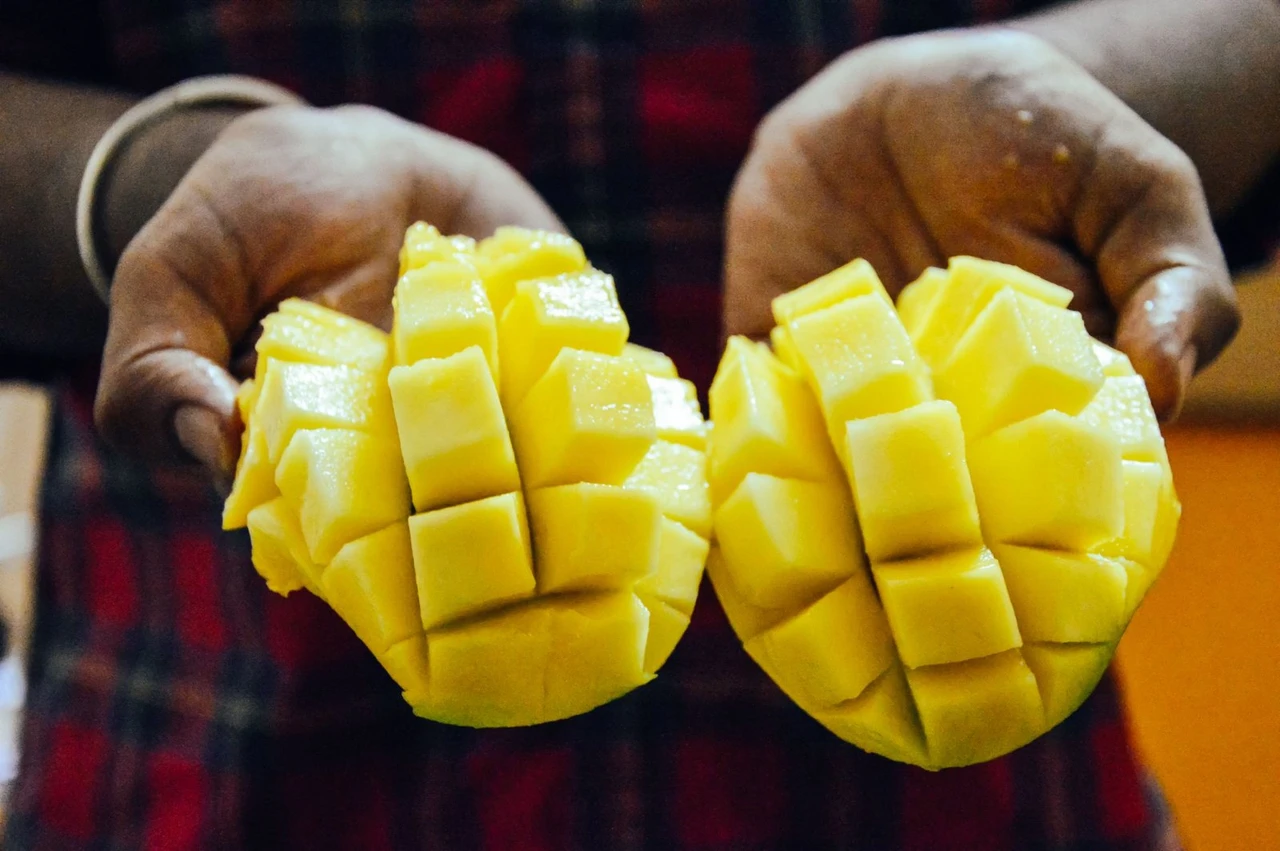
- Cut the flesh off the seed, then bin the seed straight away in a bin your dog cannot open. Do not leave it on the bench or the plate.
- Cut small pieces. Small pieces avoid choking and digestion issues, says the AKC.
- Weigh the portion against the calculator above and count it as part of the day's treats.
- Start with a piece or two and see how your dog's tummy handles it before giving more.
- Plain mango only. No sugar-free desserts, no sweetened dried mango by the handful.
- Pick up windfalls from under any mango tree your dog can reach.
From our kitchen
A fruit and veg treat without the seed or skin worry
None of our treats contains mango. If you like the idea of fruit and veg in your dog's treats but not the seed, the skin or the sticky fingers, our Veggie Tubes are the simplest swap.
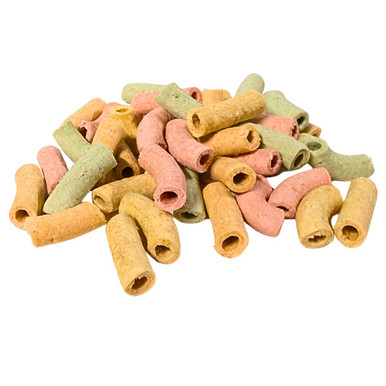

Veggie Tubes are vegetarian training treats made with Australian Apple and Australian Carrot; the label lists: Whole Flour, Oats, Rice, Australian Apple, Australian Carrot, Corn, Australian Beetroot, Apple Cider Vinegar, Turmeric, Natural Colour. They are 3.34% fat and 320 kcal per 100 g on our label, and they sit in our low fat dog treats range. They come ready to give, in small pieces that suit training, and they still count towards the same 10% treat allowance.
Golden Paws are the other one. These grain-free cookies list Apple among their ingredients and are 375 kcal per 100 g on our label. More plant-based options are in our vegetable based dog treats.
Quick answers
Mango and pets: common questions
Can dogs have mango?
Yes, a few small pieces of ripe, peeled mango flesh with the seed removed. Keep it, with all other treats, under 10% of the day's calories.
Is mango bad for dogs?
The flesh is not on RSPCA Australia's list of foods toxic to dogs, but it is mostly sugar, so large amounts can upset a dog's stomach.
Are mango seeds toxic to dogs?
RSPCA Australia lists mango seeds as toxic to dogs. The best documented danger is a blockage: in a vet case series, three dogs needed surgery to remove swallowed mango seeds.
Can dogs eat mango skin?
It is best removed. The AKC says dogs can technically eat it but it is difficult to digest.
Can dogs eat dried mango?
Only a sliver. Sweetened dried mango has about six times the energy and five and a half times the sugar of fresh mango, gram for gram.
Can cats eat mango?
There is no need to give it. Cats are obligate carnivores, and RSPCA Australia lists mango seeds among things that can harm cats.
What are mango worms in dogs?
They are larvae of the African tumbu fly, also called the mango fly, which burrow into skin. They come from eggs laid in soil, not from eating mango.
The Huds and Toke Editorial Team
Dog and horse treat makers, Coolum Beach, Queensland. Published 21 November 2026.
We make and sell the two treats named in this article; neither contains mango. We are not vets. Health facts come from Australian sources first and from overseas sources where marked; the calorie and sugar sums are our own arithmetic from the published figures, and we show the working. Product figures are from our own nutrition panels. Photos are from Pexels. This article is general information and is not a substitute for advice from your Australian vet.
References
- RSPCA Australia Knowledgebase. What should I feed my dog? kb.rspca.org.au
- RSPCA Australia Knowledgebase. What should I feed my puppy? kb.rspca.org.au
- RSPCA Australia Knowledgebase. What should I feed my cat? kb.rspca.org.au
- RSPCA Australia Knowledgebase. What should I feed my horse? kb.rspca.org.au
- RSPCA Australia Knowledgebase. What is laminitis, and how can it be prevented or treated? kb.rspca.org.au
- Animal Poisons Helpline (Australia). Home page. animalpoisons.com.au
- Animal Poisons Helpline (Australia). About us. animalpoisons.com.au
- Animal Poisons Helpline (Australia). Xylitol Poisoning in Dogs: Symptoms, Treatment and Prevention. animalpoisons.com.au
- Food Standards Australia New Zealand. Australian Food Composition Database, Release 3, nutrient profiles per 100 g. foodstandards.gov.au
- Food Standards Australia New Zealand. Sulphites. foodstandards.gov.au
- Queensland Poisons Information Centre (Queensland Health). Mango, Mangifera indica. Last updated November 2024. poisonsinfo.health.qld.gov.au
- Australian Mango Industry Association. Australian Mango Retail Guide: Introduction to Australian Mangoes. August 2023. industry.mangoes.net.au
- Australian Mango Industry Association. Our Industry. industry.mangoes.net.au
- Australian Mango Industry Association. Australian Mango Retail Guide 2025. industry.mangoes.net.au
- Business Queensland, Queensland Government. Mango industry. Last updated 14 February 2023. business.qld.gov.au
- Sydney Animal Hospitals. Foreign body removal. sydneyanimalhospitals.com.au
- Medical Journal of Australia. Exotic myiasis with Lund's fly (Cordylobia rodhaini). 1999;171(11):654-655. mja.com.au
- Overseas (global body): World Small Animal Veterinary Association. Feeding treats to your dog, version 2. wsava.org
- Overseas: MSD Veterinary Manual. Nutritional Requirements of Small Animals. msdvetmanual.com
- Overseas: MSD Veterinary Manual. Cyanide Poisoning in Animals. msdvetmanual.com
- Overseas: MSD Veterinary Manual. Obligatory Myiasis-Producing Flies of Animals. msdvetmanual.com
- Overseas: MSD Veterinary Manual (horse owners). Disorders of the Esophagus in Horses. msdvetmanual.com
- Overseas: MSD Veterinary Manual. Equine Metabolic Syndrome. msdvetmanual.com
- Overseas (USA): American Kennel Club. Can Dogs Eat Mango? Updated 27 April 2026. akc.org
- Overseas (USA): American Kennel Club. Intestinal Blockage in Dogs. akc.org
- Overseas (Egypt): Abu-Seida A. Mango Seed Causing Acute Intestinal Obstruction in Dogs: A Case Series. Journal of Applied Veterinary Sciences 2023;8(4):123-126. doi.org
- Overseas: Diarra SS. Potential of mango (Mangifera indica L.) seed kernel as a feed ingredient for poultry: a review. World's Poultry Science Journal 2014;70. repository.usp.ac.fj
- Overseas (USA): Cornell University College of Veterinary Medicine, Riney Canine Health Center. Gastrointestinal foreign body obstruction in dogs. vet.cornell.edu
- Overseas (USA): Cornell University College of Veterinary Medicine, Riney Canine Health Center. Diets for diabetic dogs. vet.cornell.edu
- Overseas (USA): Cornell Feline Health Center. Feeding your cat. vet.cornell.edu
- Overseas (USA): VCA Animal Hospitals. Nutrition: general feeding guidelines for cats. vcahospitals.com
- Overseas (USA): US Department of Agriculture, FoodData Central. FDC ID 169091, Mango, dried, sweetened. fdc.nal.usda.gov
- Overseas (UK): PDSA Pet Health Hub. Diarrhoea after a change of food. pdsa.org.uk
- Overseas (USA): ASPCA Animal Poison Control. People Foods to Avoid Feeding Your Pets. aspca.org
- Overseas (USA): Mango Dermatitis After Urushiol Sensitization. Clinical Practice and Cases in Emergency Medicine 2019;3(4):361-363. ncbi.nlm.nih.gov
- Overseas (New Zealand): DermNet. Mango. dermnetnz.org
- Overseas (USA): Knight A. Mangoes toxic to horses? TheHorse.com, 2004. thehorse.com
- Overseas (Brazil and Italy): Silva CJFL, et al. Effects of the Ingestion of Ripe Mangoes on the Squamous Gastric Region in the Horse. Animals 2022;12(22):3084. pubmed.ncbi.nlm.nih.gov
- Overseas (USA): Auburn University College of Veterinary Medicine. Choke: a medical emergency. 27 October 2022. vetmed.auburn.edu
- Overseas (Europe): Durham AE, Frank N, McGowan CM, et al. ECEIM consensus statement on equine metabolic syndrome. Journal of Veterinary Internal Medicine 2019. pmc.ncbi.nlm.nih.gov