Halloween and Your Pets...
Posted by Katrina Thorpe; Russell Gibbons on 10th Oct 2019
None
Halloween used to be something Australians only saw in American movies. Not anymore. The pumpkins hit the supermarket shelves in early October, kids plan costumes weeks out and whole suburbs run trick-or-treat trails. If your dog is part of the family, they will want in on the action, and with a little planning they can be. The catch is that a few Halloween staples, chocolate especially, are genuinely dangerous for dogs. Here is how to keep the night fun for everyone, tail waggers included.
The Lolly Bowl Problem
Start with the bowl by the front door, because that is where most Halloween vet visits begin.
Chocolate is the big one. Chocolate contains a compound called theobromine, which dogs process very poorly, so it can build up to toxic levels in their system. According to the RSPCA, how sick a dog gets depends on their size, how much they ate and the type of chocolate. Cocoa powder, baking chocolate and dark chocolate contain far more theobromine than milk chocolate. Signs of poisoning include restlessness, vomiting, diarrhoea, a racing heart, tremors and, in serious cases, seizures. The RSPCA advice is clear: if your dog eats chocolate, even a small amount, contact your vet as soon as possible.
Sugar-free lollies and chewing gum are the sneaky one. Many are sweetened with xylitol, harmless to us but dangerous for dogs. The US veterinary network VCA (an overseas source, but the chemistry is the same in Australian kitchens) reports that xylitol triggers a rapid release of insulin in dogs, dropping their blood sugar to dangerous levels within 30 minutes to 2 hours, and larger amounts can damage the liver. Vomiting, weakness and wobbly walking are early warning signs. Treat it as an emergency and ring your Australian vet straight away.
The fixes are simple. Keep the lolly bowl up high, brief the kids that the dog gets none of the haul, and count the wrappers, because swallowed wrappers cause problems of their own.
Doorbells, Strangers and Spooky Masks: Helping Your Dog Cope
Now picture the night from your dog's side of the door: the doorbell every ten minutes, and every time a stranger, in a mask, at their house, after dark. Even confident dogs can find that a lot.
The easiest fix is a quiet room. Before dark, set your dog up in a bedroom or laundry away from the front door with their bed, water and a long-lasting chew to work on. A radio or the TV helps muffle the doorbell. Handing out lollies with your dog beside you? Pop their lead on first so there is no bolt through the open door.
Watch their body language either way. The RSPCA lists lip licking, yawning, ears pinned back, a tucked tail, a lowered body posture and turning the head away as signs a dog is worried. If you spot any of these, give your dog space and move them somewhere calmer. Never force a nervous dog to greet costumed visitors, no matter how much the little witches at the door want a pat.
Costume Kindness Rules
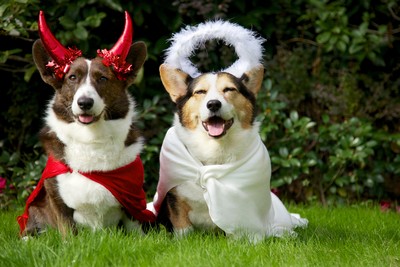
A dog in a pumpkin suit is objectively wonderful. The trick is making sure the dog agrees. The RSPCA has sensible ground rules, and they are easy to follow.
Nothing should cover your dog's nose, mouth or eyes, and nothing should be so tight it overheats them or stops them walking, drinking or toileting normally. Skip outfits with buttons, sequins or other small parts that could be chewed off and swallowed. Keep costume sessions short and supervised, and take the photos early.
Most importantly, learn the tap out signals. If your dog freezes, pants, or struggles to get the costume off, remove it immediately. If the full costume is a no, the RSPCA suggests a festive bandana or collar instead, which most dogs tolerate happily. Cats, for the record, want no part of this at all.
Dog Safe Halloween Treats (So Nobody Misses Out)
Here at Huds and Toke we never thought it was fair that the family dog had to sit out the festivities, so give your dog a haul of their own.
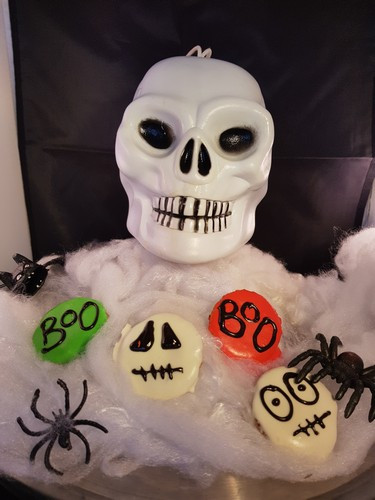
Every October we bake a dedicated Halloween range of dog treats in our Australian bakery, with spooky cookies and bones made from dog-safe ingredients. They look the part and your dog can hoe into them while the humans work through the lolly bowl.
If your dog gives you sad eyes over the chocolate they cannot have, carob is the answer. It looks just like chocolate but contains none of the theobromine that makes real chocolate dangerous for dogs. We have written a full guide on why carob is the dog-safe chocolate swap.
For the dog that deserves a whole trick-or-treat sack, our dog gift boxes make a brilliant spooky season spoil, and you can top up the jar from our full range of dog treats. Happy Halloween from the Huds and Toke family. Keep the chocolate for the humans, the carob for the dogs, and the pumpkin suit sessions short.
Frequently asked questions
Can my dog have just a little bit of chocolate at Halloween?
No. Dogs cannot metabolise theobromine properly, and the RSPCA advises contacting your vet as soon as possible if your dog eats any chocolate. Dark chocolate, baking chocolate and cocoa powder are the most dangerous, but no chocolate is safe for dogs.
My dog ate a sugar-free lolly or some chewing gum. What should I do?
Ring your vet straight away. Many sugar-free lollies and gums contain xylitol, which can send a dog's blood sugar dangerously low within 30 minutes and damage the liver in larger amounts. Do not wait for symptoms before calling.
How do I know if trick-or-treat visitors are stressing my dog out?
Watch their body language. The RSPCA lists lip licking, yawning, ears pinned back, a tucked tail, a lowered body and turning the head away as worry signs. If you see them, move your dog to a quiet room away from the front door.
Is it cruel to put my dog in a Halloween costume?
Not if you follow the RSPCA's rules: nothing covering the nose, mouth or eyes, nothing restricting movement, short supervised sessions only, and off it comes the moment your dog freezes, pants or tries to wriggle out. A festive bandana is a great compromise.
What can my dog eat at Halloween instead of chocolate and lollies?
Dog treats baked with dog-safe ingredients, like the spooky cookies and bones in our Australian-made Halloween range. Carob treats are the perfect chocolate stand-in because carob has the chocolatey look without the theobromine.
The Huds and Toke Editorial Team
Sunshine Coast, Australia · Pet treats brand since 2012
Researched and written by the Huds and Toke editorial team, the same people who bake the treats. We are bakers, not veterinarians: safety claims are drawn from the cited authorities, and for anything about your own pet, talk to your vet. Read our Editorial Standards.
Sources
- RSPCA Australia Knowledgebase: Why is chocolate toxic to dogs and other animals?: https://kb.rspca.org.au/categories/companion-animals/household-and-garden-dangers/why-is-chocolate-toxic-to-dogs-and-other-animals
- VCA Animal Hospitals: Xylitol Toxicity in Dogs: https://vcahospitals.com/know-your-pet/xylitol-toxicity-in-dogs
- RSPCA Australia Knowledgebase: What does my dog's body language mean?: https://kb.rspca.org.au/categories/companion-animals/dogs/behaviour/what-does-my-dogs-body-language-mean
- RSPCA Australia Knowledgebase: What are the animal welfare issues with pets wearing costumes?: https://kb.rspca.org.au/knowledge-base/what-are-the-animal-welfare-issues-with-pets-wearing-costumes/
- Internal pillar article (carries its own sourcing): Is Carob Good For Dogs And Why: https://hudsandtoke.com.au/pages/blog.html/is-carob-good-for-dogs-and-why/
Huds and Toke: Proudly Australian, Family Owned
Huds and Toke is a family owned Australian premium pet treats company from Queensland's Sunshine Coast. Naturally made here in Australia and loved by pets and their people right across the country.
Learn more on Wikipedia · Our story · Awards and recognition