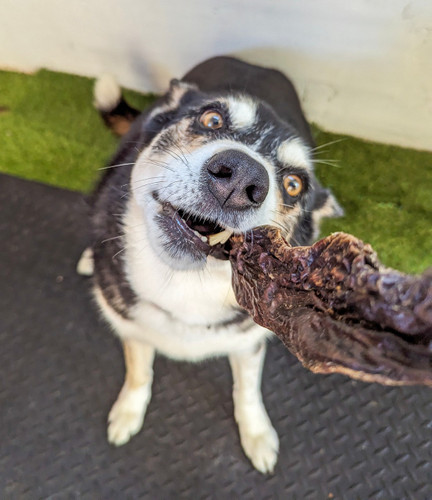
Dehydrated Dog Treats: Are They Healthy? An Australian Guide
Posted by Dog treats on 23rd Oct 2025
Dehydrated dog treats can be a healthy choice, but drying does less than most packets suggest. It takes the water out. It does not sterilise the meat, it does not clean teeth by itself, and it does not make every treat lean. This guide sticks to what Australian vets, the RSPCA and food safety authorities actually say, plus the fat and protein figures printed on our own labels.
By The Huds and Toke Editorial Team, Coolum Beach, Queensland. 9 minute read. Updated 9 October 2026.
In this guide: Are they healthy? | Fat and protein finder | Bacteria | Teeth | How many | Chicken jerky | Make your own | Questions
The short answer
Are dehydrated dog treats healthy?
For most healthy dogs, yes, in treat-sized amounts. A dried treat made from one meat and nothing else is simply that meat with most of the water removed. What decides whether it suits your dog is the same list that applies to any treat:
- How much fat is in it. Across our own dried range the label fat runs from 1.46% to 32.9%. Drying does not make a fatty cut lean.
- How much you feed. Vet Voice, run by the Australian Veterinary Association says treats should make up less than 10% of a dog's daily calories.
- How you handle it. Dried meat can still carry bacteria, so wash your hands after feeding.
- How hard it is. Jerky, liver and lung are easy going. Horns, hooves and antlers are a different kind of chew and suit a different kind of dog.
What are dehydrated dog treats?
Dehydrated, air dried and dried all mean the same thing on a dog treat: raw meat, fish or offal with the water taken out by warm moving air. Nothing else has to be added, because it is the lack of water that keeps the treat.
Food scientists measure this as water activity. The US Food and Drug Administration explains that most foods have a water activity above 0.95, enough to support bacteria, yeasts and mould, and that the available moisture "can be reduced to a point which will inhibit the growth of the organisms". For dried meat, the University of Wisconsin's meat safety guidance (a US source) puts the shelf-stable line for fully cooked dried meat at a water activity of 0.85 or lower.
Why the protein figure looks so high
Take the water out and everything left is concentrated. Food Standards Australia New Zealand analysed raw kangaroo steak at 76.1 g of water, 22.5 g of protein and 1.0 g of fat per 100 g. The panel on our dried Kangaroo Jerky reads 84.9% crude protein and 3.3% crude fat. It is the same meat. There is just far less water in each gram.
22.5%
Protein in raw kangaroo steak
FSANZ, 2019
84.9%
Protein on our dried Kangaroo Jerky label
Huds and Toke panel
76.1%
Of the raw steak is water
FSANZ, 2019
That is also why a small piece goes a long way. A dried treat is much more energy dense than the fresh meat it came from, so the serving has to shrink with it.
From our own panels
Fat and protein on the label: 29 dried treats compared
We read the nutrition panel on every dried meat, fish and chew treat we sell that publishes both a fat and a protein figure. There are 29 of them, and the spread is wide: 11 sit at 5% fat or under, and 7 are at 15% or more. Use the finder to see which is which.
Go by the label
Find a dried treat by fat and protein
29 of 29 treats match
Crude fat and crude protein as printed on each product's own nutrition panel, read on 9 October 2026, leanest first. The range runs from Beef Ears at 1.46% fat to Sheep Ears at 32.9%. A label figure is a guide, not a diet plan. If your dog has had pancreatitis or is on a vet diet, ask your Australian vet before adding any treat.
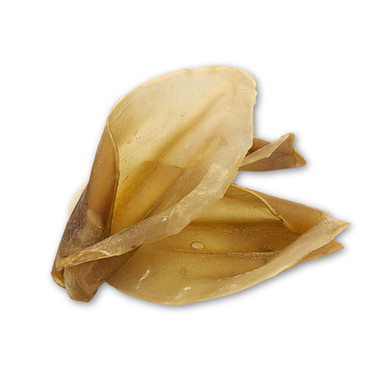
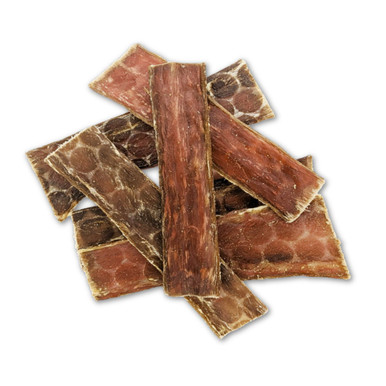
Two things stand out. Kangaroo Jerky, Tendons, Knee Caps and Lung Puff all read 4.2% fat or under, although Kangaroo Liver is 13%. So the part of the animal matters as much as the animal: Beef Ears read 1.46% fat while Beef Jerky reads 17.3%.




Food safety
Does dehydrating kill bacteria?
No, not reliably. Drying stops bacteria growing. It is heat that kills them. This is the point most guides get wrong, including the earlier version of this one.
The US Department of Agriculture is blunt about it for jerky made at home: "pathogenic bacteria are likely to survive the dry heat of a warm oven and especially the 130 to 140°F temperature of a food dehydrator". That is 54 to 60°C.
Closer to home, Vet Voice warns that "chews such as raw-hide and tough jerky-style treats can be contaminated with harmful bacteria, potentially causing unwellness in pets and in the humans handling them", and adds: "Any owner handling these treats should wash their hands thoroughly afterwards." The same page advises against these treats in homes where a pet or a person has reduced immunity.
It is not a theoretical risk. In 2019 the US FDA recorded "154 cases of human infection tied to exposure to pig ear pet treats" in a Salmonella outbreak.
What to do
- Wash your hands with soap after handling any dried meat treat. The FDA says at least 20 seconds, before and after.
- Keep treats away from where you prepare your own food, and wash the treat jar between bags.
- If someone at home is very young, elderly, pregnant or immunocompromised, talk to your Australian vet about which treats make sense.
Are dehydrated treats good for a dog's teeth?
Chewing helps a little. It is not dental care. RSPCA Australia says dental chews "can help to reduce the formation of plaque and tartar, although they will not prevent it". Vet Voice says tooth brushing "is safer and more effective than chewing".
If a dental claim is what you are buying for, look for the Veterinary Oral Health Council seal. The council is US based, and its protocol asks for a mean plaque or tartar reduction of at least 20% across two trials. Our dried treats have not been through it, so we do not make that claim.
Hard chews suit some dogs and not others
Horns, hooves and antlers are sold alongside dried meat, but they behave very differently in a dog's mouth. Vet Voice reports that "vets frequently see pets with broken teeth as a result of chewing on these harder treats" and suggests avoiding treats "which are too hard and don't easily bend". The World Small Animal Veterinary Association gives the same advice for antlers and hooves.
So match the chew to the dog, and use the Vet Voice test: if a chew is very hard and will not bend, think twice. A dog that clamps down and tries to crack things is better with something that gives, like jerky, tendon or an ear. Vet Voice also advises against large strips of jerky, rawhide or pig's ear for dogs that gulp their food, because a swallowed piece can lodge in the oesophagus and swell. Size up, stay in the room, and take the last small piece away.
Puppies are a separate case. RSPCA Australia suggests "puppy-specific chew toys and healthy chewable treats" for teething and does not recommend bones for puppies, because "they can break teeth and cause internal blockages". Keep very hard chews for adult dogs.
How many dehydrated treats can a dog have?
Australian and international vets agree on the ceiling. Vet Voice: "treats should make up less than 10% of the daily calories our pets consume". The WSAVA words it as "no more than 10% of a dog's daily calorie intake". RSPCA Australia is more cautious about commercial treats because of the kidney cases covered below, suggesting they be limited "to occasional use, for example, a small treat once or twice a week".
Because dried meat is concentrated, 10% is a smaller pile than it sounds. Break jerky into thumbnail pieces and count a long chew as most of the day's allowance.
Go easy on the rich ones
Fat is where dried treats differ most, and it matters for some dogs. VCA Animal Hospitals (US and Canada) notes that pancreatitis "may be triggered in some cases by a fatty meal", and the MSD Veterinary Manual (US) says dogs with mild cases "will usually be switched to a low-fat diet and low-fat treats". RSPCA Australia lists fatty trimmings among the foods to avoid. If your dog has a history of pancreatitis, is overweight or is on a vet diet, pick from the lean end of the finder above and check with your Australian vet first.
The jerky history
Is dehydrated chicken good for dogs?
Plain dried chicken breast is a simple, single-ingredient treat. The reason people ask is a real piece of history, and it is worth knowing.
From 2007, vets in Australia and the United States began seeing dogs with an unusual kidney problem after eating imported jerky treats. In the Australian Veterinary Journal, Thompson and colleagues described 108 affected Australian dogs: "All had been fed the same brand of dried chicken treats, made in China, for a median of 12 weeks", and small breeds made up 88% of cases. In the US, the FDA had received about 5,200 complaints by the end of 2015 and reported that testing "has not revealed a root cause".
RSPCA Australia still carries the warning: "A number of Australian dogs have suffered from kidney problems after being fed particular pet treats." No cause was ever found, so the practical advice is modest:
- Know where a treat was made and what is in it. A short ingredient list and a named country of origin are the two things you can check.
- Feed jerky as a treat, not a daily staple, especially for small dogs.
- If your dog starts drinking or urinating far more than usual, stop the treats and see your Australian vet.
- Your vet can report a suspected problem through PetFAST, the tracking system set up in 2011 by the Australian Veterinary Association and the pet food industry association.
Our own dried chicken treats list one ingredient on the label: 100% Australian chicken.
Are kangaroo treats better for dogs with allergies?
Sometimes, and for a narrower reason than the marketing suggests. True food allergy is uncommon. A 2017 international review in BMC Veterinary Research put it at 1 to 2% of dogs seen by vets for any reason. The proteins most often involved are the ones dogs eat most: "beef, dairy products, chicken, and wheat", according to a 2016 review by the same group.
Kangaroo helps mainly because many dogs have never eaten it. The MSD Veterinary Manual (US) is clear that a "strict dietary elimination trial and subsequent provocative rechallenge is the only reliable method for diagnosing food allergies", and the research says those trials should run at least 8 weeks. During a trial, any treat outside the plan can undo it, kangaroo included. So if you suspect a food allergy, ask your Australian vet before you change treats. If your dog is simply fine on kangaroo, it is a lean, single-protein option. We do not call it hypoallergenic.
Dehydrated vs freeze dried dog treats
Both take the water out. Dehydrating uses warm moving air. Freeze drying freezes the food and draws the water off under vacuum, which gives a lighter, crumblier treat and usually a higher price. For your dog the same rules apply to both: read the fat on the label, keep to the 10% ceiling, and wash your hands afterwards, because neither method is a guarantee against bacteria.
Make your own
How to make dehydrator dog treats at home, safely
A home dehydrator makes good dog treats, and the one step most recipes skip is the one that matters. The USDA recommends heating meat to 160°F (71°C) and poultry to 165°F (74°C) before drying, because "a dehydrator may not reach temperatures high enough" to do it.
- Start with lean, plain meat. Trim the visible fat and add nothing.
- Slice it thin and even so it dries at the same rate.
- Cook it through first: 71°C in the middle for meat, 74°C for chicken or other poultry. A quick steam, bake or simmer does it.
- Dry it in a dehydrator with a temperature dial that holds at least 54 to 60°C, until the pieces are dry all the way through.
- Cool, then store in an airtight container. The USDA's figure for home-dried jerky is 1 to 2 months, against 12 months for commercially packaged jerky.
- Wash hands, boards, knives and trays in hot soapy water when you finish.
Sweet potato, apple and pumpkin dry well too, and skip the meat-handling steps.
How dog treats are regulated in Australia
Less than most owners assume. The Department of Agriculture, Fisheries and Forestry states that "States and territories have primary responsibility for overseeing the manufacture and sale of pet food in Australia". A 2018 Senate inquiry summed it up: "Australia's pet food industry is self-regulated against a voluntary Australian Standard". That standard is AS 5812, and RSPCA Australia recommends choosing food that meets it.
One labelling rule is worth knowing if you also have a cat. RSPCA Australia notes "a requirement that irradiated imported dog food be labelled 'Must not be fed to cats'". If you see that line on an imported treat, take it literally.
Because the rules are light, the label is your best tool: named ingredients, a country of origin, a nutrition panel and a maker you can contact.
How to store dehydrated dog treats
Cool, dry and sealed. The FDA advises storing pet treats "in the original container or bag", and says dry pet food should be kept in "a cool and dry place" under 80°F, which is about 27°C. That matters in an Australian summer, so a pantry beats a shed or the car. Vet Voice adds that correct storage also reduces the risk of people coming into contact with bacteria.
Our own packs say the same: store in a cool, dry place, no refrigeration needed, and move to an airtight container once opened. Go by the best before date printed on the pack. If a dried treat smells rancid, feels damp or shows any mould, bin it.
Quick answers
Dehydrated dog treat questions, answered
What is the 10 treat rule for dogs?
It is the 10 percent rule: all treats together should stay under 10% of your dog's daily calories, with the rest coming from a complete and balanced diet. The Australian Veterinary Association's Vet Voice and the World Small Animal Veterinary Association both use that figure.
What are the best dog treats to dehydrate?
Lean, plain cuts dry best: chicken breast, kangaroo, lean beef, liver in thin slices and white fish. Trim the fat, cook the meat through first (71°C, or 74°C for poultry) and add nothing. Sweet potato and apple slices are easy meat-free options.
Is dehydrated meat good for dogs?
As a treat, yes for most healthy dogs. It is the same meat with the water removed, so protein and fat are concentrated and a small piece is a full reward. Check the fat on the label and keep treats under 10% of daily calories.
Can puppies have dehydrated treats?
RSPCA Australia suggests puppy-specific chew toys and healthy chewable treats for teething, and advises against bones for puppies because they can break teeth and cause blockages. Keep pieces small, leave horns, hooves and other very hard chews for later, and ask your Australian vet if unsure.
Are dehydrated treats better than rawhide?
They are different products with some of the same cautions. A single-ingredient dried meat treat is just meat. But Vet Voice warns that large strips of jerky, rawhide or pig's ear are best avoided for dogs that gulp, because a swallowed piece can lodge and swell. Size and supervision matter more than the name on the packet.
Do dehydrated dog treats need refrigeration?
No. Keep them in a cool, dry place and in an airtight container once opened. Home-dried treats keep for a shorter time than commercially packaged ones, around 1 to 2 months according to the US Department of Agriculture.
How long do dehydrated dog treats last?
Go by the best before date on the pack and store them cool, dry and sealed. For jerky you dry yourself, the US Department of Agriculture gives 1 to 2 months.
Ready to choose? Start with the dried meat dog treats range, or the kangaroo dog treats if lean is the brief. For a dog watching its weight, every treat in low fat dog treats shows 6% fat or less on its label. margin-top:2em;
Buying for Christmas? Our Christmas gifts for dogs guide and the Christmas dog treats range are the place to start.
The Huds and Toke Editorial Team
Dog and horse treat makers, Coolum Beach, Queensland
We make and sell dried dog treats, so we have tried to be careful about what they can and cannot do. We are not vets. This guide was rewritten on 9 October 2026 to remove figures we could not trace to a source. Health and safety points come from the Australian and overseas authorities linked below, with overseas sources marked as such. The fat and protein figures come from our own nutrition panels. This is general information, not veterinary advice. For your own dog, speak with your Australian vet. Our editorial standards explain how we check what we publish.
References
- Vet Voice, Australian Veterinary Association. The risks of long-lasting chew treats. vetvoice.com.au
- Vet Voice, Australian Veterinary Association. Selecting and handling pet food. vetvoice.com.au
- Vet Voice, Australian Veterinary Association. Dental care for your pet. vetvoice.com.au
- Vet Voice, Australian Veterinary Association. Pet treats: how to win the battle of the bulge. vetvoice.com.au
- RSPCA Australia Knowledgebase. What should I know before feeding dog treats? kb.rspca.org.au
- RSPCA Australia Knowledgebase. How should I take care of my cat or dog's teeth? kb.rspca.org.au
- RSPCA Australia Knowledgebase. What should I feed my dog? kb.rspca.org.au
- RSPCA Australia Knowledgebase. What should I feed my puppy? kb.rspca.org.au
- RSPCA Australia Knowledgebase. What can I do if I suspect a problem with my pet's food or treats? (PetFAST) kb.rspca.org.au
- RSPCA Australia Knowledgebase. Position on the irradiation of imported pet food products. kb.rspca.org.au
- Department of Agriculture, Fisheries and Forestry (Australia). Pet food safety. agriculture.gov.au
- Senate Rural and Regional Affairs and Transport References Committee (Australia), 2018. Regulatory approaches to ensure the safety of pet food, chapter 3. aph.gov.au
- Food Standards Australia New Zealand. 2019 Game meats analytical program. foodstandards.gov.au
- Thompson MF and others, 2013. Acquired proximal renal tubulopathy in dogs exposed to a common dried chicken treat. Australian Veterinary Journal 91(9). pubmed.ncbi.nlm.nih.gov
- World Small Animal Veterinary Association (global). Guide to treats for dogs. wsava.org
- US Food and Drug Administration. Water activity in foods. fda.gov
- University of Wisconsin (US). Shelf stability of meat products. foodsafety.wisc.edu
- US Food and Drug Administration. Tips for safe handling of pet food and treats. fda.gov
- US Food and Drug Administration. Contaminated pig ear pet treats connected to human Salmonella infections. fda.gov
- US Food and Drug Administration. Animal illnesses linked to jerky pet treats. fda.gov
- US Food and Drug Administration. Proper storage of pet food and treats. fda.gov
- US Department of Agriculture, Food Safety and Inspection Service. Jerky and food safety. fsis.usda.gov
- Veterinary Oral Health Council (US). Trial protocol requirements. vohc.org
- VCA Animal Hospitals (US and Canada). Pancreatitis in dogs. vcahospitals.com
- MSD Veterinary Manual (US). Pancreatitis and other disorders of the pancreas in dogs. msdvetmanual.com
- MSD Veterinary Manual (US). Cutaneous food allergy in animals. msdvetmanual.com
- Olivry T and Mueller RS, 2017. Prevalence of cutaneous adverse food reactions in dogs and cats. BMC Veterinary Research. pmc.ncbi.nlm.nih.gov
- Mueller RS, Olivry T and Prelaud P, 2016. Common food allergen sources in dogs and cats. BMC Veterinary Research. pmc.ncbi.nlm.nih.gov
- Olivry T, Mueller RS and Prelaud P, 2015. Duration of elimination diets. BMC Veterinary Research. pmc.ncbi.nlm.nih.gov