Thoroughbred and Arabian Treats: Feeding a Hot Blood
Posted by The Huds and Toke Editorial Team on 25th Sep 2026
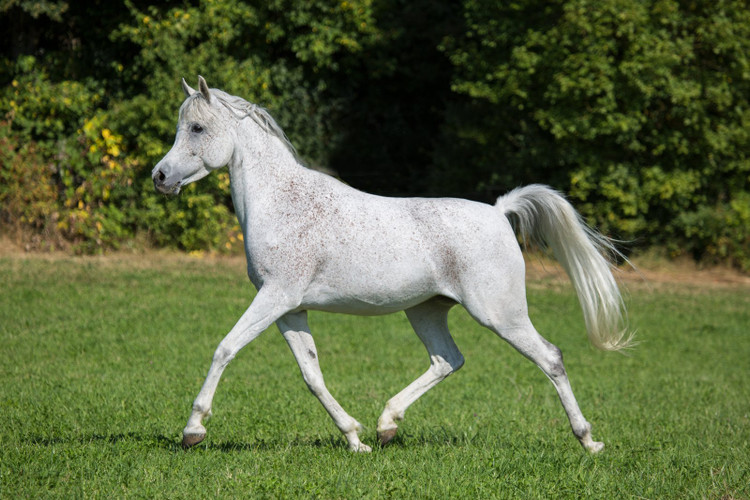
The Thoroughbred and the Arabian are the two hot bloods, and they share a reputation for being sharp, sensitive and quick. Feed them, though, and they turn out to be almost opposites. The ex-racer is often the horse that will not hold its weight and picks at its feed. The Arabian was bred to cross a desert on very little, and many owners find it holds condition on what looks like fresh air. Here is what that means for the treat bucket, including the treats of ours we would leave on the shelf.
The Huds and Toke Editorial Team | 17 minute read | Updated September 2026
If you only read one thing
Two hot bloods, two opposite feeding problems
| 1 | The off-the-track Thoroughbred often comes with an ulcer history. An Australian study found gastric ulcers in 86 per cent of 345 racehorses. What matters most is forage and timing, not a special treat. |
| 2 | The Arabian was bred to go a long way on very little. Treat it like a good doer until its ribs tell you otherwise, and keep the sugary end of our range for special occasions. |
| 3 | The Anglo Arab can take after either parent. Look at the horse in front of you, not the name on its papers, and feed accordingly. |
Why these three share a post
What makes a hot blood
Horse people split breeds into hot, warm and cold bloods. It is a temperament shorthand, not a thermometer reading. A 2020 paper co-authored by Paul McGreevy at the University of Sydney puts it plainly: hot-blooded horses "descend mainly from Thoroughbred and Arabian lines", and that ancestry is linked with more anxiousness, excitability, sociability and inquisitiveness than breeds like the Quarter Horse or the Irish Draught.
The two are family. The Thoroughbred was developed in England by crossing local mares with imported eastern stallions, among them the Darley Arabian and the Godolphin Arabian. The Anglo Arab simply puts the two back together on purpose. So this post groups them the way this whole series does: by what they physically need from a treat, which turns out to be very different for each.
| Thoroughbred | Arabian | Anglo Arab | |
|---|---|---|---|
| Bred for | Speed on the racetrack | Endurance on scarce food and water | The best of both, on paper |
| Typical weight | 400 to 600 kg | 360 to 450 kg | Somewhere between |
| Usual feeding problem | Holding weight, a sensitive stomach | Holding too much | Depends which parent it favours |
| Treat priority | When you give it | How sweet it is | Watch the horse, then choose |
Thoroughbred weight from Tozaki et al., Journal of Equine Science, 2017. Arabian weight from Poškienė et al., Animals, 2021, which gives a standard of 360 to 450 kg.
● ● ●
The part that matters most
The racing stomach does not retire with the horse
In a 2003 study from the Randwick Equine Centre in Sydney, Begg and O'Sullivan went back through the gastroscopy records of 345 racehorses, 331 of them Thoroughbreds. Gastric ulceration turned up in 86 per cent. The most common site was the squamous lining around the ridge where the upper and lower parts of the stomach meet.
Source. Begg LM and O'Sullivan CB, "The prevalence and distribution of gastric ulceration in 345 racehorses", Australian Veterinary Journal, 2003. These were horses brought in for a scope, so read it as a picture of racing stables, not of every horse in a paddock.
The bigger picture comes from the European College of Equine Internal Medicine's consensus statement on equine gastric ulcer syndrome, whose lead author is based in Australia. It reports squamous disease in 37 per cent of untrained Thoroughbreds, rising to 80 to 100 per cent within two to three months of race training. Horses kept mostly at home and rarely competed sat at 11 per cent. The panel also noted "a breed effect might be present with Thoroughbreds predisposed".
Why does training do it? Partly the diet, heavy on grain and light on forage, with long gaps between meals. Partly the work itself. A small treadmill study at the University of Florida measured what happens inside the stomach at speed: pressure in the abdomen squeezes the stomach and pushes acid up into the upper region, which has no real defence against it.
Two facts make that picture worse than it sounds. The horse's stomach is small, about 18 litres according to Ohio State University's extension service, and it keeps producing acid even when it is empty. Saliva is the natural buffer, and Iowa State University notes a horse secretes large amounts of it only while it is chewing. RSPCA Australia makes the same point: the saliva from chewing buffers acid that is dripped into the stomach constantly.
A retired racehorse leaves the track with its history. It usually comes off a high grain diet, and Team Thoroughbred, the Racing NSW rehoming program, advises moving it onto forage gradually, over about a fortnight for any change of feed or hay, with good quality hay at 1.5 per cent of bodyweight a day. For a 500 kg horse that is 7.5 kg of hay.
So where does a treat fit?
This next part is our reading of the research, not a line from it. Nobody has studied treats and ulcers directly. But the consensus is clear that fasting and long gaps between forage raise the risk, and that exercise faster than a walk splashes acid where it does damage. So the question for an ex-racer is not really which treat. It is when.
- After hay, not instead of it. A treat handed to a horse that has stood in an empty yard since breakfast lands in an empty, acidic stomach. Give the hay first.
- Reward on the ground, not only at the gallop. Groundwork, grooming, float loading and farrier visits are where treats earn their keep with a sensitive horse.
- Keep pieces small. Frequent small rewards beat one big handful, for manners as much as anything.
- If your horse has been scoped, the vet's plan wins. Ask them about treats specifically. Most will be relieved you asked.
The starch arithmetic
The ECEIM panel recommends no more than 2 g of starch per kg of bodyweight a day, and no more than 1 g per kg in a single meal. For a 500 kg Thoroughbred that is 500 g of starch in one feed. A small handful of biscuits weighs only a few tens of grams in total, so they are a small slice of that even before you count what is not starch. The grain bucket is where the starch lives, which is why it is the first thing your vet will ask about.
● ● ●
Breed one
The Thoroughbred, and the ex-racer in particular
Breed record
Thoroughbred
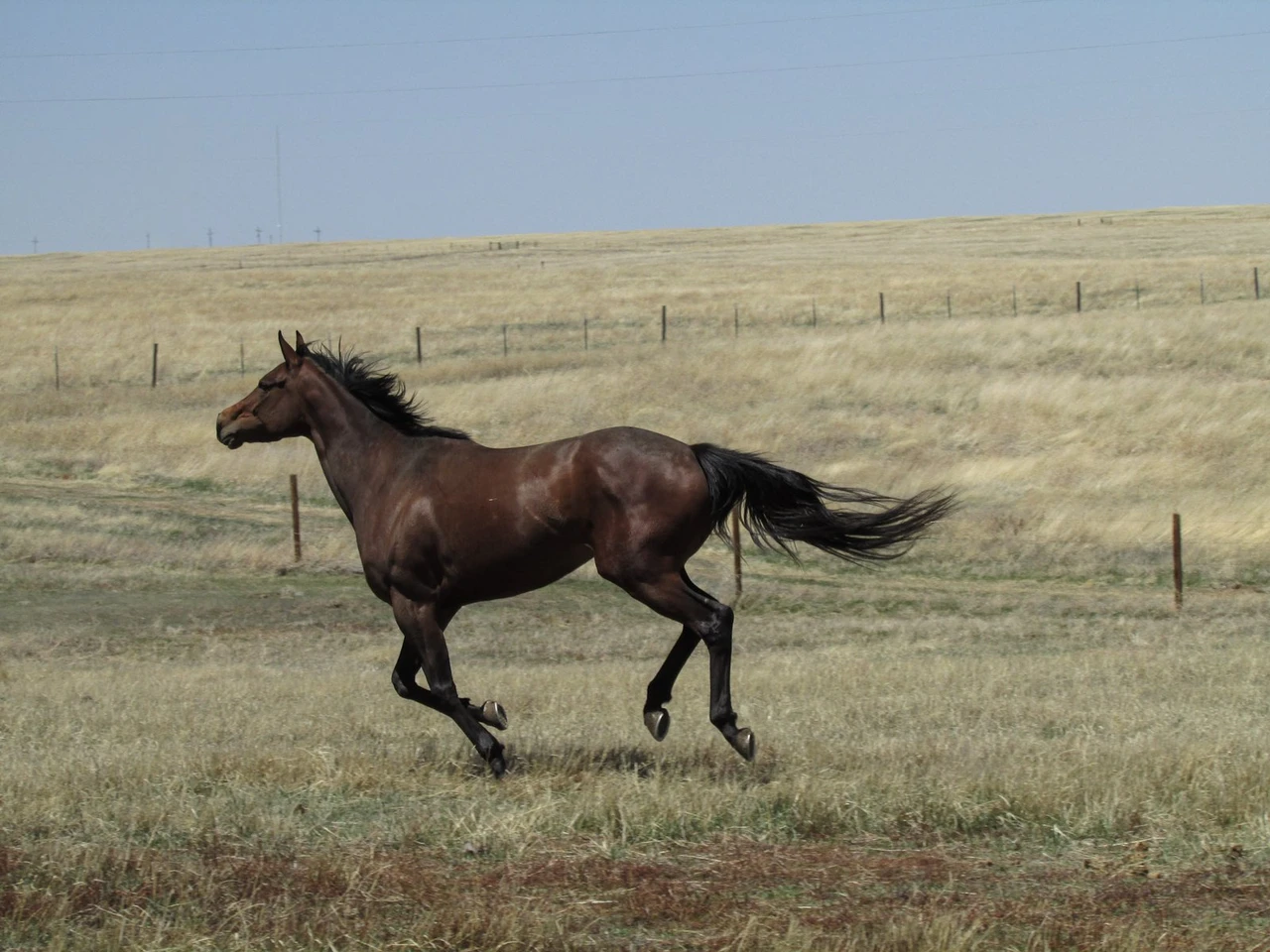
| Type | Hot blood |
| Origin | England, from local mares and imported eastern stallions |
| Weight | 400 to 600 kg; Japanese racing Thoroughbreds average around 470 kg |
| In Australia | 11,691 live foals in the 2023/24 breeding season |
| Retire each year | About 17 per cent of horses in racing or training |
| Feeding type | Often a poor doer, often called fussy |
| Treat verdict | Timing first. Low sugar most days. Something they genuinely want for the hard lessons. |
Source. Foal numbers from the Racing Australia Fact Book 2024/25. Retirement rate from Shrestha, Gilkerson, Stevenson and Flash at the University of Melbourne, PLOS ONE, 2021, based on the 2017/18 racing season (37,750 horses). The same work found a median retirement age of five, and AgriFutures Australia reported that 70 per cent of retired horses were rehomed outside the Thoroughbred industry.
Do the sums on that retirement rate and it is roughly 6,400 horses a year leaving racing, most of them around five years old, and most of them heading into new homes for equestrian and pleasure riding. That is a lot of people learning to feed a horse whose stomach was shaped by a training barn.
The consensus statement has a line in it that every OTTB owner should read twice. "Owners often refer to decreased appetite as 'fussy' eating, without actually considering it a clinical sign of gastric ulceration." It also links poor body condition with ulcers in racehorses in training.
We will own this one. Our Molasses Horse Bix listing still says the recipe passed "our Off the Track Thoroughbreds (our fussy eaters!!!) first treat test". Back in November 2014 we told our Facebook followers the horse range was tested on all of our horses, "including our OTT's". Our ex-racers were the fussy eaters of our own herd. Knowing what we know now, fussy is a word we would use more carefully. If an ex-racer turns its nose up at a feed it used to eat, call the vet before you call it fussy.
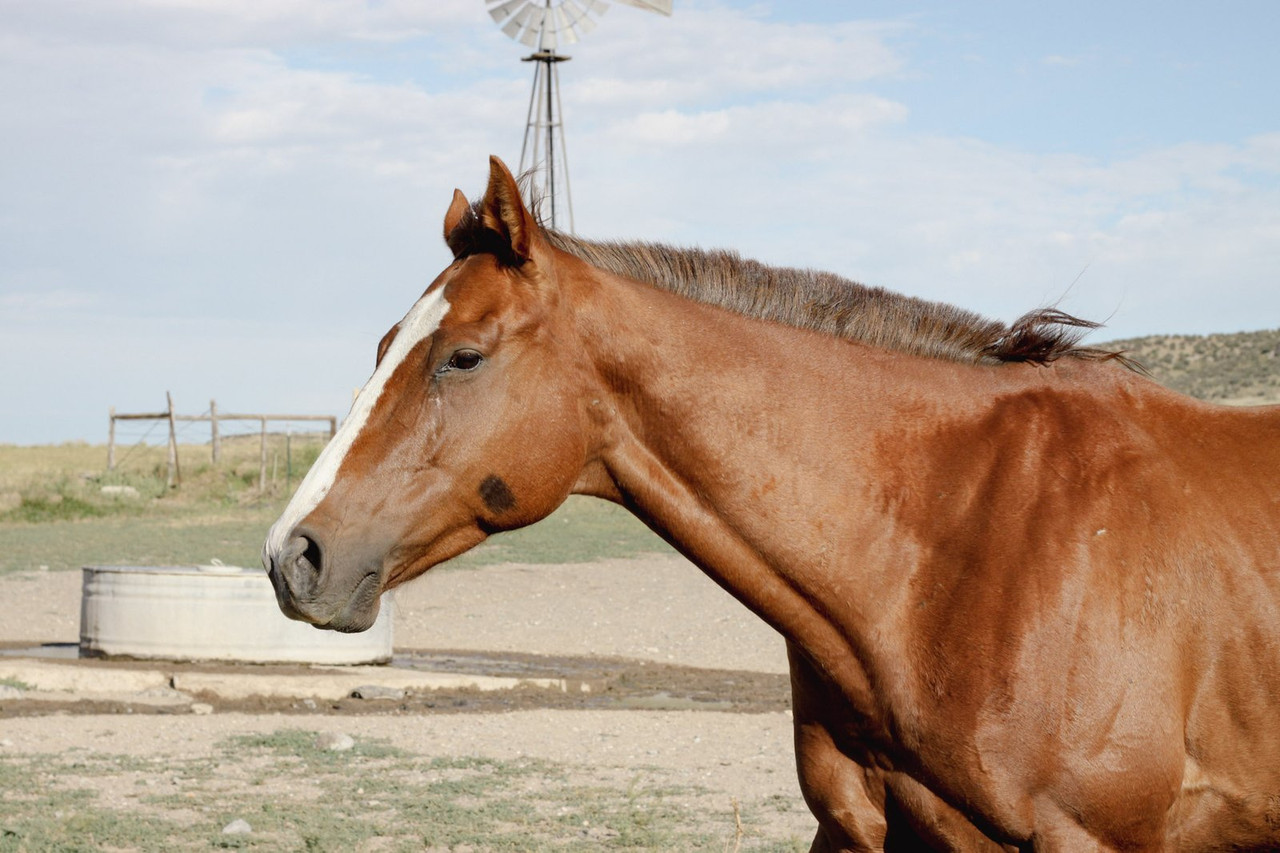
Even my fussiest thoroughbred (who doesn't eat apples) loves them.
Kate, a customer review we shared on Facebook in March 2015, about our Horse Bix
Treats that suit an off-the-track Thoroughbred
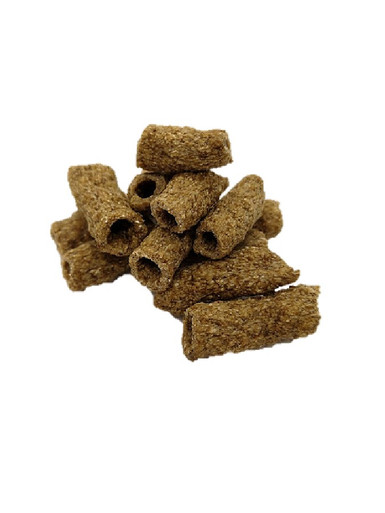
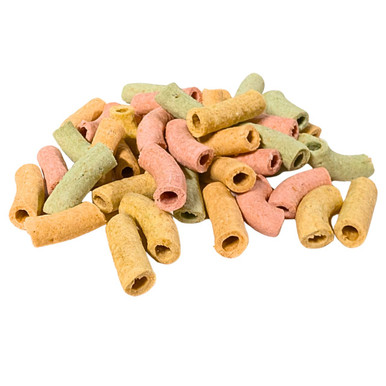

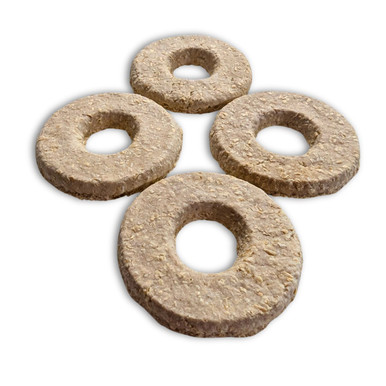
Great for picky eaters that don't like extra salt added to feed on hot days
Julia H., verified buyer, Salt O's, November 2025
Leave it on the shelf
What we would not do with an ex-racer
- Treats on an empty stomach right before work. Give hay first. The treat can wait until after the ride.
- Trying to feed weight on with treats. The energy table further down shows why that cannot work. Weight on a poor doer is a forage, teeth, worming and vet job.
- Our iced cookies as a daily habit. Carrot Cookies are 34.3 g of sugar per 100 g on our own label. A birthday, yes. A Tuesday, no.
- Calm O's for a horse still racing. They are baked with L-theanine and L-tyrosine. Anything fed to a horse in work under racing rules needs your vet's sign off first. More on that below.
● ● ●
Breed two
The Arabian
Breed record
Arabian
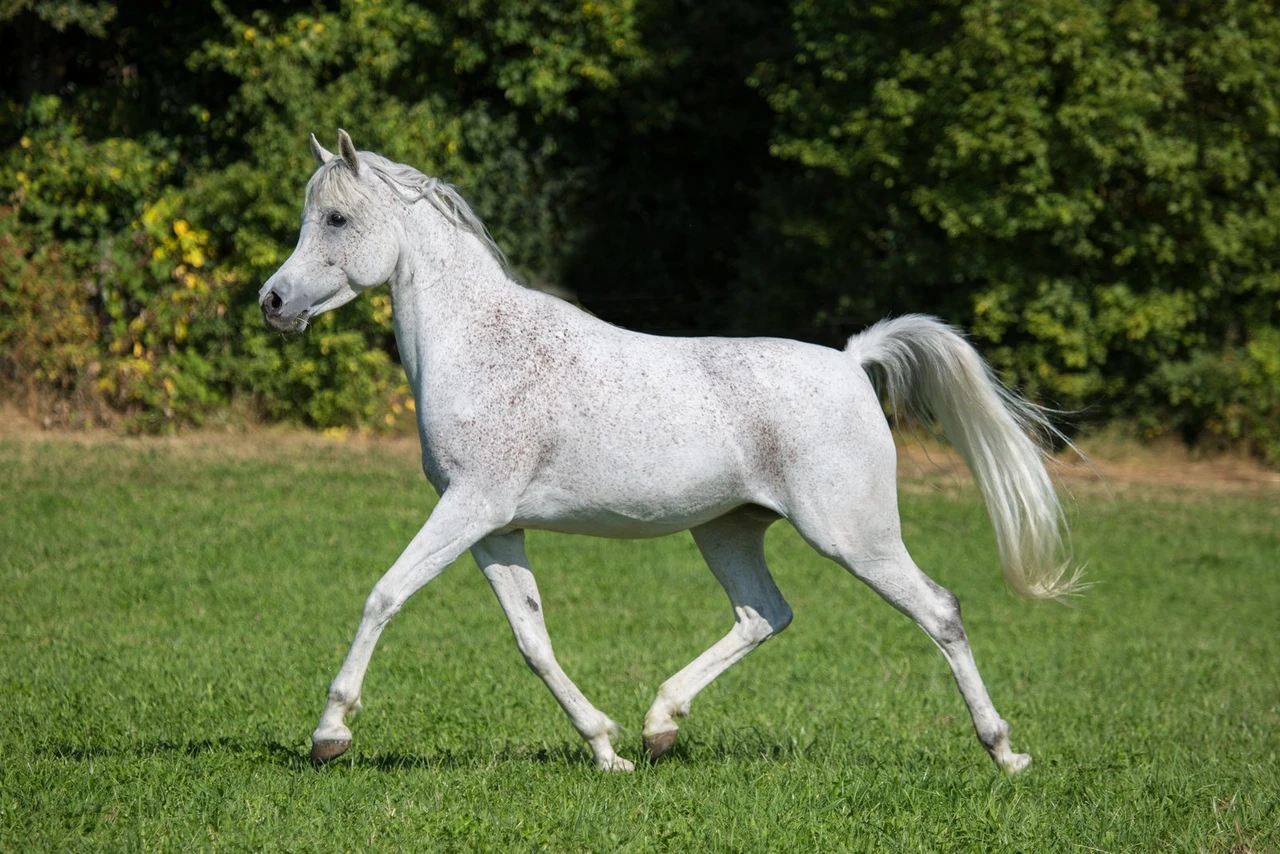
| Type | Hot blood |
| Origin | The Arabian Peninsula, bred by the Bedouin |
| Height | No standard; usually 14.1 to 15.1 hands |
| Weight | 360 to 450 kg |
| Registered in Australia by | The Arabian Horse Society of Australia |
| Feeding type | Often described as a good doer |
| Treat verdict | Low sugar as the default, and count them. |
The Arabian Horse Society of Australia describes a horse bred and nurtured by the Bedouin "to survive the harsh and challenging conditions of nomadic desert life", with the ability "to travel long distances at extreme temperatures with limited food & water". Put that horse in a green Australian paddock with a generous owner and a full treat bucket, and you can guess how the story tends to go.
Here is where we have to be careful, because the internet usually is not. You will read that Arabians are a high-risk breed for equine metabolic syndrome. The evidence does not say that. Arabian horses have been used in genetic studies of the syndrome, and one proposed risk marker was found in Arabians. Later work in the United States did not support it, and a Queensland University of Technology study concluded the same marker was unlikely to be a key gene for the condition in ponies. The 2019 ECEIM consensus on metabolic syndrome does not list the Arabian as a high-risk breed.
What is true is simpler. Horses with metabolic syndrome "are often considered 'good doers' or 'easy keepers'", in the ECEIM panel's words, and many Arabians are good doers. So feed the horse in front of you. If you can see a crest on the neck, fat pads over the tail or you cannot feel ribs, treat your Arabian the way our easy keeper pony guide suggests, and talk to your vet. If it is lean and fit and doing endurance, it is a different horse with different needs.
Treats that suit an Arabian


Leave it on the shelf
What we would skip for a good-doer Arabian
- Pony Puddings and iced cookies as everyday rewards. 19.41 g and 34.3 g of sugar per 100 g on our own labels. Save them for the tablet and the birthday.
- Treat-feeding a hot horse to settle it. Food does not fix a nervy Arabian, training does. We wrote about managing a nervous horse separately.
- Assuming it is fine because it is a hot blood. A busy temperament is no guarantee a horse burns off its feed. The ribs are the test, not the attitude.
● ● ●
Breed three
The Anglo Arab
Breed record
Anglo Arab
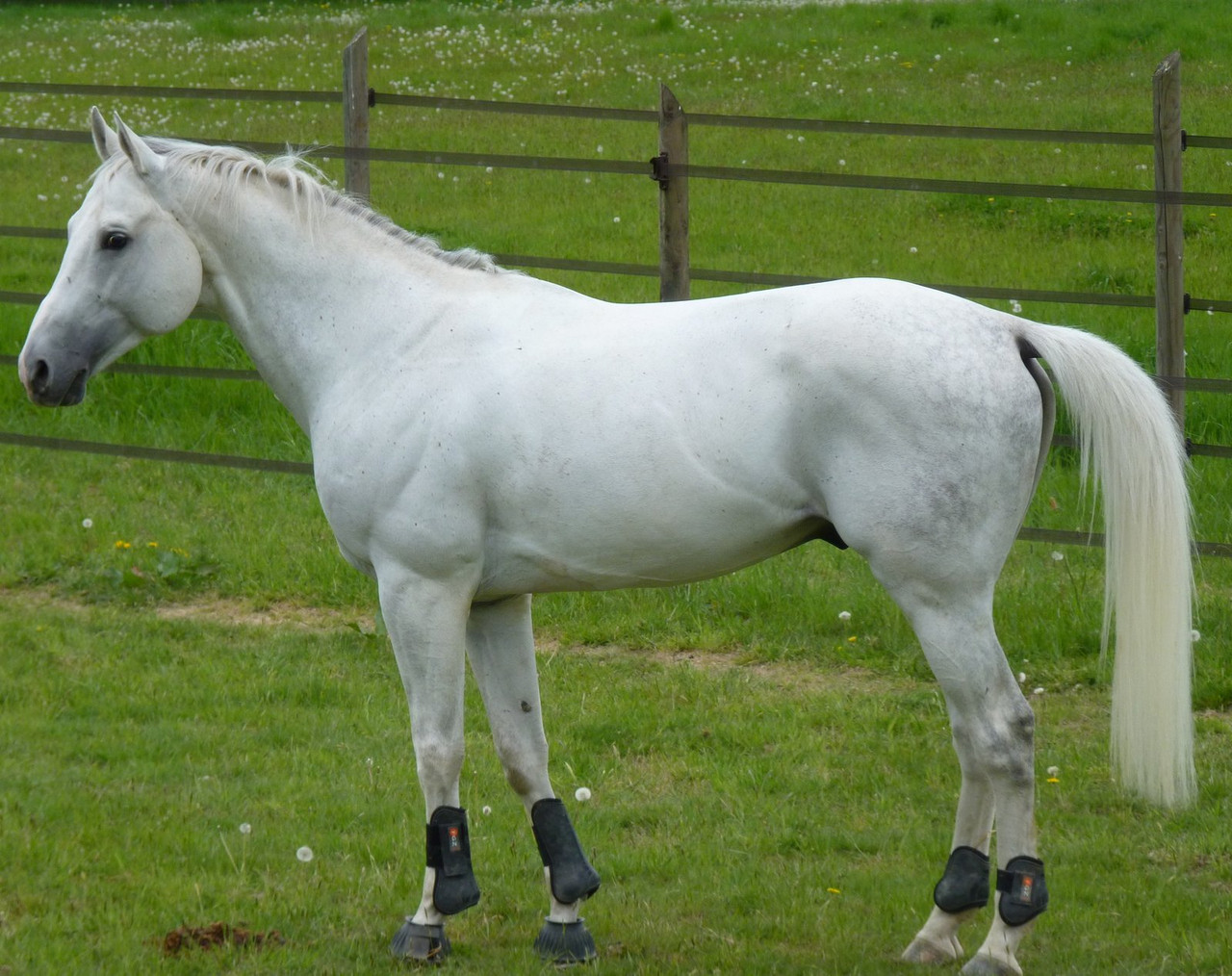
| Type | Hot blood |
| Bred from | Arabian and Thoroughbred lines only |
| Arabian blood required | Any proportion, under Australian rules |
| Registered in Australia by | The Arabian Horse Society of Australia |
| Feeding type | Whichever parent it favours |
| Treat verdict | Look at the horse, then pick from the Thoroughbred or the Arabian list. |
Search for Anglo Arab and you will quickly be told it needs at least 25 per cent Arabian blood. That figure comes from overseas breed standards, not the Australian rule. In Australia the Arabian Horse Society of Australia registers the breed, and its rule is that an Anglo Arab is derived "exclusively from horses of Arabian and Thoroughbred breeding, irrespective of the proportions thereof". There are extra conditions for horses carrying under 12.5 per cent Arabian blood, but no 25 per cent floor.
Source. Arabian Horse Society of Australia, Registry rules, ahsa.asn.au. Read on 25 September 2026.
That matters for feeding, because "any proportion" means Anglo Arabs vary enormously. One might be three quarters Thoroughbred with a racehorse's stomach and a racehorse's appetite. Another might have an Arabian's thrift in a slightly bigger frame. The breed name tells you almost nothing about which one you have.
A simple way to decide
| If your Anglo Arab... | Feed treats like a | Start with |
|---|---|---|
| Drops weight in winter, picks at feed, was raced | Thoroughbred | Molasses Horse Bix, after hay |
| Holds condition easily, has a cresty neck | Good-doer Arabian | Veggie Horse Bix |
| Is fit, lean and sweating in competition | Working hot blood | Salt O's on hot days |
| Spits out every tablet the vet prescribes | Anyone at all | Pony Puddings |
● ● ●
Read the labels with us
Our whole horse range is not built for every hot blood
We would rather show you than tell you. These are six of our horse treats, each with a published nutrition panel, lined up by sugar, straight off the product pages. Tap any of them to go to that treat.
For most off-the-track Thoroughbreds the sugar figure is not the headline, because timing and forage matter more for the stomach. For a good-doer Arabian it is the first number to look at. Either way, the bottom of that chart is for occasions. We covered the wider question in can horses eat molasses, and our sugar free horse treats are grouped in one place.
The honest arithmetic
Can a treat put weight on a poor doer?
No, and we sell treats. Here is the maths. Daily energy need comes from the US National Research Council's standard reference, the one nutritionists use. The treats are ours, from our own labels.
| Horse | Daily energy need | 10 Neigh Nuggets | 100 g Veggie Horse Bix | 250 g iced Carrot Cookies |
|---|---|---|---|---|
| 400 kg Arabian, average maintenance | 55.7 MJ | 1.0% | 2.4% | 8.4% |
| 450 kg Anglo Arab, average maintenance | 62.7 MJ | 0.9% | 2.1% | 7.5% |
| 500 kg OTTB, elevated maintenance | 75.9 MJ | 0.7% | 1.8% | 6.2% |
| 500 kg Thoroughbred in light work | 83.6 MJ | 0.6% | 1.6% | 5.6% |
Daily need from the NRC 2007 Nutrient Requirements of Horses factors (0.0303, 0.0333 and 0.0363 Mcal of digestible energy per kg of bodyweight for minimum, average and elevated maintenance; light work is average maintenance x 1.2), converted at 4.184 MJ per Mcal. Treat energy is taken from our own product labels. Label energy and digestible energy are not measured the same way, so read the percentages as scale, not as a lab result. Neigh Nuggets run over 300 to the kilogram, so ten is about 33 g.
Even a generous 100 g of Veggie Horse Bix is under 2 per cent of an ex-racer's daily energy. That is why treats cannot fix a poor doer, and also why a sensible handful will not wreck a diet. The one that starts to count is the daily cookie habit. A quarter of a kilo of iced cookies is over 8 per cent of a 400 kg Arabian's day, and about a third of that energy comes from sugar.
If your Thoroughbred will not hold weight, the list goes forage, teeth, worming, then a vet check, and the vet may suggest a scope. Team Thoroughbred's advice is to call your vet if a horse is not gaining weight and shows signs such as a dull coat, irritability, dropping feed, disinterest in eating or diarrhoea. Our guide to feeding hay covers the forage side.
The practical bit
Treats and a sharp young horse
Many ex-racers come from stables that feed on a strict routine, where hand-feeding may not have been part of the job. Some take to treats politely. Some get pushy fast. Penn State University's extension service has the clearest advice we have seen:
- Put the treat in the centre of your palm, hand wide open and flat.
- Bring your hand to the horse's mouth rather than making them reach for it.
- If a horse gets nippy, stop hand-feeding and give the treat in a bucket instead.
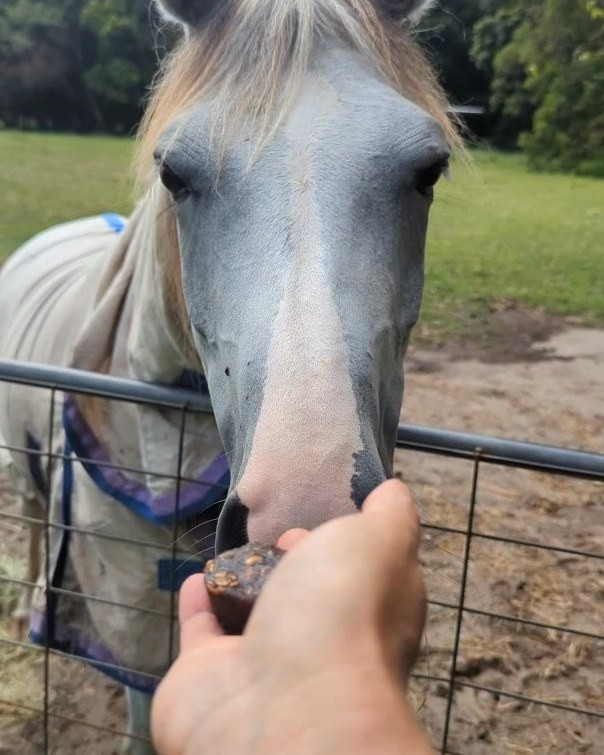
Pony Puddings are the soft one in our range, and that is really their job. If your horse is on medication from the vet, pushing the tablet into a pudding and rolling it closed is the easiest way we know to get it in. Our older post on giving oral medication has more on this.
I have finally found something that disguises the medication for my very suspicious pony.
Nicole G., verified buyer, Pony Puddings, July 2025
Two more things
Queensland summers and competition rules
A research review from the University of Queensland's Gatton campus notes that exercising horses sweat at around three times the rate of people working at a similar intensity, and that horse sweat is rich in sodium, potassium and chloride. In hot, humid conditions it evaporates poorly and can end up running off the horse, doing far less to cool it. Salt matters for a hot blood working through an Australian summer, and we wrote about salt in the diet in more detail.
A caution for ulcer-prone horses
The ECEIM consensus found an increased risk of squamous ulcers with electrolyte pastes and strong solutions given by mouth, but not when electrolytes were mixed through feed or given in lower doses in water. Salt O's are a baked treat, not a paste. If your horse has ulcers, ask your vet how they want salt given at all.
If your horse is still racing, or competing under Equestrian Australia, treats are not exempt. Under the Australian Rules of Racing the trainer is in breach if a prohibited substance turns up in a race-day sample, whatever the source, and Equestrian Australia requires every competitor to follow the FEI medication rules, with an FEI substance checker linked from its site. Check anything you feed with your vet before a start.
Baked in Australia
Treats for the horse you actually have
The whole horse range, from sugar free Veggie Horse Bix to the Molasses Horse Bix our own ex-racers approved. Rated 4.9 out of 5 across 648 verified reviews on our store.
Browse horse treatsCommon questions
Common questions
Are treats bad for a horse with ulcers?
Not in themselves. The ECEIM consensus links squamous ulcers to fasting, long gaps between forage, high starch intake and exercise. It does not look at treats at all. The practical risk is timing: a horse that has not eaten for hours, then gets worked, is the scenario the research worries about. Give treats after hay, not instead of it, and follow your vet's plan if your horse has been scoped.
Will treats help put weight on my off-the-track Thoroughbred?
No. Even 100 g of our Veggie Horse Bix is under 2 per cent of a 500 kg Thoroughbred's daily energy need. Weight on a poor doer comes from forage, the right concentrate, teeth, worming and a vet check, especially for ulcers. Treats are for training and for the relationship.
What treats are best for a fussy Thoroughbred?
Our Molasses Horse Bix were tested on our own off-the-track Thoroughbreds, who our product listing still describes as our fussy eaters. But a horse that suddenly goes off its food is a vet question before it is a treat question. The ECEIM panel notes owners often call reduced appetite fussy eating without recognising it as a possible sign of ulcers.
Are Arabians easy keepers?
They are often described as good doers, and the Arabian Horse Society of Australia describes a horse bred to travel long distances with limited food and water. That is not the same as proving the breed is at high risk of metabolic disease, which the research does not show. Judge your own Arabian by its body condition, not its breed reputation.
How much Arabian blood does an Anglo Arab need in Australia?
Under the Arabian Horse Society of Australia registry rules, an Anglo Arab is bred only from Arabian and Thoroughbred lines, irrespective of the proportions, with extra conditions for horses under 12.5 per cent Arabian blood. The 25 per cent figure often quoted online is not the Australian rule.
Can I give treats to a horse that is racing or competing?
Check first. Under the Australian Rules of Racing the trainer is in breach if a prohibited substance turns up in a race-day sample, whatever the source. Equestrian Australia follows the FEI rules and points riders to the FEI substance checker. Run any treat or supplement past your vet before a start.
The Huds and Toke Editorial Team
Horse and dog treat makers, Coolum Beach, Queensland
We bake every treat in this article ourselves, and our own ex-racers helped taste-test the horse range. We also make the iced cookies we have told you to save for birthdays, which is exactly why we would rather be straight about when they are the wrong choice. Every research figure here is linked to its source below. Product figures come from our own labels. This is general information, not veterinary advice. For your own horse, speak with your Australian vet.
References
- Begg LM, O'Sullivan CB. The prevalence and distribution of gastric ulceration in 345 racehorses. Australian Veterinary Journal, 2003;81(4):199-201. pubmed.ncbi.nlm.nih.gov
- Sykes BW, Hewetson M, Hepburn RJ, Luthersson N, Tamzali Y. European College of Equine Internal Medicine Consensus Statement: Equine Gastric Ulcer Syndrome in Adult Horses. Journal of Veterinary Internal Medicine, 2015;29(5):1288-1299. pmc.ncbi.nlm.nih.gov
- Lorenzo-Figueras M, Merritt AM. Effects of exercise on gastric volume and pH in the proximal portion of the stomach of horses. American Journal of Veterinary Research, 2002;63(11):1481-1487. pubmed.ncbi.nlm.nih.gov
- Share E, Mastellar SL, Zynda HM. The Gastrointestinal Tract of the Horse. Ohio State University Extension, fact sheet AS-1022, 2022. cfaes.osu.edu
- RSPCA Australia Knowledgebase. What should I feed my horse? kb.rspca.org.au
- Garling C. Feeding an off the track Thoroughbred. Team Thoroughbred, Racing NSW. teamthoroughbred.com.au
- Shrestha K, Gilkerson JR, Stevenson MA, Flash ML. Drivers of exit and outcomes for Thoroughbred racehorses participating in the 2017-2018 Australian racing season. PLOS ONE, 2021;16(9):e0257581. journals.plos.org
- AgriFutures Australia. Racing to retirement. agrifutures.com.au
- Racing Australia. Racing Australia Fact Book 2024/25, Breeding Figures. publishingservices.racingaustralia.horse
- Merkies K, Paraschou G, McGreevy PD. Morphometric Characteristics of the Skull in Horses and Donkeys: A Pilot Study. Animals, 2020;10(6):1002. pmc.ncbi.nlm.nih.gov
- Tozaki T, Kikuchi M, Kakoi H, Hirota KI, Nagata SI. A genome-wide association study for body weight in Japanese Thoroughbred racehorses clarifies candidate regions on chromosomes 3, 9, 15, and 18. Journal of Equine Science, 2017;28(4):127-134. pmc.ncbi.nlm.nih.gov
- Poškienė I, Gruodytė R, Autukaitė J, Juozaitienė V, Antanaitis R. Speed and Blood Parameters Differ between Arabian and Žemaitukai Horses during Endurance Racing. Animals, 2021;11(4):995. pmc.ncbi.nlm.nih.gov
- Arabian Horse Society of Australia. The Arabian Horse; Purebred Arabian; Registry. ahsa.asn.au
- Durham AE, Frank N, McGowan CM et al. ECEIM consensus statement on equine metabolic syndrome. Journal of Veterinary Internal Medicine, 2019;33(2):335-349. pmc.ncbi.nlm.nih.gov
- Cash et al. Queensland University of Technology. Domestic Animal Endocrinology, 2020;72:106439. pubmed.ncbi.nlm.nih.gov
- Roy et al. Animal Genetics, 2020;51(4):607-610. pubmed.ncbi.nlm.nih.gov
- Iowa State University Extension. Synopsis of the Digestive Anatomy and Physiology of the Horse. extension.iastate.edu
- National Research Council. Nutrient Requirements of Horses, 6th revised edition, 2007. Online calculator. webassets.nationalacademies.org
- Penn State Extension. Trick or Treat: Things to Think About When Giving Your Horse a Treat. extension.psu.edu
- Kang H, Zsoldos RR, Sole-Guitart A, Narayan E, Cawdell-Smith AJ, Gaughan JB. Heat stress in horses: a literature review. International Journal of Biometeorology, 2023;67:957-973. pmc.ncbi.nlm.nih.gov
- Racing Australia. Australian Rules of Racing (AR 240). racingaustralia.horse
- Equestrian Australia. Medication control. equestrian.org.au