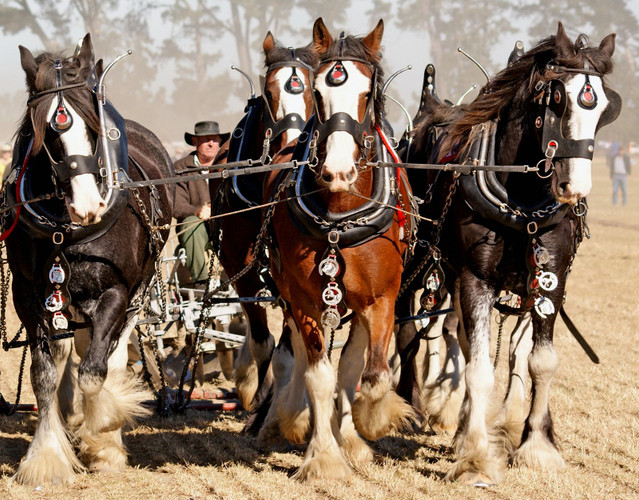
Clydesdale, Shire Horse and Percheron Treats: Feeding the Gentle Giants
Posted by The Huds and Toke Editorial Team on 5th Oct 2026
A Clydesdale, a Shire horse and a Percheron can each weigh close to a tonne, yet not one of them needs a bigger treat than a pony does. This guide puts the three side by side: how big each really gets, how to tell them apart, where they fit in Australia, and what we would and would not hand a heavy horse over the gate.
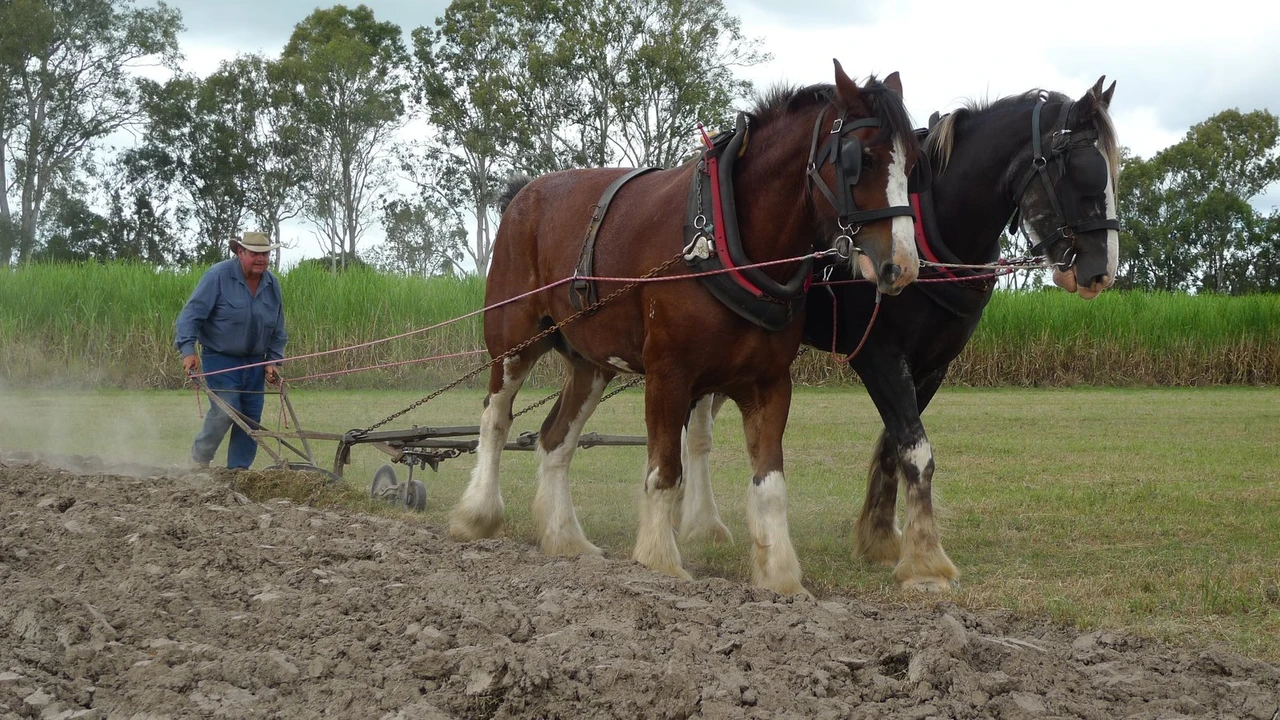
By The Huds and Toke Editorial Team, Coolum Beach, Queensland. 35 minute read. Updated October 2026.
In this guide: Side by side | Clydesdale | Shire horse | Percheron | How many treats | Treats by job | PSSM and sugar | Feather and legs | Heat and salt | Turmeric | Birthdays and Christmas | Where to see them | FAQ
We make horse treats for a living, and one assumption follows big horses everywhere: he's a Clydie cross, he's enormous, he must need them by the bucket. He does not. The size of the horse changes the handling and it changes a few health risks. It barely changes the treat.
Before we get to the feed room, it helps to know which horse you are actually looking at. Plenty of Australians call anything with hairy feet a Clydesdale. Plenty of them are. Some are not.
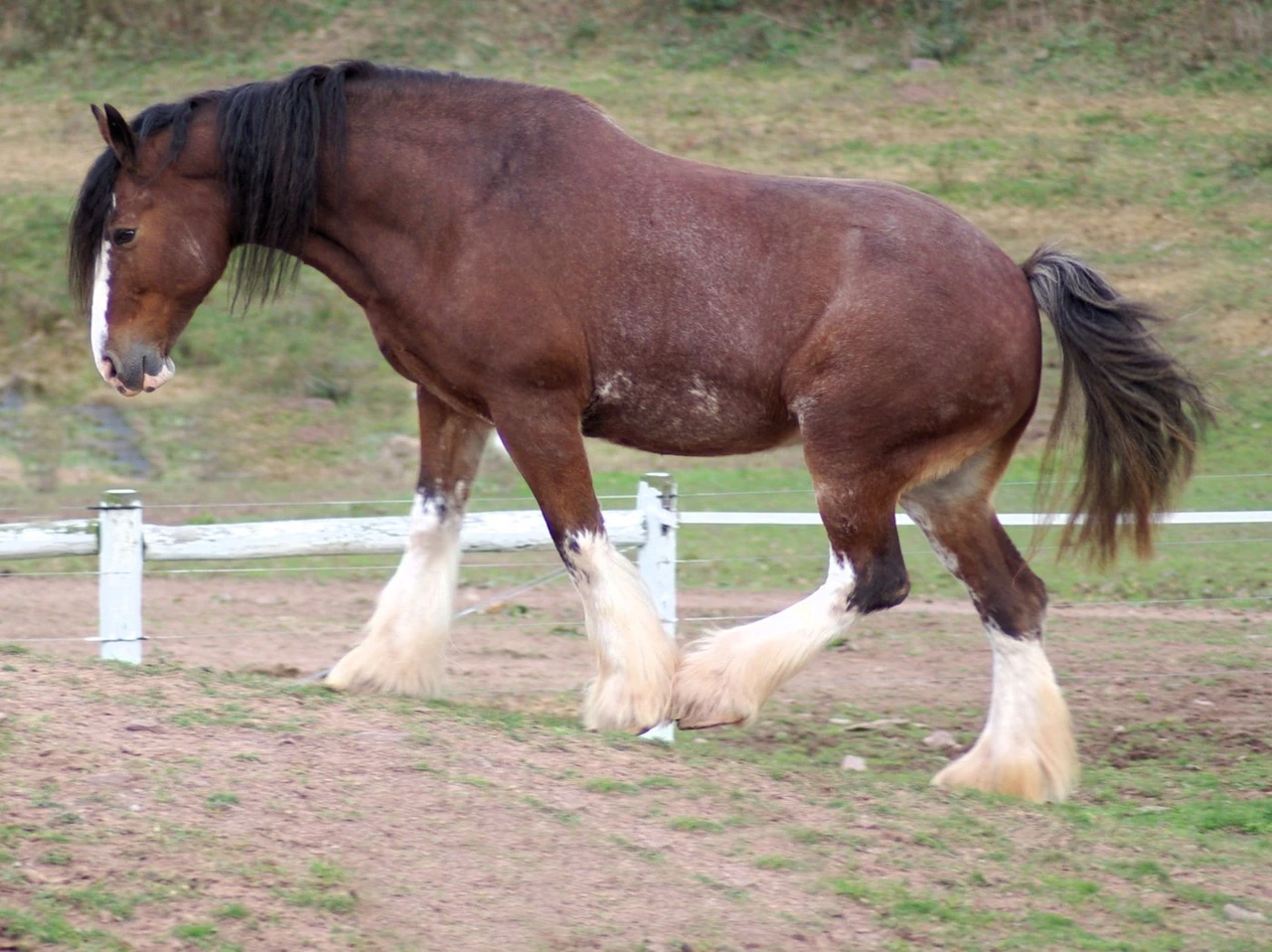
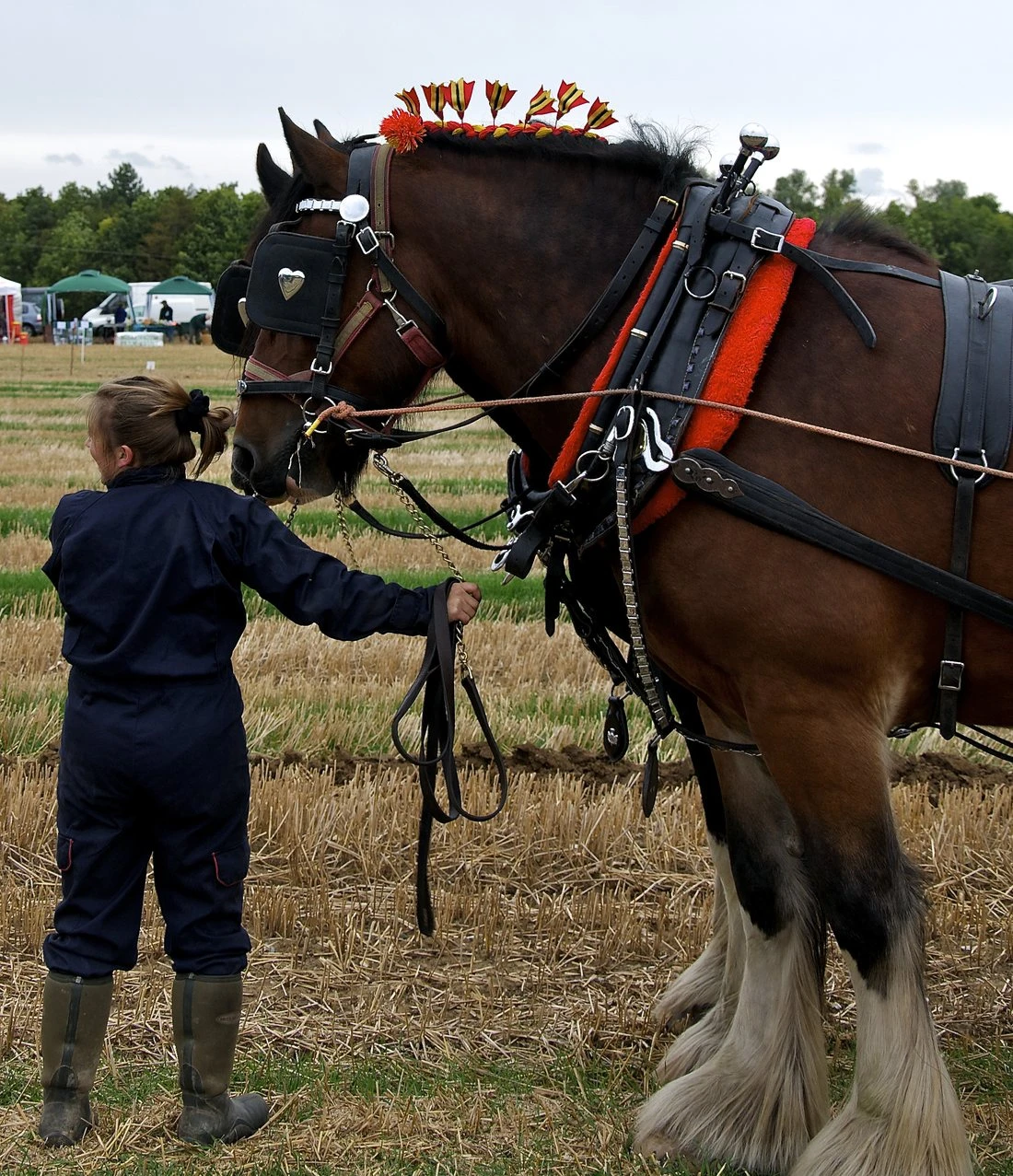
Clydesdale
Scotland's farm horse, and the heavy horse Australia knows best.
| Height | 17 to 18 hands |
| Weight | 800 to 1,000 kg |
| Look for | White blaze, white feathered legs |
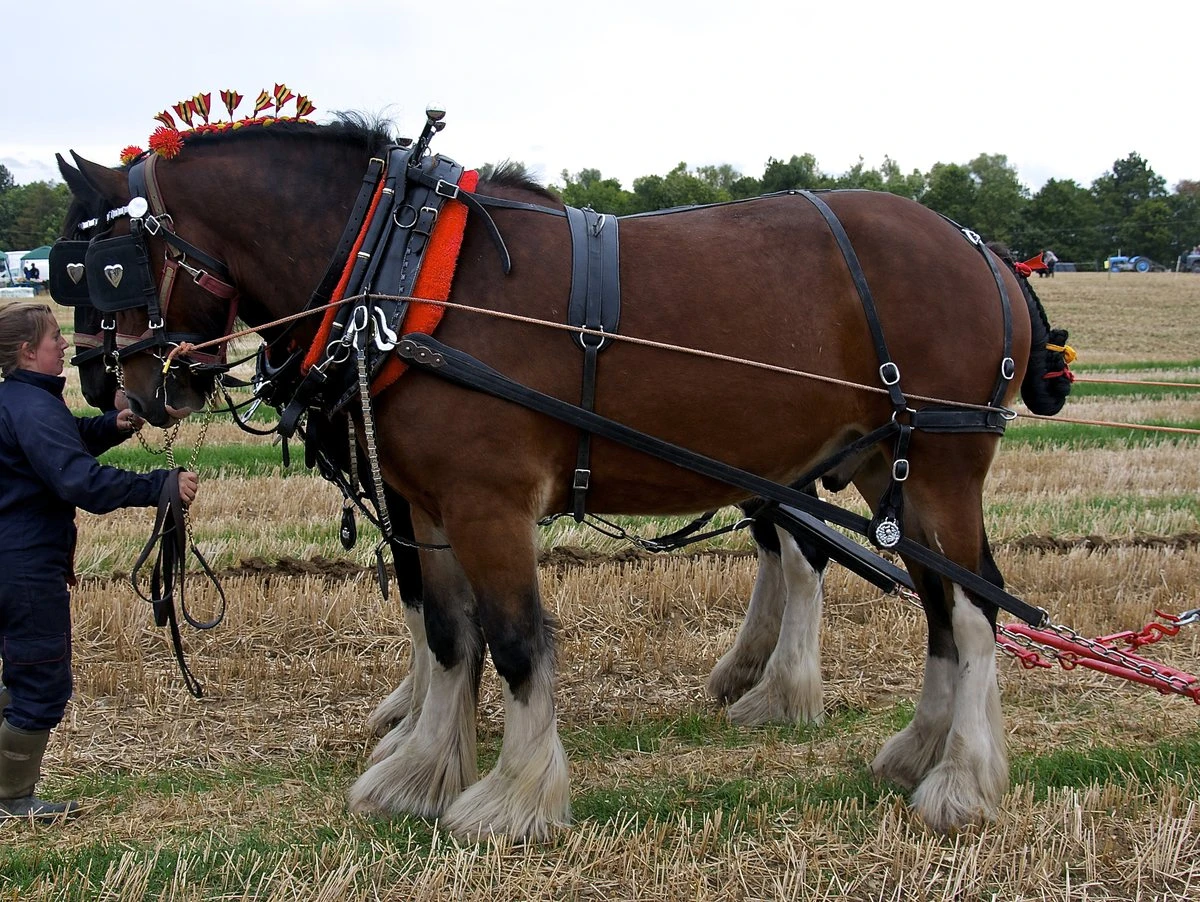
Shire horse
England's Great Horse. The largest of the three by its own breed standard, and very rare here.
| Height | Typically 18 hands |
| Weight | About 900 kg |
| Look for | Sheer height, fine silky feather |
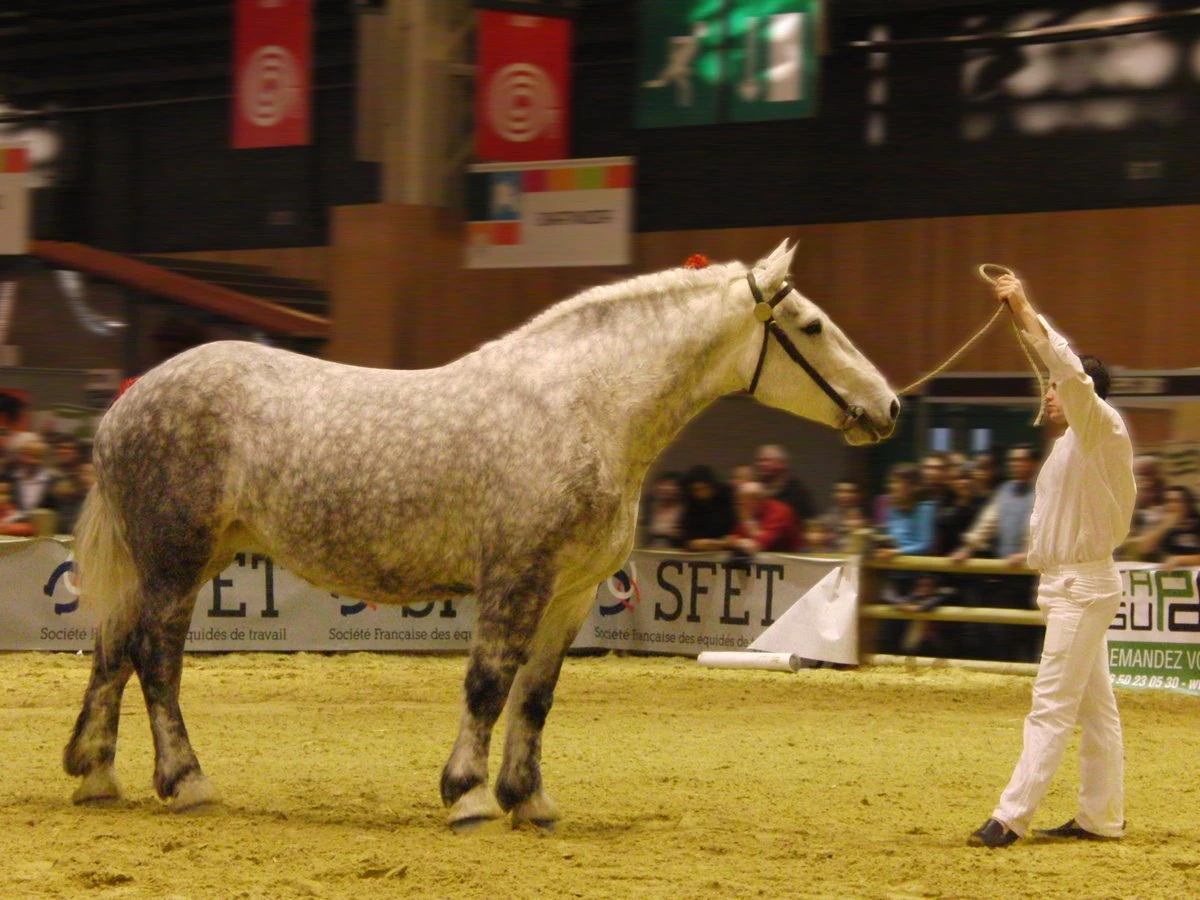
Percheron
The French grey with clean legs and Arabian blood a long way back.
| Height | Mostly 16.2 to 17.3 hands |
| Weight | About 860 kg |
| Look for | Grey or black, no feather |
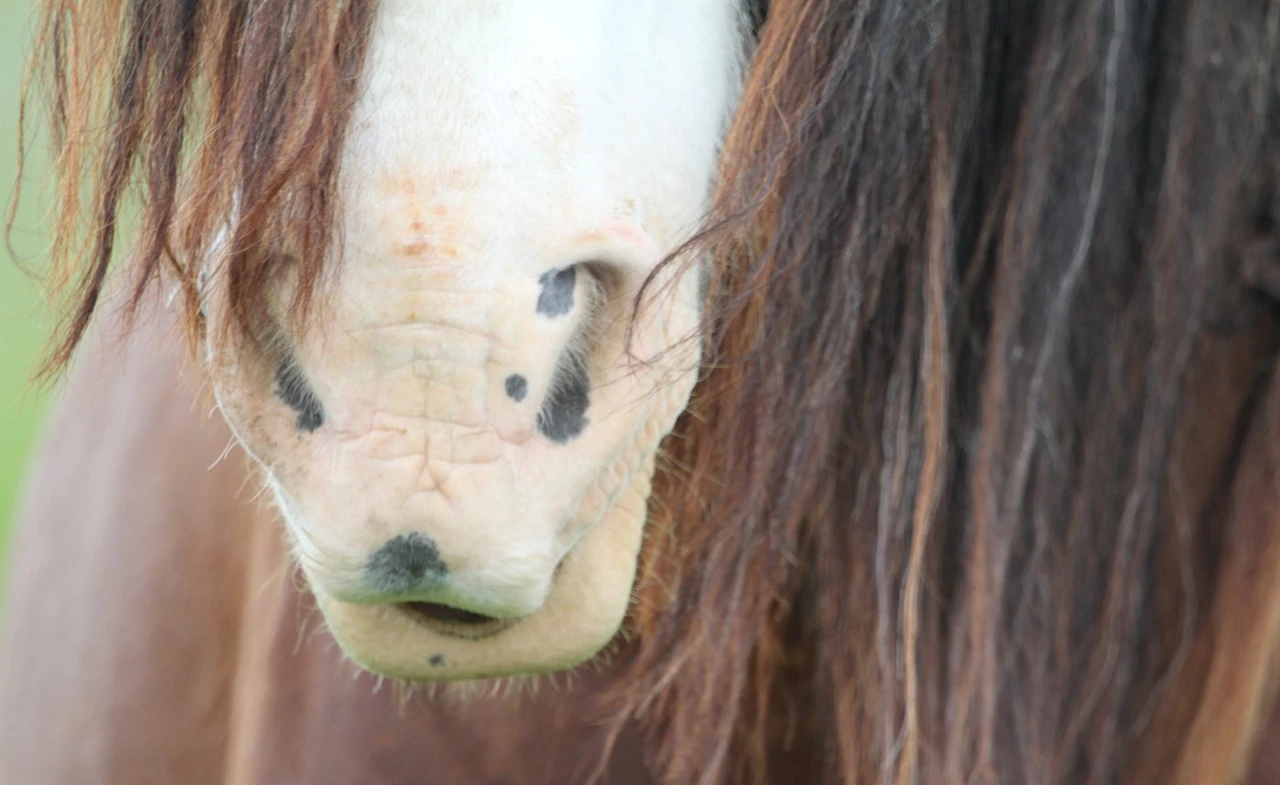
Photos, left to right: Bonnie U. Gruenberg on Wikimedia Commons, CC BY-SA 3.0; Martin Pettitt on Flickr, CC BY 2.0; Eponimm on Wikimedia Commons, CC BY-SA 3.0. All cropped.
Side by side
Clydesdale vs Shire horse vs Percheron: the comparison
Every figure in this table comes from a breed society or a rare breeds register, and the Australian one is used wherever it exists. Where the Australian standard is silent (it gives no weight or colour list for the Clydesdale and no weight for the Percheron), the figure is from an overseas society or register listed under the table.
| Clydesdale | Shire horse | Percheron | |
|---|---|---|---|
| Home | Lanarkshire, Scotland, from the mid 1700s | The English Midlands and Fens | Le Perche, north-western France |
| Height | 17 to 18 hands as a rule (UK society). The Australian standard says the height should range to over 17 hands | At least 16.2 hands, typically 18, and can exceed 19 (Australian standard) | Mares from 15.2 hands, stallions from 16 (Australian standard). Most stand 16.2 to 17.3 (US association) |
| Weight | 800 to 1,000 kg (UK Rare Breeds Survival Trust) | About 900 kg, with a mature stallion up to 1,000 kg (Australian society) | About 860 kg on average, and up to about 1,180 kg (US association, converted from pounds) |
| Colour | Bay or brown with white markings. Black, roan and chestnut turn up now and then | Black, brown, bay or grey | Grey or black, with a minimum of white |
| Legs | Long, fine, straight feather | Fine, straight, silky feather down the back of the cannon and above the foot | Clean. No feather |
| Temperament, as the society or register words it | Known for “strength, vigour, and temperament” (Rare Breeds Trust of Australia) | “Gentleness, patience and docility” | “Kind and docile” |
| Australian society | Commonwealth Clydesdale Horse Society, first meeting 1918 | Shire Horse Society Australia, started 1978 | Percheron Horse Breeders Association of Australia, 1976 |
| Status in Australia, 2025 | Watch | Endangered | Endangered |
Sources: Commonwealth Clydesdale Horse Society Australia, Clydesdale Horse Society (UK), Rare Breeds Survival Trust (UK), Clydesdale and Shire, Rare Breeds Trust of Australia, Clydesdale page, Shire Horse Society Australia, Percheron Horse Breeders Association of Australia, Percheron Horse Association of America, Rare Breeds Trust of Australia, 2025 watchlist. One hand is four inches, or 10.16 cm.
How to tell a Clydesdale, a Shire and a Percheron apart
Start at the feet and work up.
- Of these three, clean legs mean Percheron. The Australian breed standard asks for grey or black with a minimum of white, and the association describes legs “clean and free from long hair”. If the horse is a dappled grey with no feather at all, you are almost certainly looking at a Percheron or a Percheron cross.
- A white blaze and four white, feathered legs usually mean Clydesdale. The UK society calls it the exception to see a Clydesdale without a white blaze and a considerable amount of white on the feet and legs. Bay is the classic coat.
- Height and finer, sparser feather point to a Shire. Shires are black, brown, bay or grey, the Australian standard puts the typical horse at 18 hands, and the modern Shire carries less feather than it once did, with fine hair down the back of the cannon and above the foot.
And then the honest bit. A bay Shire with white socks and a big Clydesdale gelding can fool people who have owned both. When it matters, the papers settle it.
Is a Shire horse bigger than a Clydesdale?
Usually, yes, but not by much. Shire Horse Society Australia puts the typical Shire at 18 hands and about 900 kg, and says plainly that of all the heavy horses the Shire is the largest. The UK Clydesdale Horse Society says a Clydesdale will normally stand between 17 and 18 hands. On weight, the UK's Rare Breeds Survival Trust gives the Shire 850 to 1,100 kg and the Clydesdale 800 to 1,000 kg. On those published figures the typical Shire has a few centimetres and perhaps 50 to 100 kg on the typical Clydesdale. The ranges overlap heavily, and a big Clydesdale gelding will look down on a small Shire mare.
Is a Percheron bigger than a Clydesdale?
Not taller, and on the published figures about as heavy, which makes it the stockier horse. Most Percherons stand between 16.2 and 17.3 hands according to the Percheron Horse Association of America, which is a touch under the Clydesdale's 17 to 18. The same association puts the average Percheron at around 1,900 pounds (about 860 kg) and the biggest at up to 2,600 pounds (about 1,180 kg). Think of the Percheron as the shorter, wider one: deep through the body, heavily muscled, on clean legs.
What is the biggest horse breed?
The Shire, going by the record books. We could not find a source that measures breed averages against each other, so the fair way to answer is with the records. Guinness World Records lists the tallest and heaviest horse ever documented as a Shire gelding named Sampson, later renamed Mammoth, foaled in Bedfordshire in 1846. He measured 21.25 hands in 1850, which is 7 feet 2.5 inches or 2.19 m at the wither, and was later said to have weighed 1,524 kg.
The tallest living horse is a Shire as well: Hugo, from Northamptonshire, who was four when he was measured at 199 cm in December 2025. Until 2021 that record belonged to a Belgian gelding called Big Jake, at 20 hands 2.75 inches (210.19 cm), which is why older articles still name the Belgian. So no, the Clydesdale is not the biggest horse breed. It is the best known one.
What is the difference between a draught horse and a regular horse?
A draught horse (Americans spell it draft horse) was bred to pull, not to carry a rider at speed. That means more bone, more muscle and a calmer head. The Australian Percheron standard describes “a heavy cold-blood horse, possessing great muscular development and ample bone”, and cold blood is the horseman's term for the whole group: the opposite end of the scale from the hot-blooded Thoroughbred and Arabian. A Thoroughbred of 500 kg and a Shire of 900 kg are the same species with very different jobs.
Breed one
Clydesdale
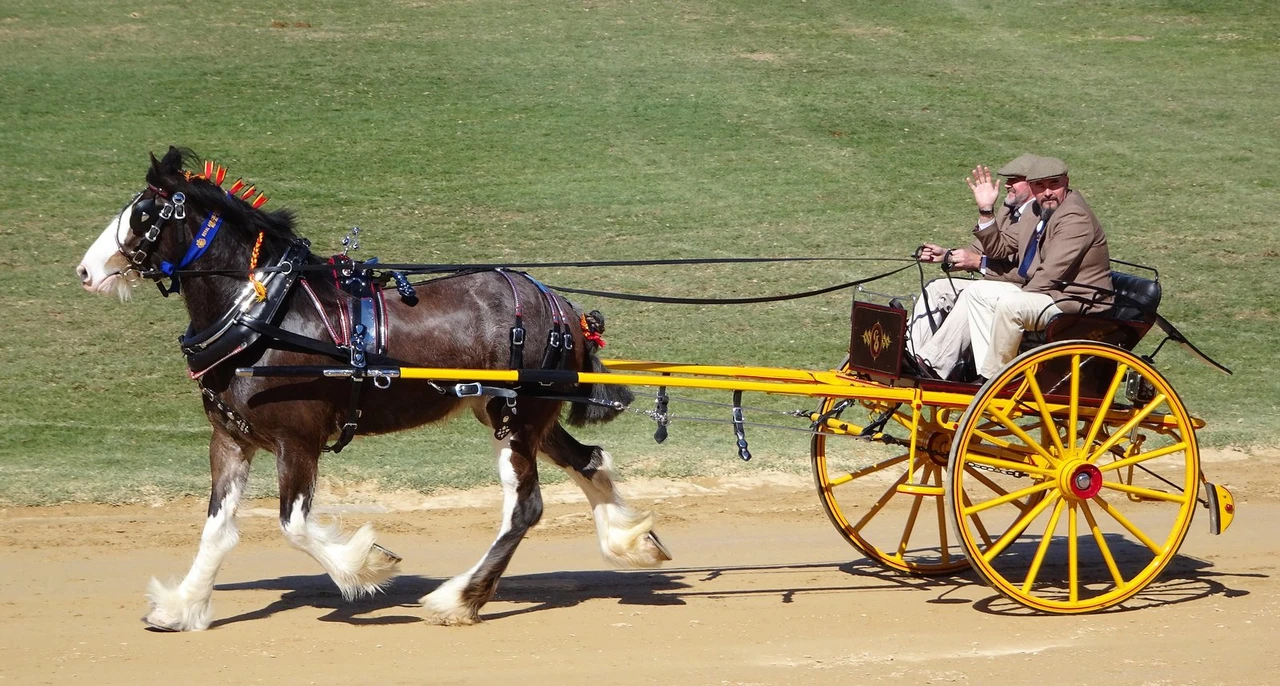
The Clydesdale comes from Lanarkshire in Scotland. Clydesdale is the old name for the district, and the breed's parent body, the UK Clydesdale Horse Society, dates the breed to the middle of the 1700s, when the native horses of Lanarkshire were graded up with Flemish stallions for more weight and substance. What came out was a tall, free-moving farm horse with a lot of white on it.
You know one when it walks away from you. The Rare Breeds Trust of Australia describes a distinctive movement, lifting each foot clear so that the sole can be seen from behind. Add the white blaze, the white stockings and the long, straight feather, and it is the horse most Australians picture when they hear the words draught horse.
Are there Clydesdales in Australia?
Yes, and they have been here a long time. The Commonwealth Clydesdale Horse Society records that heavy horse breeding took off here in the 1850s, after gold was found in New South Wales and Victoria, and that the Clydesdale came to the front in Queensland in or about 1855. The Scottish society notes that between 1850 and 1880 a large number of its best stallions were shipped out every year, mainly to Australia and New Zealand.
It is often called the horse that built a nation, which is also the title of a 2007 Australian documentary. The breed peaked here later than in Britain, in the mid 1930s. Then the tractor arrived. By the late 1950s, in the society's words, draught horse values had dropped to rock bottom. Interest has been climbing again since 1970, helped along by the brewery teams that put Clydesdales back in front of the public. The society today has about 700 members across five state branches.
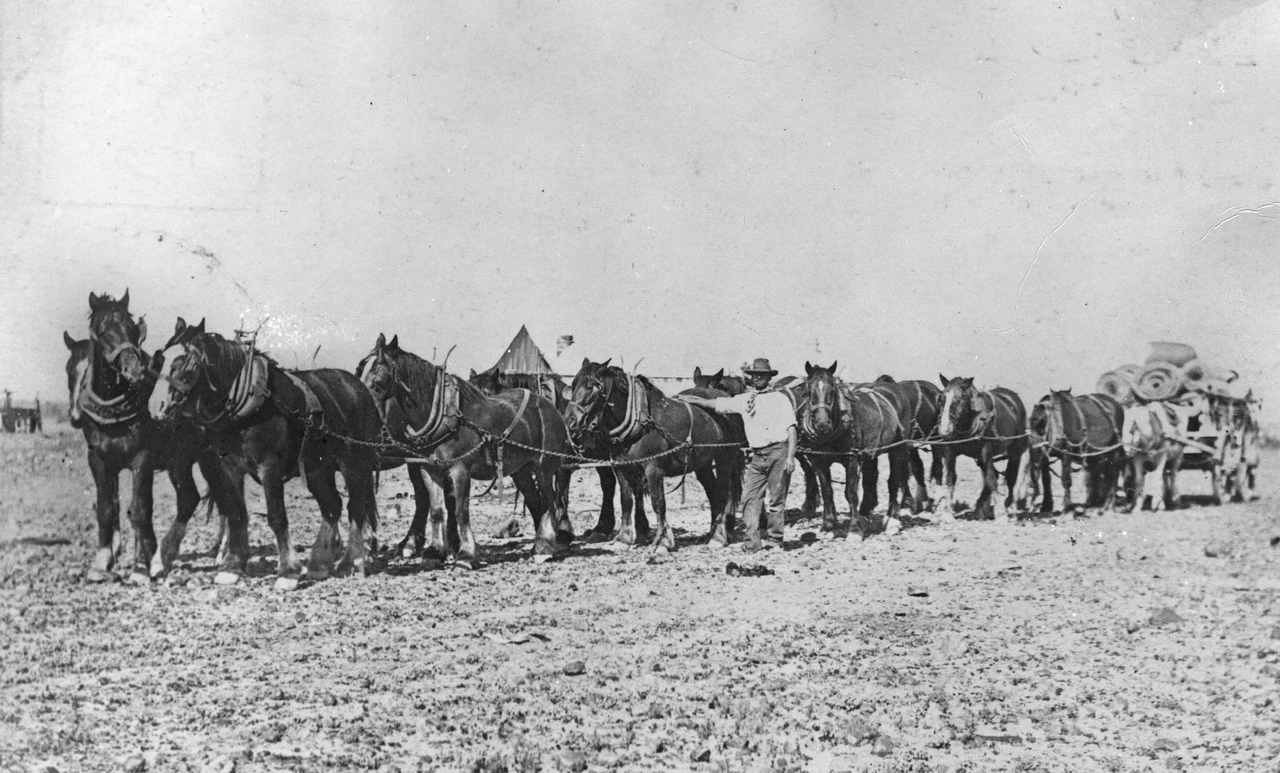
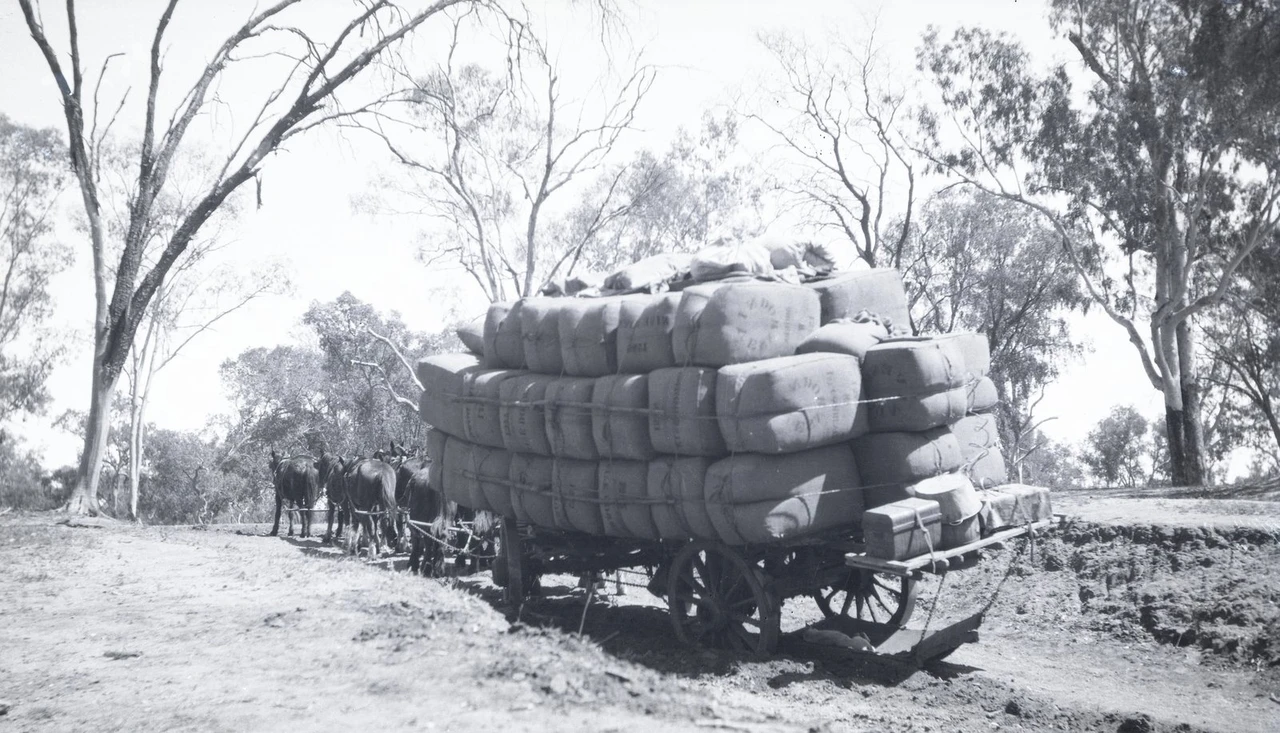
Not every horse in those old photographs was a Clydesdale. The teams that hauled wool and stores across Queensland were draught horses of every type. But by 1936, the society records, the Clydesdale had developed to the almost complete elimination of other draught breeds.
1918
The Commonwealth Clydesdale Horse Society holds its first meeting, in Melbourne, on 24 July.
CCHSA
28,415
Clydesdales registered in Australia from 1924 to August 2016 (9,347 stallions and geldings, 19,068 mares).
CCHSA, our addition
610
Clydesdale mares on the Rare Breeds Trust of Australia's count. The breed sits on its Watch list.
RBTA, 2022 and 2025
Black Clydesdales, and the other colours
Bay and brown with white markings are the common colours. The UK society adds that blacks, roans and chestnuts are occasionally seen, so a black Clydesdale is the real thing, just not the usual thing. If you are looking at a solid black heavy horse with little white and no feather, think Percheron first.
What a Clydesdale's build means at treat time
Three things, and none of them is about quantity.
- The muzzle is at your shoulder. A treat offered from a closed fist to a horse this size is a risk to fingers. Flat hand, every time, or a feed bin. More on that below.
- The feather hides the skin. Feathered legs need looking at and feeling, not just admiring. We cover greasy heel and the lymph condition CPL further down. No treat changes either one.
- He is probably not working as hard as his great-grandfather. A paddock Clydesdale in 2026 does a fraction of the work the breed was built for. That is the horse who gets fat on a full feed bin and a kind owner.
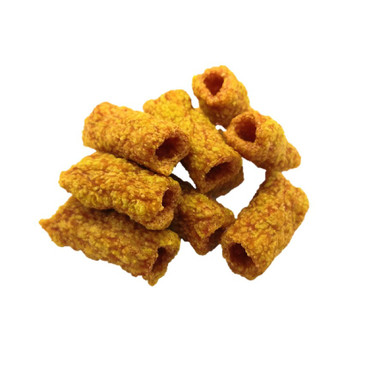 Carrot Horse BixCrunchy, 1 kg. $23.95Our crunchy Carrot Horse Bix are about 3 cm long, which is small enough to hand out one at a time and firm enough to sit in a pocket without crumbling. Wholegrain wheat, oats, rice and real carrot. For a healthy Clydesdale with no sugar restrictions, a few of these is all the reward he needs.See Carrot Horse Bix
Breed two
Shire horse
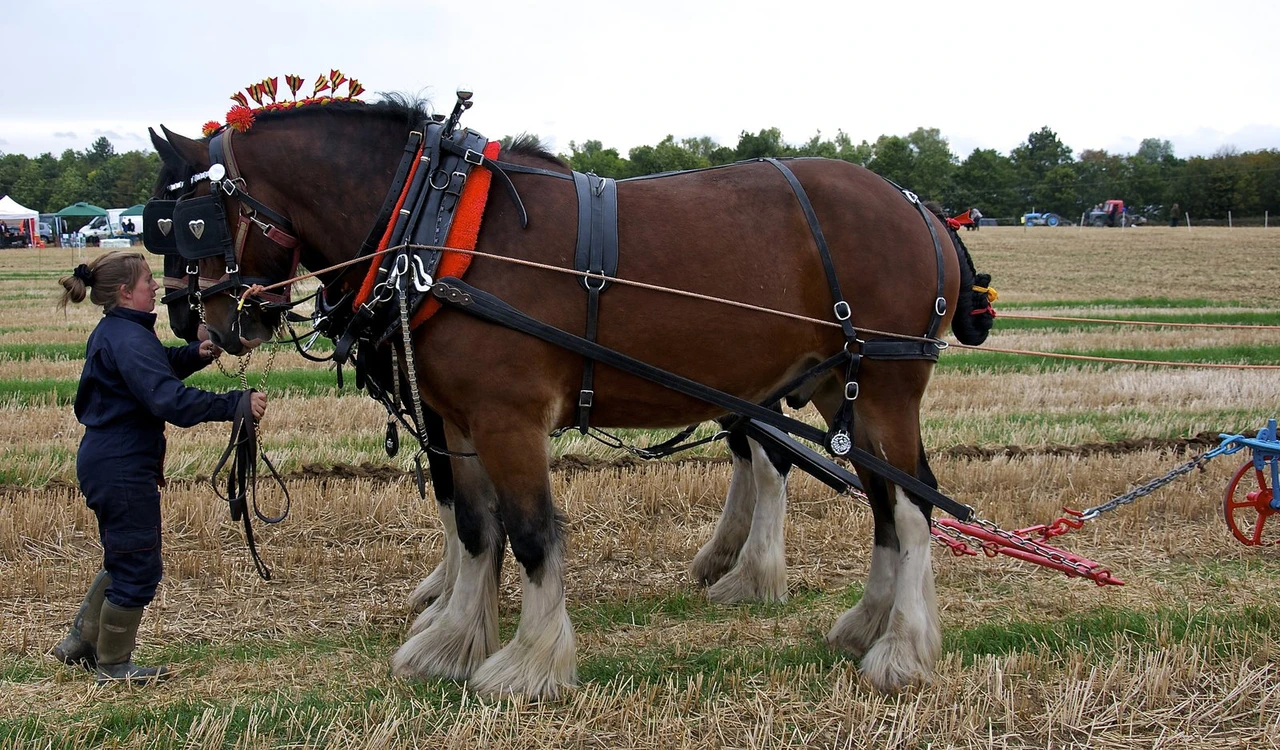
The Shire is the English one, and the old one. Shire Horse Society Australia traces it to the Great Horse of the Middle Ages, bred up in Leicestershire, Staffordshire and Derbyshire, the shires that gave it a name. The recognised foundation stallion, the Packington Blind Horse, stood near Ashby de la Zouch between 1755 and 1770. The UK society began as the English Cart Horse Society in 1878 and took the Shire name in 1884.
In its day the Shire did much of Britain's heavy haulage. The UK society cites an estimate that London's brewers alone used around 3,000 horses. Then the numbers fell off a cliff: from well over a million to a few thousand by the 1960s.
In fact, by 1958, the Stud Book contained just five colts and eleven fillies.
Shire Horse Society (UK), on how close the breed came
Shire horses in Australia
Shires came out in the 1800s and early 1900s, but never in the numbers the Clydesdale did. The Australian society is frank about why: the early Shire, being so big and heavy, struggled with the long distances and the harsh country, and by the mid 1920s registered Shires had virtually died out here.
They came back because of a handful of people. An Englishman named Grahame West started the Shire Horse Society of Australia in 1978, when there was not a single registered Shire in the country. In 1981 Helene and Gregory Scarf imported Ladbrook Edward, the first registered Shire stallion to arrive in about 60 years. The Australian Shire Horse Stud Book opened in 2007.
It is still a very rare horse. The Rare Breeds Trust of Australia's 2020 figures add up to 304 Shires (our addition), 106 of them mares of breeding age, and its 2025 watchlist lists the breed as endangered. If you own one, you are looking after something scarce.
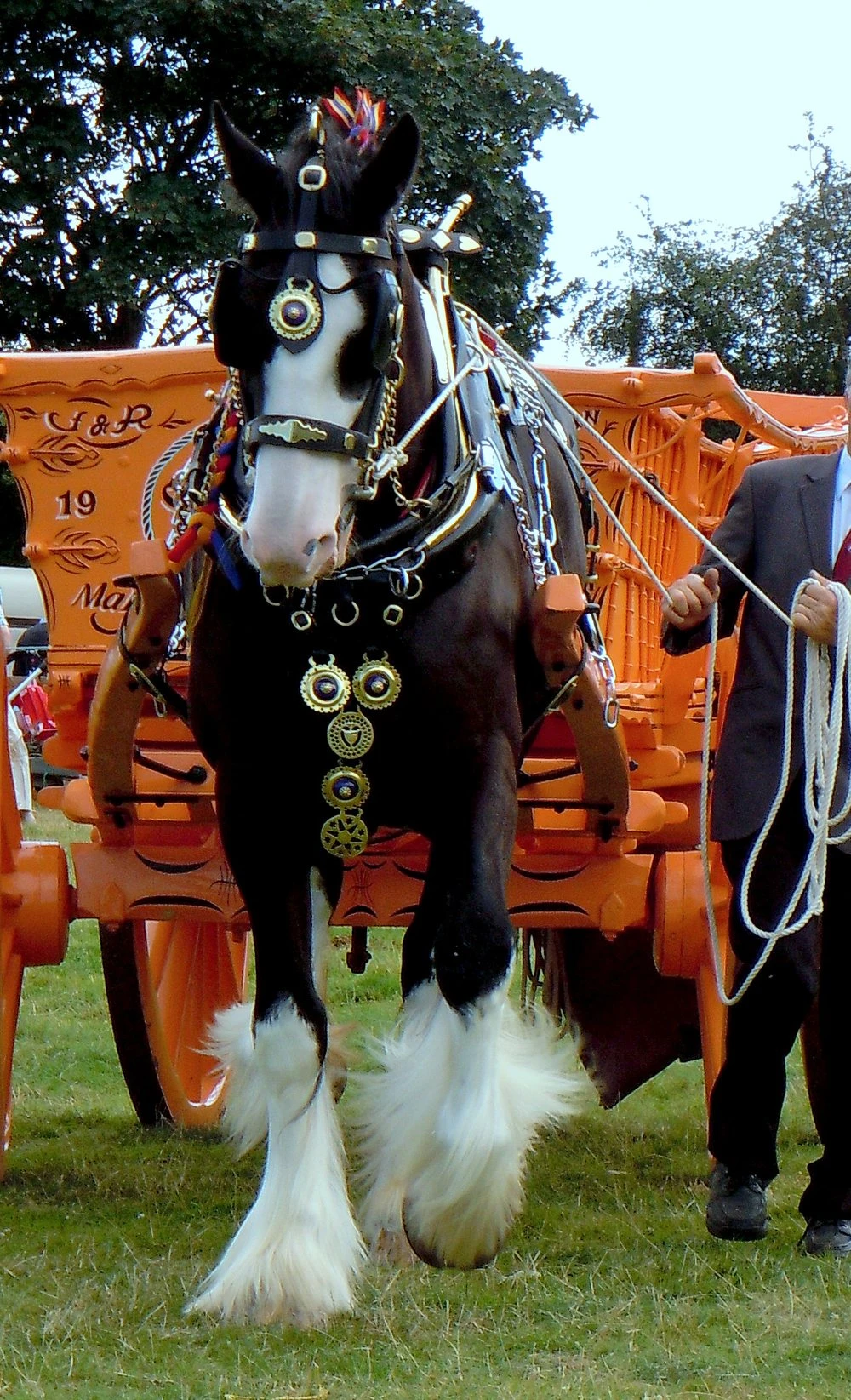
Can a person ride a Shire horse?
Yes. The UK Shire Horse Society says the breed's calm nature suits recreational riding, driving and even therapy programmes, and describes a resurgence in the Shire as a riding horse as well as a working one. The same goes for the Clydesdale: the UK Clydesdale society reports Clydesdales becoming more and more popular for riding, with ridden classes now at many shows. The practical limits are the ones you would guess. Saddles, girths and floats built for a 16 hand horse do not fit an 18 hand one, and it is a long way up.
What a Shire's build means at treat time
The Shire is the breed where gentle giant is the UK society's own phrase, and the gentleness is real. It is also the reason people over-treat them. A horse that stands quietly with its head over the gate and asks nicely is hard to refuse, and a 900 kg horse can put away a bag of anything without looking any different the next morning. One bag will not show. A daily habit on top of a full feed bin will. Decide the number before you walk to the paddock.
 Large Pony DonutsIced, 2 piece. $6.95A hand-sized iced cookie looks right next to an 18 hand horse, and it photographs well. They are a celebration cookie with sugar in the icing, so treat one as an occasion (a birthday, a show, a photo), not a daily habit.See Large Pony Donuts
Breed three
Percheron
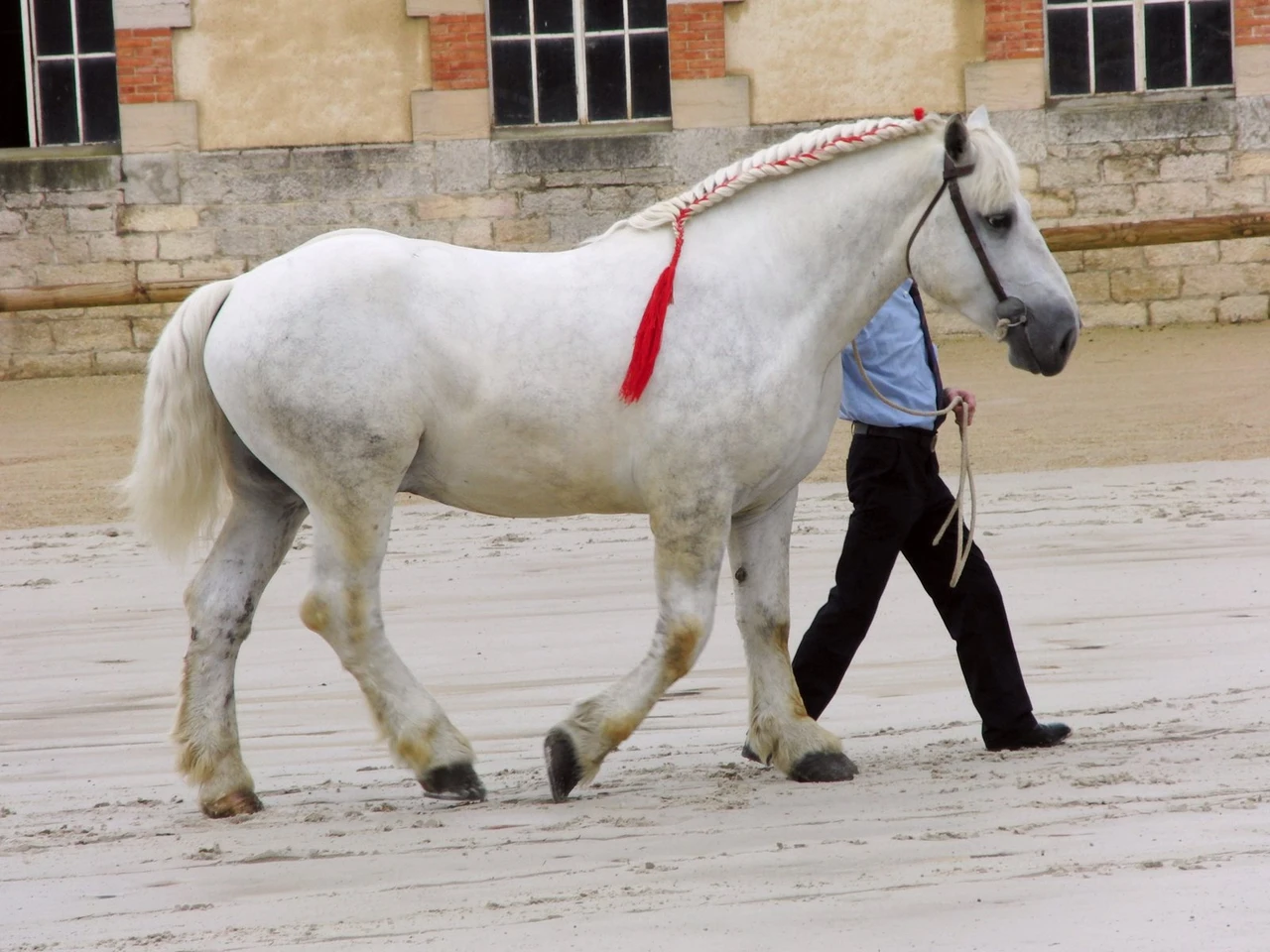
The Percheron is French, from the small district of Le Perche in the north-west. Breed tradition says it began when Arabian horses left behind after the Battle of Tours in 732 were crossed with heavy Flemish stock. That part is legend more than record. What is documented, according to the Percheron Horse Breeders Association of Australia, is that the French government stud at Le Pin added more Arabian blood in the early 1800s. The Australian standard still asks for style, activity and refinement in a heavy horse.
The colour is the giveaway. The Australian breed standard allows grey or black, with a minimum of white, and the legs are clean. A grey Percheron is not born grey. Grey horses of every breed are born fully coloured and lighten with age, and the dapple grey horse so many people picture is a stage along the way. The association's own description is “predominantly black or dappled grey”.
Percherons in Australia
The breed has a longer Australian history than most people expect. One of the earliest registered Percherons was bought in France in 1913 and landed in South Australia in 1914. The Sydney Royal held Percheron classes from 1920 to 1952, apart from the Second World War. In 1958 the Commonwealth Serum Laboratories imported two Percheron stallions, preferring, in the association's words, the Percheron temperament above any other heavy breed, and used the horses to produce antivenom for snake and spider bites.
The association elected its first office bearers in 1976. It says the breed did its Australian work in the drier country, where clean legs and hard feet were an advantage, and that Percherons are still put over station mares to add size and toughness to stock horses. The Rare Breeds Trust of Australia lists the Percheron as endangered.
What a Percheron's build means at treat time
Two things set the Percheron apart in the feed room.
First, it is an easy keeper by its own breeders' account. The Australian association calls it a “good doing” breed and says that while it is almost twice the weight of the average light horse, good condition is maintained on similar rations. That is a breeder's observation and not a feeding trial, but the point stands: a Percheron does not need feeding like two horses.
Second, in the main survey across breeds the Percheron carried the gene for a muscle condition called PSSM1 more often than any other breed tested, and sugar and starch are the part of the diet that matters for it. That gets its own section below, because it is the one place in this article where the recipe of the treat is a health decision.
 Veggie Horse BixNo added sugar, 100 g or 1 kg. from $5.50If we had to pick one of ours for a healthy Percheron, this is it. Veggie Horse Bix have no added sugar, and the nutrition panel on the product page shows 0.98 g of sugars per 100 g. They are still a grain-based biscuit (flour, oats, rice), so they are low in sugar and not low in starch. For a Percheron that has tested positive for PSSM1, or has never been tested, show your Australian vet the panel before feeding any treat, this one included.See Veggie Horse Bix
The maths
Does a bigger horse need a bigger treat?
No. A bigger horse needs more hay. The treat stays the same size, and here is the arithmetic.
| Horse | Feed a day (dry weight), at 1.5 to 2% of bodyweight | Maintenance energy a day | A whole 100 g bag of Veggie Horse Bix |
|---|---|---|---|
| Riding horse, 500 kg | 7.5 to 10 kg | 16.7 Mcal (70 MJ) | 1.9% |
| Small heavy horse, 700 kg | 10.5 to 14 kg | 21.2 Mcal (89 MJ) | 1.5% |
| Clydesdale, 800 kg | 12 to 16 kg | 24.2 Mcal (101 MJ) | 1.3% |
| Shire, 900 kg | 13.5 to 18 kg | 27.3 Mcal (114 MJ) | 1.2% |
| Big stallion, 1,000 kg | 15 to 20 kg | 30.3 Mcal (127 MJ) | 1.1% |
Energy is the maintenance figure from the US National Research Council (2007): the average rate for the 500 kg riding horse (0.0333 Mcal per kg) and the minimum rate for the heavy horses (0.0303 Mcal per kg). The NRC prints rows for 500 and 800 kg. The 700, 900 and 1,000 kg rows are our multiplication, and the megajoule figures are our conversion. Feed is Agriculture Victoria's 1.5 to 2% of bodyweight in dry feed, and it says at least 70% of that should be roughage (hay, pasture or chaff). The last column divides the 1,340 kJ on our Veggie Horse Bix panel by that daily figure. It is our arithmetic, a rough guide and not a ration.
Read the last column again. An entire bag is about one per cent of a heavy horse's day. A sensible handful is a rounding error. Treats do not make a draught horse fat by themselves, and they will not put condition on a poor one either. The hay does that, in both directions.
Notice the third column too. The Shire weighs 1.8 times what the riding horse does and needs about 1.6 times the energy. More feed in total, less per kilo. The NRC's lowest maintenance rate is the one it gives for horses with a docile, quiet temperament, and it says that figure may be the right one for an idle draught horse. The Australian Percheron association goes further, in a breeder's words and not a trial's: good condition is maintained on similar rations to a light horse.
Our guess at what does make a heavy horse fat: a quiet animal, a small workload and an owner who likes feeding it. In a British survey of 792 horses and ponies, draught types had 7.3 times the odds of being obese that Thoroughbreds did, the highest of any group in the study. The scores were reported by owners and the margin of error is wide, but the direction is not in doubt.
One caution from the NRC itself: very little feeding research has been done on draught breeds, and its figures for them are extrapolated from light horses. Use the table to get the scale right, then feed the horse in front of you, by eye and by hand over the ribs.
So how many treats can a Clydesdale have?
About the same number we would suggest for any horse. Our Horse Bix product pages say 5 to 10 in a short session suits most horses, fewer for a small pony, and more only for a large horse in hard work. A paddock Clydesdale is large. It is rarely in hard work. What should set the number is the reason you are feeding them: a reward for something done, a catch in the paddock, a goodbye at the gate. One treat does each of those jobs. Ten does not do it ten times better.
Hand-feeding a horse that weighs 900 kilograms
This is where size really does change things. We found nothing to say a heavy horse is more likely to nip than a pony. There is simply a great deal more of him, and a friendly shove from 900 kg will put an adult on the ground.
These are our own rules, not a study's.
- Flat hand, thumb tucked in, so there is nothing to mistake for the treat.
- Your space, your timing. The horse waits, head straight, and the treat arrives. If he walks into you for it, he has just been paid for pushing.
- Use a feed bin for children and visitors. A treat dropped in a bucket is still a treat.
- Nothing from the hand over a fence to someone else's horse. You do not know its diet, its teeth or its manners.
We went through the research on hand-feeding and pushy behaviour in our Pony Club guide. The short version: in the one owner survey that measured it, a UK study from 2010, hand-fed horses were more likely to lick hands and search clothing, and no more likely to nip or bite. A pocket search from 900 kg is still a problem, so the rules above matter more, not less.
Choke in horses: the real risk with a treat
If a treat is going to hurt a healthy horse, this is the most likely way. Choke in a horse is a blockage of the food pipe, not the windpipe. The UC Davis Center for Equine Health lists causes that include bolting feed, poor chewing because of dental disease, and not enough water. It notes that horses can choke on a variety of feedstuffs and treats, especially if they are prone to eating rapidly, and that treats should be portioned appropriately. UC Davis is a US vet school. We could not find an Australian page that covers choke as well.
No study we found says big horses choke less, or that they can take bigger pieces. So the same rules apply at 900 kg as at 300 kg:
- Keep pieces small enough to be chewed, not swallowed whole. Our Horse Bix are 3 cm or less. Break large cookies up.
- Watch the gulpers and the old horses. In one US study of 109 horses with choke, complications were more likely in horses over 15.
- Teeth first. Agriculture Victoria says a paddock horse needs its teeth checked at least once a year. Our piece on signs a horse needs a dentist covers what to look for.
- Know the sign. Green discharge from the nose is the most common one. Take the feed away and call your Australian vet. Do not try to clear it yourself.
The feed room
Horse treats for a heavy horse, sorted by the job they do
We have an obvious interest here, so take this as a maker describing its own shelf. Everything below was available to order on our site on 5 October 2026, and every figure we quote comes from the product's own page.
Pocket treats: the Horse Bix range
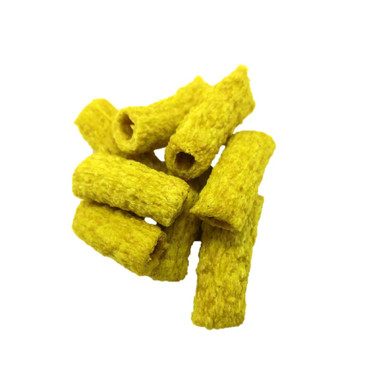
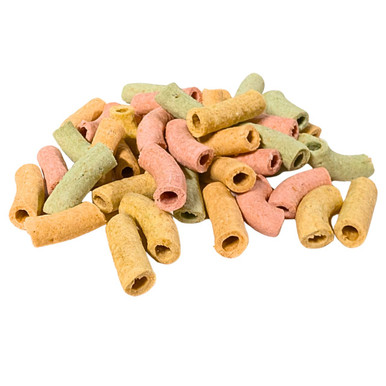
Horse Bix are our small crunchy biscuits. The Apple, Carrot, Molasses and Turmeric ones are about 3 cm long, and their 100 g bags hold roughly 20 to 25 pieces, which makes each one 4 to 5 grams. Veggie Horse Bix are a little smaller, from about 1.5 to 3 cm. That is the right scale for rewarding a horse of any size: small enough to give one at a time, and dry enough to live in a jacket pocket.
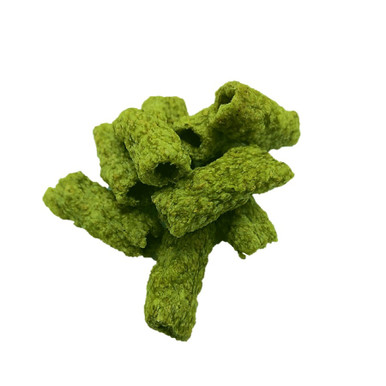
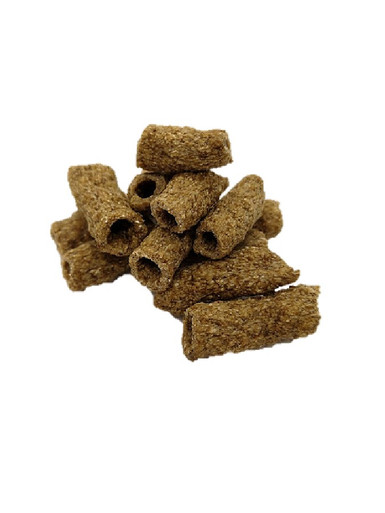
I just shove a handful in my pocket, and away we go.
Jenni S., verified buyer, on Veggie Horse Bix, November 2025
Veggie Horse Bix are the ones with a full nutrition panel on the product page. That makes them the easy choice for a horse on a vet-managed diet: you can show your Australian vet the numbers.
Soft treats for old teeth and hidden tablets
Old horses wear their teeth down, and a rock-hard cookie is no kindness to a horse with more gum than tooth. Pony Puddings are soft enough to break with your fingers, which also makes them useful for hiding a tablet.
 Pony PuddingsSoft, 1 kg. $31.95Soft, made with oats, flaxseed and molasses, and 40 or more to a kilo bag, so each pudding is 25 g or less. The panel shows 19.41 g of sugars per 100 g, which puts it at the sweeter end of our range. One at a time, and not for a horse on a low sugar diet.See Pony Puddings
Soft enough for the old timer who would eat the full bag if you let him.
Melanie S., verified buyer, on Pony Puddings, November 2024


Muscle and sugar
PSSM in horses: the one place a draught horse's treat really matters
PSSM stands for polysaccharide storage myopathy. In the type 1 form, a single gene makes the horse's muscles store too much sugar as glycogen, and the result can be repeated bouts of tying up, the horseman's term for painful muscle cramping. UC Davis says the gene is dominant, so one copy from one parent is enough, and that it is found most often in some draught breeds.
Here is where the three breeds in this article part company. The main breed survey, by McCue and colleagues at the University of Minnesota in 2010, found the gene in 11 breeds and listed them in order of how common it was. Shires came first, with the least. Percherons came last, with the most.
62.4%
The top of the range across the breeds that carried the gene. Percherons were the breed at that end of the list.
McCue et al. 2010
0.5%
The bottom of the range. Shires were the breed at that end.
McCue et al. 2010
Not found
In the Clydesdales sampled. The authors add that failing to find it does not guarantee it is absent.
McCue et al. 2010
These are North American and European horses. We could not find any Australian figures, so treat the numbers as a guide to which breed to think about, not as odds for your own horse. And ignore the line you will read online that all draught horses have PSSM. For Clydesdales and Shires, this survey points the other way.
Why would a muscle disease be so common in a working breed? The researchers think it used to be an advantage. UC Davis describes an old mutation that may have suited horses with daily work and limited sugar in the feed. On that theory, a horse that worked all day on plain rations did well with it. The same horse standing in a paddock on rich feed does not.
What the vet schools say to feed a horse with PSSM1
There is no cure, but the UC Davis Center for Equine Health says most affected horses can be managed through diet and exercise. Its advice is to keep sugar and starch (vets call the pair NSC) under 12% of the diet and to exercise the horse daily. The University of Minnesota, where the gene was found, recommends hay under 10% NSC and says to avoid grains, sweet feeds and other feedstuffs high in sugar. Both are US universities. Of horses whose owners stick to both the diet and the exercise, UC Davis reports that 90% have few or no episodes of tying up.
Neither source mentions treats. That part is our reasoning, and it is not complicated: a molasses biscuit or an iced cookie is a small serve of exactly what those vets say to avoid. If you own a Percheron or a Percheron cross that has never been tested, the gene can be checked with a simple genetic test. Ask your Australian vet.
Is PSSM the same as shivers?
No. Shivers in horses is a separate movement disorder, and a fairly rare one. A 2015 US-led study found affected horses were taller, about 173 cm at the wither against 163 cm, and more often male, with no trigger identified. In an earlier US study of 103 Belgian draught horses, 36% had PSSM and 18% had shivers, and the two turned out to be unrelated. No study we found links shivers to feed.
One more thing heavy horses are often accused of: being prone to insulin problems and laminitis, the way ponies are. The European consensus statement on equine metabolic syndrome puts cold-blooded horses in the lower risk group for that kind of laminitis. Fat, yes. A classic metabolic breed, no. If laminitis is your worry, our guide to treats for laminitic horses is the place to start.
Where our treats sit for sugar
Here are six of our horse treats in order of sugar, lowest first, using the figures from each product's nutrition panel.
Sugars per 100 g, from our own nutrition panels
Figures from the Huds and Toke product pages, October 2026.
Sugar is only half of it. Every treat here is baked from grain, so each one also carries starch. Veggie Horse Bix, for example, show 58.6 g of total carbohydrate per 100 g, of which 0.98 g is sugars.
Leave it on the shelf
If your horse has diagnosed PSSM1, or your Australian vet has it on a low sugar and starch diet
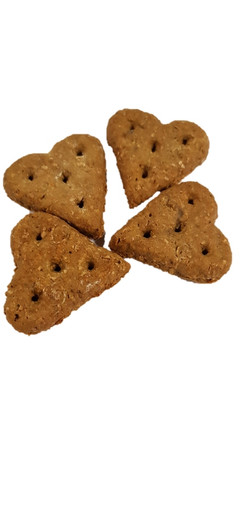
- Molasses Horse Bix, Little Love Heart Cookies, Pony Puddings and Neigh Nuggets. All four are made with molasses.
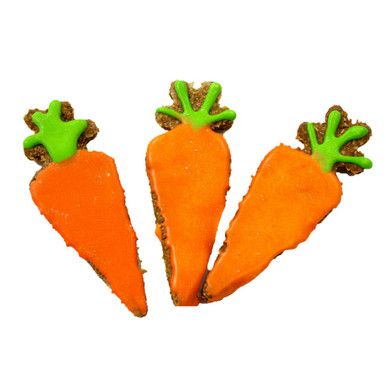
- Every iced cookie and donut, birthday and Christmas ranges included. The icing is sugar.
- Any treat at all, ours included, until your Australian vet has seen the label. Low in sugar is not the same as low in starch, and a grain-based biscuit is still grain.
Legs
Feather, greasy heel and CPL: what a treat can and cannot do
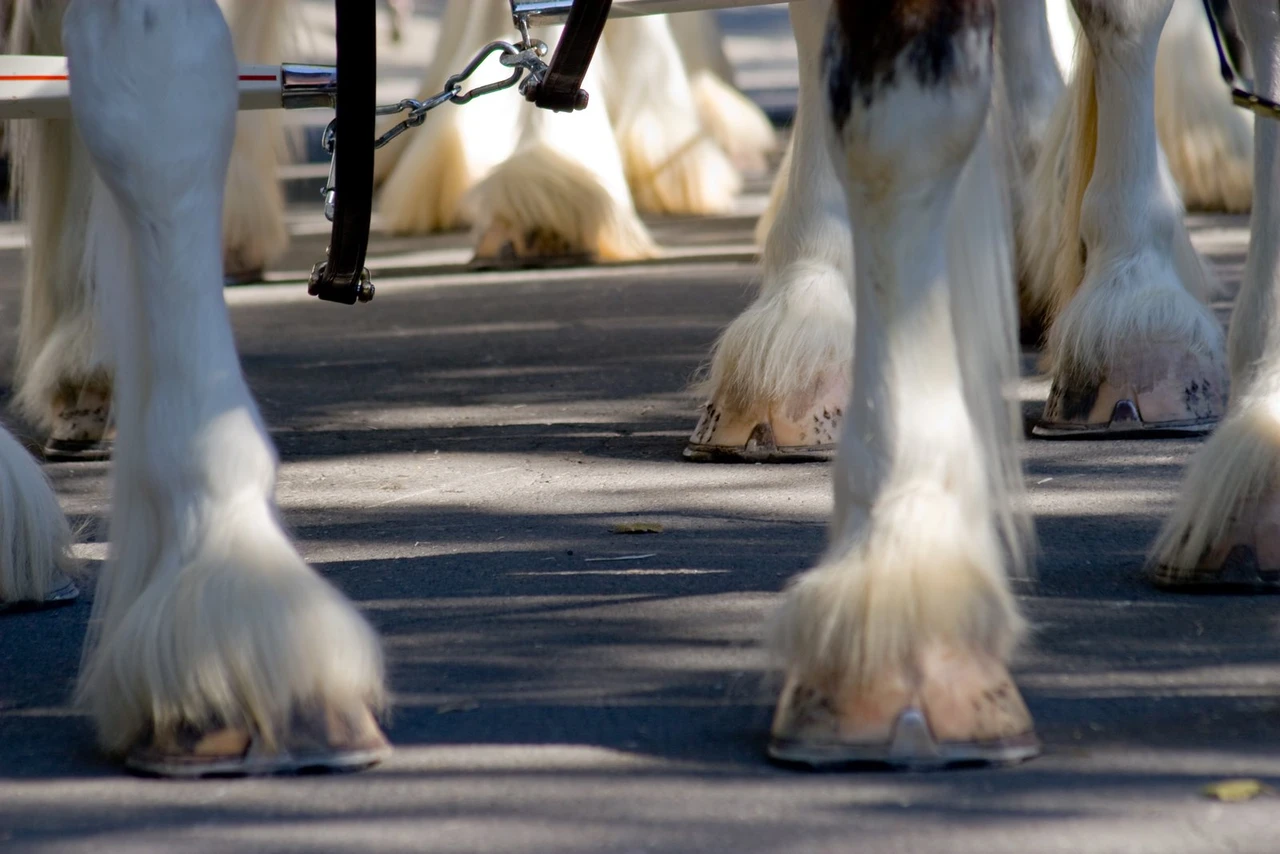
Long, silky feather is the glory of a Clydesdale or a Shire. It is also a warm, damp place for trouble to start, and two different problems get confused with each other.
Greasy heel in horses
Greasy heel, mud fever and scratches are all names for pastern dermatitis: inflamed, sore skin on the lower legs. The University of Melbourne's Australian Veterinary Prescribing Guidelines say the severe form is most commonly seen in cob and draught type horses, and list the risk factors as feathered limbs, chronic wetting of the skin, unhygienic conditions and, in the heavy breeds, a mite called Chorioptes bovis, better known as the feather mite.
Feed is not on that list. UC Davis does not list it either. Greasy heel is a skin and moisture problem, not a feed problem, and no treat prevents it. The guideline's management is about keeping the skin dry and clean, and it notes that vets will often want the feather clipped so the skin can be treated and checked.
CPL, the one to know about
Chronic progressive lymphoedema is more serious. UC Davis describes a build-up of lymph fluid in the lower legs that causes progressive swelling, skin folds, nodules and ulcers. It starts early, gets worse through the horse's life, and there is no permanent treatment. It has been described in Shires, Clydesdales and Belgians, and in Percherons too, so clean legs are no guarantee. Under heavy feather, the early stages are easy to miss.
Is there a feed link? An observed one, and it needs careful wording. A field study of 493 Rhenish German draught horses found that horses kept on pasture with clean bedding scored better, and that feeding concentrates and hay silage through winter went with worse scores. A 2023 review from Ghent University recommends keeping concentrates modest for that reason, while admitting the mechanism is not fully understood. That is an association in German and Belgian breeds. We found no study of the feed link in Clydesdales, Shires or Percherons, and none of treats.
So here is the honest position of a company that sells treats. They do not treat CPL. They do not prevent greasy heel. What a treat can do is make the real job easier. A horse that gets a biscuit for standing quietly while you part the feather, feel the skin and dry his heels is a horse whose legs get checked more often. That is the whole of the claim. Our tips for keeping a horse calm for the farrier work for leg checks as well.
Salt and water
Working days: harness, shows and the Australian heat
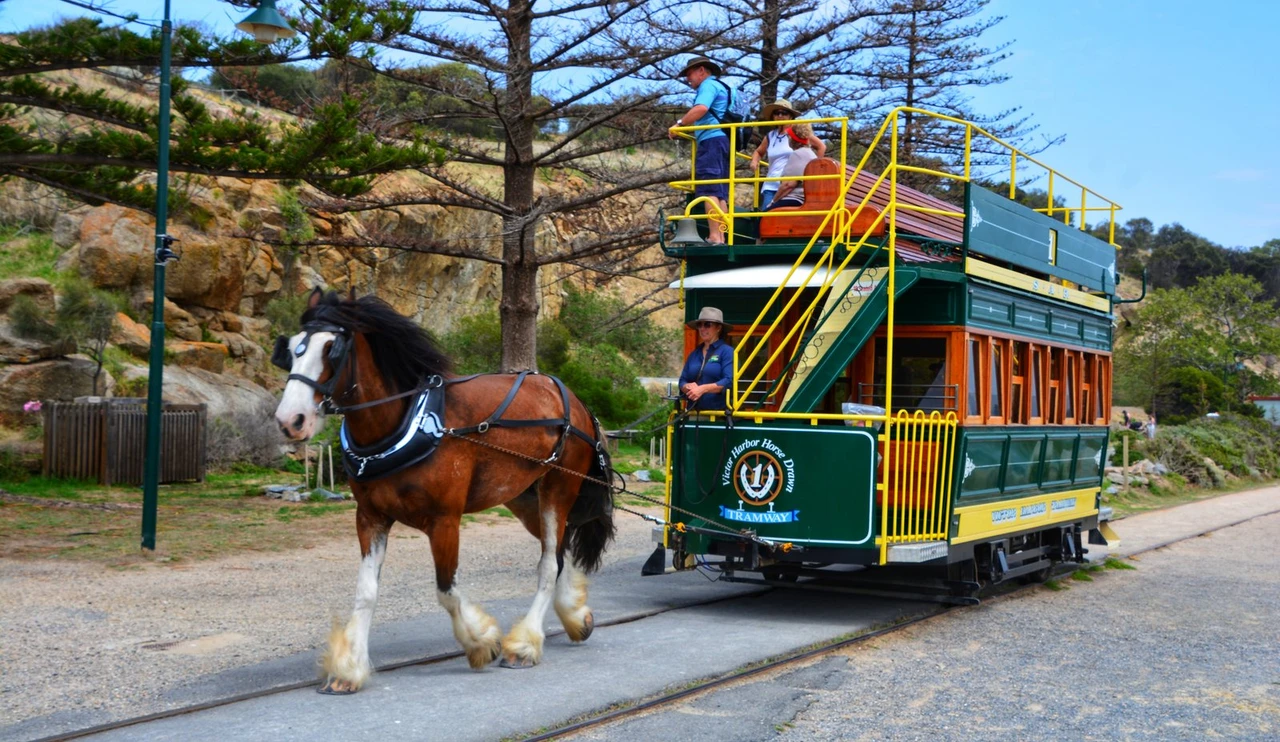
A team in harness at a January show is doing real work in real heat, and there is a lot of horse to cool. Two things scale with bodyweight far more than treats do: water and salt.
Water. The NRC (the US research council behind the energy table above) puts maintenance water at about 5 litres per 100 kg of bodyweight a day. For an 800 kg Clydesdale that is 40 litres, and for a 900 kg Shire, 45, before the weather or any work is counted. Agriculture Victoria says a horse's needs can double in hot weather or with exercise. Put the two together and a heavy horse working on a hot day can get through 80 litres or more. That is our arithmetic from the two sources. Agriculture Victoria also says buckets are not suitable as a permanent water supply, because they can be tipped over. At 80 litres a day they would not keep up either.
Salt. The NRC's maintenance figure for sodium is 0.02 g per kg of bodyweight a day. For an 800 kg horse that is 16 g of sodium, or roughly 40 g of plain salt, at rest in mild weather. Sweat adds to it quickly. The NRC says free access to salt is the minimum in hot weather, Agriculture Victoria says to provide a salt lick in the paddock, and its extreme heat advice notes that electrolytes can be added to feed to replace salts lost in sweat.
Where does a treat fit? At the edge. Per 100 g, our Salt O's carry about 9 g of sodium, a bit over half of that 16 g resting figure, and nobody feeds 100 g of them. A few rings are a top-up for a horse that will not take salt in its feed. More in our pieces on salt in your horse's diet and beating the summer heat.
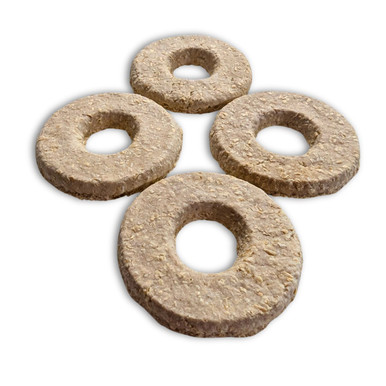 Salt O'sSalted, 20 piece. $19.50A baked ring about 5 cm across made with whole wheat flour, salt, apple and fenugreek. Our panel shows 9,190 mg of sodium per 100 g, so each one is a small top-up of salt in a form a fussy horse will take. It sits beside a salt block and clean water. It does not replace either.See Salt O's
 Calm O's3, 10 or 20 piece. from $12.00A ring of the same size, about 5 cm, made with L-theanine and L-tyrosine and meant to be given 30 to 45 minutes before an event or a ride. It is a different recipe from Salt O's, with sugar on the ingredient list and 3.8 g of sugars per 100 g on the panel. We make no promises about what it will do for your horse, and if you compete, check the rules of your event before feeding any treat with added amino acids.See Calm O's
How many for a heavy horse
The feeding guide on Salt O's and Calm O's runs 1 to 3 for a 400 kg horse, 2 to 4 for 500 kg and 3 to 6 for 600 to 700 kg. For a heavier horse, stay at that 3 to 6 and ask your Australian vet before going above it.
Joints
Turmeric for horses and heavy joints: what the evidence says
Everyone assumes a tonne of horse must be hard on its joints. It is a reasonable guess, and we could not find a study that tests it. The nearest, a 2018 Canadian study of body fat, put the gap bluntly: obesity is endemic in horses, and its relationship to degenerative joint disease has not been explored. The NRC notes that draught horses have been suggested to have a low rate of the developmental joint problems seen in young, fast-growing horses. The sensible reading is that extra fat cannot help a sore joint, and that keeping a heavy horse lean is the one joint measure we have not seen anyone argue against.
Which brings us to turmeric, because we put it in a biscuit and we are asked about it constantly. Here is what the research supports.
- In the laboratory, in one study. Curcumin, the main active compound in turmeric, reduced inflammatory breakdown in samples of horse cartilage in a dish (Clutterbuck and colleagues, 2009, in the UK).
- In living horses, not established. A placebo-controlled trial fed a green tea and curcuma blend to eleven horses and ponies for three weeks. It saw some potential but concluded the supplement did not exert an overall anti-inflammatory effect (Starzonek and colleagues, 2019, in Germany). Small trials of multi-ingredient joint blends that include turmeric have gone both ways, the positive one was run by the maker's own staff, and a blend cannot tell you what the turmeric did.
- How much a horse absorbs has barely been measured. A 2018 US methods paper notes the lack of data for horses.
- No trial of turmeric on its own for arthritis in horses turned up when we searched the medical literature in October 2026.
Europe's feed safety regulator has assessed turmeric in animal feed as a flavouring, which is a fair description of what it does in ours. In Australia the APVMA draws a line at any feed label claiming to treat a disease, condition or injury, and we think that line is in the right place.
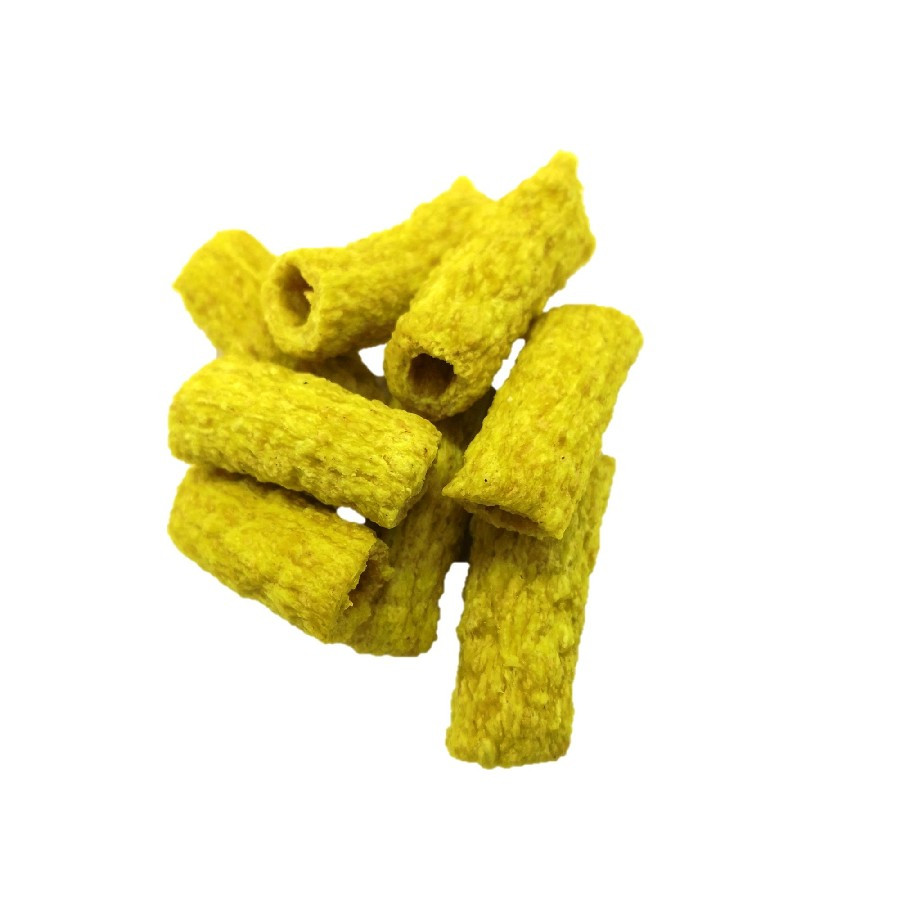 Turmeric and Coconut Horse BixCrunchy, 1 kg. $23.95Wholegrain wheat, oats, rice, real coconut, turmeric and black pepper in the same 3 cm biscuit as the Apple and Carrot. Buy them because your horse likes the taste. No biscuit should be standing in for your Australian vet when a big horse is sore.See Turmeric and Coconut Horse Bix
The fun part
Horse birthday cake, Christmas boxes and show prizes

This is where a big horse gets a big cookie, and where we stop pretending it is health food. Our iced cookies are baked biscuits with sugar in the icing. They exist for birthdays, Christmas morning, a ribbon at a show and a good photo. On those days, a horse the size of a Shire is the best possible excuse.
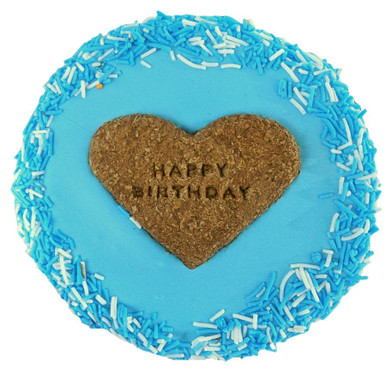
 Happy Birthday Cake Cookie13 cm, 1 piece. $17.95A 13 cm iced cookie in blue, pink or multi colour. By racing tradition, horses in Australia turn a year older on 1 August, so there is always a date to aim for. It is a hard biscuit: break it up for an older horse.See Happy Birthday Cake Cookie
They are super hard though, so I have to break it (which isn’t easy I might add) for the guy with no front teeth.
Jenni S., verified buyer, on the Birthday Cake Cookie, November 2025
We left that review in on purpose. It is the most useful thing anyone has written about the product. There is more on planning the day in our guide to celebrating your horse's birthday.



Christmas for horses
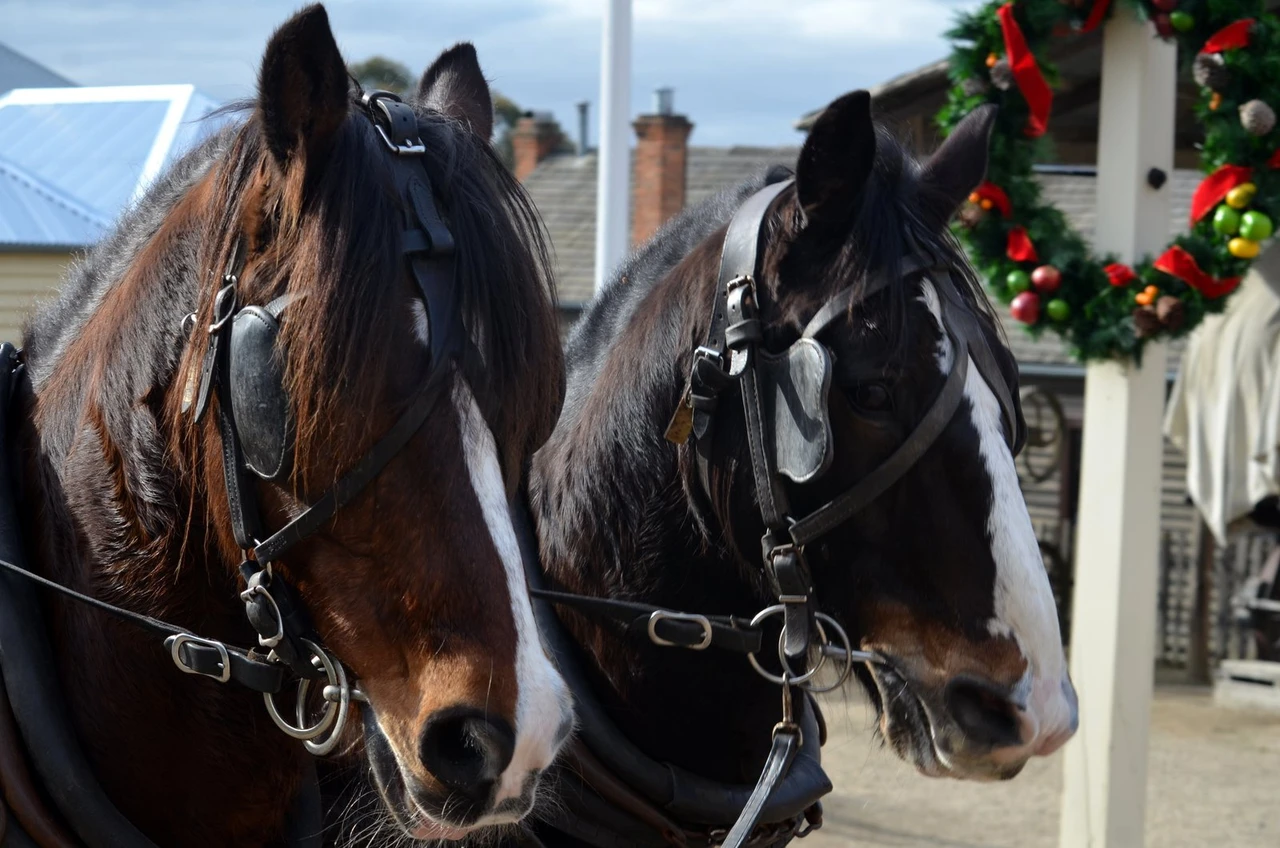
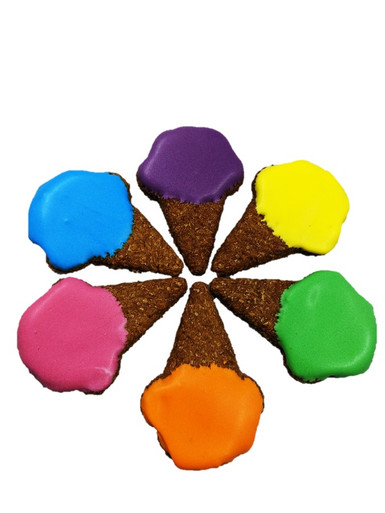
The Christmas range is the same baked cookie in red, green and white, boxed to go under a tree or on a stable door. The rest of it lives in Christmas horse treats.
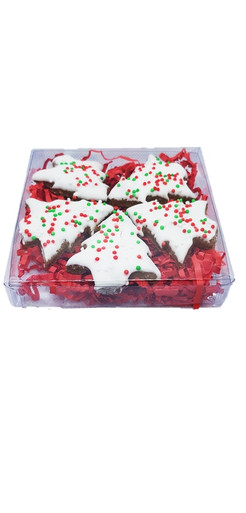


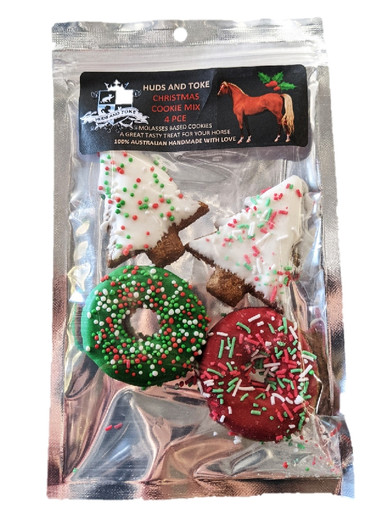


Boxes for teams, clubs and show prizes
Heavy horse people tend to travel in numbers: a team of six, a club stand at a field day, a row of stables at a royal show. The bulk boxes are the same cookies in bigger counts.


Before you buy one
What are the downsides of owning a Clydesdale horse?
People ask this of all three breeds, and the answers are the same for each. None of them is about temperament.
- The feed and water bill. Agriculture Victoria allows 10 to 13 kg of feed a day for an ordinary horse and 13 kg or more for a heavy horse of 650 kg and up. Add 40 litres of water or more on a mild day.
- The legs. Feather needs regular, hands-on care, and greasy heel and CPL are real risks in all three breeds.
- The waistline. In the British survey above, draught types were the group most likely to be obese. A quiet horse in a small paddock needs its feed measured.
- Everything is a size up. Rugs, halters, shoes, the float and the height of the stable door. This one is our own observation and not a statistic, but ask any heavy horse owner.
- Finding one. Shires and Percherons are both listed as endangered in Australia. A registered horse can take some finding.
What you get for the trouble is in the breed standards: gentleness, patience and docility for the Shire, kind and docile for the Percheron. If you are at the looking stage, our checklist of things to check before buying a horse applies at any size.
Out and about
Where to see heavy horses in Australia
The best way to learn the difference between a Clydesdale, a Shire and a Percheron is to stand next to all three on the same day. These are the gatherings where you can. Dates are as published on each event's own site on 5 October 2026, so check before you travel.
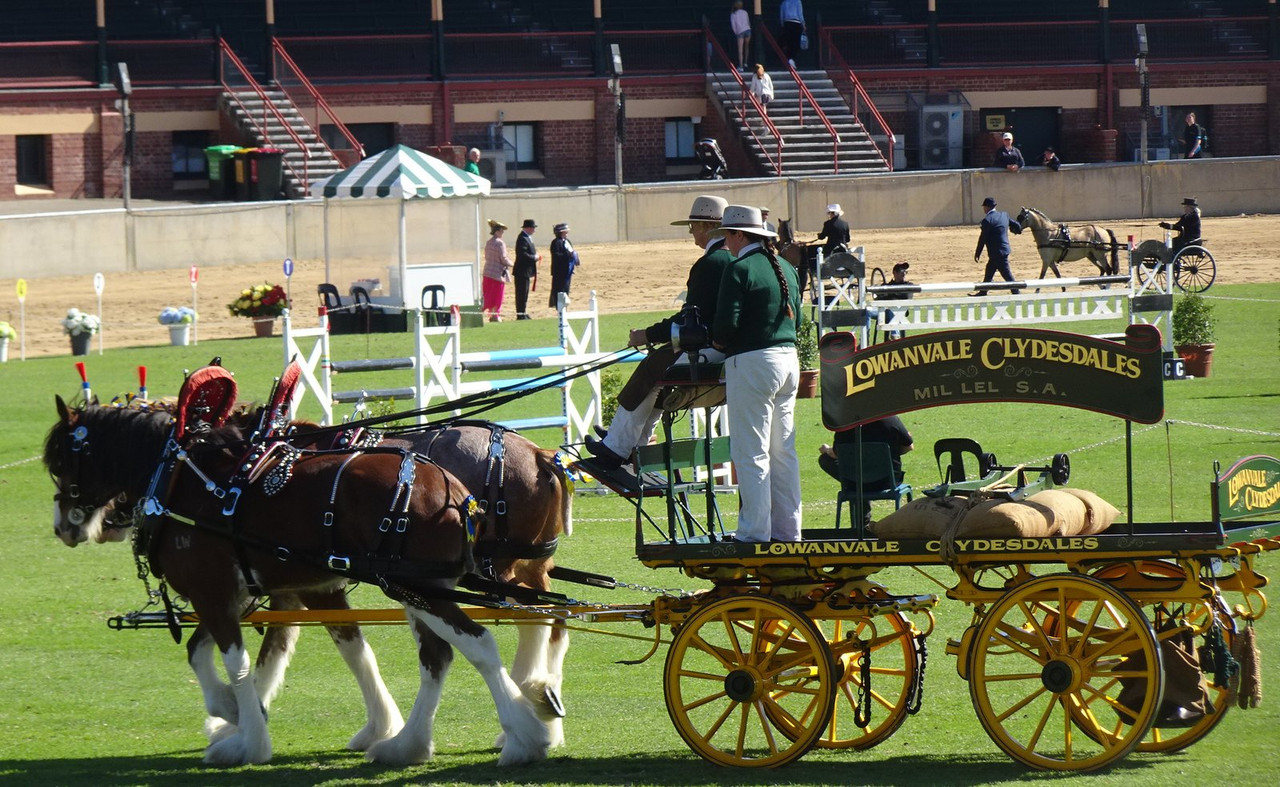
| Event | Where | When | Worth knowing |
|---|---|---|---|
| National Clydesdale and Heavy Horse Festival | Victoria. Usually Werribee Park National Equestrian Centre | 16 and 17 January 2027 | Listed by the Victorian branch of the Clydesdale society. The 2027 venue was still to be confirmed when we checked. |
| Sydney Royal Easter Show | Sydney Olympic Park, NSW | 19 to 30 March 2027 | Clydesdale and harness classes. In 2026 the Shire Horse Society Australia perpetual trophies were awarded here on Easter Monday. |
| Gatton Clydesdale and Heavy Horse Field Days | Gatton Showgrounds, Queensland | Early May each year | Running since 1978. The 2026 programme had led classes for Clydesdales, Percherons, Draughts and Shires. No 2027 date published yet. |
| Scenic Rim Clydesdale Spectacular | Beaudesert Showgrounds, Queensland | 10 to 13 June 2027 | Moved from Boonah. The Clydesdale showing is on the Saturday and Sunday. |
| Ekka (Royal Queensland Show) | Brisbane, Queensland | August each year | A silver cup went to the best heavy draught stallion at the very first show, in 1876. |
| Melbourne Royal Show | Melbourne, Victoria | Late September each year | Led Clydesdales and heavy harness. |
| Good Old Days Festival | Barellan, NSW | October long weekend each year | Describes itself as the largest gathering of harnessed draught animals in Australia. |
Gatton and Beaudesert are each a bit over two hours' drive from our bakery at Coolum Beach, so those are the two we would point a Queenslander to first.
Photo wanted
We went through every review and every photo customers have sent us, and we do not have a single picture of a Clydesdale, a Shire or a Percheron with one of our treats. We would rather say so than borrow someone else's horse. If you own a heavy horse and feed ours, tag @hudsandtoke on Instagram or Facebook. The best ones will go in this article, with your name on them.
Treats made in Coolum Beach for horses of every size
Start with the no added sugar Veggie Horse Bix, then add something soft, something salty and one cookie for the big day.
See all horse treatsQuick answers
Clydesdale, Shire and Percheron questions, answered
Which is bigger, a Clydesdale or a Shire horse?
The Shire, usually, but not by much. Shire Horse Society Australia puts the typical Shire at 18 hands and about 900 kg. The UK Clydesdale Horse Society says a Clydesdale normally stands 17 to 18 hands, and the UK Rare Breeds Survival Trust gives a weight of 800 to 1,000 kg. The ranges overlap heavily.
Is a Percheron bigger than a Clydesdale?
Not taller. Most Percherons stand 16.2 to 17.3 hands against the Clydesdale's 17 to 18. They carry a similar weight on a shorter frame: the Percheron Horse Association of America gives an average of about 860 kg and a maximum of about 1,180 kg.
What is the biggest horse breed in the world?
The Shire holds both Guinness World Records. The tallest horse ever documented was Sampson, a Shire foaled in 1846, at 21.25 hands (2.19 m). The tallest living horse is Hugo, a Shire measured at 199 cm in December 2025.
Are there Clydesdales in Australia?
Yes. Heavy horse breeding took off here in the 1850s and the Clydesdale became the main draught breed. The Commonwealth Clydesdale Horse Society registered 28,415 of them between 1924 and 2016, and the Rare Breeds Trust of Australia has the breed on its Watch list.
Can you ride a Clydesdale or a Shire horse?
Yes. The UK Clydesdale society reports ridden Clydesdale classes at many shows, and the UK Shire Horse Society says the Shire's calm nature suits recreational riding. You will need tack and a float built for a horse of 17 hands or more.
How many treats can a Clydesdale have?
About the same number as any other horse. A whole 100 g bag of our Veggie Horse Bix is a little over one per cent of an 800 kg horse's daily maintenance energy, so a few biscuits make next to no difference to its weight. Keep the pieces small, feed from a flat hand, and give a treat for a reason.
What treats are safe for a horse with PSSM?
That is a question for your Australian vet. US university advice for PSSM type 1 is to keep sugar and starch low and avoid grain and sweet feed. Treats made with molasses or sugar icing belong in that group. Even a no added sugar biscuit is grain-based, so show them the nutrition panel first.
Does turmeric help horses with arthritis?
It has not been shown to. Curcumin reduced inflammatory breakdown in horse cartilage in one laboratory study. In live horses, a controlled trial of a green tea and curcuma blend found no overall anti-inflammatory effect, trials of mixed blends cannot isolate the turmeric, and we found no trial of turmeric alone for arthritis in horses.
The Huds and Toke Editorial Team
Horse and dog treat makers, Coolum Beach, Queensland
We bake the horse treats in this article, which is why we have been careful to say where they do not belong. We are not vets and we do not breed heavy horses. The breed facts come from the breed societies, the rare breeds trusts and Guinness World Records, the health facts from published research and university vet schools, and the product figures from our own nutrition panels. Each source is linked below. This is general information, not veterinary advice. For your own horse, speak with your Australian vet. Our editorial standards explain how we check what we publish.
References
- Commonwealth Clydesdale Horse Society Australia. Clydesdale Breed Standards. clydesdalehorse.com.au
- Commonwealth Clydesdale Horse Society Australia. Clydesdale History in Australia. clydesdalehorse.com.au
- Commonwealth Clydesdale Horse Society Australia. Society information. clydesdalehorse.com.au
- Clydesdale Horse Society (UK). Breed History. clydesdalehorsesociety.com
- Clydesdale Horse Society (UK). The Clydesdale Today. clydesdalehorsesociety.com
- Rare Breeds Trust of Australia. Horses: Clydesdale. rarebreedstrust.com.au
- Rare Breeds Trust of Australia. Horses: Shire Horse. rarebreedstrust.com.au
- Rare Breeds Trust of Australia. Horses: Percheron. rarebreedstrust.com.au
- Rare Breeds Trust of Australia. Livestock Watchlist 2025. rarebreedstrust.com.au
- Rare Breeds Survival Trust (UK). Clydesdale Horse. rbst.org.uk
- Rare Breeds Survival Trust (UK). Shire Horse. rbst.org.uk
- Shire Horse Society Australia. Breed Standard for Shire Horses. shirehorsesociety.com.au
- Shire Horse Society Australia. The History of the Shire Horse. shirehorsesociety.com.au
- Shire Horse Society Australia. History of the Shire Horse Society Australia. shirehorsesociety.com.au
- Shire Horse Society (UK). The Shire Horse Society. shire-horse.org.uk
- Shire Horse Society (UK). The Shire Horse. shire-horse.org.uk
- Shire Horse Society (UK). Owning a Shire Horse. shire-horse.org.uk
- Percheron Horse Breeders Association of Australia. History of the Breed. percheron.com.au
- Percheron Horse Breeders Association of Australia. Breed Standards. percheron.com.au
- Percheron Horse Breeders Association of Australia. About Us. percheron.com.au
- Percheron Horse Association of America. Percheron Disposition and Characteristics. percheronhorse.org
- Guinness World Records. Tallest horse ever. guinnessworldrecords.com
- Guinness World Records. Tallest horse living. guinnessworldrecords.com
- Guinness World Records. Big Jake, the world's tallest horse, dies aged 20. 6 July 2021. guinnessworldrecords.com
- Screen Australia, The Screen Guide. Clydesdale - The Horse that Built a Nation (2007). screenaustralia.gov.au
- National Research Council. Nutrient Requirements of Horses, 6th revised edition. National Academies Press, 2007. doi.org
- Agriculture Victoria. Feed requirements of horses. agriculture.vic.gov.au
- Agriculture Victoria. Basic horse care. agriculture.vic.gov.au
- Agriculture Victoria. Caring for animals during extreme heat. agriculture.vic.gov.au
- Robin CA, Ireland JL, Wylie CE, Collins SN, Verheyen KL, Newton JR. Prevalence of and risk factors for equine obesity in Great Britain based on owner-reported body condition scores. Equine Veterinary Journal, 2015;47(2):196-201. pubmed.ncbi.nlm.nih.gov
- Durham AE, Frank N, McGowan CM, et al. ECEIM consensus statement on equine metabolic syndrome. Journal of Veterinary Internal Medicine, 2019;33(2):335-349. pmc.ncbi.nlm.nih.gov
- Young A, Finno C. Esophageal Obstruction (Choke) in Horses. UC Davis Center for Equine Health, 2024. ceh.vetmed.ucdavis.edu
- Chiavaccini L, Hassel DM. Clinical features and prognostic variables in 109 horses with esophageal obstruction (1992-2009). Journal of Veterinary Internal Medicine, 2010;24(5):1147-1152. pubmed.ncbi.nlm.nih.gov
- Hockenhull J, Creighton E. Unwanted oral investigative behaviour in horses: a note on the relationship between mugging behaviour, hand-feeding titbits and clicker training. Applied Animal Behaviour Science, 2010;127(3-4):104-107. sciencedirect.com
- McCue ME, Anderson SM, Valberg SJ, et al. Estimated prevalence of the Type 1 Polysaccharide Storage Myopathy mutation in selected North American and European breeds. Animal Genetics, 2010;41 Suppl 2:145-149. pubmed.ncbi.nlm.nih.gov
- UC Davis Veterinary Genetics Laboratory. Polysaccharide Storage Myopathy (PSSM1). vgl.ucdavis.edu
- Young A, Bellone R, Finno C. Polysaccharide Storage Myopathy (PSSM). UC Davis Center for Equine Health, 2020. ceh.vetmed.ucdavis.edu
- McCue M, Valberg S, Schultz N. Polysaccharide storage myopathy (PSSM) in horses. University of Minnesota Extension. extension.umn.edu
- Firshman AM, Baird JD, Valberg SJ. Prevalences and clinical signs of polysaccharide storage myopathy and shivers in Belgian draft horses. Journal of the American Veterinary Medical Association, 2005;227(12):1958-1964. pubmed.ncbi.nlm.nih.gov
- Draper AC, Bender JB, Firshman AM, et al. Epidemiology of shivering (shivers) in horses. Equine Veterinary Journal, 2015;47(2):182-187. pubmed.ncbi.nlm.nih.gov
- University of Melbourne. Australian Veterinary Prescribing Guidelines, Equine: Dermatological, wounds and feet disorders (pastern dermatitis). science.unimelb.edu.au
- Young A. Scratches: A Problem No Matter What You Call It. UC Davis Horse Report, 2022. horsereport.vetmed.ucdavis.edu
- Young A, Affolter V. Chronic Progressive Lymphedema (CPL). UC Davis Center for Equine Health, 2019. ceh.vetmed.ucdavis.edu
- Brys M, Claerebout E, Chiers K. Chronic Progressive Lymphedema in Belgian Draft Horses: Understanding and Managing a Challenging Disease. Veterinary Sciences, 2023;10(5):347. pmc.ncbi.nlm.nih.gov
- Sievers J, Distl O. Prevalence of Chronic Progressive Lymphedema in the Rhenish German Draught Horse. Animals, 2023;13(6):999. pmc.ncbi.nlm.nih.gov
- Pearson W, Wood K, Stanley S, MacNicol J. Exploring relationships between body condition score, body fat, activity level and inflammatory biomarkers. Journal of Animal Physiology and Animal Nutrition, 2018;102(4):1062-1068. pubmed.ncbi.nlm.nih.gov
- Clutterbuck AL, Mobasheri A, Shakibaei M, Allaway D, Harris P. Interleukin-1beta-induced extracellular matrix degradation and glycosaminoglycan release is inhibited by curcumin in an explant model of cartilage inflammation. Annals of the New York Academy of Sciences, 2009;1171:428-435. pubmed.ncbi.nlm.nih.gov
- Starzonek J, Roscher K, Blüher M, et al. Effects of a blend of green tea and curcuma extract supplementation on lipopolysaccharide-induced inflammation in horses and ponies. PeerJ, 2019;7:e8053. pubmed.ncbi.nlm.nih.gov
- Liu Y, Siard M, Adams A, et al. Simultaneous quantification of free curcuminoids and their metabolites in equine plasma by LC-ESI-MS/MS. Journal of Pharmaceutical and Biomedical Analysis, 2018;154:31-39. pubmed.ncbi.nlm.nih.gov
- EFSA FEEDAP Panel. Safety and efficacy of turmeric extract, turmeric oil, turmeric oleoresin and turmeric tincture from Curcuma longa L. rhizome when used as sensory additives in feed for all animal species. EFSA Journal, 2020;18(6):e06146. pubmed.ncbi.nlm.nih.gov
- Australian Pesticides and Veterinary Medicines Authority. Stockfeed and petfood regulation. apvma.gov.au
- Rubin CJ, Hodge M, Naboulsi R, et al. An intronic copy number variation in Syntaxin 17 determines speed of greying and melanoma incidence in Grey horses. Nature Communications, 2024;15:7510. pmc.ncbi.nlm.nih.gov
- Scenic Rim Clydesdale Spectacular. Official site. clydesdalespectacular.com.au
- Gatton Clydesdale and Heavy Horse Field Days. Official site. gattonheavyhorses.com.au
- Good Old Days Festival, Barellan. Official site. barellanclydesdales.com.au
- Commonwealth Clydesdale Horse Society, Victorian Branch. National Clydesdale and Heavy Horse Festival. clydesdalesvic.org.au
- Royal Agricultural Society of NSW. Sydney Royal Horse Show. rasnsw.com.au
- Melbourne Royal Show. Official site. melbourneroyal.com.au
- Royal Queensland Show (Ekka). Horse competition. ekka.com.au