Connemara, Welsh Section B and Riding Pony Treats: The Pony Club Guide
Posted by The Huds and Toke Editorial Team on 29th Sep 2026
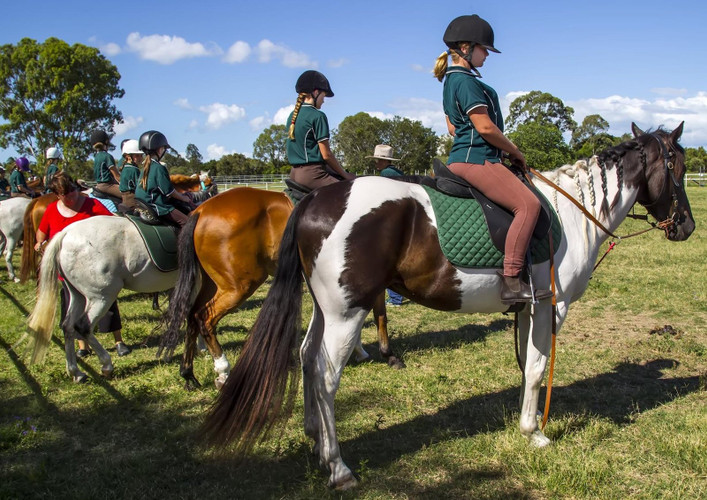
Connemaras, Welsh Section B ponies and Australian Riding Ponies are the ponies Australian kids ride at Pony Club. Here is how to treat them without ending up with a fat pony or a nippy one, with the sugar figures from our own nutrition panels.
The Huds and Toke Editorial Team | 15 minute read | Updated September 2026
If you only read one thing
Treats, ponies and the kids who give them
| 1 | Hand-feeding was not linked to nipping in the one study that measured it, a survey of horse owners. It was linked to pocket-searching. Give a treat from a flat palm, for a job done, then show an empty hand. |
| 2 | About one in three ponies other than Shetlands at Victorian Pony Club rallies was obese (Shetlands were worse), and owners scored their own animals thinner than the researchers did. Pony Club Australia's target is a 3 out of 5. |
| 3 | Count the soft and iced treats. One Pony Pudding carries up to about 5 g of sugar, roughly the same as half a kilo of our Veggie Horse Bix. |
Why these three share a post
The ponies Australian kids ride at Pony Club
Our first pony post was about the little ones: the Shetland, the Welsh Mountain pony and the Australian Pony, the easy keepers that can founder on a good spring. This one is about what usually comes next. When a child outgrows a first pony and starts riding at Pony Club in earnest, the next pony tends to be bigger, quicker and more athletic, somewhere between 12.2 and 14.2 hands. Very often it is one of these three.
Show rules make the point better than we can. In children's ridden show pony classes, a pony up to 12.2 hands carries a rider aged 12 and under, up to 13.2 hands a rider 14 and under, and up to 14.2 hands a rider 17 and under, according to the Riding Pony Stud Book Society judges handbook. These are children's ponies by design.
They are not the same pony. The Connemara is an Irish native built for rock and rain. The Welsh Section B is a Welsh pony bred up into a children's riding pony. The Australian Riding Pony is our own show pony. What they share is a pony's appetite in a body that is asked to jump, travel and stand in a line-up, and an owner who is often ten or twelve years old.
That last part is why this post spends as long on the hand as it does on the treat.
30,000
Pony Club Australia members, across more than 750 clubs.
Pony Club Australia
32%
of ponies (other than Shetlands) at ten Victorian Pony Club rallies were obese.
Potter et al., 2016
3%
of horse injuries to children at an Adelaide hospital were bites. Falls were 79%.
Craven, 2008
Source. Pony Club Australia; Potter et al., Australian Veterinary Journal, 2016 (researcher-assessed obesity, 9 point scale, in pony types other than Shetlands; Shetlands were 71.5%); Craven, Emergency Medicine Australasia, 2008 (186 children, 1999 to 2003).
Breed one
The Connemara
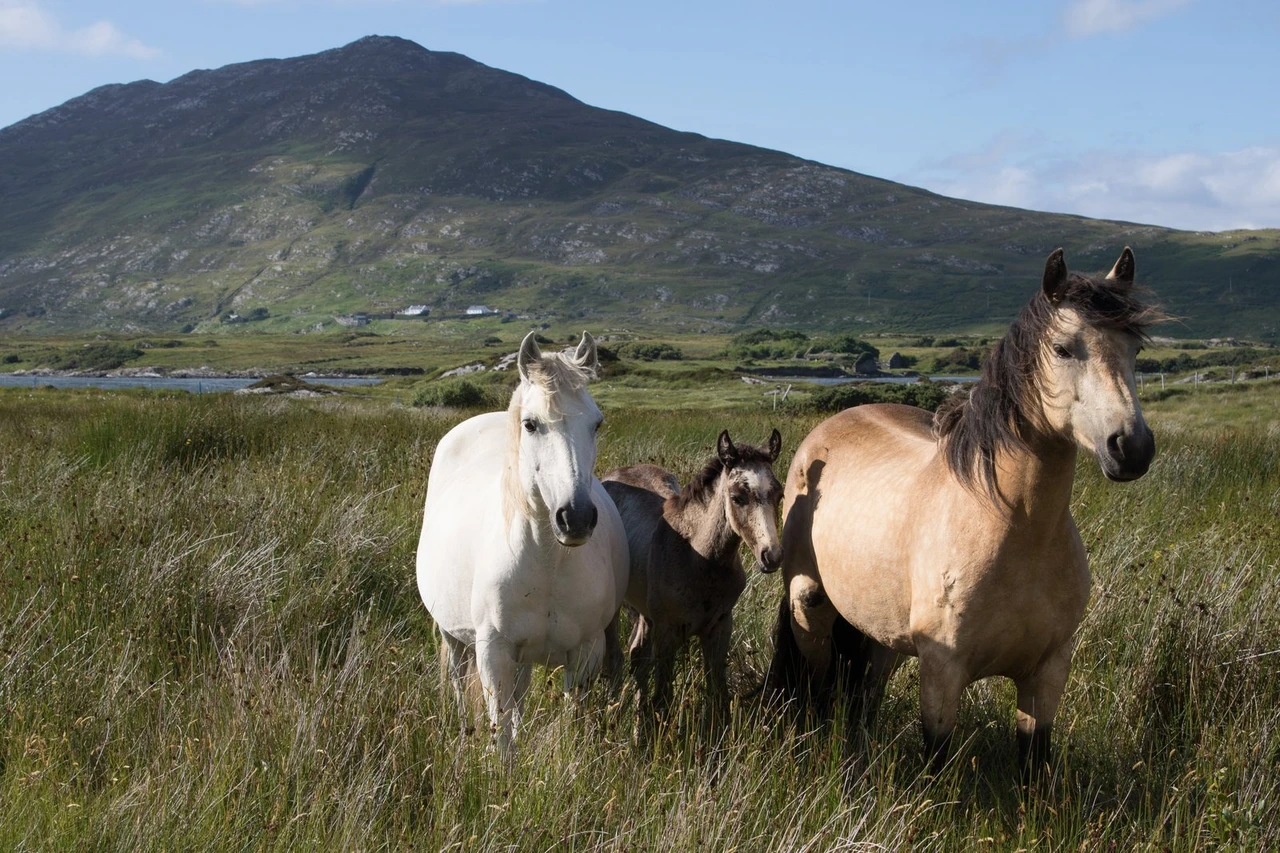
The Connemara comes from the west coast of Ireland, where the breed society describes an environment that "requires a hardy, surefooted and frugal pony for survival". It reached Australia in 1963, when Dr Fred Wiltshire imported the stallion Island King, originally to improve the Australian Pony. The Connemara Pony Breeders Society of Australia lists it as suitable for child or adult, and it is the pony a lot of Pony Club riders keep when they grow: big enough to carry a teenager round a cross country course, sensible enough for a nervous ten year old.
Show catalogue | Class 1
Connemara
| Origin | Connemara, west of Ireland. In Australia since 1963. |
| Height | 12.2 to 14.2 hh (128 to 148 cm), breed society standard |
| Built for | Hardiness, staying power, jumping, "suitable for child or adult" |
| Feeding type | Frugal. Stays well on less than you think. |
| Watch for | Weight gain on rich pasture, and HWSD, a genetic hoof condition so far found only in Connemaras and their crosses |
Treat verdict. Low sugar, small pieces, and keep the pony lean. Veggie Horse Bix every day, Carrot Horse Bix for variety.
Is a Connemara a laminitis risk?
Lower than a Welsh Mountain pony's, as long as it stays lean, but not zero. The European vet consensus on equine metabolic syndrome names British native ponies, Welsh ponies and Shetlands, but does not mention the Connemara at all. In a UK study of native ponies and cobs, Connemaras had much lower odds of EMS than Welsh Section A ponies (an odds ratio of 0.06).
The catch is condition. An Irish study of 200 Connemaras found 29.5% had a body condition score of 7 or more out of 9, 16% had high insulin, and the odds of high insulin rose about 6.5 times once a pony reached that score. In other words, the risk follows the fat more than the breed name. But the same study found owner-reported or clinical signs of past laminitis in 46% of the ponies (they were recruited through social media, so problem ponies may be over-represented), and its authors concluded that obesity, laminitis and metabolic problems are prevalent in the breed. A Connemara is not immune, and one on a lush Australian paddock with a pocketful of treats can end up there.
The hoof problem no treat can fix
Hoof wall separation disease (HWSD) is a genetic condition so far found only in Connemaras and ponies with Connemara blood. Affected foals' hoof walls separate along the bottom edge in their first year. UC Davis researchers traced it to a single gene and estimated 14.8% of Connemaras carry it. It is recessive, so carriers are normal. The Australian breed society requires new registrations to be tested unless both parents are clear, and a report it hosts says affected hooves do not respond to any topical or systemic hoof treatment. So if someone sells you a supplement or a treat for it, save your money and talk to your vet and farrier.

Leave it on the shelf
For a Connemara carrying extra weight
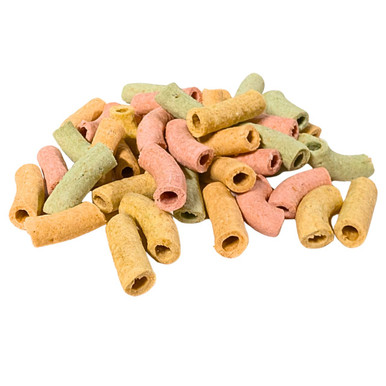
- Pony Puddings as an everyday reward. 19.41 g of sugar per 100 g on our own nutrition panel. Keep them for tablets.
- Molasses Horse Bix. Molasses is on the ingredient list, and in the name. Fine for a lean, working pony; not for one that is putting on weight.
- Iced cookies by the handful. One, broken up, on a birthday. That is the whole allowance.
Breed two
The Welsh Section B
The Section B is the Welsh pony bred for children to ride. According to the Welsh Pony and Cob Society of Australia, in the late 1920s two stallions of half Oriental and half Welsh breeding were accepted into the stud book "with the intention of breeding childrens' riding ponies", and those ponies became the Section B. The Australian Pony Stud Book describes it as "a riding pony, with quality, riding action, adequate bone and substance, hardiness and constitution with pony character", capped at 13.2 hands.
Show catalogue | Class 2
Welsh Section B
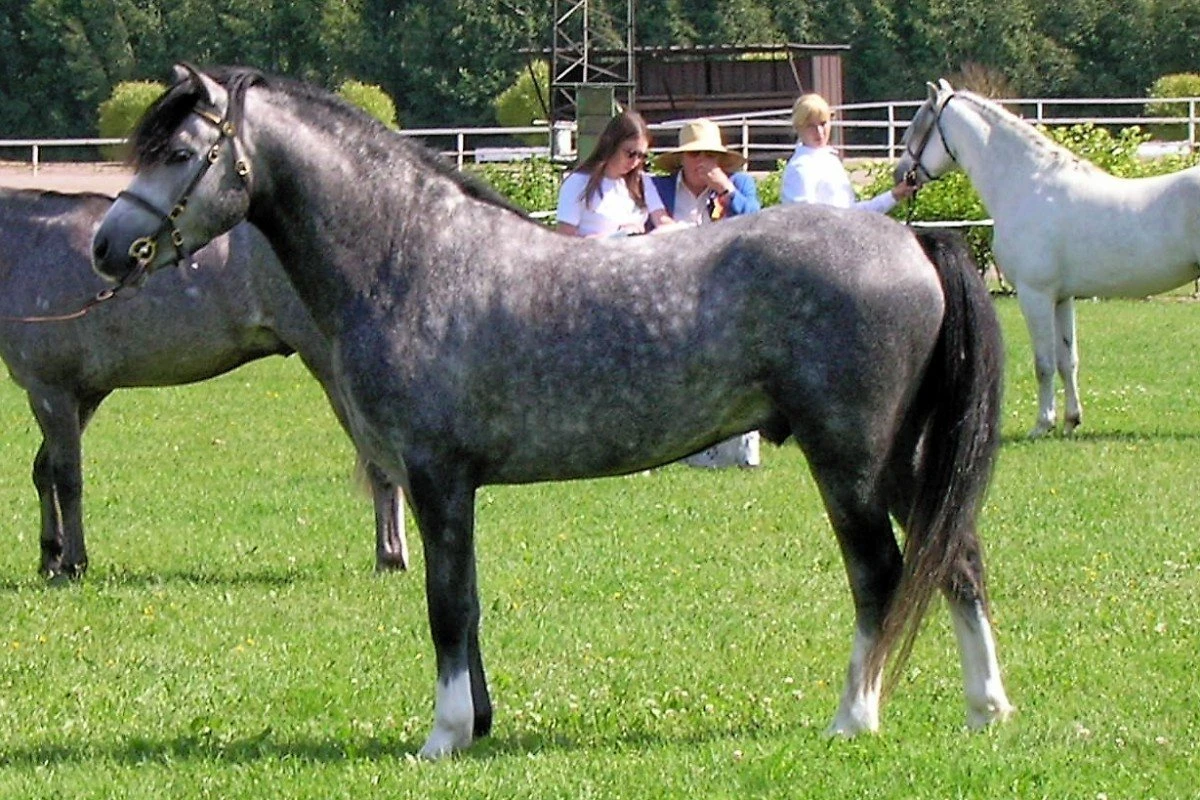
| Origin | Wales, as the riding type of the Welsh pony |
| Height | Not exceeding 13.2 hh (APSB and Welsh Pony and Cob Society of Australia) |
| Built for | Children's riding, jumping and the show ring |
| Feeding type | A good doer. Carries the Welsh tendency to hold weight. |
| Watch for | Insulin dysregulation, a cresty neck, and owners who do not see the weight coming |
Treat verdict. The closest of the three to our easy keeper pony guide. Green row treats only, in small pieces, and none at all with a laminitis history.
Why Welsh ponies need the most care
A 2024 study of Shetland and Welsh ponies in Queensland and Victoria found 61% had insulin dysregulation, the metabolic state that raises a pony's risk of laminitis. Older ponies and mares were more likely to have it, and so were ponies their owners already thought were fat. The finding that matters most for a family: owners underestimated their pony's body condition by an average of one score compared with a vet.
There is a genetic thread too. A Victorian study found 20 of 22 Welsh Section B ponies carried two copies of a gene variant linked to short stature and higher insulin. The same study found the variant explained only about 7% of the difference in insulin between ponies, so it is not destiny. Other factors in the same study, including age, cresty neck score and the farm the pony lived on, explained more of it. In the UK study above, Welsh B and C ponies also had lower odds of EMS than Welsh Section A ponies (an odds ratio of 0.35), though not as low as the Connemaras' 0.06.
Leave it on the shelf
For a Welsh Section B
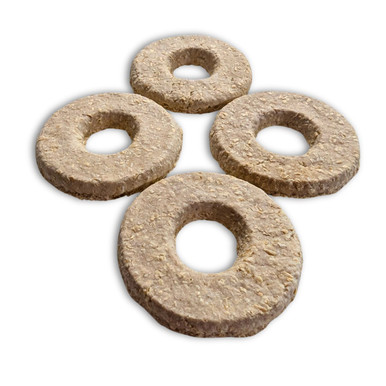
- Anything at all, if the pony has diagnosed EMS or active laminitis. That includes ours. Our laminitis treat guide explains why your vet, not a treat label, decides what that pony eats.
- Pony Puddings and the iced cookies for a pony with a cresty neck or fat pads, even on its birthday.
- Neigh Nuggets by the handful. Tiny, but 12.3 g of sugar per 100 g. Count them.
Breed three
The Australian Riding Pony
The Australian Riding Pony is our own show pony. The Riding Pony Stud Book Society traces it to the early 1970s, when Australian breeders imported British Riding Pony stallions and bred them with the Welsh Section B ponies, other ponies, and Thoroughbred and Arab lines already here. The society itself began in 1975. Its breed standard is blunt about the purpose: "a combination of various pony breeds with thoroughbred and Arab, bred to produce the ultimate pony to perform in show riding classes."
Show catalogue | Class 3
Australian Riding Pony
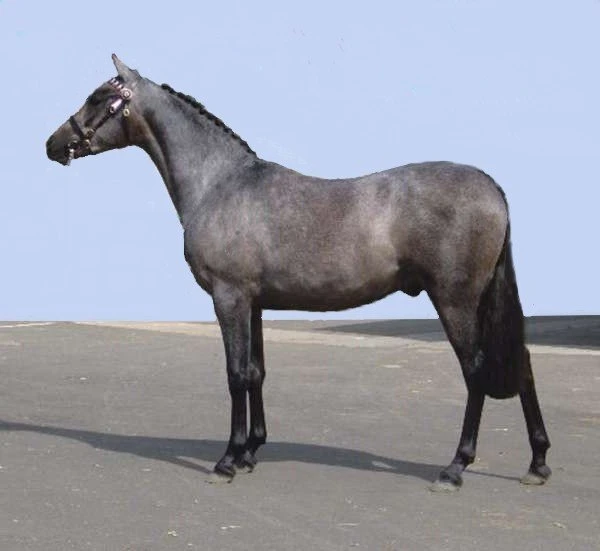
| Origin | Australia, from British Riding Pony stallions crossed with Welsh B, Thoroughbred and Arab lines. |
| Height | Not to exceed 14.2 hh, shown in height classes |
| Built for | Show riding classes: quality, movement, manners |
| Feeding type | Varies with the blood. Often sharp, and often kept too well. |
| Watch for | Show condition creeping past working condition, and nerves on the float |
Treat verdict. Condition first, treats second. Keep a close eye on the scale below, and keep any calming product off rally and competition days until you have checked the rules.
The same Victorian gene study found 15 of 19 Australian Riding Ponies carried two copies of the short, higher insulin variant. With the Thoroughbred and Arab in the mix, some riding ponies are sharp and hard to keep; others are Welsh through and through and hold weight on air. Feed the pony in front of you, and let the condition score decide the treats.

Leave it on the shelf
For a show pony
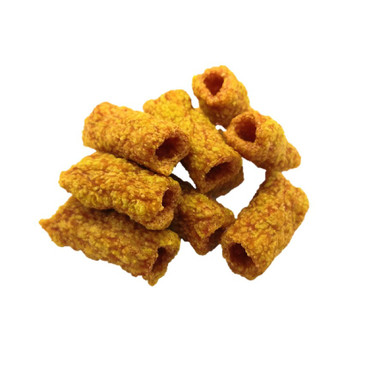
- Treats as a condition tool. A show pony that looks a bit plain does not need more treats. It needs a condition score.
- Calm O's on a rally or competition day you have not cleared with the event vet or technical delegate.
- Iced cookies as show-day bribes. Save them for after the last class, if the day earned one.
● ● ●
The question every Pony Club parent asks
Do treats make a pony nip?
Search for horse nipping and a lot of the advice you will find tells you to stop hand-feeding. We make treats, so you would expect us to disagree. Here is what the research actually says, because it is more interesting than either side.
The one study we could find that measured it was a survey of UK horse owners published in 2010. Ninety-one percent of owners fed their horse by hand. Hand-feeding was linked to horses licking hands and searching pockets and clothing, gently or roughly. But in the researchers' words, "Nipping hands and biting clothes were not associated with hand-feeding, suggesting that risk factors for these behaviours originate outside of this practice." Owners who used clicker training saw no more of any of these behaviours.
These findings suggest that horse owners should not be deterred from using food-based positive reinforcement techniques with their horses, as fears that this practice will result in unwanted oral investigative behaviours from their horses appear unfounded.
Hockenhull and Creighton, Applied Animal Behaviour Science, 2010
So the honest summary is: treats handed out carelessly teach a pony to mug you for more, and a mugging pony is annoying and sometimes pushy. In that study, hand-feeding was not linked to nipping. Pony Club Australia teaches food rewards too. Its syllabus asks even E Certificate riders to "Know two different ways to reward the horse (scratching and food rewards)", and its horse welfare policy lists food treats among the things to give a horse regularly as a positive experience.
Food rewards also seem to change how ponies feel about people. In a French study, ponies trained with food rewards showed more interest in humans and sought contact after training, and the effect was still visible five months later. In a second study, horses rewarded with a small piece of carrot from the hand learned to stand still faster than horses rewarded with a scratch on the withers.
Any owner of a treat-motivated pony will recognise what the 2010 survey found. Two of our own customers put it better than the paper did:
My Connemara, always keen on treats, is now a pocket terrorist. He knows where the treats are and refuses to budge without a few.
Christine S., verified buyer, Apple Horse Bix, March 2026
She could smell them when they were in my pockets and used to nudge me to give them to her.
Tracy G., verified buyer, Carrot Horse Bix, June 2024
That is mugging, not nipping, and it is fixable.
How to reward a pony without making a mugger
The technique is where it goes right or wrong, and it is simple enough for a ten year old. Penn State Extension puts it plainly: place the treat in the centre of your palm with your hand wide open and flat, and bring your hand to the pony rather than making it reach. Here it is in four steps.
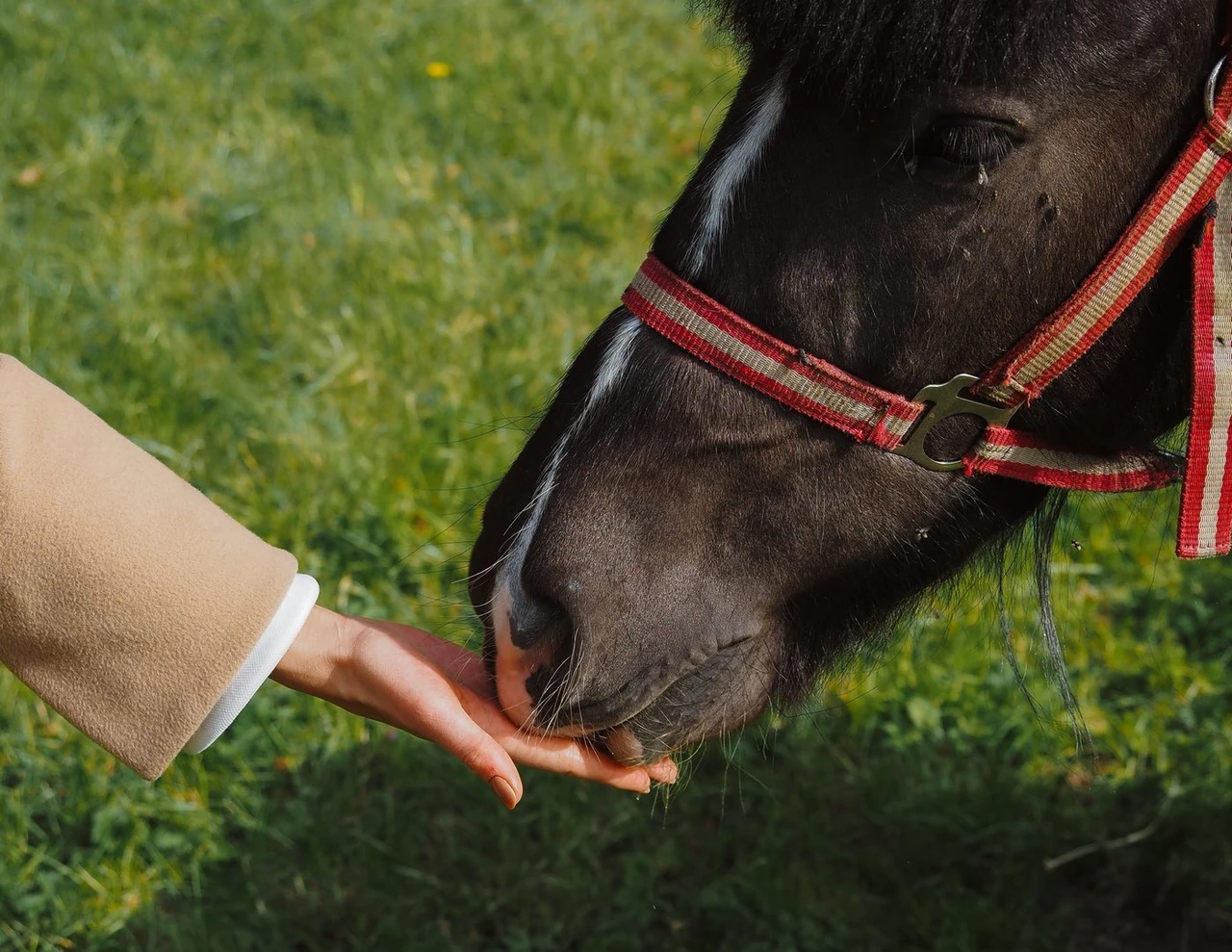
Two more rules from the research. The International Society for Equitation Science says to minimise delays in reinforcement, so the treat has to arrive within a second or two of the thing you are rewarding, not after the pony has wandered off. And a 2022 Swedish study started every horse's food training by rewarding it for turning its head away from the owner, "in order to prevent mugging for treats". That is the single most useful thing you can teach a Pony Club pony before you ever put a treat in your hand: the treat comes when your head is away from my pocket.
Do
- Ask for one small thing first: stand still at the mounting block, lower the head for the bridle, walk onto the float. Then treat.
- Treat within a second or two of the pony getting it right, so the pony can link the two.
- Use small pieces, so ten rewards in a lesson is still a small amount of food.
- Take the treat to the pony on a flat hand, a little low, then drop your hand to your side so the pony knows that is the end of it.
- For little kids, or a pony that already mugs, put the treat in the feed bucket instead of the hand.
Don't
- Hand out treats because the pony is pushing, nosing pockets or nibbling at you. That teaches the pony that pushing works.
- Keep treats in the pocket the pony can smell and reach. Use a bum bag or a tin on the fence.
- Hold a treat up in your fingertips or snatch it back when the pony reaches for it.
- Let every child at the rally feed the same pony. Pick one person, one treat, one reason.
- Treat a pony that has just nipped, even to settle it. The treat lands on the nip.
If a quiet pony suddenly starts to nip
Think pain and pressure before manners. A University of Sydney review notes that a horse that cannot escape something unpleasant may try confrontational behaviour such as biting. Check teeth, saddle fit, girth and anything sore, and talk to your Australian vet. Pony Club Australia's own welfare policy says to seek advice from a horse behaviour professional for dangerous behaviour such as barging, kicking and biting.
For perspective, bites are a small share of what puts children in hospital. In five years of horse injuries to children at an Adelaide hospital, 79% were falls, 15% kicks and 3% bites. That is not a reason to ignore a nippy pony, but it is a reason to spend more energy on a good helmet and a sensible pony than on banning carrots.
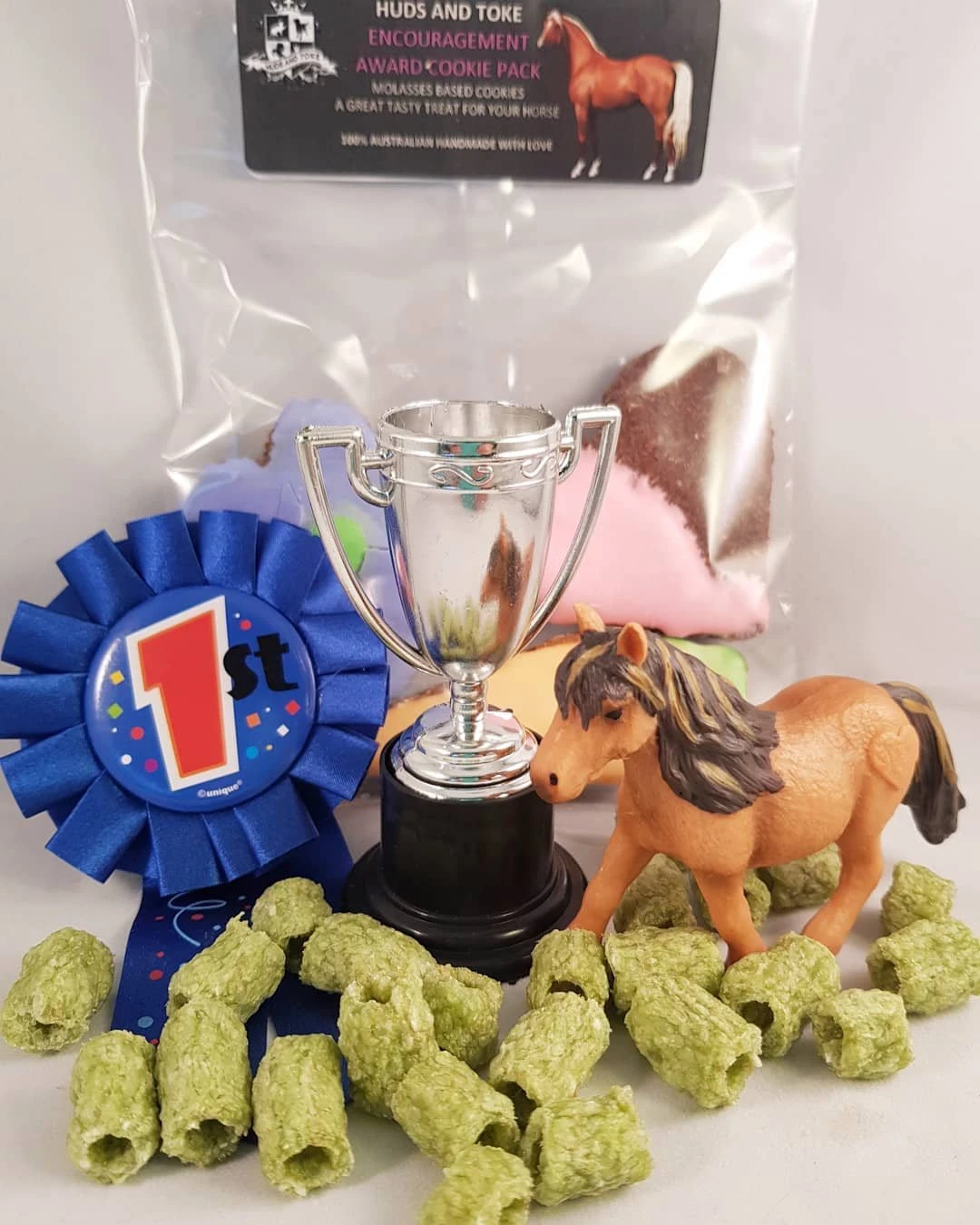
Our Encouragement Award pack. Photo: Huds and Toke.
Where we stand
We have been handing treats to Pony Club kids for years
In May 2018 we started the Huds and Toke Encouragement Award, first presented at Mooloolah Pony Club, for young riders with "a great attitude, great sportsmanship and great horsemanship" rather than a blue ribbon. We supply prize treats to Pony Clubs and shows, and treat bags for rider camps.
So when we say give treats with a flat hand, for a job done, we are saying it as the people who put the treats in the rider bags.
"Huds and Toke have supported our camps since the first one, 4 years ago!"
Yandina and District Pony Club, April 2025, on Facebook
The show ring
Why do show ponies end up too fat?
Because it looks good in a photo, and because it creeps up. Agriculture Victoria's condition scoring note, built on Carroll and Huntington's Australian method, lists typical scores for equestrian horses of 3 to 4 out of 5, and for show horses, over 4. Pony Club Australia sets the target at 3 for both idle and performance horses, and its welfare policy makes it a breach not to address the feeding of any horse scoring under 2 or over 4, and asks coaches and officials to watch for those scores.
The Pony Club rally data shows how common it is. Researchers from the University of Melbourne visited ten Pony Club rallies across Victoria and scored 229 horses and ponies themselves. Obesity ran at 71.5% in Shetlands, 32.0% in other pony types and 9.3% in horses, and owners rated their animals as significantly leaner than the researchers did. It is not only an Australian habit: a US study of 377 ponies at a national hunter show found 35% were obese, and in the large ponies there was a small link between more condition and a better score in the conformation phase.
There is good news in the rule books. For working hunter ponies, the Riding Pony Stud Book Society's judges handbook says the pony "must exhibit an ability to jump and be fit enough to go a distance. Over conditioned ponies should be scored down." And Pony Club Australia's hot weather policy lists being overweight among the things that make a horse struggle in the heat.
What does that mean for treats?
Let the score set the budget. At a 3, a few small low sugar rewards a day are a sensible habit. Creeping towards 4, the iced cookies go first and the everyday treats get snapped in half. At 4 or more, or with a diagnosis of EMS, the European vet consensus is clear that "grains or cereal-based complementary feeds, fruit, or vegetables such as carrots, apples, or treats should be excluded from the diet". Ours included. That is not what a treat company usually says, but it is what we would tell our own kids.
They're excellent training treats for my chonky ponies, as well as my goats and dogs.
Rebecca V., verified buyer, Veggie Horse Bix, May 2023
Training is the job Veggie Horse Bix suit best. At 0.98 g of sugar per 100 g, they are the treat we would reach for when a pony creeping towards a 4 still needs its rewards, snapped small and counted. Once a pony is at 4 or more, the consensus above applies to ours too.
Read the labels with us
Which of our treats suit a Pony Club pony?
We publish a full nutrition panel for six of our horse treats. Here they are, sorted the way we would sort them for a pony that lives on Australian pasture and gets ridden a few times a week. Tap any row to see the product.
The rest of the horse range, the Apple, Carrot, Molasses and Turmeric and Coconut Horse Bix and the iced cookies, does not carry a published panel yet, so we are not going to guess at a number for you. What we can tell you is what is in them. The iced cookies are a molasses and oat biscuit with a sugar icing on top, the same build as the Carrot Cookies at the bottom of the chart, so treat them the same way. The Molasses Horse Bix say molasses on the tin. If your pony needs a low sugar treat, the green row is where to shop.
One pudding versus half a kilo
There are roughly 40 Pony Puddings in a 1 kg bag, so each one weighs about 25 g and carries up to about 5 g of sugar. To eat that much sugar from Veggie Horse Bix a pony would need close to half a kilo of them. Neither number is scary on its own. It just shows why the soft and iced treats are the ones to count.
Rally, camp and show day
How should you feed a pony on a long Pony Club day?
A rally or a show is a long day for a pony: an early float trip, hours tied to the float, a lesson or three classes, and the same trip home. Treats have a small job to do on a day like that, and the order you do things in matters more than which bag you pack.
Forage first, all day. Pony Club Australia's welfare policy makes it a breach to leave a horse without access to food for more than six hours at a Pony Club event, and suggests a hay net when tethered or yarded between activities. The European vet consensus on gastric ulcers backs that up: more than six hours between forage meals increases the likelihood of ulcers in the upper stomach (why hay comes first). A small forage feed before riding is common advice too; the science behind it is a small treadmill study, so treat it as sensible practice rather than proven. Our hot blood post has a diagram of why an empty stomach and a canter do not mix.
Treats after the work, not before it. The reward is for the job. A treat at the float on arrival is just food.
Water and salt on hot days. Agriculture Victoria advises planning for days over 36 degrees in dry heat (less if humid), moving exercise to the cool of the day, and notes that electrolytes can be added to feed to replace salts lost in sweat. The same ulcer consensus considers electrolytes with feed safe, but links electrolyte pastes and strong solutions given by mouth with more ulcers. Our salt guide covers the everyday side. Pony Club Australia wants horses allowed to drink as much water as they want, and cool and comfortable before they are loaded onto a well-ventilated float.
Calming products and the rules. Pony Club Australia recognises and applies the FEI list of prohibited substances, and bans sedatives and tranquillisers at all times. L-theanine and L-tyrosine, the two amino acids we add in our Calm O's, are not on the FEI 2026 list. But that list also covers "any other substance with a similar chemical structure or similar biological effect(s)", Pony Club Victoria prohibits any substance "other than a normal nutrient" that could affect performance, and Pony Club Queensland requires the activity's appointed vet to be notified if a horse needs treating with a calming drug during an activity. So we will not tell you Calm O's are competition-legal. They are for the float and the practice day. Before giving them on the way to, or at, any Pony Club rally or competition, ask the event vet or technical delegate first: Pony Club Victoria's rule covers the time before an activity, not just during it. If the rider is under 18, Pony Club makes compliance the parent's job. For a nervous traveller, our guide to managing a nervous horse is the place to start.


Packed for the rally
The treat and feed side of the float, ticked off the night before.
Forage and water
✓A full hay net for the float and another for the tie-up. The pony eats this first, before any treat.
✓A water bucket and enough water for the day, plus a sponge for a hot afternoon.
Treats, and a way to carry them
✓A small tin of Veggie Horse Bix for flat-hand rewards. Tins live on the float, not in the rider's pocket.
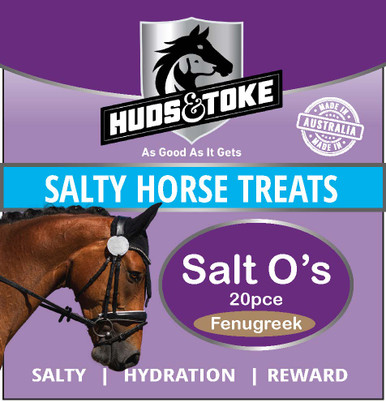
✓Salt O's if the forecast is hot, broken into pieces for a pony.
✓Calm O's for a nervous traveller, if your club's rules allow them before a rally or competition.
✓Pony Puddings only if the pony is due a tablet.
Grooming
✓A Dual Sided Shedding Brush for the dried sweat patch under the saddle before the trip home.
For after
✓One birthday or ribbon treat, if the day earned it. One.
Birthdays and Christmas
Can a pony have a birthday cookie?
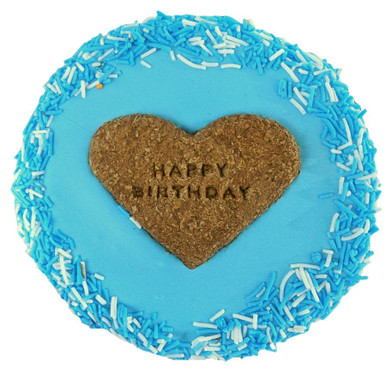
Yes, if it is a healthy pony at a sensible weight, and if the cookie is the treat for that day rather than something on top of it. We make iced cookies because kids love choosing them and ponies love eating them. They are also where most of the sugar in our range lives, and we would rather tell you that than pretend otherwise.
- One cookie, broken into pieces, as that day's treat. Not a handful on top of the everyday ones.
- Let the child who chose it give it, with a flat hand, after the pony has been groomed or ridden.
- Skip the iced range altogether for a pony with a laminitis history, and give a pony with diagnosed EMS or active laminitis no treats at all. Our easy keeper pony guide explains why.
- For Christmas, a gift box from the kids is a lovely thing. Share it across the week, not the morning.
- By convention, Australian horses share an official birthday on 1 August, which makes a Pony Club pony party easy to plan.


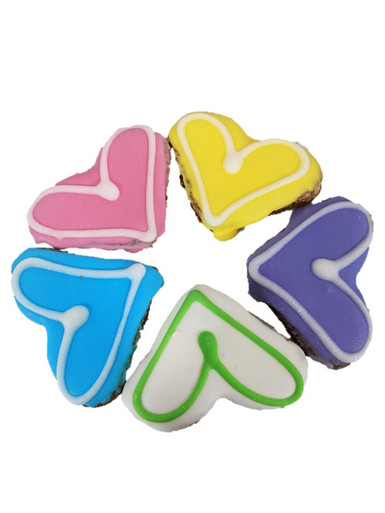


My daughter loved her Christmas present of horse treats and so did the ponies.
Faith C., verified buyer, Apple Horse Bix, January 2025
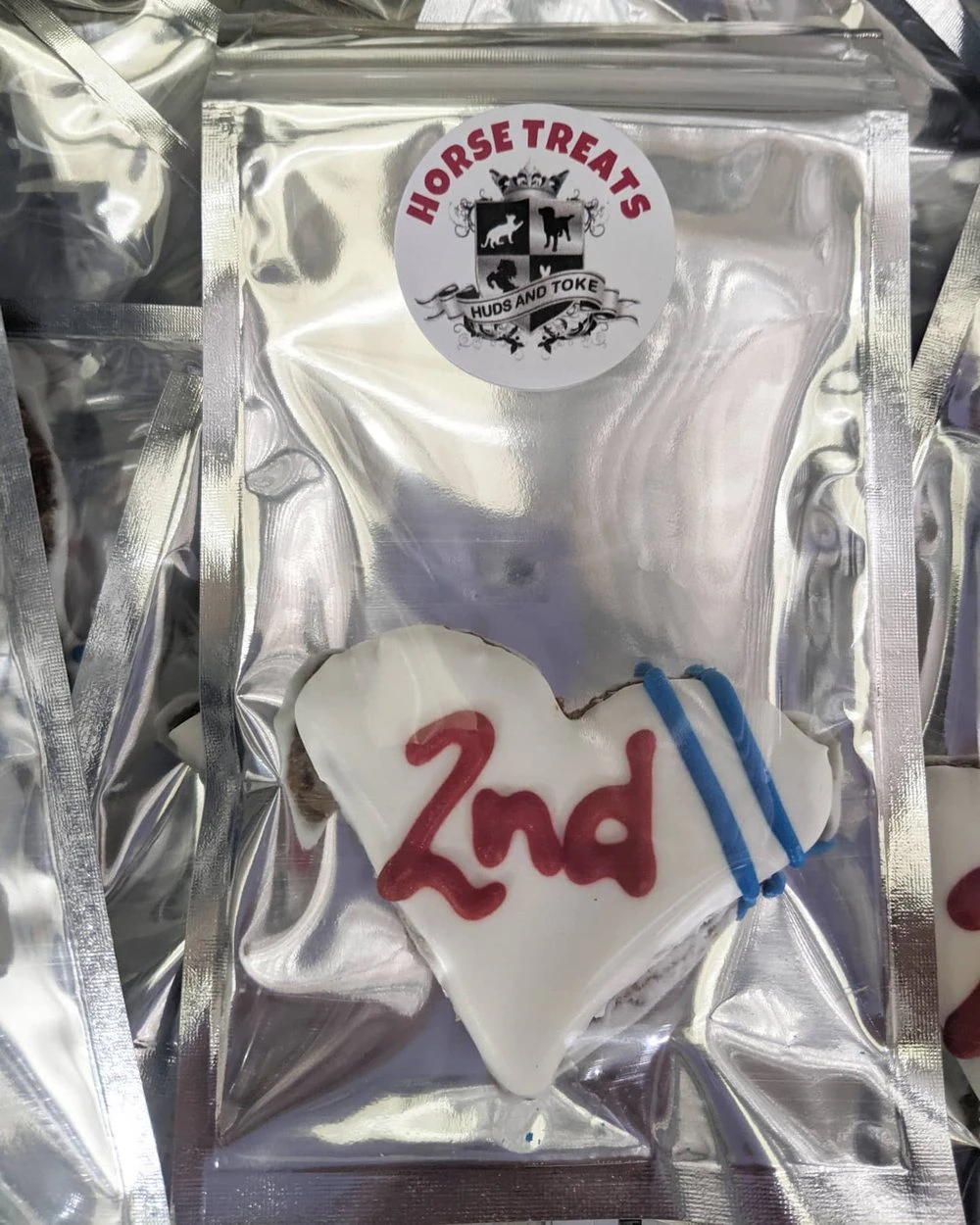
A placegetter cookie. Photo: Huds and Toke.
For the ribbon days
The pony gets a prize too
At some of the shows we sponsor, the placegetters get a Huds and Toke placegetter cookie, so the pony is rewarded directly for its efforts. It is our favourite use for an iced cookie: one, earned, at the end of the day.
"We give Huds and Toke horse treats as prizes and everyone loves them."
Sharon W., verified buyer, Fancy Flowers cookies, October 2024
Made in Coolum Beach, for Australian ponies
Every horse treat in this post is Australian made. Start with the lowest sugar one, and keep the iced ones for the days that deserve them.
Shop low sugar horse treatsSee every horse treatCommon questions
Common questions
Does hand-feeding treats make a pony nip?
Not in the one study that measured it. A UK survey of horse owners found hand-feeding was linked to horses licking hands and searching pockets and clothing, but nipping hands and biting clothes were not associated with hand-feeding. Give treats from a flat palm, only as a reward for something the pony has just done, then show an empty hand. For a pony that already mugs, use a bucket.
How many treats can a Pony Club pony have?
There is no official number. RSPCA Australia gives no treat quantity at all. For a healthy pony at a condition score of about 3 out of 5, a few small low sugar pieces used as rewards is a sensible habit. For a pony that is obese or has equine metabolic syndrome, the European vet consensus says treats, carrots and apples should be left out altogether. Talk to your Australian vet.
Are Connemara ponies prone to laminitis?
The Connemara is not named as a high risk breed in the European vet consensus on equine metabolic syndrome, and in a large UK study Connemaras had much lower odds of EMS than Welsh Section A ponies. An Irish study found overweight Connemaras were the ones at risk: the odds of high insulin rose about 6.5 times when body condition was 7 or more out of 9. Keeping a Connemara lean removes the biggest risk factor, but the same Irish study found signs of past laminitis in 46% of the ponies it examined.
Are Welsh Section B ponies easy keepers?
Often, yes. In an Australian study of Shetland and Welsh ponies in Queensland and Victoria, 61% had insulin dysregulation, and owners underestimated their pony's body condition by about one score. Treat a Welsh Section B like the good doer it probably is: low sugar treats in small pieces, and none at all if it has a laminitis history.
Can I use calming treats at Pony Club?
Pony Club Australia applies the FEI list of prohibited substances. L-theanine and L-tyrosine are not on the FEI's 2026 list, but the list covers any substance with a similar biological effect, and Pony Club Victoria's rules ban anything other than a normal nutrient that could affect performance. Check with the event vet or technical delegate before a rally or competition day.
What body condition score should a Pony Club pony be?
Pony Club Australia's target is 3 on its 0 to 5 scale, and its welfare policy makes it a breach not to address the feeding of any pony scoring under 2 or over 4. Show horses often sit above 4, which is heavier than a working pony needs to be.
Which Huds and Toke horse treat has the least sugar?
Veggie Horse Bix, at 0.98 g of sugar per 100 g on our label. Salt O's (2.3 g) and Calm O's (3.8 g) are next. Pony Puddings (19.41 g) and our iced cookies are the ones to keep for birthdays and tablets.
The Huds and Toke Editorial Team
Horse and dog treat makers, Coolum Beach, Queensland
We make the horse treats in this article, and we have been handing them out as ribbons and encouragement awards at Pony Club and shows for years. We also make the iced cookies we have told you to ration, which is exactly why we would rather be straight about when they are the wrong choice. Every research figure here is linked to its source below, and product figures come from our own published nutrition panels. This is general information, not veterinary advice. For your own pony, speak with your Australian vet.
References
- Pony Club Australia. Home page, and Syllabus of Instruction, Proficiency Standards, revised September 2024. ponyclubaustralia.com.au
- Pony Club Australia. Horse Welfare Policy (V4), including Appendix B, Body Condition Scoring. ponyclubaustralia.com.au
- Pony Club Australia. Horse Medication Policy, May 2023. ponyclubaustralia.com.au
- Pony Club Australia. Hot Weather Policy. ponyclubaustralia.com.au
- Pony Club Victoria. Handbook of By-Laws, Rules 13 to 43, effective 1 July 2024, Rule 27. ponyclubvic.org.au
- Pony Club Association of Queensland. By-Laws. ponyclubqld.com.au
- Federation Equestre Internationale. 2026 Equine Prohibited Substances List. inside.fei.org
- Australian Pony Stud Book Society. Welsh Pony (Sections A and B) and Connemara Pony breed standards. apsb.asn.au
- Welsh Pony and Cob Society of Australia. Welsh Breeds. wpcs.com.au
- Riding Pony Stud Book Society. History of the Society; Breed Standard. rpsbs.com.au
- Riding Pony Stud Book Society. Judges Handbook. rpsbs.com.au
- Connemara Pony Breeders' Society of Australia. The Pony (Standard of Excellence). sites.google.com
- Finno CJ, Stevens C, Young A, et al. SERPINB11 frameshift variant associated with novel hoof specific phenotype in Connemara ponies. PLoS Genetics, 2015;11(4):e1005122. pmc.ncbi.nlm.nih.gov
- Finno CJ. Hoof wall separation disease: a review. Equine Veterinary Education, 2022;34(9):501-502. pmc.ncbi.nlm.nih.gov
- Durham AE, Frank N, McGowan CM, et al. ECEIM consensus statement on equine metabolic syndrome. Journal of Veterinary Internal Medicine, 2019;33(2):335-349. pmc.ncbi.nlm.nih.gov
- Carslake HB, Pinchbeck GL, McGowan CM. Equine metabolic syndrome in UK native ponies and cobs is highly prevalent with modifiable risk factors. Equine Veterinary Journal, 2021;53(5):923-934. pmc.ncbi.nlm.nih.gov
- Al-Ansari AS, Golding E, Walshe N, Mooney CT, Duggan V. Obesity and obesity-associated metabolic disease conditions in Connemara ponies in Ireland. Equine Veterinary Journal, 2024;56(2):273-280. pubmed.ncbi.nlm.nih.gov
- Clark BL, Norton EM, Bamford NJ, et al. Epidemiological investigation of insulin dysregulation in Shetland and Welsh ponies in Australia. Equine Veterinary Journal, 2024;56(2):281-290. minerva-access.unimelb.edu.au
- Clark BL, Bamford NJ, Stewart AJ, et al. Evaluation of an HMGA2 variant contribution to height and basal insulin concentrations in ponies. Journal of Veterinary Internal Medicine, 2023;37(3):1186-1192. pmc.ncbi.nlm.nih.gov
- Potter SJ, Bamford NJ, Harris PA, Bailey SR. Prevalence of obesity and owners' perceptions of body condition in pleasure horses and ponies in south-eastern Australia. Australian Veterinary Journal, 2016;94(11):427-432. pubmed.ncbi.nlm.nih.gov
- Carroll CL, Huntington PJ. Body condition scoring and weight estimation of horses. Equine Veterinary Journal, 1988;20(1):41-45. pubmed.ncbi.nlm.nih.gov
- Agriculture Victoria (Pearson N). Condition Scoring and Weight Estimation of Horses. Information Note AG0928, updated May 2007. horsesafetyaustralia.com.au
- Pratt-Phillips S, Munjizun A, Janicki K. Visual assessment of adiposity in elite hunter ponies. Journal of Equine Veterinary Science, 2023;121:104199. pubmed.ncbi.nlm.nih.gov
- Hockenhull J, Creighton E. Unwanted oral investigative behaviour in horses: a note on the relationship between mugging behaviour, hand-feeding titbits and clicker training. Applied Animal Behaviour Science, 2010;127(3-4):104-107. sciencedirect.com
- Sankey C, Richard-Yris MA, Henry S, et al. Reinforcement as a mediator of the perception of humans by horses. Animal Cognition, 2010;13(5):753-764. pubmed.ncbi.nlm.nih.gov
- Sankey C, Henry S, Gorecka-Bruzda A, Richard-Yris MA, Hausberger M. The way to a man's heart is through his stomach: what about horses? PLoS One, 2010;5(11):e15446. pmc.ncbi.nlm.nih.gov
- Larssen R, Roth LSV. Regular positive reinforcement training increases contact-seeking behaviour in horses. Applied Animal Behaviour Science, 2022;252:105651. sciencedirect.com
- International Society for Equitation Science. Training Principles. equitationscience.com
- Starling M, McLean A, McGreevy P. The contribution of equitation science to minimising horse-related risks to humans. Animals, 2016;6(3):15. pmc.ncbi.nlm.nih.gov
- Smarsh D, Kocher A. Trick or Treat: Things to Think About When Giving Your Horse a Treat. Penn State Extension. extension.psu.edu
- Craven JA. Paediatric and adolescent horse-related injuries: does the mechanism of injury justify a trauma response? Emergency Medicine Australasia, 2008;20(4):357-362. pubmed.ncbi.nlm.nih.gov
- RSPCA Australia Knowledgebase. What should I feed my horse? kb.rspca.org.au
- Sykes BW, Hewetson M, Hepburn RJ, Luthersson N, Tamzali Y. ECEIM consensus statement: equine gastric ulcer syndrome in adult horses. Journal of Veterinary Internal Medicine, 2015;29(5):1288-1299. pmc.ncbi.nlm.nih.gov
- Lorenzo-Figueras M, Merritt AM. Effects of exercise on gastric volume and pH in the proximal portion of the stomach of horses. American Journal of Veterinary Research, 2002;63(11):1481-1487. pubmed.ncbi.nlm.nih.gov
- Agriculture Victoria. Caring for animals during extreme heat. agriculture.vic.gov.au