Kelpie, Cattle Dog and Border Collie Treats: Fuelling an Aussie Working Dog
Posted by The Huds and Toke Editorial Team on 24th Aug 2026
Ask a stockman how many times he rewarded his young Kelpie in this morning's session and the honest answer is somewhere north of a hundred. Ask a suburban Border Collie owner doing shaping work at home and the number is not much lower. Now hold that against the arithmetic every vet uses, which says a treat budget for a dog this size is roughly a hundred calories a day, and you can see the problem. These three breeds are not hard to feed because they are fussy. They are hard to feed because of how often you need to pay them.
Three Aussie working breeds, three different problems
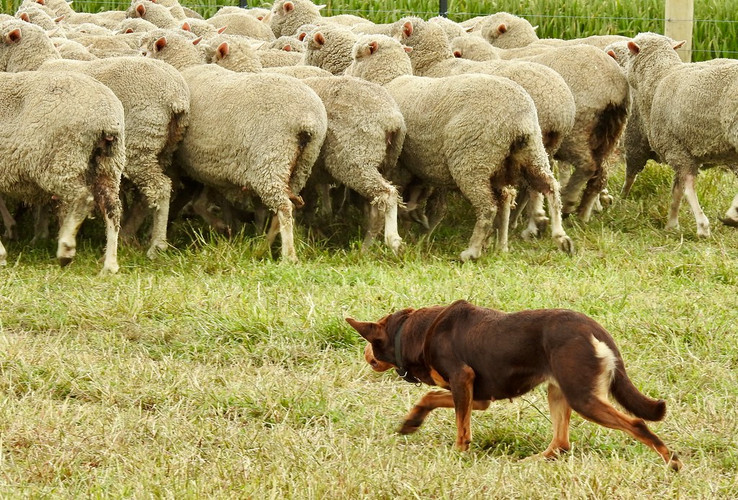
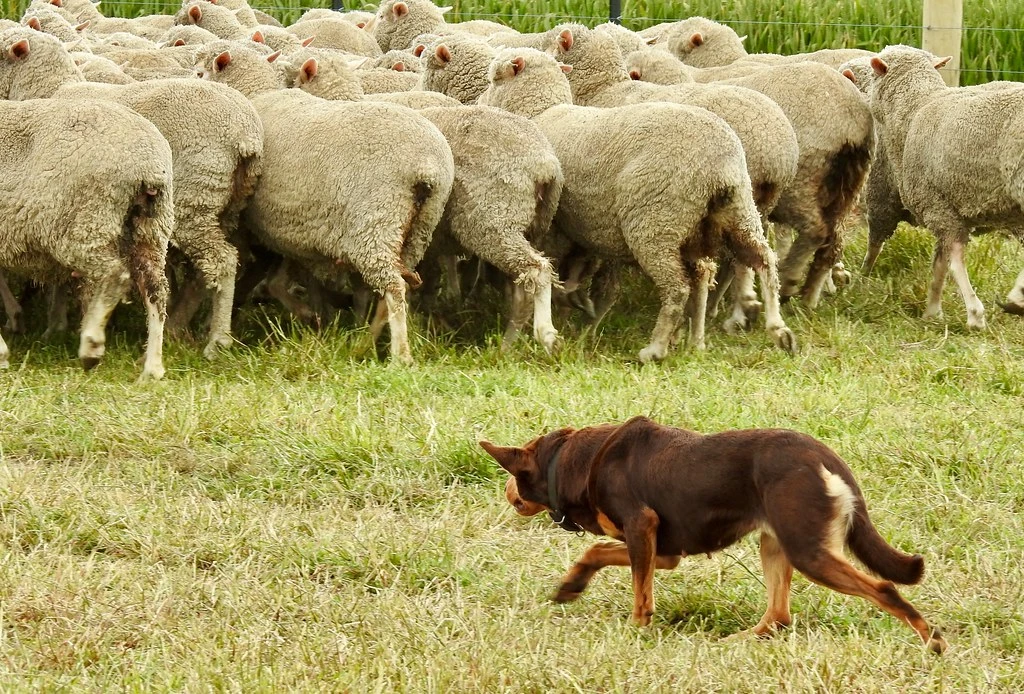
- Australian Kelpie. Built to work all day in heat on very little. Wants the smallest, driest, highest value morsel you can hand over quickly. Volume is the enemy, not protein.
- Australian Cattle Dog. The same drive, plus a serious appetite and a body that holds condition far too easily once the work stops. The breed where portioning matters most.
- Border Collie. Brain works harder than the body. Needs a treat that survives long shaping sessions without turning to crumbs in your pocket, and an owner who counts.
- The number that governs all three. Treats should sit at or under 10 per cent of daily energy intake, per the WSAVA Global Nutrition Committee. For a working dog that number moves with the workload. For a pet, it does not.
Why one hundred rewards is the real problem
Every other article about working dog treats starts with protein. That is the wrong end of the problem. A Kelpie, a Cattle Dog and a Border Collie all do the same thing that pet breeds do not, which is earn food dozens or hundreds of times in a single session. Reward frequency, not ingredient quality, is what breaks a working dog's diet.
The arithmetic is not complicated. Vets estimate a dog's resting energy requirement as 70 multiplied by bodyweight in kilograms to the power of 0.75, then multiply that by an activity factor. A desexed 16 kilogram Kelpie living as a pet lands near 900 calories a day. Ten per cent of that is about 90 calories of treats. Ninety calories does not go very far when it has to be divided into a hundred pieces.
This is why the answer for all three breeds is the same in shape and different in detail. You do not need a better treat. You need a smaller one, delivered faster, and you need to know how many you have handed over. That is the whole game.
The three breeds, side by side
| Australian Kelpie | Australian Cattle Dog | Border Collie | |
|---|---|---|---|
| Origin | Victoria and NSW, 1870s | Hunter Valley, NSW, 1820s to 1830s | Anglo-Scottish border, 1890s |
| Typical adult weight | 14 to 20 kg | 15 to 22 kg | 14 to 20 kg |
| Bred to | Cast wide and move sheep all day in heat | Drive stubborn cattle by heeling, take a kick and keep going | Control sheep with eye and precision at close quarters |
| Watch out for | Heat load, sheer volume of rewards in a session | Weight gain once work stops, inherited deafness | Obsessive focus, exercise-induced collapse in heat |
| Treat verdict | Tiny, dry, high value, fast to deliver | Tiny and counted. Lean protein over fat | Tiny, tough enough not to crumble, and consistent |
The Australian Kelpie
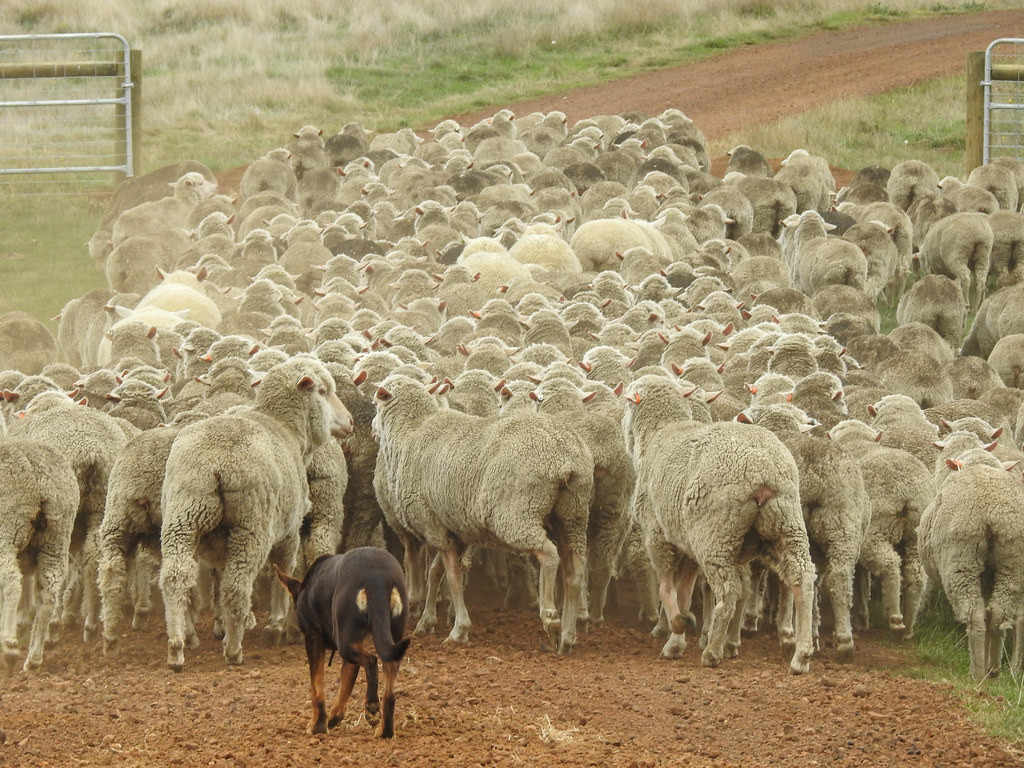
Where they come from. The Kelpie descends from working collies brought out from Scotland by early landholders. Around 1872 a roving stockman named Jack Gleeson acquired a black and tan pup bred at Warrock Station near Casterton in western Victoria, and named her Kelpie after the shape-shifting water spirit of Scottish folklore. Her daughter, known as King's Kelpie, tied the Forbes sheepdog trial in 1879, and from then on the name belonged to the type rather than the dog. Casterton still calls itself the birthplace of the Kelpie and runs a festival every June to prove it.
What that history did to the dog. The Kelpie was selected for one thing above all others: covering enormous ground in Australian heat, on very little. Nothing about that dog was designed around a full stomach. A Kelpie that has just worked all morning is often not especially hungry, and will still work for a reward the size of a fingernail. That is not a lack of appetite, it is the breed doing what it was built to do.
The watch-outs that change the treat. Heat is the real risk with a Kelpie, not food. The University of Sydney's Farm Dog Survey, which collected data from 812 owners on 4,027 herding dogs, found that 89 per cent of working dogs dismissed from their jobs went for behavioural rather than health reasons, so this is a robust breed by any measure. What it is not built for is a treat that takes twenty seconds to chew in the middle of a cast.
Treats that suit a Kelpie.
- Kangaroo Micro Bones, because kangaroo is the leanest protein in our range and the size is already right. No breaking up in the paddock with cold hands.
- Little Fish Bites for the dog that has switched off. Fish carries further on the nose than red meat, which matters when the dog is a hundred metres out and thinking about sheep.
- Kangaroo Jerky Cubes as the high value payment for the hard ask. Keep them separate from the everyday treats so they keep their value.
- Kangaroo Sticks for the end of the day, in the shade, once the work is finished.
The Australian Cattle Dog
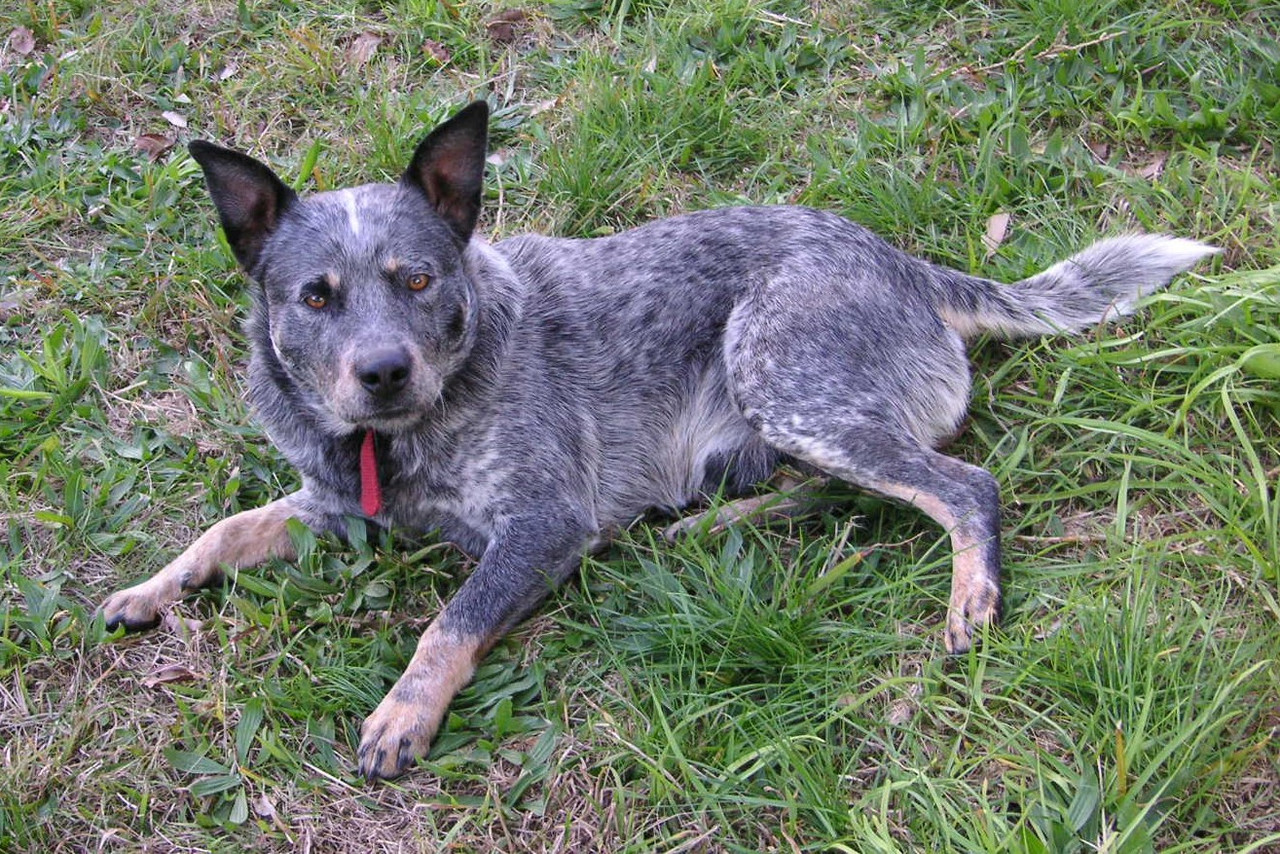
Where they come from. In 1825, at Dartbrook in the upper Hunter Valley of New South Wales, Thomas Simpson Hall began crossing droving dogs from northern England with the dingo. By roughly 1832 he had what became known as the Hall's Heeler: a mostly silent dog with the dingo's stamina and heat tolerance, working the heels of cattle and quick enough to duck a kick. After Hall's death the dogs spread beyond the family holdings, later breeders added other lines, and Robert Kaleski wrote the first breed standard in 1902, which the New South Wales Kennel Club approved the following year.
What that history did to the dog. Two things worth knowing at the food bowl. First, the dingo inheritance produced a dog that is remarkably efficient with energy, which is a wonderful trait on a cattle station and a liability in a suburban backyard. Second, Cattle Dogs are food motivated in a way Kelpies often are not. That combination, a thrifty metabolism plus genuine enthusiasm for eating, is exactly the pairing that puts weight on a dog.
A Cattle Dog will never tell you it has had enough. That job is yours.
The Huds and Toke Editorial TeamThe watch-outs that change the treat. Congenital hereditary deafness runs in the breed and is worth knowing about early, because a deaf dog is trained almost entirely on hand signals and food, which pushes reward frequency higher again. On weight, the largest Australian study of the problem, by McGreevy and colleagues in the Veterinary Record in 2005, examined 2,661 dogs through Australian veterinary practices and found 33.5 per cent overweight and 7.6 per cent obese. Working breeds carrying extra weight into their senior years is a common and entirely preventable story.
Treats that suit a Cattle Dog.
- Beef Micro Bones or Kangaroo Micro Bones as the everyday working currency. Small enough that a hundred of them is still a sane number.
- Veggie Tubes and Carrot Bon Bons for the retired or between-jobs Cattle Dog who still expects to be paid. This is the breed our low fat range exists for.
- Green Lipped Mussels for the older dog with a decade of jumping in and out of a ute behind him. We have written separately on what green lipped mussel actually does.
- Lamb Puff when you want something that feels generous without carrying much weight.
The Border Collie
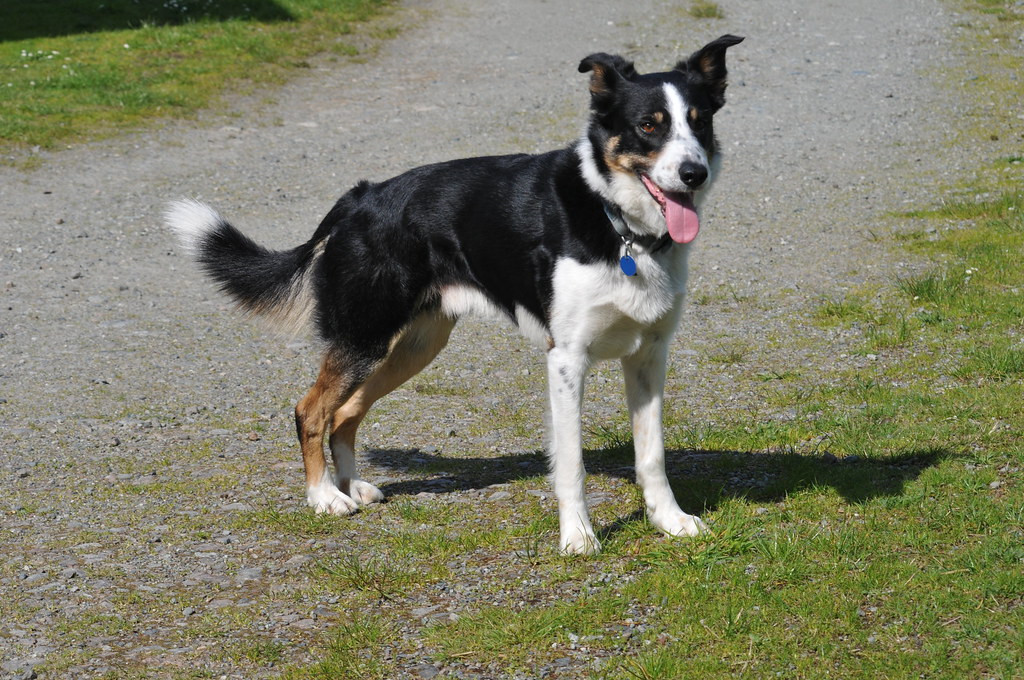
Where they come from. Every Border Collie alive traces back to one dog. Old Hemp was born on 1 September 1893 at West Woodburn in Northumberland, bred by Adam Telfer from a strong-eyed bitch called Meg and a loose-eyed, good-natured dog called Roy. Hemp worked sheep far more quietly than was normal for the time, and the style was so effective that breeders copied it wholesale. He sired more than two hundred pups. The name Border Collie itself was not used until 1915, when James Reid of the International Sheep Dog Society needed a way to distinguish the working strain from the show collie.
What that history did to the dog. Old Hemp was selected for control and precision rather than raw ground-covering stamina, and it shows. The Border Collie is the breed most likely to be doing genuinely demanding brain work at home rather than physical work in a paddock, which produces a very particular treat problem: long shaping sessions with a high rate of reinforcement, indoors, often several times a day.
The watch-outs that change the treat. Border Collies carry a handful of inherited conditions worth knowing about, including collie eye anomaly and trapped neutrophil syndrome, both of which reputable Australian breeders test for. The one most relevant to a treat article is the MDR1 gene variant, which affects how some dogs process particular drugs. It is a conversation with your Australian vet before any medication, not a food issue, but it is the reason Border Collie owners should be more careful than most about what they give without asking.
Treats that suit a Border Collie.
- Little Chicken Bites or Little Beef Bites, because a shaping session needs a treat that comes out of the pouch whole every time. Anything that crumbles turns a fluent session into a dog hoovering the carpet.
- Australian Fish Nibble for the collie that has gone flat mid-session and needs the value lifted without the calorie count moving much.
- Kangaroo Tendons or a Beef Tendon for afterwards. A Border Collie that cannot switch off is a real welfare problem, and a long chew is one of the better ways to help them come down.
- Meal Topper Sprinkles for the collie who is too wound up to eat dinner after a big day.
The honest bit: what the RSPCA actually says about treats
We sell treats, so it would be easy to leave this part out. We would rather you had it.
The RSPCA's Knowledgebase is more conservative than the ten per cent rule most of the industry quotes. Its guidance is to limit treats to occasional use, giving the example of a small treat once or twice a week, and it flags caution about several product categories including imported chicken jerky and pig's ear products.
Two things are worth saying plainly about that. The first is that the RSPCA is talking about treats as snacks, given for nothing, which is a different activity from paying a working dog for behaviour. Food used as a training reward is doing a job. The second is that several of the concerns behind that guidance relate to imported product and to the way some treats have been manufactured overseas. Everything we make is made here, which addresses the manufacturing question but does not change the calories.
Where both positions agree: treats are not a nutritionally complete food and they should not be displacing a balanced diet. If your dog is being paid a hundred times a day, the food it is being paid with has to come out of the daily ration, not on top of it.
How to actually run the numbers on your dog
- Get a real weight. Not an estimate. Most Australian vet clinics will let you use the scales in reception for nothing.
- Work out the daily energy figure. 70 x (weight in kg to the power of 0.75), multiplied by an activity factor your vet agrees with. A desexed pet sits near 1.6. A dog genuinely working stock all day sits much higher, and that number moves with the season and the workload.
- Take ten per cent of it. That is the treat ceiling, not the target.
- Take that amount out of the daily ration. This is the step everybody skips and it is the one that matters.
- Weigh it into the pouch in the morning. Empty pouch, training finished.
Small, lean and built for a high rate of reward
Our micro bones, little bites and kangaroo range were made for exactly this job: a treat small enough to give a hundred times without wrecking the day's calories.
Browse dog training treatsWork it out for your dog
Dog treat allowance calculator
How much is ten per cent for your dog? Set the weight, then type in the calories per 100 g printed on any treat pack.
About 1.6 suits most desexed adult pets. Your Australian vet may set it lower for a dog that gains weight easily, and higher for a dog doing real work.
A starting point for a healthy adult dog, not a diet. Resting energy is 70 times bodyweight in kilograms to the power of 0.75, the formula used by the Ohio State University Veterinary Medical Center (a US vet school, which notes individual needs can vary by as much as 50%). The ten per cent treat limit is from the WSAVA Global Nutrition Committee. Puppies, pregnant dogs and dogs with a health condition need their own plan from your Australian vet.
Common questions
Are kangaroo treats better for working dogs?
Kangaroo is the leanest of the proteins we work with, which makes it a sensible default when reward frequency is high and you want the calorie load low. It is also a novel protein for most dogs, which is useful if there is any suspicion of a food sensitivity. It is not magic, and a dog that does not find it valuable will not work for it.
My Kelpie is not interested in food. How do I train?
Common, and usually not a problem with the dog. Try training before a meal rather than after, use a smaller and drier treat than you think you need, and be honest about whether the dog would rather be paid in access to stock or a ball. For many Kelpies the food is a bonus and the work is the reward.
How many treats a day is too many for a Border Collie?
For a typical 18 kilogram pet Border Collie, roughly 100 calories a day is the ceiling, and that has to come out of the daily ration rather than be added to it. The practical answer is to weigh the allowance into a pouch each morning.
Can I use these treats for a puppy?
Some, with sizing and supervision. We have written a full puppy treats guide covering what is appropriate at each age.
What about hard chews for a working dog's teeth?
Useful, but the harder the chew the more supervision it needs, and a strong-jawed dog can fracture a tooth on something that is genuinely too hard. Our guide to using treats in training covers where chews fit alongside training food.
References
- WSAVA Global Nutrition Committee, Global Nutrition Guidelines. wsava.org
- McGreevy PD, Thomson PC, Pride C, Fawcett A, Grassi T, Jones B. Prevalence of obesity in dogs examined by Australian veterinary practices and the risk factors involved. Veterinary Record. 2005;156(22):695-702.
- Arnott ER, Early JB, Wade CM, McGreevy PD. Environmental Factors Associated with Success Rates of Australian Stock Herding Dogs. PLOS ONE, 2014. journals.plos.org
- RSPCA Australia Knowledgebase, What should I know before feeding dog treats? kb.rspca.org.au
- Australian Veterinary Association, Vet Voice, Obesity in Australian pets. vetvoice.com.au